
The Quick Verdict
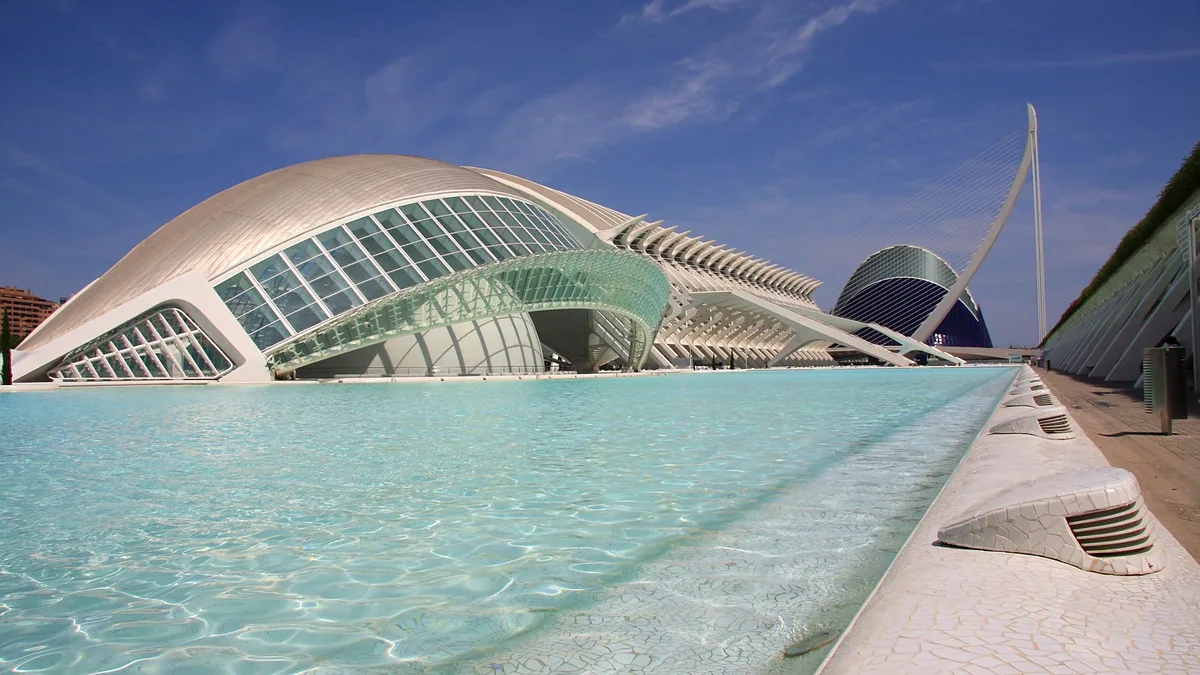
Valencia is not a visual copy of Cairo, and anyone promising Mamluk minarets on the Turia riverbed is selling you something. What it does replicate is the exact quality that makes Cairo so rewarding on foot: century after century of living architecture packed into a district you can cross in an afternoon. Swap the Fatimid walls for a Gothic silk exchange and the pyramids for a white concrete opera house, and the shape of your day barely changes.
What you gain is boring but real: printed prices, no haggling tax, an airport 20 minutes from the old town, and a food culture you can navigate without a guide. What you lose is scale, age, and the pyramids sitting on the horizon — plus, honestly, Cairo's street-level prices are still lower than Spain's. Go in clear-eyed about that trade and Valencia is a superb stand-in.
Side-by-Side Comparison Scorecard
| Feature | Cairo | Valencia |
|---|---|---|
| Average Daily Cost (Stay + Meals) | EGP 3,200–5,000 / ~$65–100 for a mid-range double plus three meals; street food days can drop under $40 | €115–165 / ~$125–180 for the same standard; €75–90 if you self-cater and take the menu del día |
| Atmosphere & Aesthetic | Fatimid gates, Mamluk minarets, Khedival facades, dust, donkeys, late-night noise | Gothic and Baroque stone, Modernista markets, Calatrava's white ribs, tiled bars, sea light |
| Crowd Density & Seasonality | Very heavy at Giza 8–11am; Islamic Cairo's northern end stays quiet. Peak Oct–Apr | Heavy at Mercado Central and Plaza de la Virgen 10am–1pm; Fallas (15–19 March) triples prices. Peak Mar–Jun, Sep–Oct |
| Flight & Transit Accessibility | 6–10 hour flights from Europe; Uber and Careem are cheap and everywhere; Metro lines 1–3 | 2–3 hour budget flights from most of Europe; Metrovalencia lines 3 and 5 reach the airport; flat and walkable |
| Best For | Monument hunters, backpackers, winter sun, gateway to Luxor and Aswan | Architecture walkers, food-led trips, first-time solo travellers, short breaks |
Scenery & Atmosphere: How Similar Are They Really?
Cairo throws everything at you at once. Walk Al-Muizz li-Din Allah Street in Islamic Cairo and within 400 metres you pass a 10th-century Fatimid gate, a 14th-century Mamluk madrasa, a 19th-century Khedival shopfront and a stall selling plastic sandals. The skyline is serrated with minarets, and the noise never fully drops.
Unlimited High-Speed International Travel eSIM
Connect in seconds across 180+ destinations. Instant QR code activation with zero roaming surcharges.

Valencia works at a gentler scale, but the layering is genuine. Stand in the Plaza de la Virgen and there's a Roman forum beneath your feet, a Baroque basilica in front of you, the Gothic Cathedral behind, and a 15th-century silk trading hall three minutes west. It's the same centuries-in-one-square feeling, compressed into a 15-minute walk.
Where the comparison holds up
La Lonja de la Seda is Valencia's answer to Khan el-Khalili in spirit: a UNESCO-listed merchant hall with twisted Gothic columns where traders once argued over silk contracts. The City of Arts and Sciences plays the pyramid role — the one landmark you'd recognise from a thumbnail, white and huge and best at sunset.
Then there's the green spine. Cairo has the Nile Corniche and Zamalek's tree-lined streets; Valencia has the 9km Turia Gardens, a riverbed rerouted after the 1957 flood and turned into a park you can cycle end to end in 40 minutes.
Where it breaks down completely
If Islamic architecture is the reason you're travelling, Valencia fails. There are no minarets, no madrasas, no bazaar maze, no City of the Dead. Valencia's historic core is European Christian and merchant-built, with a Roman foundation underneath. That's a different pleasure, not a substitute for Cairo's.
Go for the density of history, not the style of it. Valencia gives you a walkable thousand-year-old core. It cannot give you Cairo's specific thousand years.
The Wallet Test: Real Cost Breakdown
Here's the uncomfortable part of the swap. Valencia is not cheaper than Cairo — it's only more predictable. Cairo has cheap street life and expensive tourist pricing; Valencia has expensive everything and no surprises. Both facts matter when you're budgeting.
| Item | Cairo | Valencia |
|---|---|---|
| Mid-range double room | EGP 3,000–4,800 / ~$60–95 | €95–140 / ~$105–155 |
| Hostel dorm bed | ~$12–20 | €22–35 |
| Cheap eat (koshary bowl vs bocadillo) | EGP 60–90 / ~$1.20–1.80 | €4–6 |
| Sit-down dinner for two | EGP 900–1,500 / ~$18–30 | €45–70 |
| Local beer or vermouth | EGP 180–280 / ~$3.50–5.50 | €2–3.50 |
| Big-ticket sight | Giza Plateau ~EGP 700 / ~$14; Grand Egyptian Museum from ~EGP 1,200 / ~$24 | Oceanogràfic €35–40; Cathedral ~€9 |
| Airport transfer to centre | Uber EGP 300–450 / ~$6–9 | Metro ~€4.90; taxi €22–28 |
| Half-day excursion | Saqqara and Dahshur with driver ~$50–70 per person | Albufera sunset boat trip €45–60 |
Cairo's prices also drift upward inside a single trip. Egyptian monument tickets rose sharply between 2023 and 2025, guides quote $60 and then add a "photography fee," and hotel rates in Zamalek and Downtown climb every high season. Valencia's costs sit still: a menu del día is €13.50 including tax, printed on a board outside.
Where Valencia genuinely wins is the flight. From most of Europe you're looking at €30–70 return on Ryanair, Vueling or easyJet versus $200–400 to Cairo — often the single biggest line in the budget.
Crowds, Authenticity, and Tourist Footprint
Both cities concentrate their crowds into a handful of blocks, and both reward anyone willing to walk 15 minutes past them. In Cairo, the coach convoys hit Giza between 8 and 11am, then vanish. Walk the northern stretch of Islamic Cairo from Bab al-Futuh to the Al-Hakim Mosque and you'll share it with school groups and cats.
Valencia's pinch points are Mercado Central before 1pm, the Plaza de la Virgen, and the City of Arts at weekends. Fallas in March is magnificent and completely impractical for sightseeing. August is 35°C-plus and half the neighbourhood restaurants close for the month.
Honest downsides on the Spanish side: El Carmen has a tourist-flat problem and gets loud with party groups on warm weekends, and Calle Caballeros is now mostly souvenir shops and gelato. Ruzafa, Extramurs and El Cabanyal are where Valencians actually eat and live.
How to Experience the Best of Valencia (Without Pretending It's Cairo)
Where to stay
El Carmen puts you inside the historic core for €110–140 a night, but pack earplugs. Ruzafa is the better all-rounder: 15 minutes' walk to the centre, Metrovalencia at Xàtiva and Bailén, and the city's best tapas density.
El Cabanyal trades convenience for sea air — tram lines 4 and 6 or bus 95 get you in, rooms run €90–120, and you're eating at Casa Montaña, a tavern pouring since 1836.
Signature activities
Cycle the Turia Gardens from Bioparc to the City of Arts — a day rental is €10–14, and Valenbisi bike share costs about €13.50 for a week. Hit Mercado Central before 10:30 to see it as a market rather than a camera queue. La Lonja is free on Sundays and public holidays.
Climb the Miguelete bell tower for the rooftop view (a couple of euros), and book Oceanogràfic online to skip the gate queue. Finish at Malvarrosa beach with a paella at La Pepica, serving since 1898.
What to order
Paella valenciana is a lunch dish, priced €17–22 per person, and always for a minimum of two. If the menu offers chorizo, leave. Casa Roberto and Alquería del Pou do it properly, and the socarrat at the bottom of the pan is the point.
Do the esmorzaret — a mid-morning sandwich with a small beer for €5–8, the most Valencian meal there is. Then horchata and fartons at Horchatería Daniel in Alboraya or Santa Catalina in the centre for about €3, and clóchinas in summer if you see them.
Who Should Still Choose Cairo?
Choose Cairo if the pyramids are genuinely on your list. No substitute exists, and pretending otherwise wastes your money. Choose it too if you want depth in Islamic architecture, Arabic immersion, or a winter sun trip from November to February when Valencia is grey and damp.
Cairo also wins for anyone continuing onward to Luxor, Aswan or Jordan, and for true backpackers who can travel on $35–45 a day all-in. Valencia's floor is roughly double that.
One caveat: budget Cairo higher than the internet suggests. Monument tickets, guide extras and hotel rates have all climbed, so build in a 20% cushion and carry small notes for tips.
Frequently Asked Questions
Is Valencia actually cheaper than Cairo?
No. Street food, taxis and hotels are cheaper in Cairo. Valencia's advantage is fixed pricing — no haggling, no surprise fees, no fluctuating ticket costs — which makes it easier to budget but not cheaper per day.
Can Valencia replace Cairo for an architecture-focused trip?
Only in spirit. Valencia offers Roman remains, Gothic civil architecture, Modernista markets and Calatrava's futurism. There's no Islamic architecture of any real scale. Pair Valencia with Granada or Córdoba if that's your interest.
How many days do I need in each city?
Cairo needs four to five days: two for Islamic Cairo, one for Giza, one for Coptic Cairo and Downtown. Valencia works in three to four, including a beach afternoon and a day trip to Albufera.
When is the best time to visit each?
Cairo is best October to April, avoiding the summer heat. Valencia is best March to June and September to October — skip August for the heat and closures, and book early or stay away during Fallas, 15–19 March.