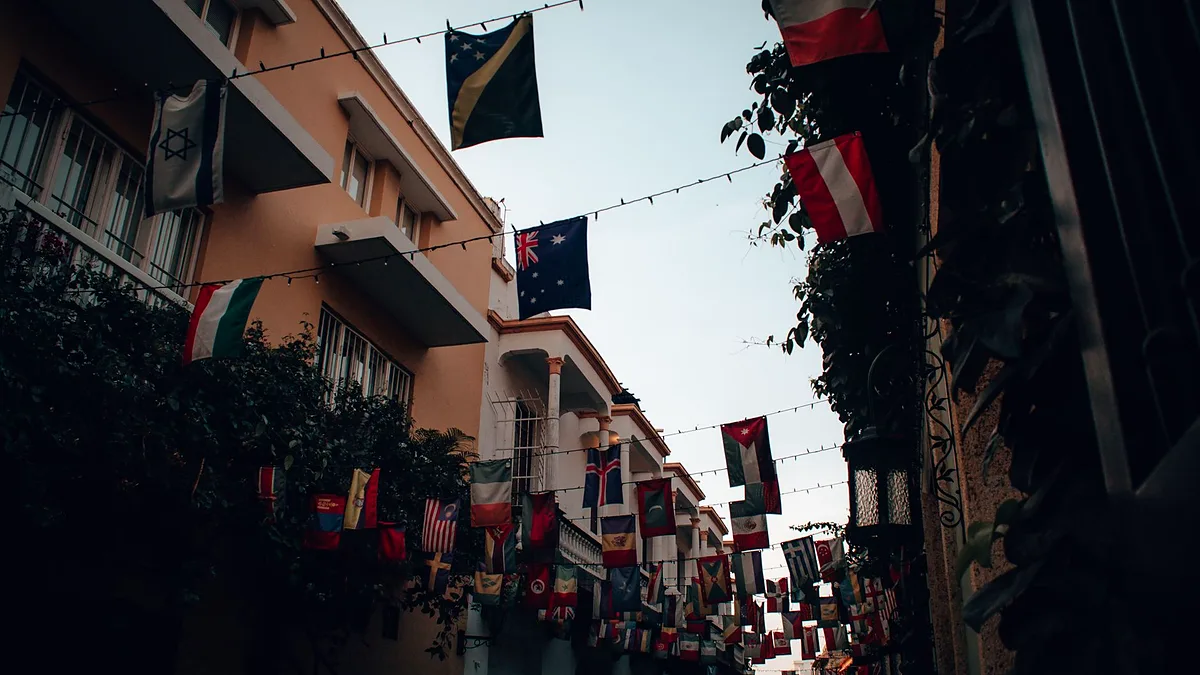

Cartagena has been a shipping town for five centuries. Gold, tobacco, and now a lot of souvenir fridge magnets. Skip the magnets. The craft scene here is tied directly to the walls you're walking on, and to the people still being trained to repair them.
That overlap is what makes this city unusual for a craft-focused trip. The historic center is a UNESCO-listed fortification, so heritage sites sit within a five-minute walk of the workshops selling what they preserve. There's also a working school that teaches young Cartageneros lime plaster, ironwork, and gilding — and you can shop the results.
This guide sticks to that overlap: the vault markets, the teaching workshops, the free museums that explain what you're buying, and the fortress that pays for a lot of it. Currency conversions use roughly $1 USD = 4,000 COP.
Unlimited High-Speed International Travel eSIM
Connect in seconds across 180+ destinations. Instant QR code activation with zero roaming surcharges.

Cartagena at a Glance
- Best time to visit: December to April (dry season). September to November is rainy and sticky; May to August brings short, heavy afternoon storms.
- Typical daily budget: COP 160,000–220,000 (~$40–55) for budget travelers; COP 380,000–550,000 (~$95–140) mid-range with sit-down meals.
- Getting around: Walk inside the walls and Getsemaní. Transcaribe buses for Bocagrande and Bazurto; InDrive for late nights.
- Overall vibe: hot, loud, and slow between noon and 3 p.m. Craft shopping works best before 11 a.m. or after 4 p.m.
1. Las Bóvedas: 23 Vaults, One Craft Market
Built into the city wall in the late 1700s as ammunition storage, Las Bóvedas now holds about two dozen craft stalls inside arched brick rooms. Thick walls, cannon ports, and a sea breeze make it the one shopping stop in Cartagena that's genuinely pleasant at midday. Vendors sell hammocks, mochilas, caña flecha bracelets woven by Zenú artisans, and the painted palenquera dolls you'll see everywhere else for triple.
Haggling is normal but gentle — asking for COP 5,000 off is fine, insulting lowballs get a shrug. Quality swings wildly between stalls, so pick up three versions of the same item before you commit. Stitching, dye consistency, and whether the tag is handwritten tell you who's serious.
- Neighborhood: Centro Histórico, north end of the wall above Plaza de Santa Teresa
- Cost: Free entry; crafts COP 15,000–120,000 (~$4–30)
- Best time of day: 9–11 a.m. or 4–6 p.m.
- How to get there: 10-minute walk from Plaza de Bolívar, or a COP 12,000 (~$3) taxi from Getsemaní
Insider tip: Several stalls at the far northern end are run by the makers themselves rather than resellers. Ask "¿Usted lo hace?" (do you make this?) and watch the answer — the ones who say yes will talk you through the whole process.
2. Escuela Taller Cartagena de Indias
A working trade school in Getsemaní that trains Cartageneros aged 16 to 25 in traditional building crafts: lime mortar, carpentry, forged iron, stained glass, and gilding. The building is a restored colonial house, and the courtyard is usually full of half-finished window frames and drying plaster molds.
You can't freely wander into the workshops, but the on-site shop sells student work — iron hooks, turned wooden bowls, gilded frames — at prices well under what the center's boutiques charge for similar pieces. It's the single best place in the city to buy something that came from a bench, not a container ship.
- Neighborhood: Getsemaní, Calle del Sargento Mayor #6-87
- Cost: Free to enter the shop; pieces COP 20,000–180,000 (~$5–45)
- Best time of day: Monday to Friday, 8 a.m.–4 p.m. Closed weekends
- How to get there: 4-minute walk from Plaza de la Trinidad
Insider tip: Weekday mornings are when students are actually working. Message the school's office or Instagram a few days ahead if you want a guided look at the workshops — walk-ins usually only get the shop, and the shop alone is a 15-minute stop.
3. Museo del Oro Zenú: Free Goldwork, Useful Context
Free, air-conditioned, and small enough to finish in 45 minutes — which matters in a city where the afternoon heat flattens you. The collection covers goldwork from the Zenú people of the Sinú and San Jorge river valleys, including the fine filigree that Cartagena's jewelers still sell as a local specialty.
Go before you buy any gold jewelry in the center. An hour here teaches you to spot hand-drawn filigree against cast pieces, and that gap in workmanship is roughly a three-to-one gap in price.
- Neighborhood: Centro, on Plaza de Bolívar beside the Palacio de la Inquisición
- Cost: Free
- Best time of day: Tuesday to Saturday, 9 a.m. opening or after 3 p.m.
- How to get there: Walk — nearly every Centro hotel is within 12 minutes
Insider tip: Jewelers around Plaza de Santo Domingo and along Calle de la Mantilla will sometimes show you a filigree bench if you show real interest. Ask about the process first and buy something small after — not the other way around.
4. Getsemaní: Murals, Studios, and Plaza de la Trinidad
Getsemaní grew up outside the walls as a working-class neighborhood, and it kept the messier, cheaper, more interesting version of the city's creative life. The Ciudad Mural project brought Colombian and international artists to paint large-scale pieces on Calle de la Sierpe, Calle del Pozo, and the lanes around the plaza.
It's a self-guided walk — no ticket, no gate, no schedule. Start at Plaza de la Trinidad, loop Calle de la Sierpe and Callejón Angosto, and you'll pass small studios selling screen prints, painted tiles, and hand-bound notebooks in the COP 40,000–90,000 range.
- Neighborhood: Getsemaní
- Cost: Free to walk; prints COP 40,000–90,000 (~$10–22)
- Best time of day: 7–9 a.m. for empty streets, 5–7 p.m. for good light
- How to get there: 8-minute walk from the Torre del Reloj, straight through the Puerta del Reloj
Insider tip: Plaza de la Trinidad gets rowdy after 11 p.m. and phone snatching is common at the beer stalls. Keep your phone in a front pocket, don't set bags on the ground, and walk back to the center on Calle del Espíritu Santo rather than the dark side streets.
5. Castillo San Felipe de Barajas
The largest Spanish fort in South America, started in 1536 and expanded over two centuries on the San Lázaro hill. It's a heritage stop rather than a craft one, but the interpretation boards are better than most, and the tunnel network shows you exactly the engineering that Escuela Taller students are trained to conserve.
Honest version of the experience: it's a steep, shadeless climb with cruise-ship crowds from about 10 a.m., and the tunnels are narrow and hot. Go at opening, carry water, and budget 90 minutes. Skip the audio guide — the bilingual boards cover the same ground.
- Neighborhood: Pie del Cerro, on the San Lázaro hill northeast of Centro
- Cost: COP 30,000 (~$7.50) for foreign adults; COP 12,000 for Colombian nationals
- Best time of day: 8–9:30 a.m., right at opening
- How to get there: COP 12,000–15,000 taxi, or a 25-minute walk from Getsemaní via Avenida Pedro de Heredia
Insider tip: Ignore the unofficial "guides" working the ticket line — their pricing is invented on the spot. If you want context, read the boards slowly instead; they're detailed enough.
6. Portal de los Dulces at Plaza de los Coches
A row of sweet stalls under the arcade, run mostly by women from Cartagena and Palenque, selling cocadas, enyucados, caballitos, and bollos wrapped in banana leaf. This is food heritage more than craft heritage, and most of the recipes are held within families rather than written down.
Prices are posted at some stalls and fixed at all of them — you're paying COP 2,000–6,000 per piece, so don't bother negotiating. The coconut-and-panela cocadas are the safest bet; the neon-bright candies are mostly sugar and food coloring.
- Neighborhood: Centro, Plaza de los Coches arcade, just inside the clock tower
- Cost: COP 2,000–6,000 per sweet (~$0.50–1.50)
- Best time of day: Mid-morning to early evening; stalls thin out after 7 p.m.
- How to get there: Walk through the Puerta del Reloj and turn right
Insider tip: Ask which sweets come from Palenque. Several vendors are Palenqueras selling family recipes, and those are consistently the better-made ones.
7. Convento de la Popa
A 17th-century monastery on the highest hill in the city, with a painted courtyard, a small chapel, and the broadest view of Cartagena you'll get without a drone. You reach it by road, not stairs, which makes it far easier than it looks from the center.
Set expectations: the site itself is small, much of the religious art is reproduction, and vendors outside are persistent. What you're really paying for is the panorama and a quick, clear lesson in how the city spread from the walled core outward.
- Neighborhood: Cerro de la Popa, roughly 3 km east of Centro
- Cost: COP 24,000 (~$6) for foreign adults
- Best time of day: 8:30–10 a.m., before clouds build
- How to get there: Taxi only, COP 25,000–35,000 (~$6–9) each way from Centro
Insider tip: Negotiate a round trip that includes a 30-minute wait. Taxis waiting at the top are scarce and charge roughly double the inbound fare.
Where to Eat and Drink Nearby
La Cocina de Pepina — Getsemaní
Home-style Caribbean Colombian cooking in a small dining room off Calle 29. The set lunch runs COP 35,000–50,000 (~$9–13), and the mote de queso and crab rice are the two dishes worth planning your day around. Cash is preferred and the kitchen closes when the pots run out.
El Bololó — Getsemaní
A tiny storefront near Plaza de la Trinidad doing arepas de huevo — corn dough dropped in oil, stuffed with egg, fried to order. COP 8,000–12,000 (~$2–3) each, five minutes to make, and the right breakfast before a walking day.
La Cevichería — Centro
Famous for a reason, and priced like it: expect COP 90,000–130,000 (~$22–33) for two with drinks, plus a queue at peak lunch. The seafood is genuinely fresh. If you want the same fish without the wait, the ceviche counters around Bazurto market cost about a third as much.
Practical Logistics and Budget Tips
The Centro Histórico and Getsemaní are about 2 km end to end, so almost everything in this guide is walkable. Do your walking before 11 a.m. and after 4 p.m.; the middle of the day is genuinely punishing, and the shade disappears fast.
- Bus pass: Buy a Tarjeta Transcaribe at any station kiosk — COP 5,000 for the card plus COP 2,900 (~$0.75) per ride. It's only worth it for Bocagrande, Manga, or Bazurto; you'll never use it inside the walls.
- Taxis: No meters, so agree the price before you get in. InDrive works well and undercuts street hails. Uber technically operates but cancellations are frequent.
- Cash: Most craft stalls and lunch counters are cash-only. Use bank ATMs inside the walls (Banco de Bogotá, Davivienda) and skip standalone street machines with no bank branding.
- Cheap culture: Museo del Oro Zenú is free, the Museo de Arte Moderno runs about COP 12,000 (~$3), and the Palacio de la Inquisición is around COP 22,000 (~$5.50). Stack all three on one weekday.
- Timing: December, January, and Semana Santa roughly double hotel rates and triple the queue at every site. If you're flexible, February and October are the sweet spot.
What to skip: the chiva party buses, the horse-drawn carriage rides around the plaza (the horses are visibly worked hard and the COP 90,000 price is steep), and the souvenir shops immediately outside the cruise terminal — same inventory as Las Bóvedas at 40% more.
Small scams to know: street sellers in Plaza de Santo Domingo will place a hat on your head and then demand payment for it. Walking tours marketed as "free" are tip-based, and COP 30,000–50,000 per person is the going rate.
Frequently Asked Questions
What are the best artisan markets in Cartagena?
Las Bóvedas inside the city wall is the main one, with two dozen stalls in historic vaults. For better prices and real maker-run shops, head to Getsemaní and the Escuela Taller store on Calle del Sargento Mayor.
Is the Castillo San Felipe de Barajas worth visiting?
Yes, if you arrive at opening and skip the audio guide. Go after 10 a.m. in high season and you'll spend more time in queue lines than in the tunnels.
How much should I budget for crafts in Cartagena?
Small items like bracelets and sweets run COP 5,000–20,000, while quality mochilas, hammocks, and student-made woodwork sit between COP 60,000 and COP 180,000 (~$15–45). Bring cash and expect modest room to bargain at Las Bóvedas, none at fixed-price shops.
Can I take a craft workshop in Cartagena?
Yes — the Escuela Taller arranges guided visits with advance notice, and several Getsemaní studios offer half-day screen-printing and coffee-tasting sessions. Book at least three days ahead, since most workshops run on weekday mornings only.