
If you're pricing a winter trip to Interlaken and wincing at the numbers, Puglia is the swap that actually holds up. Not as a mountain substitute — nothing in southern Italy replaces a 4,000-meter wall of rock — but as a winter trip with better food, better weather, and roughly half the daily burn.
Here's the short version: Interlaken wins on drama. Puglia wins on everything you pay for. You trade glaciers and fondue for olive groves, trulli, and €11 plates of orecchiette under a 14°C sun. Whether that's a good deal depends on whether you came for altitude or for a life well fed.
Side-by-Side Comparison Scorecard
| Feature | Interlaken | Puglia |
|---|---|---|
| Average Daily Cost (Stay + Meals) | CHF 320–420 (~$355–465) per person | €110–160 (~$120–175) per person |
| Atmosphere & Aesthetic | Alpine valley between two lakes, chalet architecture, snow and cable cars | Whitewashed hill towns, baroque limestone, olive groves, fishing ports |
| Crowd Density & Seasonality | Busy year-round; peak crush from Christmas to early January and July–August | Near-empty November to March; brutally crowded in August |
| Flight & Transit Accessibility | Zurich Airport plus 2 hours on a flawless train; no car needed | Direct winter flights to Bari (BRI) and Brindisi (BDS); car strongly recommended |
| Best For | Skiing, sledding, bucket-list mountain railways, easy logistics | Food, history, slow travel, cold-weather value |
Scenery & Atmosphere: How Similar Are They Really?
Honestly, not very. Interlaken sits in a valley between Lake Thun and Lake Brienz, with the Jungfrau massif filling the view and paragliders dropping out of the sky every ten minutes. It is one of the most dramatic settings in Europe, and no amount of Puglian sunshine changes that.
Unlimited High-Speed International Travel eSIM
Connect in seconds across 180+ destinations. Instant QR code activation with zero roaming surcharges.

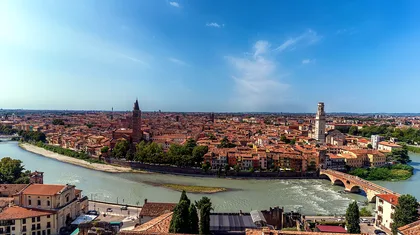
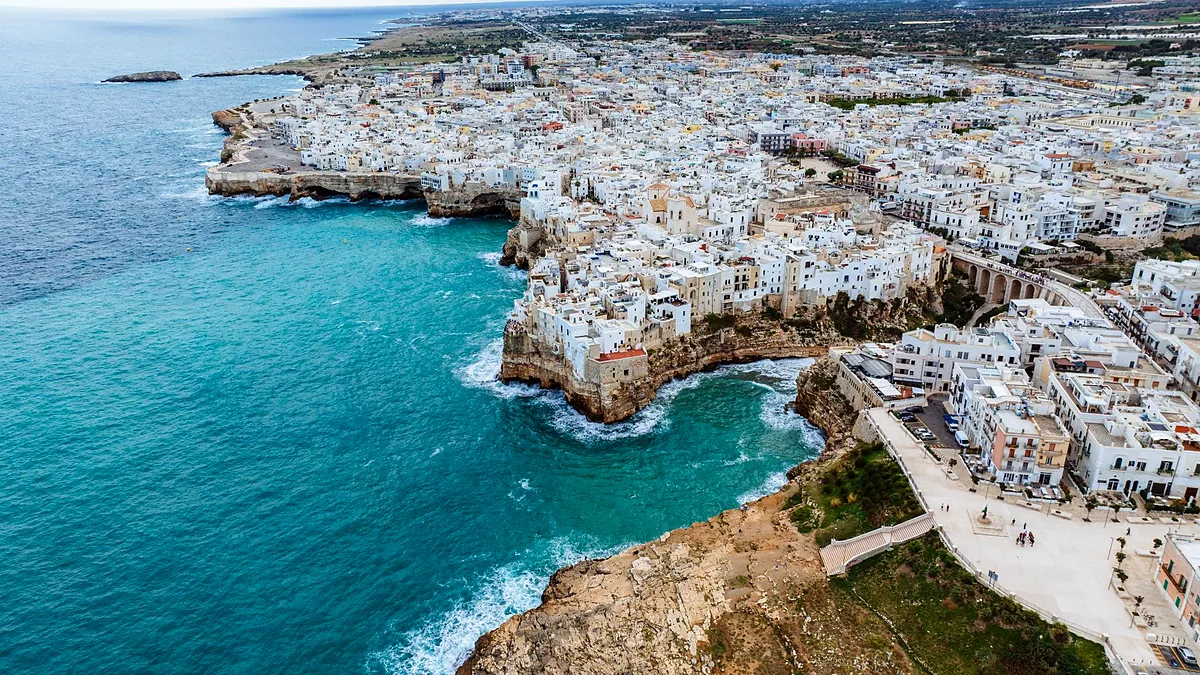
Puglia's beauty is slower and flatter — literally. Olive groves run to the horizon in rows, towns like Ostuni and Locorotondo stack up hillsides, and Lecce's baroque center is carved from soft golden limestone that glows at 4pm in January. It's a landscape you walk through, not one you photograph from a viewpoint.
Street life differs too. Interlaken's main strip, Höheweg, is a 20-minute run of watch shops, souvenir stores, and hotel restaurants. Puglia's equivalent is Bari Vecchia, where women still roll orecchiette on wooden boards outside their front doors and the smell of focaccia hits you from a block away.
If you need mountains to feel like you've travelled, Puglia will disappoint. If you need old stone, good wine, and a town square to sit in for two hours, it delivers more than Interlaken ever will.
The Wallet Test: Real Cost Breakdown
These are winter-season figures, roughly November through March, quoted per person unless noted.
Sleeping
- Interlaken: a decent three-star double runs CHF 190–260 (~$210–290) in winter. Hostel dorms sit at CHF 55–70 (~$60–78).
- Puglia: a masseria farm-stay or restored palazzo B&B is €75–120 (~$80–130) for a double with breakfast. A night inside an actual trullo in Alberobello starts around €90 (~$98).
Eating and Drinking
- Interlaken: lunch CHF 20–28, dinner mains CHF 32–45, fondue for two CHF 60–70, coffee CHF 5.50, a beer CHF 8. Budget CHF 90–120 (~$98–130) per day if you eat out twice.
- Puglia: a panzerotto and slice of focaccia barese at a street counter is €5. A full dinner with primo, secondo, and house wine lands at €28–38. Espresso at the bar is €1.20 and a glass of Primitivo is €5. You can eat extremely well on €50 (~$54) a day.
Doing Things
- Interlaken: Jungfraujoch return is CHF 259 (~$290). The Harder Kulm funicular is CHF 40 (~$44) and shuts for the season, so check dates. Paragliding runs CHF 180–200, and a day pass at Grindelwald or Mürren is CHF 70–80 before gear rental.
- Puglia: Castellana Caves guided tour €18 (~$20), Trullo Sovrano in Alberobello €5, a three-hour cooking class in Lecce €55–70 (~$60–76), Primitivo tasting at a Manduria winery €25–35. The old towns of Lecce and Ostuni cost nothing to wander.
Add it up. A week in Interlaken at CHF 350 a day lands near CHF 2,450 (~$2,700) before flights. The same week in Puglia at €135 a day is €945 (~$1,030). That gap is basically a second holiday.
Crowds, Authenticity, and Tourist Footprint
Interlaken is busy all year. Winter brings skiers and Gulf-region travellers chasing snow, summer brings everyone else, and Höheweg never really empties. That's not a criticism — the infrastructure handles it well — but you will queue for the Jungfraujoch train and pay tourist-zone prices for a mediocre schnitzel.
Puglia in winter has the opposite problem, and it is a real problem. Ostuni's restaurants run reduced hours, Polignano's beach clubs are boarded up, and in small coastal towns you may find three open eateries on a Tuesday. The upside: you'll be sitting next to locals, not tour groups.
In August the script flips completely. Puglia's coast becomes one of Italy's most crowded summer destinations and room rates roughly double. If you're making this swap, winter and spring are when the trade makes sense.
Authenticity favors Puglia on the whole. Bari Vecchia, Martina Franca, and Lecce's centro storico are lived-in neighborhoods rather than stage sets, and the food culture is fiercely regional instead of hotel-adapted.
How to Experience the Best of Puglia
Where to Base Yourself
- Lecce — baroque architecture, the region's best restaurant scene, easy train access to the coast. Worth two or three nights.
- Ostuni or Martina Franca — whitewashed hill towns in the Valle d'Itria, central for day trips. You'll want a car.
- Bari — cheapest hotels, the liveliest old town, and the transport hub for everything else.
- Polignano a Mare — a dramatic clifftop town, though limited in deep winter. Fine for one night in spring.
Things That Scratch the Interlaken Itch
- Ride the train from Bari to Lecce (€15–25, about 1 hour 35 minutes) instead of a scenic mountain railway. Same window-watching pleasure, a fraction of the price.
- Swap the Jungfraujoch for the Castellana Caves, a 3km underground system with guided tours running year-round.
- Walk the coastal path between Polignano and Monopoli through the olive groves — the closest thing to a winter hike here.
- Day-trip to Matera, an hour from Bari. Cave dwellings carved into a ravine, and no ticket required to walk the Sassi.
What to Order
- Orecchiette alle cime di rapa — the region's signature dish, best in Bari Vecchia for around €11.
- Burrata from Andria — order it plain with bread and oil. Anything else is a waste of good cheese.
- Bombette — pork skewers stuffed with cheese, grilled in Valle d'Itria butchers' shops, about €1.50 each.
- Pasticciotto — Lecce's custard-filled pastry, eaten warm at 8am with an espresso like a local.
- Primitivo or Negroamaro by the carafe — house wine runs €8–12 a half-litre and is genuinely good.
One thing to skip: the famous cliffside restaurant in Polignano. It's closed most of the winter, and when it opens it's a €200-per-person photo op with average food.
Who Should Still Choose Interlaken?
Choose Interlaken if snow is the entire point. If you want to ski, sled, or stand on the Jungfraujoch, no amount of Puglian olive oil substitutes for it. Skiers and snowboarders should book the original without hesitation.
Also pick Interlaken if you want zero logistics. Swiss trains run like clockwork, English is universal, and you can arrive without a car and be perfectly fine. Puglia rewards drivers; rural buses thin out on Sundays and some masserie are unreachable without wheels.
And if you're travelling with people who need guaranteed winter snow — kids, first-timers, anyone chasing a white Christmas — Interlaken delivers certainty. Puglia's winter is mild but not assured. You might get a week of 14°C sun or four days of cold rain.
Everyone else should look hard at Puglia. The food is better, the history is older, the crowds are thinner, and your money goes roughly twice as far.
Frequently Asked Questions
Is Puglia actually cheaper than Interlaken in winter?
Yes, by about half. Expect €110–160 (~$120–175) per day in Puglia against CHF 320–420 (~$355–465) in Interlaken, once hotels, meals, and one paid activity are included.
Is Puglia warm enough to enjoy in winter?
Daytime highs sit around 12–15°C (54–59°F) from December to February, with rain and cool evenings. It's jacket weather, not beach weather — the sea stays near 14°C, so swimming is out.
Can I ski or see snow in Puglia?
No. Puglia is the flattest region in Italy. The nearest real skiing is in Abruzzo, roughly three hours north by car, which defeats the purpose of a cheap swap.
How do I get to Puglia and get around?
Fly into Bari (BRI) or Brindisi (BDS); both have direct winter routes from across Europe, and Bari airport is 20 minutes from the city center. Trains link Bari, Ostuni, and Lecce cheaply, but rent a car for the Valle d'Itria and the coast.