
Santa Teresa is the Rio neighborhood where people actually make things. Ceramicists, tile-setters, printmakers and painters work out of old houses on a hill above Lapa, and a surprising number of those doors open to visitors.
That is what makes it worth a full day rather than a photo stop. You can climb a mosaic staircase built by one obsessive artist, wander a ruined mansion that is now a free arts center, then sit with a maker and get clay under your nails — all within a 20-minute walk.
Below are the heritage sites and studios that actually deliver, what they cost in reais and dollars, and the honest bits most lists leave out.
Unlimited High-Speed International Travel eSIM
Connect in seconds across 180+ destinations. Instant QR code activation with zero roaming surcharges.

At-a-Glance Snapshot
- Best time to visit: May to October (dry, cooler). Any day except Monday, when several museums and many restaurants close.
- Daily budget: R$200–450 per person (~$40–90 USD) covering transport, one paid museum, a workshop and two meals.
- Local transport: Metro Line 1 or 2 to Cinelândia or Glória, then walk up or take the historic bondinho tram. Uber from Glória costs about R$15–20 (~$3–4).
- Vibe: Slow, hilly, artsy, slightly scruffy. Cobblestones, mango trees, cats on walls, cold beer at 3pm.
- Closed days to know: Parque das Ruínas and Museu Chácara do Céu shut Mondays; the tram often suspends Monday service for maintenance.
Escadaria Selarón: The 215-Step Mosaic
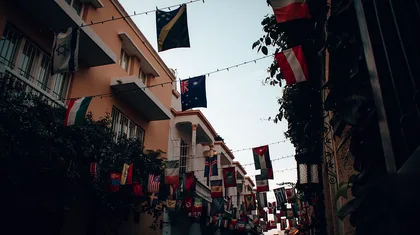
Jorge Selarón started tiling this staircase outside his door in 1990 and kept going until his death in 2013. The result is 215 steps covered in fragments from more than 60 countries, and it reads less like public art than like one man's obsession left running in the open.
It connects Lapa at the bottom to Santa Teresa at the top, which makes it the natural entry point for a craft-focused day. Look closely at the tiles — hand-painted flags, ceramic shards, a few genuinely odd donations from strangers.
- Neighborhood: Border of Lapa and Santa Teresa, top of Rua Joaquim Silva.
- Cost: Free. No ticket, no gate.
- Best time: 7–9am. By 11am in summer it is a slow-moving queue of tour groups.
- Getting there: Metro Line 1 or 2 to Cinelândia, then a 12-minute walk via Rua Joaquim Silva.
Insider tip: Walk it top-down from Rua Pinto Martins instead of climbing. You get the same views without arriving at the studios sweaty, and the upper third is where the most interesting tiles are.
Parque das Ruínas: A Mansion Shell Turned Free Arts Center
This was the home of Laurinda Santos Lobo, a socialite who hosted Brazil's art and literary crowd in the early 1900s. The house fell into ruin, then the city rebuilt it inside a steel-and-glass frame that preserves the original brick walls and arches.
Entry is free, there are rotating exhibitions, and the top-floor deck gives you a clean sweep over the Arcos da Lapa, Guanabara Bay and Sugarloaf. It also runs free workshops and talks, so check the board at the entrance when you arrive.
- Neighborhood: Santa Teresa, Rua Murtinho Nobre 169.
- Cost: Free (special events occasionally ticketed).
- Hours: Tuesday to Sunday, roughly 8am–6pm. Closed Mondays.
- Getting there: 8-minute walk uphill from Largo dos Guimarães, or one stop on the bondinho.
Insider tip: There is a small café and an elevator if the hill has beaten you. Go around 4–5pm — the light hits the bay and the deck empties out.
Museu Chácara do Céu: Modern Art in a 19th-Century House
A short walk from the Ruínas, this mansion holds a genuinely good collection of Brazilian modernists — Portinari, Di Cavalcanti, Guignard — plus a handful of European pieces including Miró and Picasso. It is small enough to do properly in 45 minutes.
The draw is the setting as much as the art: parquet floors, shuttered windows, and a garden that looks straight down over the city. It is one of the calmest rooms in Rio.
- Neighborhood: Santa Teresa, Rua Murtinho Nobre 93.
- Cost: Around R$10 (~$2 USD). Cash is handy.
- Hours: Tuesday to Sunday (closed Tuesdays in some schedules — call ahead), roughly 12pm–5pm.
- Getting there: Two minutes on foot from Parque das Ruínas.
Insider tip: Staff are strict about large bags — leave backpacks at the desk. And do not skip the garden; most visitors walk straight past it.
Ride the Bondinho and Walk the Arcos da Lapa
The little yellow tram is the easiest way to understand the neighborhood's geography, and it crosses the Arcos da Lapa — a 270-metre, 42-arch aqueduct finished in 1750 that once carried water from the Carioca River into the city center.
Ride it once for the view, then walk the aqueduct at street level later. The Arcos are free, floodlit after dark, and still the best free sight in the area.
- Neighborhood: Departs from Estação Carioca, Rua Professor Lélio Gama, near Cinelândia metro.
- Cost: R$20 each way (~$4 USD). Buy at the station window.
- Best time: Late morning on a weekday. Weekends mean queues.
- Stops: Largo do Curvelo and Largo dos Guimarães, both useful for studios.
Insider tip: Monday service is frequently suspended for maintenance. If the tram is down, the number 006 bus and Uber both cover the same route for less hassle than waiting.
Book a Hands-On Workshop With a Working Maker
This is the part people miss. Santa Teresa has a dense cluster of ceramics, lino-print, mosaic and jewelry studios, many run by one person in a converted garage or back room. Prices are modest and sessions are short — usually two to three hours.
The reliable way in is Instagram. Search for local ateliers, message the maker directly, and ask about a beginner session. Many take two to four people at a time for R$120–250 (~$24–50 USD) including materials.
- Where to look: Rua Almirante Alexandrino between Largo dos Guimarães and Curvelo, plus the lanes around Largo das Neves.
- Cost: R$120–250 (~$24–50 USD) per session, materials usually included.
- Best time: Weekday afternoons — makers are more relaxed and studios are quieter.
- Getting there: Bondinho to Largo do Curvelo, then walk downhill.
Insider tip: Book three to five days ahead and confirm in Portuguese if you can (a short translated message works fine). Turning up unannounced is the most common tourist mistake here — most of these are private studios, not shops.
Centro Cultural Laurinda Santos Lobo and Largo dos Guimarães
Laurinda Santos Lobo's other mansion on Rua Monte Alegre is now a free cultural center with a courtyard, exhibition rooms and a steady calendar of art courses. It is scruffy and unpolished in the best way — locals actually use it.
From there, walk down to Largo dos Guimarães, the neighborhood's square. It holds the tram stop, a few small galleries and shops, and the 1919 grocery-turned-bar Armazém São Thiago. This is your base for the afternoon.
- Neighborhood: Santa Teresa, Rua Monte Alegre 306.
- Cost: Free.
- Hours: Tuesday to Friday, roughly 10am–6pm. Closed Mondays and often weekends.
- Getting there: 10-minute walk from Largo dos Guimarães.
Insider tip: Ask at reception about current course schedules — short courses in drawing and ceramics open to outsiders when spots are free.
Where to Eat & Drink Nearby
Bar do Mineiro (Rua Paschoal Carlos Magno 99) is the feijoada benchmark, served in a tiled room full of framed photos. Expect around R$78 (~$16 USD) per plate, enough for two; closed Mondays.
Bar do Gomes (Largo dos Guimarães 127) is the square's default stop — cold chopp for R$12 (~$2.50), bolinho de bacalhau around R$42. Open daily, gets loud after 8pm.
Armazém São Thiago (Rua Áurea 26) has been pouring since 1919. Order the pernil sandwich, roughly R$35 (~$7 USD), and sit at the counter. For a splurge, Aprazível (Rua Aprazível 62) serves Amazonian-influenced mains at R$90–140 with a view over the hills.
Practical Logistics & Budget Tips
- Metro first: Line 1 or 2 to Cinelândia or Glória, R$5.30 (~$1 USD) with a RioCard or contactless card. From Glória, an Uber up the hill costs R$15–20 and saves 25 minutes of steep walking.
- Wear real shoes. The cobblestones are uneven and genuinely slippery after rain. Flats and flip-flops are a bad idea on these inclines.
- Carry cash. Several studios and small bars take Pix but not foreign cards, and ATMs in the neighborhood are unreliable.
- Budget realistically: R$200 a day is doable if you stick to free sites and one workshop; R$400+ if you add a museum, a splurge lunch and taxis.
- Skip the midday staircase. From 11am to 3pm in summer it is shoulder-to-shoulder with tour groups in full sun.
- Skip the souvenir galleries on Rua Almirante Alexandrino selling imported fridge magnets and generic tiles. Ask any shop whether the work is made within walking distance; the honest ones say yes.
- Plan around Monday. The neighborhood goes quiet — museums shut, several kitchens are dark, and the tram often stops running. Tuesday to Saturday is the sweet spot.
Frequently Asked Questions
Is Santa Teresa safe to walk around during the day?
Yes, the main tourist routes between Largo dos Guimarães, Parque das Ruínas and the Escadaria Selarón are well-policed and busy. Keep your phone out of sight on the quieter cobbled lanes and take an Uber back down after dark.
How do I get to Santa Teresa from Copacabana or Ipanema?
Take Metro Line 1 to Cinelândia, then either walk up Rua Joaquim Silva for about 15 minutes or catch the bondinho from the Carioca station. An Uber direct from the beach neighborhoods takes 20–30 minutes and costs around R$40–60.
Do I need to book craft workshops in advance?
Yes — most ateliers are working studios rather than drop-in attractions. Message the maker on Instagram three to five days ahead, confirm the price and materials, and get the exact address, because many are down unmarked lanes.
Are there free heritage sites in Santa Teresa?
Several. The Escadaria Selarón, the Arcos da Lapa, Parque das Ruínas and Centro Cultural Laurinda Santos Lobo all cost nothing to enter. Only the Museu Chácara do Céu and the tram carry a small fee.