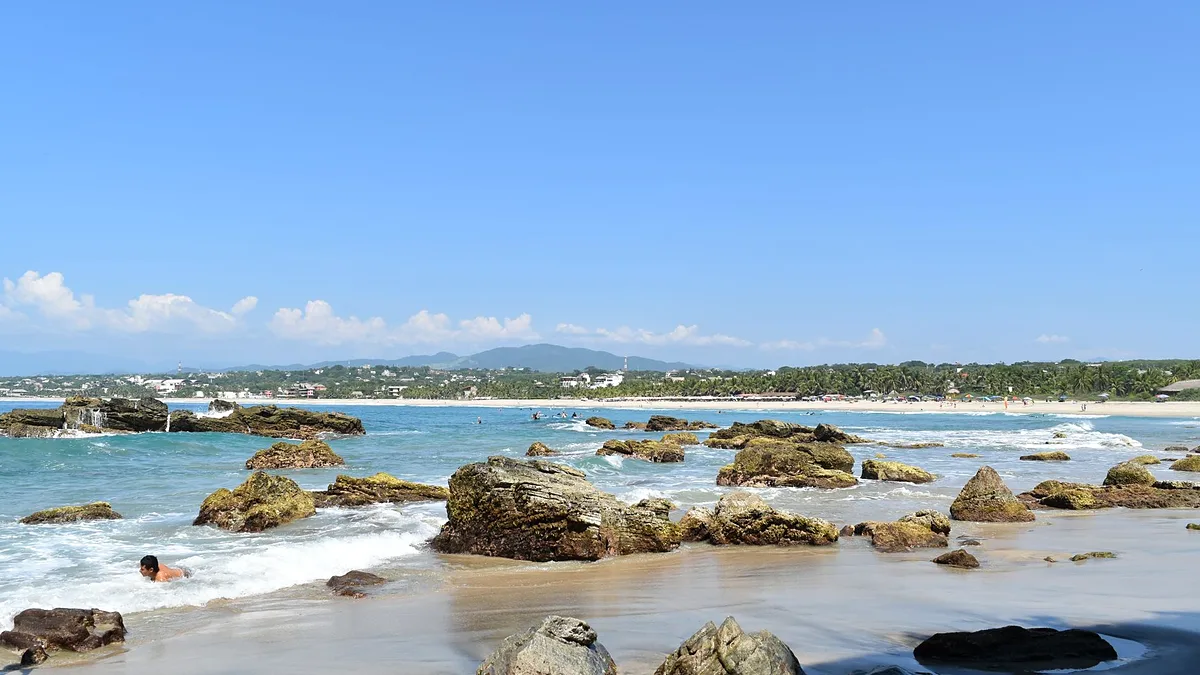

Puerto Escondido sells itself as a surf town, and fair enough — Zicatela's beach break is genuinely serious. But the town behind the waves has a second life that most visitors never touch: a clay studio designed by a Pritzker-winning architect, a culture house running cheap workshops for locals, a market where hand-knotted hammocks cost less than a round of cocktails in Tulum, and a cliff walk that remembers when this was a fishing village of a few thousand people.
The name means "hidden port," and for centuries that was literal — the bay stayed invisible to passing ships until the geography betrayed it. That isolation is exactly why the craft here still feels like work rather than performance.
This guide covers the workshops and heritage sites worth your morning, plus the honest stuff: what's overpriced, when things close, and how to get there without a rental car.
Unlimited High-Speed International Travel eSIM
Connect in seconds across 180+ destinations. Instant QR code activation with zero roaming surcharges.

- Best time to visit: November to April for dry weather; late October and May are quieter and cheaper. Avoid the first week of September, when many workshops and family businesses shut for vacation.
- Typical daily budget: MX$900–1,600 / ~$45–80 USD per person, mid-range, including one workshop or entry fee.
- Local transport: Colectivo vans (MX$10–15 a ride) link Centro, Zicatela and Bacocho; taxis run MX$60–100 between Centro and Zicatela. Scooter rental is MX$250–350 a day.
- Vibe: Barefoot, unhurried, cash-based. Spanish opens doors here more than any booking app.
1. Casa Wabi: Clay, Concrete and a Working Studio
About 25 minutes east of Centro, in Santa María Colotepec, artist Bosco Sodi built a foundation around a Tadao Ando-designed concrete compound. The clay pavilion is the part that matters for this trip — a working studio where local potters and residents fire pieces, alongside galleries, a library and a small botanical garden.
It is not a tourist attraction in the usual sense. Visits are by guided tour only, in small groups, and the schedule shifts with each artist residency. But an hour here will teach you more about Oaxacan clay than a week of browsing souvenir shops.
- Neighborhood: Santa María Colotepec, on the coastal highway toward Río Grande
- Cost: MX$300–500 / ~$15–26 USD per person, donation-based; confirm current rate when you book
- Best time: Mid-morning tours, Thursday to Sunday in high season
- Getting there: Taxi from Centro (MX$250–350 round trip with waiting time) or the Río Grande colectivo plus a 15-minute walk on a dusty shoulder
Insider tip: Book by email or WhatsApp at least five days ahead and ask directly whether any ceramic workshops are open to visitors that week. Walk-ins are turned away at the gate, and this is the single most common mistake people make here.
2. Casa de la Cultura: Where Locals Actually Learn
The town's culture house is a low-key, unrenovated building a few blocks off the Adoquín, and it runs the workshops that keep local craft alive rather than monetizing it. Expect dance, music, drawing, and rotating ceramics or textile classes, plus a courtyard of student murals that changes every year.
Drop in mid-afternoon when classes are running. You'll see teenagers painting, kids rehearsing folkloric dance, and a noticeboard listing whatever talleres are open that season.
- Neighborhood: Centro, a few blocks from the Adoquín on the town grid
- Cost: Free to enter; individual workshop fees typically MX$80–150 / ~$4–8 USD per class
- Best time: Weekdays 9am–2pm and 4–8pm; Saturday mornings
- Getting there: Walkable from anywhere in Centro; any colectivo drops you within five minutes
Insider tip: Ask in Spanish, politely, whether you can join a session as a visitor — "¿Hay algún taller abierto al público esta semana?" The answer is often yes, but it's a favor, not a product.
3. Mercado Benito Juárez: Hammocks, Textiles and Honest Prices
This is the town's real market, not a souvenir arcade. Vendors sell embroidered blouses from the Mixteca, hand-knotted hammocks, woven baskets, painted ceramics and leather sandals next to produce, dried chiles and butchered meat.
Quality varies wildly, and that's the point — you can feel the difference between a machine-crimped hammock end and a hand-tied one in about three seconds. Prices are negotiable but reasonable to start with.
- Neighborhood: Centro, within walking distance of the Adoquín
- Cost: Free entry; hammocks MX$250–600 / ~$13–31 USD, blouses MX$350–900 / ~$18–47 USD
- Best time: Before 11am, when the food stalls are fresh and vendors are unhurried
- Getting there: Ten-minute walk from the Adoquín; taxis drop at the corner
Insider tip: Check the loops at each end of a hammock — hand-knotted ones have small, uneven cotton tails, not fused plastic tips. Bring small bills; nobody breaks a MX$500 note at 8am.
4. The Andador Escénico: A Cliff Walk Older Than the Surf Hype
This paved walkway hugs the cliffs between Playa Principal and Playa Marinero, with murals, lookout points and pelicans doing low passes at eye level. It's free, it takes twenty minutes, and it's the clearest physical record of what this town was before 1970.
Come at sunrise. Fishermen are still hauling pangas onto Playa Principal and the light hits the headland before the heat does.
- Neighborhood: Centro / Playa Principal waterfront
- Cost: Free
- Best time: 7–8:30am, or late afternoon for shade
- Getting there: Starts a five-minute walk from the Adoquín's western end
Insider tip: At the Playa Principal end, ask a panga captain about a short sunset loop past the headlands — roughly MX$300–500 / ~$16–26 USD per boat, not per person. Skip it if the swell is up.
5. Mazunte: Turtle Museum and a Women's Co-op That Reinvented Itself
An hour west along the coast, Mazunte's Centro Mexicano de la Tortuga is a modest, genuinely useful museum built on the ruins of the old turtle-hunting economy. Around the corner, the Cosméticos Naturales de Mazunte co-op was founded by the same families who used to hunt turtles — they now make soap, oils and balms from local ingredients.
It's the most honest craft-to-economy story on this coast, and the shop is the best place to spend your souvenir budget.
- Neighborhood: Mazunte, Oaxaca coast
- Cost: Museum entry MX$50–70 / ~$3–4 USD; soaps MX$60–120 / ~$3–6 USD
- Best time: Weekday mornings; museum is closed Mondays
- Getting there: Colectivo or second-class bus toward Pochutla, 50–70 minutes, MX$40–60
Insider tip: Give the museum about 45 minutes, then walk ten minutes to San Agustinillo for a swim. Anyone selling you a "baby turtle release" outside the official season is selling you a photo, not conservation.
6. Juquila: The Pilgrimage Town Up the Mountain
Two and a half to three hours inland, past coffee slopes and cloud that sits on the road, Juquila is one of Oaxaca's most important pilgrimage sites. The sanctuary draws busloads of devotees, and the streets around it are lined with shops selling backstrap-loom textiles, silver religious pieces and embroidered cloth.
It's a long day, and the drive is punishingly curvy. But if you want to see craft that serves faith rather than tourism, this is it.
- Neighborhood: Juquila, Sierra Sur, Oaxaca
- Cost: Sanctuary free; second-class bus MX$120–180 / ~$6–9 USD each way
- Best time: Weekday mornings; avoid December 8, the feast day, unless you want crowds
- Getting there: Second-class buses from the Puerto Escondido terminal; the road climbs steeply through San Gabriel Mixtepec
Insider tip: Take motion sickness tablets before you board and sit near the front. Bring cash — several of the best textile stalls don't take cards, and the signal up there is patchy.
Where to Eat & Drink Nearby
Comedores at Mercado Benito Juárez
Plastic stools, one daily menu, no menu in English. Expect tlayudas the size of a steering wheel, enfrijoladas, and café de olla for around MX$70–130 / ~$4–7 USD. Go before 2pm, when the good pots run out.
El Sultan
A long-standing Centro breakfast spot popular with people who work in town rather than visit it. Chilaquiles, eggs, decent coffee, MX$120–200 / ~$6–10 USD. It gets loud and busy from 9am, so aim earlier.
Seafood Palapas at Playa Principal
The family-run spots behind the beach do whole grilled fish and camarón al mojo de ajo for MX$180–340 / ~$9–17 USD. Sit at the tables closest to the sand and skip the laminated photo menus — the specials board is the real food.
Practical Logistics & Budget Tips
- Arrive by air if you can: Puerto Escondido airport (PXM) sits ten minutes from Centro, with direct flights from Mexico City and Oaxaca City. ADO buses from Oaxaca City take 7–8 hours for MX$450–700 — scenic, but the mountain curves are relentless.
- Ride colectivos: They're marked by their route on the windshield, run until around 9pm, and cost MX$10–15. No pass needed — just hand over coins.
- Carry cash: ATMs in Centro are few and regularly empty by Sunday. Bring enough pesos for two full days.
- Schedule around heat: Reserve midday hours (1–4pm) for indoor workshops or the market, and do cliff walks and ruins early.
- Buy direct: Hotel concierge "artisan tours" add 40% or more to the same experiences you can book yourself. Call the studio, the co-op or the workshop directly.
| Daily cost (per person) | Budget | Mid-range |
|---|---|---|
| Lodging | MX$400–700 / $20–36 USD | MX$1,200–2,500 / $60–125 USD |
| Food | MX$200–300 / $10–15 USD | MX$450–800 / $22–40 USD |
| Transport | MX$80–150 / $4–8 USD | MX$200–350 / $10–18 USD |
| Workshops & entries | MX$100–300 / $5–15 USD | MX$400–800 / $20–40 USD |
What to skip: The craft boutiques along Zicatela's main strip. A lot of what sits on those shelves is machine-made stock from other states with a Oaxacan price tag. If you want the real thing, buy at the market, at a co-op, or at the source.
Also skip the pack of animals, the crowded dolphin boats and the pedal-powered turtle pitches. And be realistic about September and October: workshops pause, restaurants close for family holidays, and afternoon rain kills outdoor plans.
Frequently Asked Questions
Are there craft workshops in Puerto Escondido open to visitors?
Yes, but they're informal. Casa de la Cultura and Casa Wabi are the two reliable starting points, and both expect you to ask rather than expect a booking page.
Where do I buy authentic Oaxacan crafts in Puerto Escondido?
Mercado Benito Juárez in Centro is the best value, with textiles and hammocks sold by the families who make them. For specific co-ops, head west to Mazunte or inland to Juquila.
How far is Puerto Escondido from Oaxaca City's craft villages?
Seven to eight hours by bus — too far for a day trip. Plan Puerto Escondido and the Oaxaca Valley as two separate legs, with the mountain road connecting them as an overnight journey.
What's the best day to visit markets and heritage sites?
Weekdays, ideally Tuesday to Thursday, when crowds thin out and the people running workshops have time to talk. Mornings beat afternoons every time, both for heat and for stock.