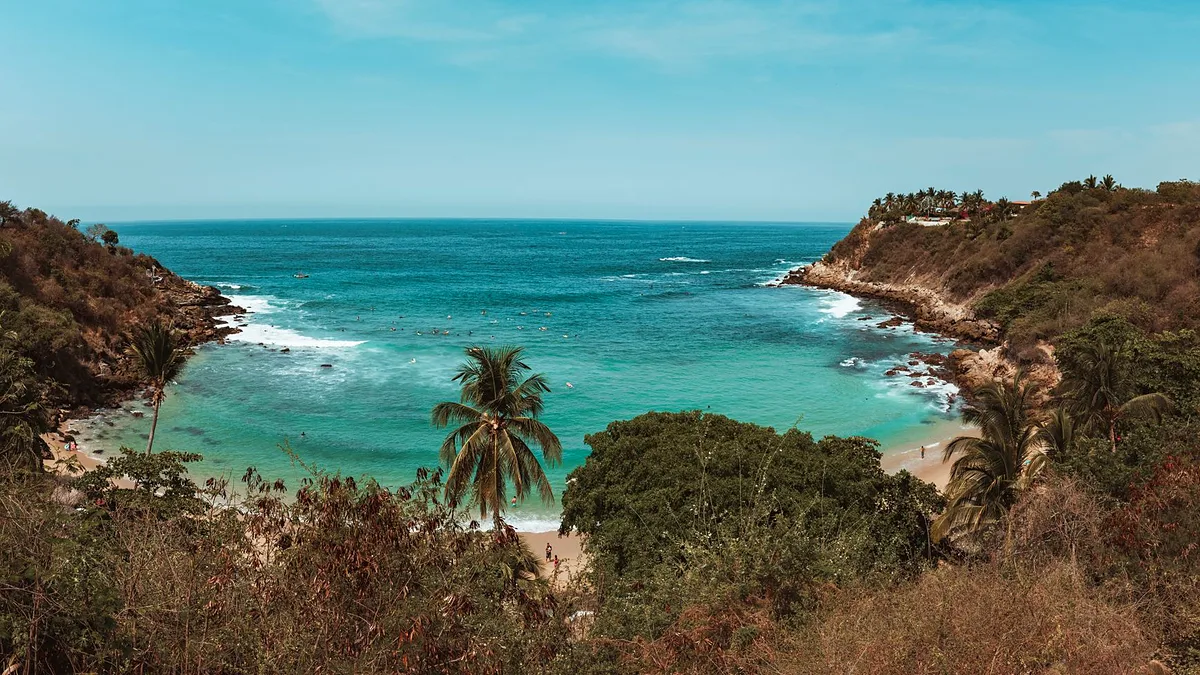

Puerto Escondido built its name on one thing: the wave. But walk two blocks inland from Zicatela and the town gets quieter and stranger in the best way — a courtyard gallery with a dance class going on inside, a hand-painted sign pointing up a stairwell, a bar with no sign that pours one family's mezcal and nothing else.
Late autumn is when that side of town wakes up. Most small studios and galleries shut down through September and October, then reopen in the first week of November with fresh work on the walls. Show up now and you get the art without the January crowd.
Here's what's actually worth your afternoon, which "private" clubs will let you in without a hotel key, and the harvest-season stops that make a November trip different from any other.
Unlimited High-Speed International Travel eSIM
Connect in seconds across 180+ destinations. Instant QR code activation with zero roaming surcharges.

At a Glance: Puerto Escondido in Late Autumn
- Best time to visit: November through the first week of December. Rains are done, rooms are cheap, and studios have reopened.
- Daily budget: 900–2,200 MXN (~$50–120 USD) per person, covering food, local transport and one paid activity.
- Local transport: Urbano pickup trucks and colectivos (12–20 MXN / ~$1 USD), moto-taxis in La Punta (40–60 MXN), and a lot of walking on sand.
- Vibe: Barefoot, unhurried, and slightly chaotic. Doors close at 2pm for comida and reopen around 6pm. Plan around that, not against it.
Casa de la Cultura de Puerto Escondido
The town's official culture house sits on Avenida Hidalgo, a couple of blocks off the main plaza, in a whitewashed building with a courtyard that stays ten degrees cooler than the street outside. There's a small exhibition room, a dance studio, and a rotating schedule of cheap workshops — guitar, painting, folkloric dance — that local families actually use.
Exhibitions lean toward Oaxacan painters and printmakers rather than the beach-sunset stuff sold on the Adoquín. It isn't polished, and that's exactly why it's worth 40 minutes of your morning. You'll often be the only visitor in the room.
- Neighborhood: Centro, on Av. Hidalgo, two blocks from the Plaza Principal
- Cost: Free to walk in; workshops run 350–600 MXN (~$19–33 USD) per month
- Best time of day: Weekday mornings, 9am–1pm, before the heat and the lunch closures
- How to get there: Any Centro-bound urbano from Zicatela (15 MXN / ~$1 USD), or a 10-minute walk from the plaza
Insider tip: The cork bulletin board by the entrance is the real information desk. Workshop schedules, open calls and studio opening nights get pinned there days before they reach Instagram — photograph the whole board before you leave.
La Punta Open Studios and Mural Walls
La Punta is the sandy, unpaved end of Zicatela where the road gives up and the backpackers settle in. Above the surf shops and taco stands, artists rent cheap rooms with good light. In November, doors that stayed shut all autumn start opening again — a ceramicist here, a printmaker there, a guy who paints surfboards and charges accordingly.
Nothing is organized. There is no art walk, no map, no collective schedule. You find it by walking the lanes behind Playa La Punta between 5 and 7pm, when it's finally cool enough to be outside and people are sitting on their steps with a beer.
- Neighborhood: La Punta, the lanes behind the beach and off the main dirt road
- Cost: Free to browse; prints and small pieces 500–2,500 MXN (~$28–139 USD)
- Best time of day: 5–7pm, golden hour, when studios are open and the light is good
- How to get there: Walk the beach from Zicatela (about 25 minutes) or take a moto-taxi from the Adoquín (40–60 MXN)
Insider tip: Ask before photographing a mural or someone's doorway. Plenty of these walls belong to families, not businesses, and a quick "¿puedo?" changes the whole interaction.
Upstairs at Mercado Benito Juárez
The second floor of the Centro market is where Oaxacan families sell textiles, barro negro pottery, tinwork, hammocks and embroidered blouses. Prices sit well below the Adoquín souvenir strip, and the vendors will tell you honestly whether a piece came from a workshop in Ocotlán or a factory in Puebla.
It's not a gallery, but it's where local collectors actually buy. Go for the crafts, then stay for the comedores downstairs, which serve the best cheap food in town.
- Neighborhood: Centro, one block west of the Plaza Principal, off Av. Hidalgo
- Cost: Free entry; textiles 250–1,800 MXN (~$14–100 USD), barro negro 150–900 MXN
- Best time of day: 8am–2pm. Stalls start packing up for comida and the floor empties fast
- How to get there: Five-minute walk from the plaza; any Centro urbano stops nearby
Insider tip: Bring cash. The upstairs vendors don't take cards, and the nearest working ATM is a five-minute walk toward the plaza — with a line on Saturday mornings.
Day Passes at the Private Beach Clubs
Puerto's "private clubs" are mostly hotel beach clubs, and almost every one sells a day pass if you ask at the right hour and it isn't a holiday week. Bacocho is the polished version: pool, loungers, someone bringing you cold drinks, and water calm enough to actually swim in.
Zicatela is the other flavor — surf clubs with board storage, outdoor showers and a crowd that's been in the water since 6am. In late November, midweek, rates are negotiable and the minimum spend often gets waived.
- Neighborhood: Bacocho (north end, 10 minutes by taxi from Centro) and Zicatela
- Cost: 350–700 MXN (~$19–39 USD) per person, usually credited toward food and drink; some ask a 500 MXN minimum spend instead
- Best time of day: Arrive at 10am for a full day, or 3pm to combine it with sunset
- How to get there: Taxi from Centro 90–120 MXN; urbano toward Bacocho about 15 MXN
Insider tip: The Bacocho turtle release happens right around sunset in late November (roughly 5:45–6:15pm) and it's run by local conservation camps, not the hotels. Expect a 150 MXN donation — and book it through a recommended camp, not the first person who approaches you on the sand.
The Back-Room Mezcal Tasting Rooms
There's no sign, no menu and no website for the good ones. Puerto's mezcal scene runs on WhatsApp: you message, they tell you a time, you show up to a room with six stools and a shelf of unlabeled bottles.
The etiquette is simple. You don't order — you taste, you listen, and you say yes or no to the next pour. Expect four to six small glasses, a lot of talk about which village the agave came from, and a bill that's smaller than you feared.
- Neighborhood: Side streets off Av. Hidalgo in Centro, and the lanes behind Zicatela's Adoquín
- Cost: 250–400 MXN (~$14–22 USD) for a tasting flight; bottles to take home 350–900 MXN
- Best time of day: 7–10pm, Thursday to Saturday, when the rooms are actually open
- How to get there: Ask a bartender or your hotel for a contact and a WhatsApp number — this is not a walk-in scene
Insider tip: If someone offers you "the best mezcal in Oaxaca" from an unmarked plastic bottle at 11am on the beach, decline. Real tasting rooms don't need to sell you on the street.
Pluma Hidalgo: Coffee Harvest in the Sierra
An hour up the mountain behind Puerto Escondido, Pluma Hidalgo is a coffee town that most beach visitors never reach. The harvest runs from November into February, which means late autumn is exactly the right window to watch picking, sorting and roasting in the same afternoon.
Several smallholder fincas will cup with you if you arrange it ahead of time. The road climbs through cloud forest, drops fifteen degrees, and smells like wet leaves and woodsmoke the whole way.
- Neighborhood: Pluma Hidalgo, roughly 50km northeast of Puerto Escondido
- Cost: Colectivo 90–130 MXN each way, or a private taxi 800–1,000 MXN round trip; farm tour and cupping 200–400 MXN
- Best time of day: Leave Puerto by 7–8am during harvest (November–January) and be back for dinner
- How to get there: Colectivo from the second-class bus terminal; ask to be dropped at the parque
Insider tip: Bring a light jacket and enough cash for the whole day — there are no ATMs in town. Also confirm the finca is receiving visitors before you commit to the ride; during peak harvest they're working, not hosting.
Where to Eat & Drink Nearby
Mercado Benito Juárez comedores (Centro). The food stalls downstairs are the best value in Puerto Escondido: a tlayuda for 70–110 MXN (~$4–6 USD), memelas for 30–40 MXN, café de olla for 25 MXN. Go before 2pm or the good stalls are cold.
El Cafecito (Zicatela). A long-running breakfast spot where surfers and laptop workers share tables. Chilaquiles or huevos rancheros run 120–190 MXN, smoothies around 80 MXN, and the coffee is strong enough to justify a second cup.
Espadín (Zicatela side of La Punta). Dinner territory, 350–650 MXN a head, with a serious mezcal list and Oaxacan plates that don't apologize for the chilies. Book a table after 8pm or expect to wait.
Practical Logistics & Budget Tips
Getting Around
Urbanos and colectivos cost 12–20 MXN and run along the main coast road until roughly 9pm. Moto-taxis are a La Punta specialty at 40–60 MXN a hop; taxis between Centro and Zicatela are 90–120 MXN. Scooter rentals (350–500 MXN a day) are popular but police checkpoints are real — carry your license and wear a helmet.
Money and Hours
Cash is king. ATMs run dry on weekends and around holidays, so pull pesos on a Tuesday morning. Most galleries and studios take cash or a bank transfer, not cards, and many are closed Monday.
What to Skip
Ignore the souvenir shops along the Adoquín — most stock is imported and priced for people who won't check. Skip gallery "tours" hawked on the beach, timeshare presentations disguised as breakfast invitations, and any midday walk through Centro between 1 and 4pm, when the sun is punishing and everything is shut.
And do not swim at Zicatela. The currents are genuinely deadly; that's why the surfers are there and the swimmers aren't.
Frequently Asked Questions
Are there art galleries in Puerto Escondido?
Yes, but they're small and spread out rather than clustered on one street. Start with Casa de la Cultura in Centro, then walk the lanes behind Playa La Punta, where artist-run studios reopen from early November.
When is the best time to visit Puerto Escondido?
November through early December is the sweet spot: the rains have stopped, prices are still low season, and the cultural calendar restarts. Expect heat and humidity year-round, with the heaviest rain from June to September.
Can you visit Puerto Escondido's beach clubs without staying at the hotel?
Usually yes. Most clubs on Bacocho and Zicatela sell day passes for 350–700 MXN, often credited toward food and drink. Call or message ahead during holiday weeks, when guests get priority.
Do you need a car in Puerto Escondido?
No. Urbanos, colectivos and moto-taxis cover the main strip for a few dollars, and walking the beach between Zicatela and La Punta takes about 25 minutes. A car is only useful for day trips like Pluma Hidalgo.