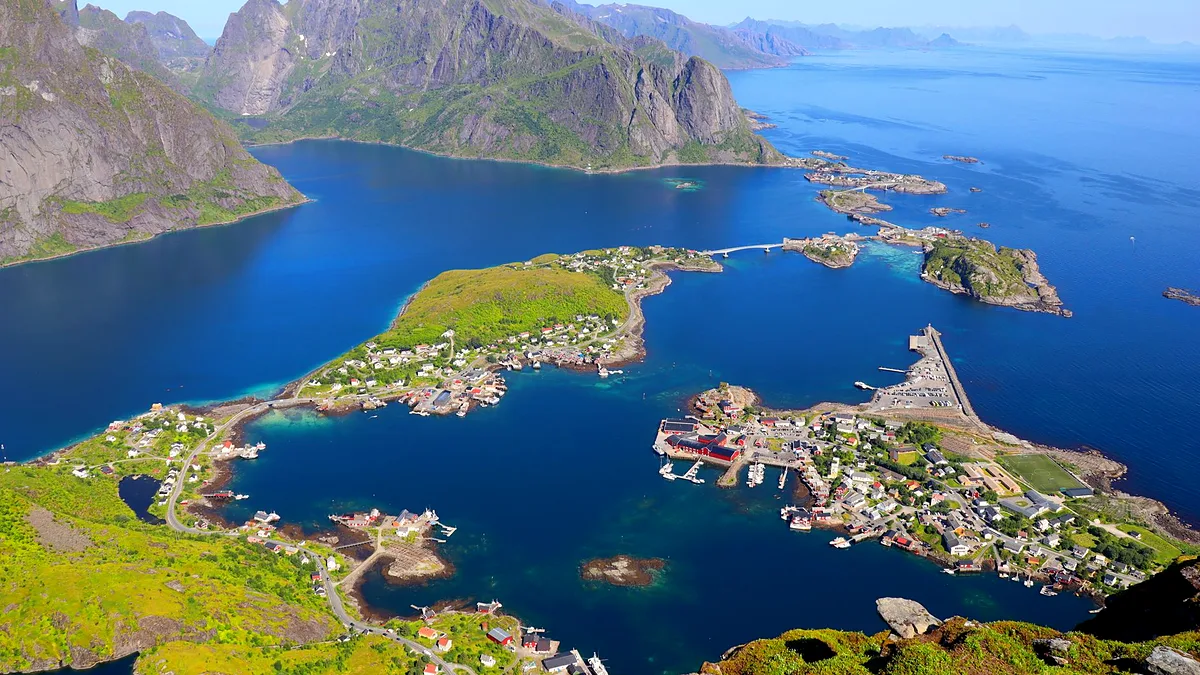

Lofoten is not a museum. People still hang cod on wooden racks in February, still caulk wooden boats, still hammer iron in a shed that smells like a fireplace. That is the whole appeal if you are the sort of traveler who likes things used — chipped enamel, oiled pine, tools with handles worn into the shape of somebody's hand.
This guide skips the photo-op stops. It covers the workshops and heritage sites where something is actually being made, mended or dried, plus the honest logistics: what it costs, when it is open, and where not to waste a morning.
At a Glance: Lofoten for Makers and History Nerds
- Best time to visit: Mid-June to mid-August for full workshop hours and midnight sun. Late September for northern lights and empty roads — but half the sites shut.
- Typical daily budget: NOK 1,300–2,200 per person (~$125–210 USD), assuming you split a rental car two ways and cook some meals.
- Local transport style: Your own wheels. Buses exist but run a handful of times a day, and the E10 is basically the only road.
- General vibe: Working harbors, wet rope, wood smoke. Nobody performs heritage here — it just still runs.
Glasshytta på Vikten: Blow Your Own Bowl on Flakstadøy
Vikten is a cluster of houses on the north coast of Flakstadøy with a beach, a handful of residents and a glass furnace that has been going since the mid-1990s. You walk in off a gravel yard and the heat hits you before you see the kiln. Blowers work at a bench near the door, and in summer you can pay to make your own paperweight or small bowl.
Unlimited High-Speed International Travel eSIM
Connect in seconds across 180+ destinations. Instant QR code activation with zero roaming surcharges.

It is not a slick attraction. The gallery shelves are crowded, the tools look genuinely used, and there are usually seconds for sale at half price because glassblowing is a game of near-misses. Give it an hour; give it two if you are blowing.
- Location: Vikten, Flakstadøy — signposted off the E10 near Napp, about 25 minutes' drive from Leknes.
- Cost: Gallery entry free. Blow-your-own session NOK 500–900 (~$48–86 USD). Finished bowls from NOK 400 (~$38).
- Best time: 11:00–13:00 on a weekday, before the afternoon coach crowd arrives.
- Getting there: Car only, realistically. Follow the E10 to Napp, then the signed side road for roughly 5 km.
Insider tip: Book your blowing slot by email a week ahead in July — walk-ins usually get to watch, not participate. Ask which colours are left before you commit.
Lofotr Viking Museum, Borg: Forge Iron Like It's 900 AD
The reconstructed chieftain's longhouse at Borg is 83 metres of timber and turf, and yes, it is a rebuild rather than an original. The reason to come is what happens inside it: staff card wool, cook over open fire and work a real forge in the outbuilding, turning out nails and knife blanks with a hammer that rings across the field.
It is the rare heritage site that rewards lingering. Walk the longhouse fast, then spend your time in the smithy and the boathouse where a replica boat sits half-finished. That is where the actual knowledge lives.
- Location: Borg, Vestvågøy, about 15 km north of Leknes via signed local roads.
- Cost: Adult entry NOK 260 (~$25 USD); children roughly half.
- Best time: 10:00 at opening, then circle back to the forge mid-afternoon when tour groups are eating.
- Getting there: 15 minutes by car from Leknes. Limited summer bus service from Leknes town centre.
Insider tip: Demo times are chalked on a board by the entrance and change daily. Photograph it on arrival, then plan your loop around the blacksmith rather than the exhibits.
Nusfjord: A Fishing Village That Never Got Demolished
Nusfjord sits at the end of a side road on Flakstadøy, tucked into a narrow bay with red and ochre rorbuer stacked on stilts over black water. It is one of the oldest preserved fishing villages in Norway, and unlike most preserved villages it still smells like a harbor: cod liver oil, tar, wet nets.
You pay a small fee to walk the old core, which funds the upkeep. There is a 19th-century trading post, a fish-oil works and a boathouse with tools left where they landed. Half a day here is generous; two hours is enough if you are quick.
- Location: Nusfjord, eastern Flakstadøy, roughly 20 minutes from Leknes off the E10.
- Cost: NOK 100 (~$10 USD) for the heritage village. Kids free.
- Best time: After 16:00, when the day-trippers leave and the harbor goes silent.
- Getting there: Signed side road off the E10. No practical public transport.
Insider tip: If you can afford one splurge night on this trip, do it here. Staying overnight means you get the village at 07:00 with nobody in it but a couple of gulls.
Å i Lofoten: The Museum That Smells Like Cod
Drive the E10 to its very end and you reach Å, a fishing village so traditional that the stockfish racks are still strung between the houses. The Norwegian Fishing Village Museum here is a cluster of buildings — a rorbu, a forge, a cod-liver-oil factory — that explains how this coast actually fed itself for two centuries.
The oil factory is the standout. Rusting presses, copper vats, handwritten labels on the walls. Combine it with the Stockfish Museum next door on a joint ticket; the two together take about 90 minutes.
- Location: Å, Moskenes municipality, at the southern end of the E10.
- Cost: NOK 150 (~$14 USD) combined ticket for both museums.
- Best time: Opening time, 10:00, before the Reine crowds drift down.
- Getting there: Bus 742 from Leknes runs the E10 south, but only a few times daily. Car is far easier.
Insider tip: The smell genuinely transfers to your jacket, so don't wear your good wool coat. Also, the little shop sells stockfish vacuum-packed — legal to take home to most countries.
KaviarFactory, Henningsvær: An Old Fish Factory Full of Art
Henningsvær's KaviarFactory produced cod roe caviar for decades before two collectors turned the industrial hall into a contemporary art space. The building is the point as much as the art: floor-to-ceiling glass, salt-eaten steel beams, a harbor view that makes half the paintings look redundant.
Exhibitions rotate and quality varies, so check what is on before you pay. But the architecture alone justifies an hour, and it is the best example in Lofoten of heritage reuse that did not turn into a gift shop.
- Location: Henningsvær, on the harbor front past the bridge.
- Cost: Around NOK 150 (~$14 USD) for adults.
- Best time: 11:00–13:00. Note it is usually closed on Mondays and outside summer.
- Getting there: 25 minutes' drive from Svolvær off the E10, signed at the Gimsøy junction. Summer bus from Svolvær.
Insider tip: The famous football pitch is a 10-minute walk on the far side of the harbor. Go after 18:00 — before that you are queuing for a photo of other people queueing for a photo.
Lofotmuseet, Storvågan: The 1800s Trading Post
Storvågan, just outside Kabelvåg, was one of northern Norway's main trading posts long before tourism existed. The museum occupies a merchant's house from the 1800s, with fishermen's cabins, a boat collection and a reconstruction of a jekt — the fat wooden cargo vessel that carried stockfish south to Bergen.
It is quieter and more scholarly than the Viking museum, and better for it. Labels are in Norwegian and English, and staff are happy to explain how the dried-fish trade actually worked.
- Location: Storvågan, about 5 km west of Kabelvåg and 10 minutes from Svolvær.
- Cost: Around NOK 150 (~$14 USD). Ask about the Museum Nord combined ticket.
- Best time: Rainy afternoons — most of it is indoors.
- Getting there: Local bus from Svolvær stops at Storvågan in summer; otherwise a short taxi or a 50-minute walk.
Insider tip: The Galleri Espolin in Kabelvåg, ten minutes away, holds Kaare Espolin Johnson's eerie depictions of Arctic fishing life. Pair the two and you have the best rainy day in the archipelago.
Lofoten Wool, Kvalnes: Yarn From Sheep You Can Meet
On Vestvågøy, a small farm project keeps old Norwegian sheep breeds and turns their fleece into undyed, hand-dyed yarn. It is a genuine working setup rather than a shop — you may well find the owner in boots and a fleece jacket, mid-task, with a barn to show you.
Hours are limited and irregular, so this is one to check before driving out. If it is open, it is the most honest craft stop in Lofoten and a good counterweight to the glassblowing.
- Location: Kvalnes, Vestvågøy, along the E10 between Leknes and the Gimsøy bridge.
- Cost: Free to visit. Skeins run NOK 120–180 (~$11–17 USD).
- Best time: Selected summer days, typically late morning to mid-afternoon.
- Getting there: On the E10, so easy by car; check bus 742 timings if not driving.
Insider tip: Message ahead on social media rather than turning up. This is a farm, not a visitor centre, and they will tell you honestly whether it is worth your detour.
Where to Eat and Drink Nearby
Børsen Spiseri, Svolvær. Set in a restored 1828 trading building on the Svinøya quay, all creaking floors and candlelight. The bacalao is around NOK 375 (~$36 USD) and the fish soup NOK 245 (~$23 USD). Book a window table for the harbor view.
Fiskekrogen, Henningsvær. A rorbu on the water with the day's catch chalked on a board. Fish soup is about NOK 265 (~$25 USD); mains NOK 320–380. Lunch is calmer and cheaper than dinner. Whale appears on some menus — skip it if that is not your thing.
Gammelbua, Reine. A converted boathouse on the quay in Reine, serving stockfish, bacalao and a decent fish burger around NOK 300 (~$29 USD). It gets packed at 19:00 in July; eat at 17:30 or book.
Practical Logistics and Money Tips
Getting there: Fly Widerøe to Leknes or Svolvær via Bodø for the shortest transfer, or take the 3.5-hour ferry from Bodø to Moskenes if you are bringing a car. Evenes airport, three hours' drive north, usually has the cheapest fares.
Car hire: Expect NOK 700–1,000 per day (~$67–95 USD) in summer, and book months ahead. Fuel sits around NOK 23–25 per litre. Distances look tiny on the map but the E10 is slow, so plan two sites a day, not four.
Buses: Routes 742 and 743 link Svolvær, Leknes and Å, but only a few times daily and rarely near workshop hours. Use the Reis app for timetables; buy single tickets on board.
- Save money: Shop at Rema 1000 or Coop Extra in Leknes or Svolvær. A self-catered dinner costs a third of a restaurant one. Alcohol is only sold at Vinmonopolet, with short weekday hours.
- What to skip: The Trollfjord sea-eagle speedboat trips are pricey and mostly about the boat. The souvenir shops around Svolvær harbor sell the same imported knitwear everywhere.
- Honest heads-up: Most workshops run mid-June to mid-August only, often 11:00–16:00, and many close on Sundays. Out of season you will find locked doors and empty furnaces.
- Respect the racks: The stockfish drying frames are private working property. Look, photograph from the road, do not climb or rearrange.
Frequently Asked Questions
Are Lofoten's workshops and heritage sites open year-round?
No. Most craft workshops and several museums operate only from mid-June to mid-August, with shorter hours in May and September. The Viking museum and Lofotmuseet stay open longer but cut their daily hours outside summer.
Do I need to book craft sessions like glassblowing in advance?
Yes, especially in July, when walk-ins usually only get to watch. Email the workshop a week or two ahead, confirm the price, and ask what you will actually be making.
Can you visit these places without a car?
Partly. Å, Nusfjord and Storvågan are reachable by summer bus or local transport, but Glasshytta på Vikten and the smaller farms effectively require a car. If you skip the car, base yourself in Svolvær or Henningsvær and pick two sites.
How much should I budget for museum entries?
Most heritage sites charge NOK 100–260 (~$10–25 USD) per adult, so around NOK 500 (~$48 USD) covers a solid day of three stops. Ask about combined regional tickets — they usually save 20–30 percent.