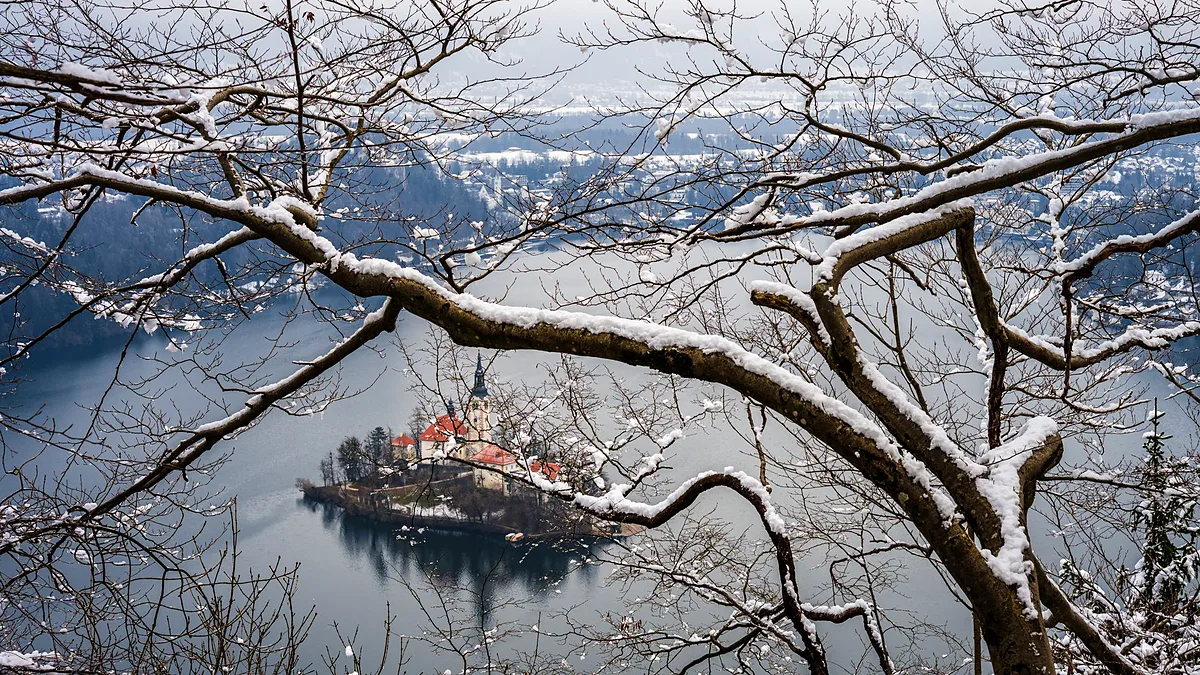

Bled in January is a different town from the one on the postcards. The lake turns grey, the island church fades into fog by half past four, and the pletna boats sit under tarps along the shore. What stays open — and honestly gets better — is the working craft side of the region.
Gorenjska never let its trades die. Bobbin lace, honey gingerbread, hand-forged nails, painted beehive panels and letterpress printing are all still practiced here by people who will happily stop and explain what they're doing. In deep winter you often get these workshops almost to yourself, but you have to plan around short hours and appointment-only schedules. This guide is built around that trade-off.
- Best time to go: Late January to late February — thin crowds, snow on the Karavanke, artisans back at work after the holiday break.
- Daily budget: €55–110 (~$60–120) per person, mid-range, not counting car hire.
- Getting around: Hourly buses to Radovljica, a rented car for Kropa and Bohinj, and everything in Bled town walkable in 20 minutes.
- Vibe: Foggy mornings, woodsmoke, half-empty cafés, and craftspeople with time to talk.
Bled Castle's Print Shop and Craft Rooms
Most people climb to Bled Castle for the terrace view and leave. Don't. The castle keeps a historic printing workshop where a printer hand-sets metal type and pulls a sheet on a cast-iron press, and in winter there's rarely a queue blocking your view of it. The same complex holds a small blacksmith's setup, a wine cellar, and a museum on the castle's 1,000-year history.
Unlimited High-Speed International Travel eSIM
Connect in seconds across 180+ destinations. Instant QR code activation with zero roaming surcharges.

Winter is genuinely the better season here. The light comes in low off the lake, the courtyard is quiet, and the craft demonstrations turn into conversations rather than performances. The catch is staffing: in January and February, live demos typically run weekends only.
- Neighbourhood: Grajska cesta 61, up the hill above the lake's north shore.
- Cost: €18 adult (~$20 USD), €10 students, kids under 7 free. Cash and card both fine.
- Best time: 15:00–16:00, when the day-trippers have gone and the fog is lifting off the water.
- Getting there: A 15-minute uphill walk from the promenade via Grajska cesta; or drive the back road and park at the top lot (limited, roughly €3/hour).
Insider tip: Combined castle-and-gorge tickets are sold in season — skip them in winter, because the Vintgar boardwalks shut from November to mid-April. And ask at the ticket desk which demonstrations are running that day before you pay.
Lectar: Honey Gingerbread Workshop in Radovljica
Lectar has been baking lect — the decorated honey dough that Slovenians give as hearts and love tokens — since the 18th century, and the family still runs a restaurant and cellar workshop on the main street. You mix, roll, cut and ice your own heart, then watch it dry while the owner walks you through the old moulds and painted tin patterns. It takes about an hour and it's hands-down the best souvenir in the region.
The cellar room fits maybe six people at a table, so it feels like a kitchen, not a class. The restaurant above serves proper Gorenjska cooking, which makes this an easy half-day rather than a dash.
- Neighbourhood: Gorenjska cesta 5, Radovljica old town — a 15-minute bus ride from Bled.
- Cost: Workshop €15–25 (~$16–27 USD) per person including materials. Finished hearts in the shop €4–10. Restaurant mains €13–18.
- Best time: Weekday late morning, roughly 10:00–12:00, before the lunch service takes over.
- Getting there: Arriva or Alpetour bus from Bled bus station to Radovljica, roughly hourly, 15 minutes, €2.50–3.50 (~$3–4 USD).
Insider tip: Book a day ahead by phone or email — winter hours shrink to roughly 10:00–18:00, Tuesday to Saturday, and the workshop doesn't run if nobody's signed up. Two minutes away, Šivčeva hiša (Šivec House) is a preserved medieval burgher's home turned gallery; it opens by arrangement in winter, so ask while you're on the street.
The Museum of Apiculture and Painted Beehive Panels
Slovenia's beekeeping heritage is genuinely world-class, and the painted front panels of traditional hives — panjske končnice — are its folk art. The collection inside Radovljica Manor holds more than 200 of them, with scenes that range from religious warnings to sly jokes about neighbours. There's a live hive behind glass and a good explanation of why the Carniolan grey bee ended up exported worldwide.
Be honest with yourself about the season: this museum officially runs April to October and switches to appointment-only in winter. Ring the Gorenjska Museum a few days before you go. Even if it's shut, the manor courtyard and the town's frozen moat walk are worth the trip.
- Neighbourhood: Linhartov trg 1, Radovljica, in the manor at the top of the old town.
- Cost: Around €5 adult (~$5.50 USD); small family discount.
- Best time: Midday, since the manor's stone rooms stay cold.
- Getting there: Same bus as Lectar, then a five-minute walk uphill through the old town.
Insider tip: Painted panels still hang on working hives on farmsteads around Begunje and Kropa — nobody puts them behind glass. Ask at the Radovljica tourist office and someone will point you toward a barn wall worth the detour.
Kropa: The Iron Forging Village
Kropa has been hammering iron since the 14th century, and the village still looks like it: a narrow valley packed with stone forges, water channels, and the tall wooden chimneys of nail-makers' houses. The Kropa Iron Forging Museum (Kovaški muzej) explains the whole chain, from ore to finished nail, and the preserved water-powered forge called Vigenjc Vice still has its hammer in place.
This is the most atmospheric stop on the list and the most likely to let you down logistically. In deep winter the museum keeps weekday hours at best and often opens only if you call. The village itself is free to wander and genuinely doesn't need a ticket.
- Neighbourhood: Kropa 22, about 20 km southeast of Bled — 25 minutes by car.
- Cost: €4–5 (~$5 USD) for the museum; village access free.
- Best time: Weekday mid-morning, and only after you've confirmed it's open.
- Getting there: Bus to Radovljica, then a connecting bus toward Kropa — three or four a day on weekdays, none on Sundays. A taxi from Radovljica runs €18–25 (~$20–27 USD).
Insider tip: Park at the lower lot by the stream and walk up. The upper road narrows to almost nothing and ices over. Wear real boots — the forge yard holds a sheet of ice all winter.
Bobbin Lace: Bled's Lacemakers and the Idrija Option
Slovenian bobbin lace — klekljanje — is UNESCO-listed intangible heritage, and Bled has an active lacemakers' club that keeps the patterns alive. Getting in front of them in January takes a little effort: contact Infocenter Bled at least a week ahead and ask to be connected, because winter sessions are informal and often at a member's kitchen table. That's the whole appeal.
If you want something guaranteed, drive to Idrija instead — about 80 km, 75 minutes — where the lace school has been teaching since 1876 and runs short introductory lessons on weekday mornings. It's a longer day, but you'll actually leave with a motif.
- Neighbourhood: Bled town centre (via Infocenter Bled, Ljubljanska cesta 27); or Čipkarska šola Idrija, Idrija.
- Cost: Demonstrations usually free; a two-hour beginner lesson €20–30 (~$22–33 USD), bobbins €2–4 each.
- Best time: Weekday mornings, when patience is highest and the light is good.
- Getting there: Bled is walkable from anywhere in town; Idrija needs a car or a bus via Ljubljana, which eats most of a day.
Insider tip: A bobbin pillow needs about two hours before the pattern starts making sense. Don't book a one-hour taster and expect a finished piece — and buy a few bobbins as souvenirs, they photograph better than the lace.
Oplen House in Studor, Bohinj
Forty minutes over the ridge from Bled, the village of Studor keeps a preserved 18th-century smokehouse dwelling called Oplenkova hiša — a dark timber house built around an open hearth with no chimney, so the smoke cured the meat and the roof beams along the way. It's one room and a black kitchen, and it explains more about how Alpine Slovenia actually lived than any museum display case.
Manage expectations: it's a 30-minute visit, and in winter it opens strictly by arrangement through Turizem Bohinj. The drive over via Bohinjska Bistrica is beautiful on a clear day and grim in fog.
- Neighbourhood: Studor 16, near Ribčev Laz and Lake Bohinj.
- Cost: €3–4 (~$4 USD) per person.
- Best time: Late morning, paired with a walk at the lake's eastern end.
- Getting there: 30 km by car, roughly 35 minutes. Public transport involves a train to Bohinjska Bistrica plus a local bus — slow in winter.
Insider tip: Don't make the round trip for the house alone. Pair it with a Bohinj cheese or dairy stop and a short lake walk, or you'll spend 80 minutes in the car for half an hour inside.
Where to Eat & Drink Nearby
Slaščičarna Šmon, Bled
The local answer to the famous Bled cream cake (kremšnita). A slice is about €4.50 (~$5 USD) and coffee €2. It's a five-minute walk from the lake and there's no queue in winter.
Gostilna Pri Planincu, Grajska cesta 8, Bled
A pub-ish, wood-panelled room that fills with locals after dark. Order the bograč goulash or the štruklji; mains run €10–15 (~$11–16 USD). Cash is welcome and portions are honest.
Gostilna Lectar, Radovljica
If you're already doing the gingerbread workshop, stay for lunch. Mains €13–18, with a decent list of Slovenian wines by the glass at €4–6. Book ahead on Saturdays.
For a nightcap back in Bled, the small wine bars along Cesta svobode pour local bottles by the glass for €4–7 — a good way to try a Rebula or a Žametovka without committing to a full bottle.
Practical Logistics & Budget Tips
Getting to Bled
Buses from Ljubljana take about 1 hour 20 minutes and cost €7–8 (~$8 USD). By rail, Lesce-Bled station is 4 km out of town with the better connections; Bled Jezero is closer to the lake but has very few winter departures.
Local transit hacks
Buses to Radovljica leave roughly hourly from Bled bus station and are the single most useful line in the area. Ask at your hotel whether they issue the local guest card — many do, and it can cover local rides and museum discounts. For Kropa and Bohinj, rent a car for one day rather than fighting the winter timetable.
Realistic winter costs
| Item | EUR | USD (approx) |
|---|---|---|
| Bled Castle entry | €18 | ~$20 |
| Gingerbread workshop | €15–25 | ~$16–27 |
| Apiculture museum | €5 | ~$5.50 |
| Kropa forge museum | €4–5 | ~$5 |
| Lunch, traditional gostilna | €12–16 | ~$13–17 |
| Bus Bled–Radovljica | €2.50–3.50 | ~$3–4 |
What to skip, honestly
- Vintgar Gorge: the boardwalks close from November to mid-April. Anyone selling you a ticket in January is selling you a closed gate.
- Pletna boat to the island: effectively out of service in deep winter. Don't plan a day around it.
- Horse-drawn fijaker rides: €50+ for 30 minutes along a road you can walk in 20.
- The castle restaurant: the view earns its price, the food doesn't.
- Cream cake at the Park Hotel terrace: a summer ritual. In winter, go to Šmon.
Carry some cash. Small studios and village gostilne still run card-light, and the nearest ATM is often back in Radovljica. Tipping isn't expected — rounding up is plenty.
Frequently Asked Questions
Are Lake Bled's craft workshops open in winter?
Some are: Bled Castle's craft rooms, Lectar's gingerbread workshop and the Kropa forge museum all run reduced winter hours. Most smaller studios switch to by-appointment only between November and March, so call or email three to five days ahead.
Can I visit Lake Bled without a car in winter?
Yes for Bled and Radovljica — hourly buses cover that stretch in about 15 minutes. Kropa and Bohinj are harder, with thin weekday service and almost nothing on Sundays, so budget for a taxi or one day of car hire.
How much does a craft-focused day around Bled cost?
Plan on €45–70 (~$50–76 USD) per person, covering castle entry, two small museums, lunch and local buses. Add €15–30 if you're booking a gingerbread or lace workshop.
What's the best winter month for demonstrations?
Late February is the sweet spot — longer days, snow usually still on the Karavanke, and workshops staffing back up before the March school holidays. January is quietest of all if you don't mind making appointments.