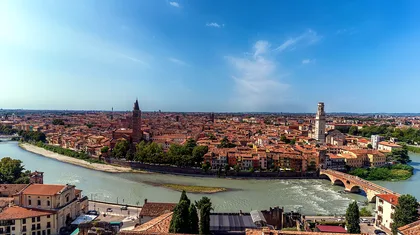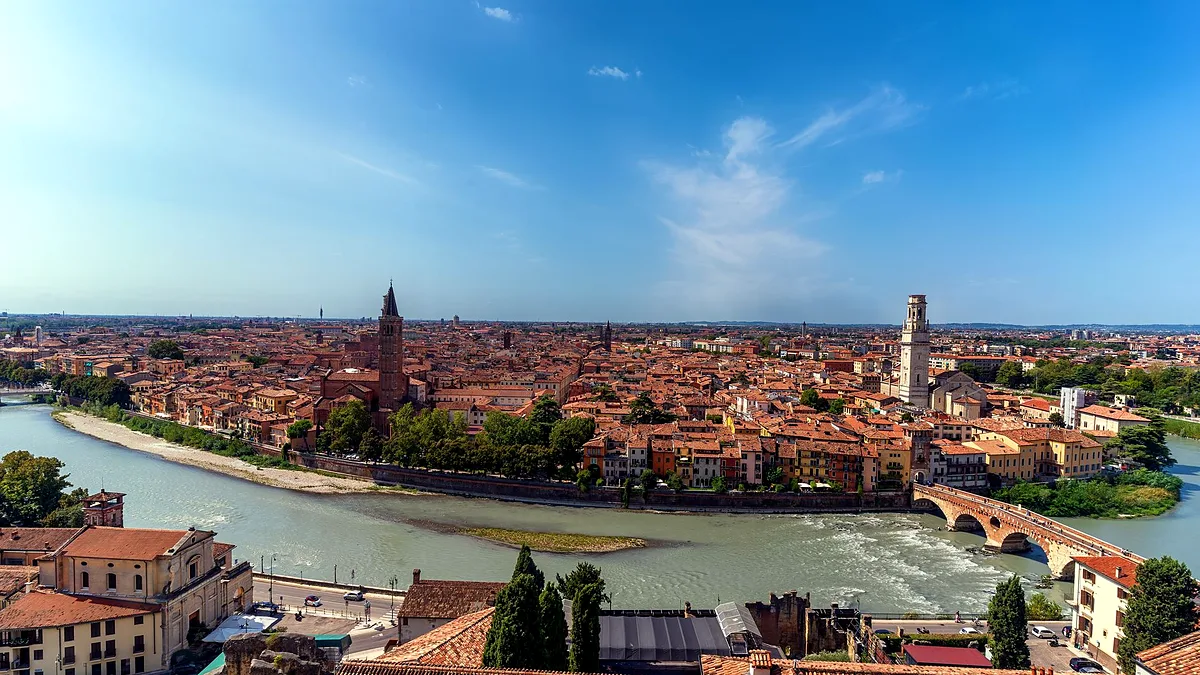

Verona in winter is a different city. The summer queue for Juliet's balcony disappears, fog settles on the Adige, and the red-marble arcades echo with your own footsteps. What stays open, and often gets better, is the stone and the workshops.
This is a walking guide, because Verona's historic center is small. You can cross it end to end in about 25 minutes, which means a winter day here is really a string of short walks between warm interiors: a copper shop under a portico, a Roman museum, a library that has been in business since the 400s.
Bring layers, waterproof shoes and a tolerance for 2–8°C afternoons. Everything below is open in the cold months, and none of it needs a summer crowd to make sense.
Unlimited High-Speed International Travel eSIM
Connect in seconds across 180+ destinations. Instant QR code activation with zero roaming surcharges.

At a Glance: Verona in Winter
- Best time to visit: late November to mid-December for the Christmas market in Piazza dei Signori, or mid-January to February for the cheapest hotels and emptiest museums
- Typical daily budget: €80–130 / ~$87–140 per person, including a mid-range room
- Local transport: mostly your feet; ATV city buses (about €1.50 / ~$1.60 per 90 minutes) for the station run
- Vibe: quiet, porticoed, foggy, generous aperitivo hour, shops shut by 19:30
Castelvecchio and the Scaligero Bridge
Start with the Scaliger fortress because it sets the tone: this is a city that built in brick and then decorated in red marble, and Castelvecchio shows you both. The 14th-century castle now holds Verona's main museum, reworked by architect Carlo Scarpa in the 1960s.
Scarpa's handrails, floor slots and lighting are as much the exhibit as the paintings. In winter you can stand alone in front of Pisanello's Madonna della Quaglia; in July you'll be shoulder to shoulder. Walk out onto the bridge at 16:00 and the fog turns the river orange.
- Neighborhood: Corso Castelvecchio, five minutes from the Arena
- Cost: museum about €6 (~$6.50); the bridge is free, always
- Best time of day: 10:00 opening for the galleries, late afternoon for the bridge
- Getting there: walk straight down Corso Castelvecchio from Piazza Bra
Insider tip: The museum closes Mondays and stops admitting people an hour before closing. Look for the upper-gallery window that frames the bridge — most visitors miss it because they turn back at the first courtyard.
Torre dei Lamberti and Palazzo della Ragione
The 84-metre tower is the highest point in the old town, and winter gives you something summer visitors never get: a view where the fog line cuts across the plain below. A lift does most of the climb, then there's a final stretch of stairs.
Down in the same courtyard, Palazzo della Ragione holds the Achille Forti modern art gallery — small, warm, and usually empty on a weekday afternoon. It's a sensible pairing: one cold climb, one heated room.
- Neighborhood: Cortile Mercato Vecchio, just off Piazza delle Erbe
- Cost: tower about €8 (~$9); gallery roughly €5 (~$5.40); both covered by the VeronaCard
- Best time of day: 15:30 in December, before the light goes
- Getting there: one minute on foot from Piazza delle Erbe
Insider tip: The lift shuts in high wind, and last entry is 20 minutes before closing. Sunset in December is around 16:40, so don't leave the climb for the end of the afternoon.
Biblioteca Capitolare
This one is the reason to come in winter rather than spring. The Biblioteca Capitolare, beside the Duomo, has been collecting since the 5th century and calls itself the oldest library in the world still in continuous operation. You don't browse here — you join a small guided visit and get shown manuscripts.
Groups in January can be three or four people, which means you actually get to ask questions. If you've ever shuffled behind 40 people through a museum, you'll notice the difference immediately.
- Neighborhood: Piazza Duomo 13, northeast edge of the center
- Cost: roughly €8–10 (~$9–11) for a visit
- Best time of day: weekday morning, Tuesday to Friday
- Getting there: six-minute walk from Piazza delle Erbe along Via Duomo
Insider tip: Entry often runs by reservation only, and the library closes Sundays. Ring or email the day before, and don't confuse it with the Duomo complex next door, which sells a separate ticket.
Via Sottoriva: the Artisan Street
Sottoriva means "under the bank," and this porticoed lane was where Verona's wool workers and dyers lived. Today it's the best single street for actual workshops: antique dealers, furniture and frame restorers, print and paper shops, and Osteria Sottoriva at number 9.
The porticoes matter in winter. You can walk the whole street, browse slowly and stay out of the wind and rain, then step out at the river for the view back to Ponte Pietra.
- Neighborhood: Sottoriva, between Ponte Navi and Ponte Pietra
- Cost: free to browse; most pieces are priced for collectors
- Best time of day: 9:30–12:30, Tuesday to Saturday
- Getting there: three minutes north of Piazza delle Erbe
Insider tip: Shutters come down for lunch around 12:30–15:30 and most places close Mondays, so treat this as a morning street. If a door is open with the lights on, walk in — several studios are too small to advertise.
Veronetta, Across the River
Veronetta is the left bank, and it's where the makers who can't afford Piazza delle Erbe rents keep their studios. It's also the student quarter, so you'll find cheap food, printmakers, ceramicists, and more North African and South Asian kitchens than anywhere else in the city.
Base yourself around Via San Giovanni in Valle and Via XX Settembre, then add the Teatro Romano and its archaeology museum — a Roman theatre built into the hillside, with the collection housed in the old convent above it.
- Neighborhood: Veronetta, left bank of the Adige
- Cost: free to wander; Teatro Romano plus museum about €6 (~$6.50)
- Best time of day: weekday afternoon, when studios are open again
- Getting there: walk over Ponte Nuovo from Piazza Bra, about 12 minutes
Insider tip: The stairs up to Castel San Pietro start near the Teatro Romano and cost nothing. Take them if the morning is clear; skip them if the fog is thick, because you'll pay in effort and see white.
San Zeno and the Quiet West Side
San Zeno Maggiore is the church Verona actually loves, and winter is when you can study the 11th-century bronze doors without a tour group blocking them. The panels show scenes from the life of the city's patron saint, and inside hangs Mantegna's San Zeno Altarpiece.
The walk there from Castelvecchio takes about 15 minutes along Corso Castelvecchio, past ordinary shops and a couple of good bakeries. It makes a clean half-day: castle, walk, church, then back into the center for lunch.
- Neighborhood: San Zeno, west of the historic center
- Cost: basilica free; small charge for certain side chapels
- Best time of day: 10:00–12:00 on a weekday
- Getting there: 15-minute walk from Castelvecchio, or buses along Corso Porta Palio
Insider tip: The church closes for lunch like everything else, roughly 12:00–13:30. Dress for it — the interior is genuinely cold and the heating is not worth the name.
Where to Eat and Drink Nearby
Osteria Sottoriva (Via Sottoriva 9) is the cheapest honest lunch in the center. Polenta with baccalà or bigoli with sardines runs €10–15 (~$11–16), served at shared tables under the portico. No bookings for two: turn up at 12:15 or after 14:00.
Trattoria al Pompiere (Vicolo Regina d'Ungheria 5, just off Piazza delle Erbe) is a Veronese institution for bollito with pearà and pastissada de caval. Mains €16–22 (~$17–24). Book a day ahead — the room is small and locals fill it through December.
Antica Bottega del Vino (Vicolo Scudo di Francia 3) pours Amarone by the glass at €6–9 (~$6.50–10) and plates Monte Veronese cheese at about €12 (~$13). Standing at the bar costs roughly half of what a table does. For breakfast, Pasticceria Flego on Via Stella does a cappuccino and a slice of pandoro at the counter for about €4 (~$4.30).
Practical Logistics and Budget Tips
Transport
Everything in the old town is walkable, and you should walk it. From Verona Porta Nuova station, buses 11, 12 and 13 reach Piazza Bra in about 10 minutes; a 90-minute city ticket is around €1.50 (~$1.60) from a tabacchi or by tapping a contactless card on board.
The VeronaCard costs about €22 (~$24) for 24 hours and €27 (~$29) for 48, covering the Arena, Torre dei Lamberti, Castelvecchio and most churches. Buy it at the tourist office on Piazza Bra if you plan three or more paid sites.
Costs and Money-Saving
- Coffee at the counter: €1.30 (~$1.40). The same coffee seated outside on Piazza delle Erbe: triple, plus a cover charge.
- Lunch €12–18, dinner €25–40 with a glass of Valpolicella. Winter doubles in the center run €70–130 (~$76–140).
- Churches usually ask €3 or nothing at all. The real savings come from the VeronaCard and from eating one street back from any piazza.
What to Skip
Skip the paid interior of Casa di Giulietta. It's about €8 (~$9) for a small room and a balcony, and the famous courtyard — gum on the wall, statue queue — is free and takes four minutes. The Juliet industry around it is the one genuinely overhyped thing in Verona.
Also skip the café terraces on the north side of Piazza delle Erbe and the Arena audio guide. If the Torre dei Lamberti lift is closed for wind, don't wait around; head for Castel San Pietro instead.
Winter Heads-Up
Museums and churches mostly close one day a week, usually Monday, and break for lunch between 12:00 and 14:00 or 15:00. Center shops shut by 19:30, so buy what you need before 18:00 and book dinner from 19:00 onward.
Fog is real. It can close the tower lift and delete every view, so schedule viewpoints for the clearest morning of your stay rather than your last day. Cobbles stay damp for hours — flat shoes with grip beat anything stylish.
Frequently Asked Questions
Is Verona worth visiting in winter?
Yes, especially if you care about indoor heritage: Castelvecchio, the Biblioteca Capitolare, San Zeno and the churches all work better without crowds. Expect 2–8°C, foggy mornings and hotel rates roughly 30% below spring.
Is the VeronaCard worth buying?
It is if you visit three or more paid sites. At about €22 for 24 hours, the Arena (€10), Torre dei Lamberti (€8) and Castelvecchio (€6) already beat the price.
Are Verona's artisan workshops open in winter?
Most open Tuesday to Saturday, roughly 9:30–12:30 and 15:00–19:00, and close Mondays. December is their busiest retail month so nearly everything is trading; in late January a few owners take a short holiday.
Where should I stay for a winter walking trip?
Anywhere between Piazza Bra and Piazza delle Erbe. Every stop in this guide is within a 25-minute walk, and you're close to the buses back to Porta Nuova when you leave.