
Verona usually gets treated as a day trip. Visitors arrive from Venice, photograph Juliet's balcony, pay €14 for a panini on Piazza Bra, and are back on the train before dinner. They miss the actual reason Italians come here on purpose: the opera, the wine, and a historic center that stays calm even in August.
What makes Verona work for a budget traveler is that the luxury here is atmospheric rather than expensive. A €10 museum, a €4 spritz on the correct street, a free hilltop terrace at sunset. You can live well in this city for roughly €70–110 per person per day, wine included.
Verona at a Glance
- Best time to visit: mid-April to May, or late September to mid-October. Opera season (June to September) is unforgettable but lifts hotel rates by 30–40 percent.
- Typical daily budget: €70–110 / ~$75–120 per person, covering a decent mid-range room, two proper meals, coffee, and entry fees.
- Getting around: entirely on foot. Verona has no metro, and the historic center is only about 2.5 km across.
- Vibe: elegant and unhurried. Locals dress properly to buy bread, and no one rushes you off a table.
1. The Arena di Verona: Opera Seats for the Price of Dinner
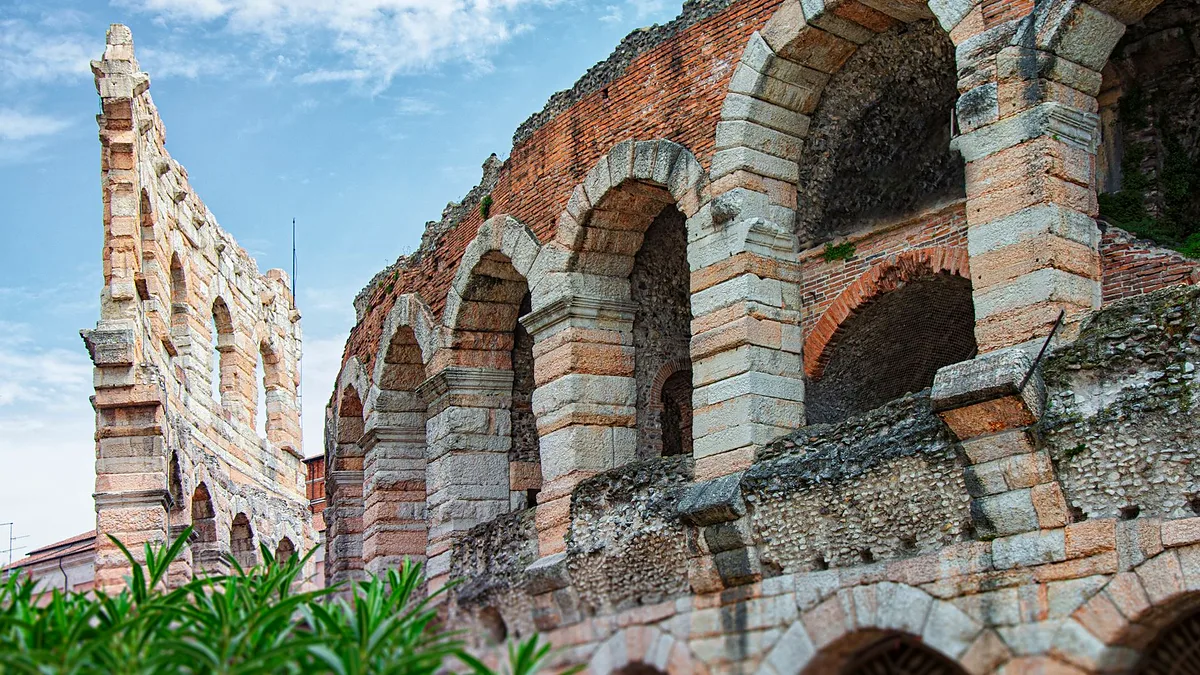
The Arena is a first-century Roman amphitheatre that predates the Colosseum and still holds around 15,000 people. Every summer it becomes the world's largest open-air opera house, with full orchestras and towering sets wheeled into the ancient stone. Sitting on those steps at dusk, with the pink marble of Piazza Bra glowing behind you, is the single best experience in the city.
Unlimited High-Speed International Travel eSIM
Connect in seconds across 180+ destinations. Instant QR code activation with zero roaming surcharges.

The trick is the ticket tier. Unnumbered stone-step seats (gradinata non numerata) start around €26–30 / ~$28–33, while the padded stalls run to €200 and beyond. You are not missing anything important — the acoustics in the Arena are famously good from the top.
- Neighborhood: Piazza Bra, historic center.
- Cost: opera from ~€26 / ~$28; daytime Arena entry ~€10 / ~$11 (free with the VeronaCard).
- Best time: gates open around 20:00, curtain near 21:00. For daytime visits, be there at the 08:30 opening.
- Getting there: a 10-minute walk from Verona Porta Nuova station straight up Corso Porta Nuova.
Insider tip: Rent or bring a cushion. The stone steps hold the day's heat for the first hour and feel like concrete by act two, and a light scarf helps once the breeze comes off the Adige after midnight. Book the cheap tier in spring the day tickets drop — it sells out before the expensive seats do.
2. Piazza delle Erbe and the Torre dei Lamberti
Piazza delle Erbe is Verona's living room and its market, all at once. Mornings bring stalls of peaches, radicchio, mountain cheese and cheap linen; after about 13:00 the crates vanish and the café terraces take over. Look up at the frescoed facades, then find the Arco della Costa, where a whale rib has hung for centuries — legend says it will fall on the first honest person who walks beneath it.
The 84-metre Torre dei Lamberti anchors the square. You take a lift most of the way, then climb a final spiral for the payoff: terracotta roofs, the Arena's oval, and the Adige curving through the city.
- Neighborhood: Piazza delle Erbe, historic center.
- Cost: square free; tower ~€6 / ~$7, free with the VeronaCard.
- Best time: 08:30–10:00 for the market, or 45 minutes before sunset for the view.
- Getting there: a 5-minute walk from Piazza Bra through Via Mazzini, the city's shopping street.
Insider tip: The lift fits about eight people, so queues start building around 11:00. Go at opening, and skip the tower completely if you have already booked the Castel San Pietro terrace — that view is free and arguably better.
3. Piazzale Castel San Pietro: The Free Sunset
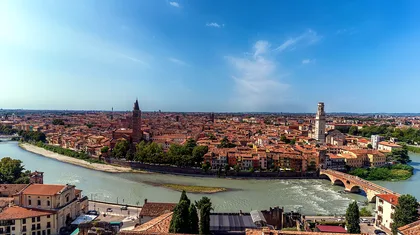
Cross the Roman Ponte Pietra, climb the staircase on the far bank, and you reach the terrace above the river. From here you get the postcard: four bridges, the Duomo's two-tone tower, the Lamberti spire, and hills of cypress behind. It costs nothing, and it is where locals actually take their guests.
- Neighborhood: Veronetta side, above Lungadige Castel San Pietro.
- Cost: free.
- Best time: 30–40 minutes before sunset, then stay for the streetlights.
- Getting there: about 230 steps up from Ponte Pietra, 10 minutes; the climb is shaded but steep.
Insider tip: Buy a €5–6 bottle of Valpolicella from a small shop on Via Sottoriva and drink it on the terrace steps instead of paying €9 a glass at the bar up top. Bring a phone torch for the descent — parts of the staircase are unlit.
4. Via Sottoriva and Veronetta: Aperitivo Without the Bill
Veronetta is the left-bank district where students, nurses and bakers live, and its spine is Via Sottoriva — a long arcaded street of wine bars under stone vaults. A spritz here costs €3–4 / ~$4, roughly half what you pay on Piazza Bra for the same drink in a worse room. It is the easiest place in Verona to feel like a regular by day two.
Wander the side streets toward Via San Giovanni in Valle for secondhand shops, tiny bakeries and hand-painted signboards. This is also where you find the good cheap dinner: bigoli with sardines, baccalà, horse stew if you're brave.
- Neighborhood: Veronetta, left bank of the Adige.
- Cost: spritz €3–4 / ~$4; panini €3–5; a full dinner €15–20.
- Best time: 18:30–20:00, when the arcades fill up.
- Getting there: an 8-minute walk from Piazza delle Erbe, past Sant'Anastasia.
Insider tip: Walk to the far end of the street and turn around. The view back toward Ponte Pietra with the arcades in shadow is the photograph everyone else is queuing for at Juliet's house.
5. Giardino Giusti: A Renaissance Garden for Ten Euros
The Giusti family planted this garden in the 1500s and it still looks like a stage set: a long cypress avenue climbing a hill, a box-hedge labyrinth, a graffiti-scratched grotto, and a terrace framing the city's towers. Goethe came here and wrote about it; you can come for €10 and have the same view with fewer people.
- Neighborhood: Via Giardino Giusti 2, Veronetta.
- Cost: ~€10 / ~$11 for adults.
- Best time: 09:00 opening, or the last two hours before closing (roughly 19:00 in summer, 17:00 in winter).
- Getting there: 15 minutes on foot from Ponte Pietra; bus lines along Via XX Settembre drop you 5 minutes away.
Insider tip: Climb the cypress avenue first while it is still cool, then work back down to the labyrinth. Bring a hat — the upper terraces have almost no shade by midday.
6. Castelvecchio and the Ponte Scaligero
The Scala family built this brick fortress in the 1350s, and Carlo Scarpa's 1960s restoration turned it into one of Italy's most quietly beautiful museums. You come for the frescoes and the Cangrande statue, but mostly for Scarpa's stairs, doorways and sightlines. Entry is about €6, and the museum is small enough to finish in 90 minutes without museum fatigue.
The adjoining Ponte Scaligero is free, open around the clock, and best at golden hour. Standing mid-bridge with the red brick towers on either side and the river below is the shot that makes people ask where you are.
- Neighborhood: Corso Castelvecchio 2, historic center.
- Cost: ~€6 / ~$7, free with the VeronaCard; bridge free.
- Best time: 10:00 for empty galleries, or 18:30–19:30 on the bridge.
- Getting there: a 6-minute walk from Piazza Bra along Corso Castelvecchio.
Insider tip: The museum is closed on Mondays, and the bridge is the go-to spot for wedding photos on Saturday evenings — go early or accept a crowd in your frame.
7. Basilica di San Zeno and the Quiet West Bank
San Zeno is Verona's most loved church and the least crowded of its big sights. The bronze doors carry 48 panels of Old Testament scenes, the rose window is nicknamed the Wheel of Fortune, and Mantegna's altarpiece sits above the main altar in a light that shifts all afternoon.
Entry is €3 and the surrounding district is a normal, lived-in neighborhood of bakeries and bike repair shops. Pair it with Piazza Corrubbio for a coffee, then walk back along the river.
- Neighborhood: San Zeno, west of the center.
- Cost: ~€3 / ~$3.50; free with the VeronaCard.
- Best time: late afternoon, around 17:30–18:30.
- Getting there: a 15-minute walk from Castelvecchio, or buses along Via San Zeno.
Insider tip: Cover your shoulders and knees — this is an active parish, and staff do turn people away at the door in summer shorts.
Where to Eat and Drink Nearby
Antica Bottega del Vino — Vicolo Scudo di Francia 3
A Verona institution a few steps off Piazza delle Erbe, with a wine list the size of a phone book and a marble bar built for solo drinking. Amarone by the glass runs €8–11 / ~$9–12, and the bigoli with ragù or risotto all'Amarone costs €14–18.
Order this: a glass of Valpolicella Superiore and the pastissada de caval if it is on. Book a table for dinner; bar seats at lunch are usually free.
Osteria Sottoriva — Via Sottoriva 9/A
Rustic, loud, and cheap in the best way, tucked under the arcades with long shared tables and a short handwritten menu. Expect €8–13 plates and a house red that arrives in a carafe.
Order this: baccalà mantecato with polenta, then whatever the table next to you is having. Arrive at 12:30 sharp or expect a wait.
Pasticceria Flego — Via Mazzini 21
Verona invented pandoro, and Flego has been baking since the 19th century. A brioche and cappuccino at the bar costs €3.50 / ~$4; sitting at a table roughly doubles it.
Order this: an espresso and a slice of pandoro, standing up, like everyone else.
Practical Logistics and Budget Tips
Do the VeronaCard math first
A 24-hour card costs around €20 (~$22) and a 48-hour around €25 (~$27), covering the Arena daytime visit, Torre dei Lamberti, Castelvecchio, Teatro Romano, San Zeno and most churches. Break-even is about four paid sights in a day, which is easy. If you are here for three days of slow wandering, buy the 48-hour version and front-load the museums.
Getting around and getting in
- Verona is a walking city. A single 90-minute bus ticket runs about €1.60–2 (~$2) from a tabaccaio or contactless on board.
- From Villafranca airport, the Aerobus shuttle to Verona Porta Nuova takes 15 minutes and costs about €7 (~$8). From the station, it is a 20-minute walk to Piazza Bra.
- Bring a refillable bottle. Verona's public fountains (fontanelle) run constantly and the water is good.
- Trains make cheap day trips: Venice in 1 hour 10 minutes, Peschiera del Garda on Lake Garda in 15 minutes.
What a realistic day costs
| Item | Budget-luxury spend |
|---|---|
| Coffee and brioche at the bar | €3.50 / ~$4 |
| Museum or garden entry | €6–10 / ~$7–11 |
| Lunch at an osteria | €12–18 / ~$13–20 |
| Aperitivo in Veronetta | €4–6 / ~$4–7 |
| Dinner with a glass of Amarone | €25–35 / ~$27–38 |
What to skip
- Juliet's balcony: the courtyard and the statue are free and take two minutes. The €6 ticket only buys you a view from a small wooden platform.
- Restaurants with photo menus on Piazza Bra: you are paying for the postcode, not the food. Walk 400 metres inland.
- Horse-drawn carriages: around €60 for 20 minutes of traffic fumes.
- Midday in July and August: the center is shadeless and 36°C. Shift to mornings and after 18:00.
- Verona as a day trip: one night is the minimum. The city is at its best after the tour groups leave on the 17:00 trains.
Frequently Asked Questions
Is Verona expensive to visit?
No — Verona is noticeably cheaper than Venice, Florence or Milan, with a solid mid-range dinner around €25–35 per person. Budget travelers can manage on €70–90 a day without feeling like they are missing out.
How do I get cheap tickets for the Arena di Verona opera?
Buy the unnumbered stone-step seats (gradinata non numerata), which start around €26–30 and go on sale in spring. They sell out first, so book the day tickets are released rather than waiting for the week of the show.
Is the VeronaCard worth buying?
Yes, if you plan to see three or four paid sights in a single day — the Arena, Torre dei Lamberti and Castelvecchio alone cover the cost of the 24-hour card. If you are mostly walking, eating and sitting in squares, skip it.
How many days do you need in Verona?
Two full days covers the Arena, the river, Castelvecchio and a proper dinner in Veronetta without rushing. Add a third if you want the Giardino Giusti, San Zeno and an opera night.