
Valencia has been making things for a very long time. Silk since the 1400s, ceramics since before that, and parade-sized sculptures that get set on fire every March. That long production line is why this city is such a good place to watch craftspeople actually work.
Most visitors tick off the cathedral and the City of Arts and Sciences, then leave. Fair enough. But the better story sits a few streets inland: a Gothic trading hall where silk contracts were signed, a market under a 1928 glass dome, a guild museum with looms that still run, and a portside shipyard that built galleys for the Crown of Aragon.
Everything below is a real, working place you can walk into this week. Prices, hours and the annoying bits are all included, so you don't waste a morning on a locked gate.
Unlimited High-Speed International Travel eSIM
Connect in seconds across 180+ destinations. Instant QR code activation with zero roaming surcharges.

At-a-Glance Snapshot
- Best time to visit: Late April to June, or September to October. March is spectacular but crowded and expensive because of Fallas; August is hot and many workshops shut.
- Typical daily budget: €50–90 / ~$55–100 per person, covering a couple of museum entries, lunch, coffee and transport.
- Local transport style: Walk the old town, use the metro for Manises, and grab a bus or tram for the port and El Cabanyal.
- General vibe: Low-key and hands-on. Nobody rushes you out of a workshop, and most heritage sites cost less than a sandwich.
La Lonja de la Seda: The Room Where Silk Deals Were Signed
Built between 1482 and 1548, this UNESCO-listed hall is where Valencia's silk merchants signed contracts beneath columns that spiral upward like twisted rope. It's the finest Valencian Gothic interior in the city, and 40 minutes covers it properly.
Don't rush past the Consolat del Mar at the back, where maritime disputes were settled, or the orange-tree courtyard. That courtyard is a cool, quiet bench stop in a part of the old town that gets loud by noon.
- Neighborhood: Ciutat Vella, Plaza del Mercado
- Cost: €2 / ~$2.20; free on Sundays and public holidays
- Best time of day: Right at the 9:30 opening, or after 16:30
- Getting there: Metro Xàtiva (L3, L5, L9), then a 6-minute walk
Insider tip: Skip the free Sunday if you can. The €2 weekday ticket buys you a nearly empty Contract Hall; on Sundays the queue forms before the doors open.
Museu de la Seda: Looms That Still Move
The silk guild's old college on Carrer de l'Hospital is part museum, part working workshop. Volunteers operate 18th-century looms upstairs, so you watch punch cards, shuttles and warp threads actually move instead of staring at them behind glass.
The exhibits explain why Valencian silk collapsed: disease hit the mulberry trees, then mechanised mills in the north took the trade. It's more interesting than that sounds. Give it an hour, longer if a weaving demo is running.
- Neighborhood: Ciutat Vella, Carrer de l'Hospital
- Cost: Around €8 / ~$9; reduced roughly €5
- Best time of day: Weekday late morning
- Getting there: Metro Colón (L3, L5, L9), or an 8-minute walk from Plaza de la Virgen
Insider tip: Demos run at set times, not continuously. Ask at reception the moment you arrive and build the rest of your visit around that slot.
Mercado Central: Market Crafts Under a Glass Dome
Roughly 300 stalls sit under a 1928 dome of iron and leaded glass, and the building is the craft here. Painted tiles climb the walls, light filters through the roof, and fishmongers have worked the same aisles for decades. Come for the architecture, stay for olives, salt cod and jamón.
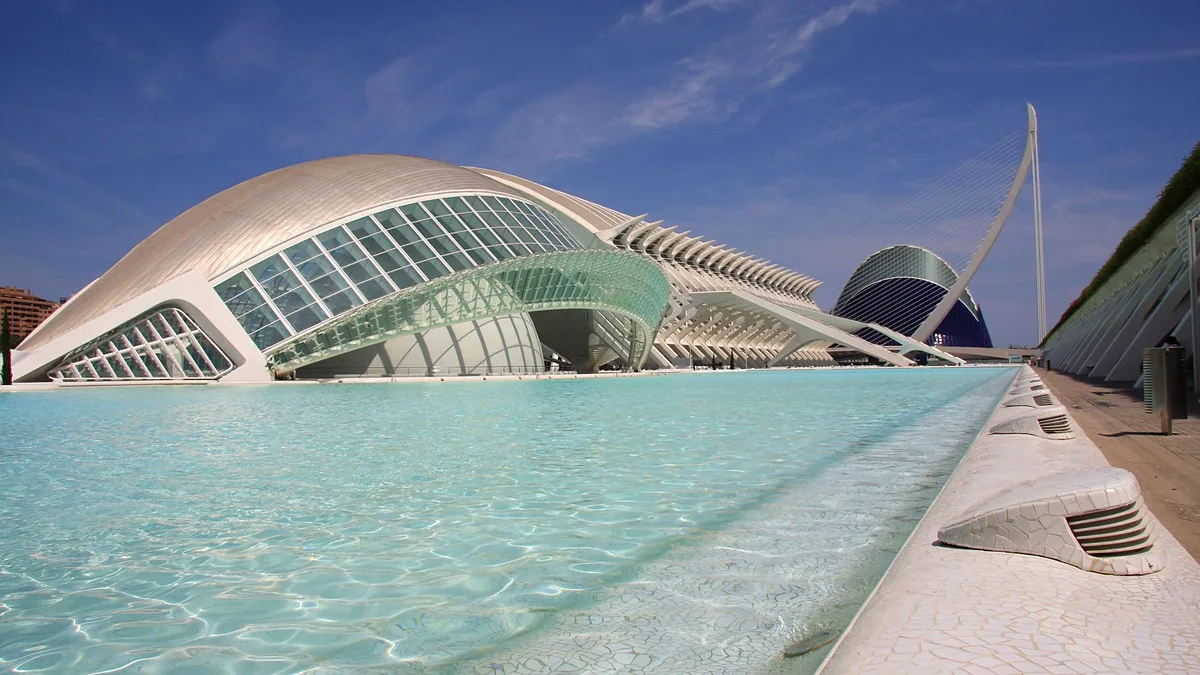
This is also where Valencia's glass story splits in two. The old end is overhead; the new end is Calatrava's tessellated glass at the Hemisfèric, a 25-minute walk south along the old riverbed. See both in one day and the city's design history suddenly makes sense.
- Neighborhood: Ciutat Vella, Plaza del Mercado, next door to La Lonja
- Cost: Free to enter
- Hours: Monday to Saturday roughly 7:30–15:00; closed Sunday
- Getting there: Metro Xàtiva (L3, L5, L9) or buses 4, 6, 11, 26 to Plaza del Ayuntamiento
Insider tip: Arrive between 8:00 and 10:30. Stalls start packing up around 14:15 and the lights go off at 15:00 sharp, and the front row facing the main doors charges more than the aisles behind it.
Museo de Cerámica: The Palace Full of Tiles
Everyone photographs the pink alabaster doorway of the Palacio del Marqués de Dos Aguas. The reason to go inside is the ceramics: Spain's national collection, from Manises lustreware to a kitchen entirely clad in painted tiles.
It's a manageable museum, two floors and no overwhelm, which makes it the perfect primer before you head out to the kilns. Closed Mondays.
- Neighborhood: Eixample, Calle Poeta Querol 2
- Cost: €3 / ~$3.30; free Saturday afternoons and Sundays
- Best time of day: Weekday, 10:00–12:00
- Getting there: Metro Colón (L3, L5, L9) or buses 4, 6, 11
Insider tip: Head to the top floor, where individual tiles are displayed like paintings. Most visitors stop at the ballroom and never see it.
Manises: A Working Kiln Town on the Metro
Manises has fired ceramics since the 14th century and it's still a production town, not a museum piece. The ceramics museum occupies the old railway station building, and family workshops sit between tile factories on the surrounding streets.
You'll find €4 souvenir bowls next to hand-painted pieces at €200, and several workshops let you watch the delicate painting stage without booking anything. Go on a weekday and the kilns are running.
- Neighborhood: Manises, about 8 km west of the centre
- Cost: Museum roughly €2–3; browsing workshops is free
- Best time of day: Tuesday to Thursday, mornings
- Getting there: Metrovalencia L3 or L5 from Xàtiva, 20–25 minutes, zone B ticket
Insider tip: Don't come on a Sunday or in August. Most workshops close for the whole month, and Sunday opening is limited to a couple of showrooms.
Museu Faller and the Falla Artists' Workshops
The Museu Faller exists because of one strange rule: each year Valencians vote to save one figure from each burning, and those ninots end up here. The collection is funny, odd and occasionally unsettling, and it explains the craft behind the festival.
For the live version, head to the Ciutat de l'Artista Faller, the workshop district on the city's northern edge where artists build 20-metre structures from cork, wood and papier-mâché all year. In February and early March the place is loud with saws and paint.
- Neighborhood: Museo Fallero, Plaza Monteolivete 4, beside the City of Arts
- Cost: €2 / ~$2.20; free Sundays and public holidays; closed Monday
- Best time of day: January to March, any weekday
- Getting there: Metro Alameda (L3, L5), then 15 minutes on foot
Insider tip: Walk the museum loop backwards from the newest room. The saved figures are arranged by year, so going in reverse gives you a fast lesson in how the style changed since the 1930s.
Reales Atarazanas: The Gothic Shipyards
These 13th-century yards built and repaired galleys for the Crown of Aragon, and the stone ribs of the arches still look like the hulls they once framed. It's free, usually empty, and one of the most atmospheric spaces in Valencia.
Restoration has been stop-start for years, so sections may be closed and exhibitions rotate. Treat it as a bonus stop on a port-side walk rather than the anchor of your day.
- Neighborhood: El Grau, beside the port, a 10-minute walk from El Cabanyal
- Cost: Free
- Best time of day: Weekday late afternoon
- Getting there: Bus towards the port or El Cabanyal; a taxi from the centre is about €10 / ~$11
Insider tip: Check the current schedule the day before you go. Hours have been irregular for years, and turning up unannounced is how people end up photographing a locked gate.
Where to Eat and Drink Nearby
Central Bar, Mercado Central
Ricard Camarena's counter inside the market serves a short, changing tapas list built from whatever looks best that morning. Expect to spend €15–20 / ~$16–22. Closed Sundays and after the market shuts.
La Pilareta, El Carmen
A 1917 bar on Calle Moro Zeit, famous for clóchinas, the small local mussels in season from roughly April to August. Tapas run €5–9 and a beer is cheap. Budget about €20 / ~$22 per person.
Casa Montaña, El Cabanyal
An 1836 bodega near the port with cured fish, good anchovies and a serious wine list. It's the natural lunch stop after the shipyards. Count on €30–40 / ~$33–44; closed Sunday nights and Mondays.
For something sweet, Horchatería de Santa Catalina at Plaza Santa Catalina 6 pours a proper horchata with fartons for about €4 / ~$4.40.
Practical Logistics and Budget Tips
Buy a SUMA 10 card for about €9 / ~$10. It covers ten journeys across metro, tram and bus in zone A, and it beats paying €1.50–2.00 per single ticket plus a €1 card fee every time.
Ciutat Vella is flat and compact. La Lonja, the Mercado Central and the silk museum form a 10-minute triangle on foot, so don't waste a ticket on a two-stop ride.
| Item | Typical cost |
|---|---|
| La Lonja entry | €2 (free Sundays) |
| Museu de la Seda | ~€8 |
| Ceramics museum (Dos Aguas) | €3 |
| Museu Faller | €2 |
| SUMA 10 travel card | ~€9 |
| Menu del día lunch | €12–16 |
Money-savers: Stack your free-entry days. La Lonja and the Museu Faller are free on Sundays and public holidays, and the ceramics museum is free on Saturday afternoons and Sundays.
What to skip: The València Tourist Card (€15–25 for 24–72 hours) rarely pays off if you're walking the old town and taking a couple of metro trips. Also skip the paella restaurants with photo menus on Plaza de la Reina — walk 10 minutes to Ruzafa or El Cabanyal instead.
Honest heads-up: Several heritage sites in Valencia close on Mondays, and the shipyards keep irregular hours. Check the day before, every time.
Frequently Asked Questions
Do I need to book a craft workshop in Valencia in advance?
For hands-on sessions such as ceramics, glass or silk workshops, yes — book one to two weeks ahead, especially in spring. Museum and heritage visits never need a booking.
Are Valencia's heritage sites free on Sundays?
La Lonja and the Museu Faller are free on Sundays and public holidays, and the ceramics museum is free on Saturday afternoons and Sundays. Expect queues at La Lonja right after opening.
How do I get to the Manises ceramics workshops?
Take Metrovalencia line 3 or 5 from Xàtiva or Àngel Guimerà; the ride takes about 20–25 minutes and crosses into zone B. Buy a zone B ticket or load your SUMA card accordingly.
When can I see the falla artists at work?
The Ciutat de l'Artista Faller is busiest from January to mid-March, with the final two weeks before 19 March completely frantic. Outside that window, many workshops run reduced hours or close entirely.