
Valencia does something Barcelona struggles with: it hands you a world-class city and a proper beach without the €8 beer. Two-Michelin-star kitchens sell weekday lunches for less than a theme-park ticket, the most photographed architecture in Spain costs nothing to walk around, and a plate of the real thing (rabbit, chicken, no chorizo) still lands at about €18 within sight of the sea.
The trick is knowing where the money goes. Valencians spend on lunch, then switch to vermouth, a couple of tapas and a long walk. Copy that rhythm and a mid-range budget starts to feel generous.
What follows is a working plan: seven things genuinely worth your euros, the honest free stuff, and the traps that quietly drain a holiday budget.
Unlimited High-Speed International Travel eSIM
Connect in seconds across 180+ destinations. Instant QR code activation with zero roaming surcharges.

Valencia at a Glance
- Best time to visit: late April to June, and mid-September to late October. Warm sea, thinner crowds, hotel rates 30–40% below July.
- Typical daily budget: €55–€90 per person (~$60–$100 USD) including a mid-range room, one paid attraction and a sit-down lunch.
- Getting around: the historic centre is flat and walkable. Beyond it, Metrovalencia, the EMT buses and the tram cover nearly everything for €1.50 a ride.
- Vibe: big-city culture at beach-town pace. Long lunches, late dinners, very little rushing.
- The freebie that pays for itself: the 9 km Turia Gardens, a former riverbed turned park that cuts clean across the city.
1. City of Arts and Sciences: Futurism for the Price of a Coffee
Santiago Calatrava's white-and-blue complex is the reason half the postcards exist. Walking the tiled channels between the Hemisfèric, the Science Museum and the Oceanogràfic costs nothing, and the light between 19:00 and 21:00 in summer turns the whole site into a giant sculpture garden.
Pay for one thing, not five. The Oceanogràfic is genuinely excellent at roughly €35 (~$38), especially with kids. Otherwise the Science Museum at about €8 (~$9) is the smarter buy, and the exteriors plus the free palm garden inside the Umbracle fill two happy hours.
- Neighbourhood: Quatre Carreres, at the southern end of the Turia Gardens
- Cost: free to wander; Science Museum ~€8 / ~$9; Oceanogràfic ~€35 / ~$38
- Best time: 09:00 for empty photos, or after 19:00 for golden light and locals on rollerblades
- Getting there: Metro L10 to Amado Granell–Montolivet plus a 12-minute walk, or EMT bus 95 from the centre
Insider tip: book the Oceanogràfic online for a weekday slot after 15:00. The aquarium empties out, the queues vanish, and you pay the same price as the 11:00 crush.
2. The Turia Gardens: Nine Kilometres of Free Real Estate
After the catastrophic flood of 1957, Valencia diverted the Turia river and did something most cities would never manage: it left the old riverbed as parkland instead of selling it to developers. The result is a green ribbon running from the Bioparc to the beach, laced with orange trees, running tracks and football pitches.
This is where you get the free version of the city. Rent a bike in Ruzafa for €10–€14 a day, ride the full length in about 90 minutes, and stop wherever the shade looks good.
- Neighbourhood: runs through Campanar, El Carme, La Petxina and Quatre Carreres
- Cost: free; bike hire €10–€14 (~$11–$15) per day, or a Valenbisi weekly pass for about €13 (~$14)
- Best time: 07:00–09:00 for runners and cool air, or an hour before sunset
- Getting there: any metro stop along the park; Porta de la Mar and Alameda are the easiest entry points
Insider tip: the stretch between the Puente de las Flores and the Palau de la Música is where locals actually go. Tour groups cluster near the City of Arts, so head north for the quiet benches.
3. Mercat Central and La Lonja: The €2 Old Town Double
The Mercat Central is the biggest fresh market in Europe by floor area, and it still works as a market rather than a museum. Get there before 11:00 and you will hear the fishmongers calling over the noise of the stalls, under a stained-glass dome that cost more than most cathedrals.
Next door, the Lonja de la Seda is a 15th-century trading hall of twisted stone columns and a palm-tree ceiling, protected by UNESCO. Entry is €2 (~$2.20), and it is free on Sundays and public holidays.
- Neighbourhood: Ciutat Vella, between Plaza del Mercado and Plaza de la Ciudad de las Flores
- Cost: market free; La Lonja €2 / ~$2.20, free Sundays and public holidays
- Best time: 08:00–10:30 on a weekday. Closed Sundays, and the market shuts around 15:00
- Getting there: a 7-minute walk from Plaza de la Reina, or metro L1/L2 to Colón plus 10 minutes
Insider tip: skip the vacuum-packed paella kits near the entrance. Buy the same bomba rice and smoked paprika from a normal stall for a third of the price, and the staff will happily explain how to cook it.
4. El Cabanyal and Las Arenas Beach
El Cabanyal was a fishing quarter long before it was fashionable, and the low tiled houses along Carrer de la Barraca are still the best free architecture walk in the city. Many facades have been restored in the last decade; a few are still peeling, which is part of the appeal.
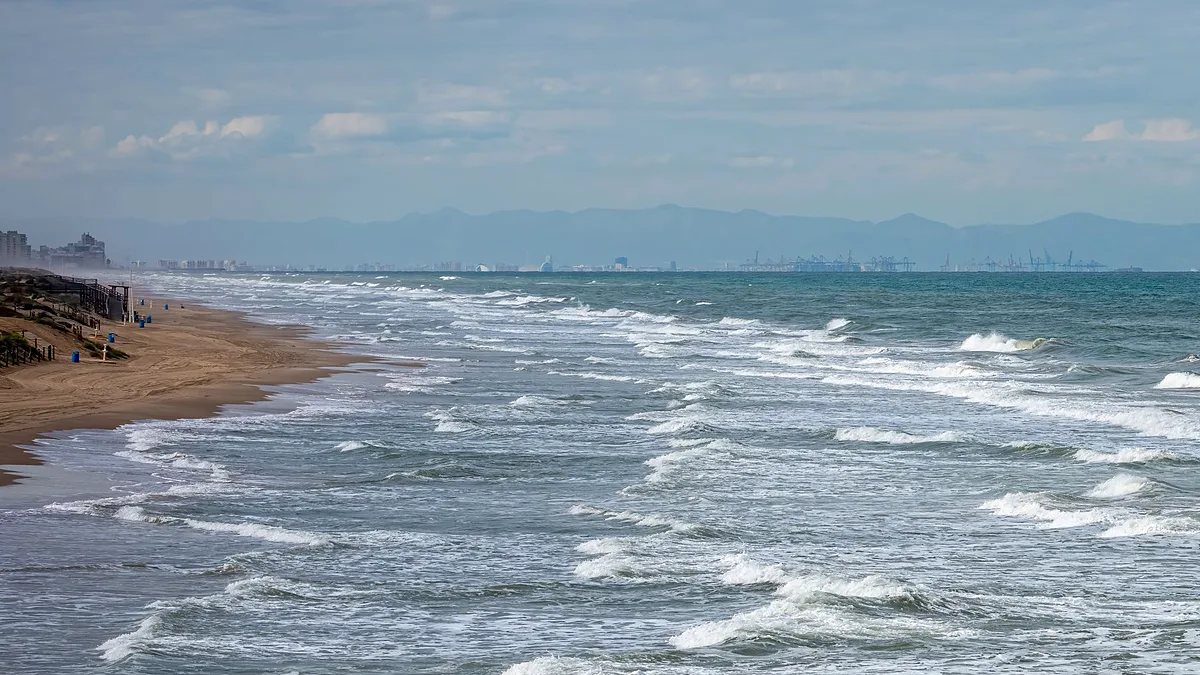
Walk ten minutes east and you hit the sand. Las Arenas and Malvarrosa form one long, wide beach with free showers, lifeguards in season and a promenade that stays pleasantly uncrowded on weekday mornings.
- Neighbourhood: Poblats Marítims, east of the port
- Cost: free; sunbed plus umbrella around €15 (~$16) if you want it
- Best time: swimming before 11:00 or after 18:00 in summer; the beach is at its emptiest in early October
- Getting there: tram T4 to Les Arenes, or metro L5/L7 to Marítim–Serrería plus a 15-minute walk
Insider tip: walk one block inland for lunch. The restaurants on Paseo Neptuno charge a €10 premium for the sea view; Calle de la Reina and Calle del Progrés serve the same rice for less.
5. Albufera and El Palmar: Rice Country on a €5 Boat
Twenty minutes south of the city, the city dissolves into rice fields, reeds and shallow lagoon. Albufera is one of Europe's most important wetlands, and it is also where paella was invented, which makes it an essential stop rather than a day trip afterthought.
Take a 30-minute flat-bottomed boat from the El Palmar jetty for around €5 (~$5.50), then eat lunch on the main street at 14:00 like everyone else. Sunset at the Gola del Pujol, where the lagoon meets the sea, is the best free finale in the region.
- Neighbourhood: El Palmar, inside the Albufera Natural Park
- Cost: boat ~€5 / ~$5.50; paella lunch €18–€25 (~$20–$27) per person
- Best time: arrive 12:30, boat first, lunch at 14:00, sunset at the lagoon
- Getting there: EMT bus 24 from the city centre, roughly 35–40 minutes, €1.50 each way
Insider tip: book the restaurant for 14:00 and ask specifically for paella valenciana with socarrat, the crisp layer at the bottom of the pan. Walk-ins at 14:30 on a Sunday are usually turned away.
6. Ruzafa and El Carme After Dark
Ruzafa is a grid of low buildings around Calle Cuba and Calle Cádiz, packed with vermouth bars, small galleries and the kind of restaurants that would cost double in Madrid. El Carme, on the other side of the old town, is narrower and rougher, with street art on shutters and €2.50 vermouth at the bar.
Both are free to wander and both reward the standing-drinking approach. A glass of vermouth runs €2.50–€3.50, craft beer €4–€5, and a decent Agua de Valencia cocktail €7–€9.
- Neighbourhoods: Ruzafa (south of Gran Via) and El Carme (north of Plaza de la Virgen)
- Cost: €10–€20 (~$11–$22) for a drinks-and-tapas circuit
- Best time: 20:00 for vermouth, 21:30 for dinner. Many kitchens close on Sunday and Monday
- Getting there: metro L3/L5 to Xàtiva for Ruzafa; walk 12 minutes into El Carme from Plaza de la Reina
Insider tip: terrace tables on the plazas add 20–30% to the bill. Order at the bar, take the glass outside, and nobody minds.
7. The Michelin Lunch Hack
Valencia has more Michelin-starred kitchens per euro than almost anywhere in Spain, and they discount hardest at lunch. A flagship tasting menu that costs €150 at night often appears as a €70–€95 midday menu, with the same kitchen and the same produce.
For a cheaper version of the same idea, book the counter at Central Bar inside the Mercat Central, run by Ricard Camarena, where tapas run €2.50–€5. Or take the lunch menu at Canalla Bistro in Ruzafa for around €25–€30 (~$27–$33).
- Neighbourhood: Ciutat Vella and Ruzafa
- Cost: €25–€30 for bistro lunch; €70–€95 (~$76–$103) for a starred midday menu
- Best time: Tuesday to Friday, 13:30 sitting
- Getting there: Central Bar is inside the Mercat Central; Canalla Bistro is a 10-minute walk from Xàtiva metro
Insider tip: reserve two to three weeks ahead and mention any allergies when you book, not at the table. Also note that many Valencian kitchens serve a shorter, cheaper menu at lunch and a longer one at dinner, so a 13:00 booking is where the value is.
Where to Eat and Drink Nearby
Casa Montaña, El Cabanyal
A bodega that has been pouring wine since 1836, with barrels along the wall and a short tapas list built on anchovies, cured tuna and local clams. Budget around €25–€35 (~$27–$38) per person with a glass of wine, and book ahead for weekends.
Central Bar, Mercat Central
Ricard Camarena's market counter serves €2.50–€5 tapas from whatever looked good that morning. It is lunch-only, closed Sundays, and the queue moves fast if you arrive before 13:00.
Horchatería Santa Catalina, Plaza Santa Catalina
The city's most famous horchata, poured since 1836 on a small plaza in the old town. A glass with fartons costs about €3.50 (~$4), and it is the correct mid-afternoon reset after too much walking.
Practical Logistics and Budget Tips
Buy the Bonobus ten-trip ticket for the EMT buses rather than singles, and use the metro from Xàtiva station for the airport at about €4.90 (~$5), which beats a €25–€30 taxi. If you plan four or more paid attractions, the Valencia Tourist Card at roughly €15 for 24 hours or €25 for 72 hours includes public transport and museum discounts.
Remember that tipping is not expected here. Rounding up is generous; 20% is not a thing, and nobody will chase you down the street either way.
One budgeting quirk catches visitors out: unlike Granada, Valencia does not give free tapas with drinks. Every plate is on the bill, so order two or three at a time rather than letting a bar keep bringing food.
What to Skip
- Paella at dinner. Most kitchens fire the rice at lunch only. An evening paella is often pre-cooked and reheated.
- Photo-menu restaurants on Paseo Neptuno. You are paying for the view, not the rice.
- Anything called paella with chorizo. The real version is rabbit, chicken, garrofó beans and sometimes snails.
- The tourist card if you plan to walk the centre and mostly eat. It rarely pays for itself.
- Fallas week (15–19 March). Superb to witness once, brutal on the wallet: room rates can triple.
Frequently Asked Questions
Is Valencia expensive compared to Barcelona?
No. Valencia is generally 20–30% cheaper for hotels, meals and drinks, and a good lunch menu costs €12–€16 instead of €18–€25. The gap is widest on accommodation and cocktails.
How much does a day in Valencia cost?
Budget travellers can manage €40–€55 (~$44–$60) a day with a hostel, market food and free sights. Mid-range visitors spending €55–€90 (~$60–$100) get a private room, one paid attraction and a proper restaurant lunch.
When is the cheapest time to visit Valencia?
Late April to early June and mid-September to late October give you warm weather and noticeably lower hotel rates. Avoid Fallas in March, and note that August is hot, crowded and when some family-run restaurants close for holidays.
Do you need to book restaurants in Valencia?
Yes, for weekend paella lunches, El Palmar arrocerías and anything Michelin-adjacent, ideally two to three weeks ahead. Tapas bars and vermouth counters are walk-in friendly, especially before 20:30.