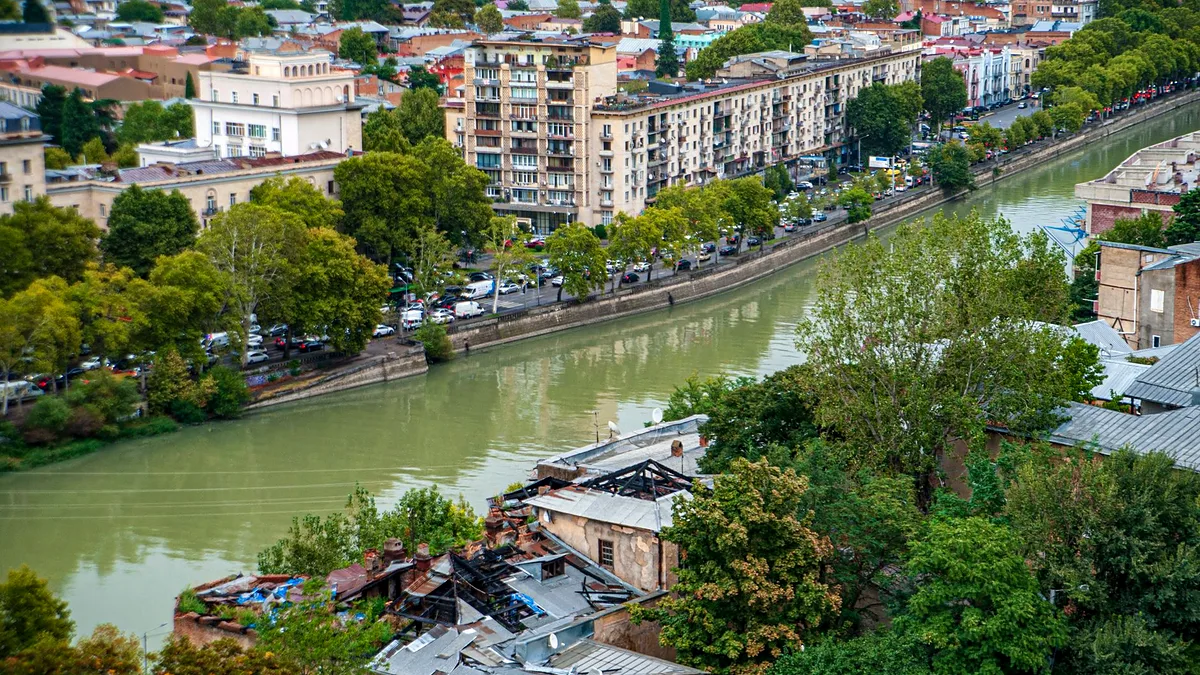

Tbilisi is the rare capital where luxury doesn't come with a credit limit. A private sulfur bath costs less than a round of cocktails in London. A taxi across the river runs about two dollars. And real qvevri wine, aged in buried clay jars, is poured by the glass for the price of a supermarket sandwich in Berlin.
The trick is knowing which splurges actually pay you back. Skip the rooftop bar on Shardeni Street. Put that money into a bathhouse room, a table in a courtyard restaurant, or a bottle from a small family cellar instead. That is where this city genuinely delivers.
Below are seven experiences that feel expensive and aren't, plus where to eat around them, how to move cheaply, and the honest warnings that don't make it into the brochure.
Unlimited High-Speed International Travel eSIM
Connect in seconds across 180+ destinations. Instant QR code activation with zero roaming surcharges.

- Best time to visit: Late April to mid-June and September to October. July and August hit 35°C and the old town becomes a stair-climbing sauna.
- Daily budget for this style of trip: 130–220 GEL (~$48–80) per person, including one paid experience, two real meals and wine.
- Getting around: Metro and buses cost 1 GEL a ride with a Metromoney card; Bolt taxis handle the hills for 5–12 GEL.
- Overall vibe: Crumbling elegance, hot springs, and a wine culture that treats 8,000 years of practice as a casual flex.
1. Take a Private Sulfur Bath in Abanotubani
Abanotubani is the reason Tbilisi exists. The name means warm place, and people have been soaking in these springs since the 5th century. It is not a spa in the polished sense — it is a tiled room underground, hot mineral water, and a scrub that takes a full layer of travel off your shoulders.
The smart-money move is a private room rather than the public bath. For roughly 80–150 GEL (~$30–55) an hour you get a domed room with a stone tub, a shower and a changing area, which two or three people can split. Bring your own towel and flip-flops and the price stays exactly where it started.
- Neighborhood: Abanotubani, Old Town — the cluster of brick domes along Abano Street.
- Cost: Private room 80–150 GEL (~$30–55) per hour; public bath around 5–10 GEL (~$2–4).
- Best time of day: Weekday mornings before 11:00, or after 20:00 when locals finish work.
- How to get there: Metro to Tavisuplebis Moedani, then a 12-minute downhill walk past Sioni Cathedral.
Insider tip: Bathhouse No. 5 is the honest, no-frills public option; Royal Bath is the step-up for private rooms. Agree the massage price at the door before you undress — the vague upsell afterward is where tourists quietly get overcharged.
2. Walk the Sololaki Balconies with a Coffee in Hand
Sololaki is the old merchant quarter, and it holds the best free show in the city. Carved wooden balconies lean over narrow lanes, art nouveau facades peel in three shades of ochre, and grapevines grow out of courtyards that predate the car.
Start at Freedom Square, climb Atoneli Street, cut across to Chonkadze, then loop back down through Bambis Rigi. The whole walk takes about 90 minutes at a slow pace and costs nothing but the coffee you carry with you.
- Neighborhood: Sololaki, between Freedom Square and the Old Town.
- Cost: Free. Coffee runs 6–10 GEL (~$2–4) at the small kiosks and cafés on Kote Abkhazi Street.
- Best time of day: 8:00–11:00, before the shutter-shooting tour groups arrive.
- How to get there: Metro to Tavisuplebis Moedani, then walk uphill for five minutes.
Insider tip: Many Sololaki courtyards are private homes behind locked gates. Look up at the balconies rather than pushing in — the best facades are visible from the street anyway, especially along Dadiani and Chonkadze.
3. A Brutalism Pilgrimage: The Ministry of Highways and the Sky Bridges
Tbilisi is a serious destination for concrete fans, and the headline act is the former Ministry of Highways on Kostava Street. Designed in the 1970s by Giorgi Chakhava and Zurab Jalaghania, it stacks cantilevered blocks in a lattice that looks like it might lift off. It now houses the Bank of Georgia.
From there, ride out to Nutsubidze Plateau, where three 18-storey towers are joined by concrete sky bridges built in the 1970s. You can walk across them and look straight down between buildings. It is free, it is strange, and it is the most photogenic piece of Soviet planning in the Caucasus.
- Neighborhood: Ministry of Highways at 29a Kostava Street (Vera); sky bridges in the 4th micro-district of Nutsubidze Plateau, Saburtalo.
- Cost: Free. A Bolt to Nutsubidze from the center runs 8–12 GEL (~$3–5).
- Best time of day: Late afternoon light, around 17:00–19:00 in summer.
- How to get there: Metro to Rustaveli or Tavisuplebis Moedani for Kostava Street; metro to Delisi plus a 20-minute uphill walk for the sky bridges.
Insider tip: The ministry building is a working office, so security will stop you at the door. The photograph you want is from the pedestrian bridge opposite, not the lobby.
4. The Chronicle of Georgia at Golden Hour
On the hill above the Tbilisi Sea stands a row of 30-metre bronze columns by Zurab Tsereteli, carved with kings, saints and scenes from Georgian history. There is a small chapel between the pillars, and on a clear evening the light turns the whole thing copper.
Almost no one pays to see it, because there is nothing to pay. You turn up, walk the colonnade, and watch the city flatten out below you. It is the closest thing Tbilisi has to a free monument on this scale.
- Neighborhood: Temka, on the ridge above the Tbilisi Sea, northeast of the center.
- Cost: Free, open at all hours.
- Best time of day: One hour before sunset — the columns face the light and the city haze goes gold.
- How to get there: Metro to Guramishvili then a 15-minute uphill walk, or a Bolt from the center for 12–15 GEL (~$5–6).
Insider tip: There is no café, no shop and no shade up there. Bring water, and don't rely on finding a taxi back — order a Bolt before you walk up so you have signal and a pin.
5. Taste Qvevri Wine with the People Who Make It
Georgia has been making wine in buried clay vessels for roughly 8,000 years, and Tbilisi lets you taste the results for less than a mid-range cocktail bar in most European capitals. The wines are amber, tannic and often cloudy — nothing like the supermarket Pinot Grigio you may be expecting.
Two rooms do it best. Vino Underground in Sololaki pours natural wines by the glass and flight, with staff who will happily explain skin contact without making you feel stupid. Poliphonia near Sioni focuses on qvevri production and small family cellars, with tastings starting around 35 GEL.
- Neighborhood: Vino Underground at 12 Bambis Rigi, Sololaki; Poliphonia at 10 Sioni Street, Old Town.
- Cost: Tasting flights 35–70 GEL (~$13–26); glasses 10–18 GEL (~$4–7).
- Best time of day: From 18:00 onward. Arrive early to grab a table without a booking.
- How to get there: Metro to Tavisuplebis Moedani, walk 8 minutes to either spot.
Insider tip: For a cheaper bottle to take home, skip the Old Town gift shops charging double and head to an 8000 Vintages branch, where the same qvevri wines are priced for locals.
6. Fabrika: A Soviet Sewing Factory Turned Design Hub
Fabrika on Egnate Ninoshvili Street was a Soviet sewing factory before it became a hostel, coworking space, courtyard bar and row of small design shops. Entry is free, and the murals alone justify the walk from Marjanishvili metro.
Mornings are calm and good for coffee and a laptop. Evenings bring a young crowd, cheap beer and occasional live music. It is not a museum and it does not pretend to be — the shops sell real things made by real Tbilisi designers.
- Neighborhood: Chugureti, 8 Egnate Ninoshvili Street.
- Cost: Free entry; coffee 8–12 GEL (~$3–4), beer around 8 GEL (~$3).
- Best time of day: 9:00–12:00 for quiet, after 20:00 for atmosphere.
- How to get there: Metro to Marjanishvili, then a 6-minute walk.
Insider tip: It is a working hostel, so the courtyard gets loud late. If you want the place to yourself, go on a weekday morning before the coffee queue forms.
7. Cheap Rides, Big Views: Narikala Cable Car and the Mtatsminda Funicular
The cable car from Rike Park up to Narikala Fortress costs about 3 GEL with a Metromoney card — less than a euro to float over the river and the rooftops. From the top, Narikala Fortress and the Mother Georgia statue are both free to visit.
For a second skyline, take the funicular from Chonkadze Street up to Mtatsminda Park. The park itself costs nothing to enter; only the rides are ticketed. Ride up around dusk, walk the ridge, and take the funicular back down.
- Neighborhood: Rike Park (cable car) in the Old Town; Chonkadze Street (funicular) in Sololaki.
- Cost: Cable car 3 GEL (~$1); funicular around 10 GEL (~$4) each way.
- Best time of day: 18:00–20:00 in summer, when the heat drops and the city lights come on.
- How to get there: Metro to Tavisuplebis Moedani for both, then a short walk to either station.
Insider tip: Buy the Metromoney card at any metro station for 2 GEL, load 10 GEL on it, and you have cheap access to the metro, buses and the cable car all week.
Where to Eat and Drink Nearby
Café Littera — Sololaki
Tucked in the courtyard of the Writers' House on Kote Abkhazi Street, this is the closest Tbilisi gets to fine dining without the bill. Mains run 25–40 GEL (~$9–15), the garden is quiet, and the Georgian classics are done properly. Book ahead for dinner and check the Monday closure.
Shavi Lomi — Chugureti
A local favorite on Amagleba Street, ten minutes from Fabrika. Expect chicken in walnut sauce, heavy doses of tkemali, and mains at 20–35 GEL (~$7–13). It fills up with Georgian families, which is the best review you can get. Reserve or arrive early.
Machakhela — multiple branches
The reliable budget workhorse. Khinkali cost 1.5–2.5 GEL (~$0.60–0.90) each, adjaruli khachapuri around 12 GEL, and a full meal with a beer lands near 25 GEL (~$9). Order five dumplings fewer than you think you need.
Practical Logistics and Budget Tips
- Get a Metromoney card. It costs 2 GEL from any metro station and drops every ride to 1 GEL (~$0.37). Without it you pay cash and fiddly change.
- Use Bolt, not street taxis. Flagged cabs at Freedom Square quote 30 GEL for a 7 GEL ride. The app fixes the price before you get in.
- Airport transfer: bus 337 to the center costs 1.5 GEL (~$0.55); a Bolt is 30–45 GEL (~$11–17).
- Carry cash. Cards work in most restaurants, but bathhouses, markets and marshrutka vans still want notes. Keep 100 GEL on you.
- Tipping: 10% is normal, and some menus already add a service charge. Check the bill before doubling up.
- Wear real shoes. The Old Town is stairs and uneven stone. Sandals are a mistake by day two.
What to Skip
The Shardeni Street restaurant row is priced for tourists and delivers mediocre food. Wine tasting tours sold in Old Town for 100+ GEL cover the same ground as a 40 GEL flight at a bar. And the add-on massage at the bathhouse is usually worth less than the ten minutes it takes.
Frequently Asked Questions
Is Tbilisi expensive for travelers?
No — it is one of the best-value capitals in Europe. A comfortable budget of 130–220 GEL (~$48–80) a day covers a paid experience, two proper meals, wine and transport.
How much does a qvevri wine tasting cost in Tbilisi?
Expect 35–70 GEL (~$13–26) for a flight of five or six wines at a dedicated bar. Bottles to take home start around 20 GEL at wine shops outside the Old Town.
Do I need cash in Tbilisi?
You can use cards almost everywhere, but bathhouses, the Dry Bridge Market and small bakeries prefer cash. Carry 100 GEL and you will never be stuck.
Is Tbilisi walkable?
The center is walkable but vertical, with steep lanes between Sololaki and Abanotubani. Use the 1 GEL metro for longer hops and Bolt for the brutalist sites on the edges of the city.