
Taroudant looks like Marrakech from a distance: the same pink-ochre walls, the same ring of ramparts, the same orange trees dropping fruit onto the road. Then you step through Bab El Kasbah and notice there is no crush of people. On some mornings the whole souk belongs to a dozen shoppers and one very confident cat.
That quiet is exactly why the town's art scene works the way it does. It is personal and slightly accidental — a Chilean painter's private museum on the edge of town, a pasha's palace you can wander with a glass of tea, jewellers still hammering silver in two-square-metre workshops. Almost nothing here is packaged for a coach tour.
This guide covers the places worth asking about, what they cost, and how to get let in. In Taroudant, the good doors are usually closed until you knock.
Unlimited High-Speed International Travel eSIM
Connect in seconds across 180+ destinations. Instant QR code activation with zero roaming surcharges.

At a Glance
- Best time to visit: October to April. March and November are the sweet spots; July and August regularly push past 40°C (104°F).
- Daily budget: 350–600 MAD (~$35–60) for budget travel; 800–1,200 MAD (~$80–120) if you want a riad and a proper sit-down dinner.
- Getting around: Walk inside the walls. Petit taxis run 15–25 MAD (~$1.50–2.50) anywhere in town; you will need a taxi or a car for the out-of-town spots.
- Vibe: A working market town that happens to have beautiful walls. Nobody is performing for visitors.
- Timing traps: Most workshops shut on Friday around midday for prayer, and private collections usually need 24–48 hours notice.
Palais Claudio Bravo: The Museum Nobody Tells You About
The Chilean hyperrealist painter Claudio Bravo bought a shuttered holiday village outside Taroudant in the 1990s and spent the rest of his life filling it with things he loved. The result is a private palace-museum holding work by Picasso, Braque and Giacometti alongside Egyptian and Roman antiquities, plus Bravo's own drawings of crumpled paper and knotted string.
Visits are guided and arranged in advance, which means you will probably be the only person there. A caretaker walks you through cool tiled rooms while you try not to touch anything. It feels less like a museum and more like being let into a very opinionated friend's house.
- Where: On the edge of Taroudant, a short drive from the ramparts. Your riad will know the gate.
- Cost: Budget roughly 100–200 MAD (~$10–20) per person for a guided visit, sometimes more for a small group. Confirm when you book.
- Best time: A weekday morning, when the light in the courtyard is soft and the caretaker is not rushed.
- How to get there: Petit taxi from Place Assarag, about 15–20 minutes including the wait. Agree the round-trip price first (100–150 MAD / ~$10–15).
Insider tip: Ask your accommodation to call at least 48 hours ahead and get a name and a time slot in writing. Turning up unannounced is the single most common mistake visitors make here — and do not photograph the collection without asking first.
Palais Salam: The Pasha's Corridors
Built as a pasha's residence and later converted into a hotel, Palais Salam is the closest thing Taroudant has to a private club you can actually walk into. The corridors go on far longer than they should, with deep carpets, cool zellige and a garden of palms and pool tucked right under the ramparts.
There is a small rotating display of old photographs and objects in one of the salons, but the building itself is the exhibition. Come for the architecture, stay for the shade.
- Where: Inside the walls, a five-minute walk from Place Talmoqart and Bab El Kasbah.
- Cost: Free to walk in, but buy something — a mint tea is 20–30 MAD (~$2–3).
- Best time: Late afternoon, roughly 4–6pm, when the garden stops baking.
- How to get there: On foot. Any local will point you down the alley.
Insider tip: Sit on the far side of the pool, not near the entrance where the staff gather. The garden empties out between 2 and 4pm, which is when you get the place to yourself.
The Silversmiths' Benches in the Covered Souk
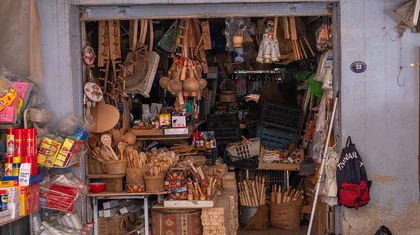
Taroudant is a silver town, and the covered Arab souk just off Place Assarag has a row of jewellers working at benches the size of a school desk. You will see Berber crosses, fibulas and heavy bangles being soldered in front of you, with a lot of melting down and remaking going on behind the glass.
Honest warning: not everything labelled antique is antique. Look at the solder lines and the wear on the clasp — new pieces are suspiciously clean. That said, a hand-made modern bangle here costs a fraction of what a Marrakech medina shop will quote you.
- Where: The covered souk off Place Assarag, along the jewellers' row.
- Cost: Free to browse. Simple silver pieces start around 200 MAD (~$20); good bangles run 400–800 MAD (~$40–80).
- Best time: 9:30am to 12:30pm, before the midday shutdown.
- How to get there: Walk. It is five minutes from anywhere in the medina.
Insider tip: Ask the price of silver by the gram before you fall in love with anything — the phrase is prix du gramme. Bring cash; very few benches take a card, and the ATM queue on Avenue Mohammed V is slow on weekends.
Dar Al Hossoun: The Garden Salon You Book Ahead
About four kilometres out on the Ouled Teima road, Dar Al Hossoun is a low ochre house sitting inside a garden that looks like a botanical experiment: giant cacti, old olives, and paths that keep opening into new courtyards. The walls are hung with art, and the whole place runs at a pace that makes the medina feel frantic.
The restaurant takes non-residents by reservation, which is your ticket in. Go for a long lunch, then walk the garden before you leave.
- Where: Route d'Ouled Teima, roughly 4 km from the ramparts.
- Cost: Expect 200–350 MAD (~$20–35) per person for lunch, without wine.
- Best time: Weekday lunch, 12:30–3pm. Weekends fill up with families from Agadir.
- How to get there: Petit taxi is 40–60 MAD (~$4–6) each way; ask the hotel to arrange a car back so you are not stranded.
Insider tip: Request the table under the oldest olive tree when you book, and mention you are coming for lunch rather than dinner so they seat you in the garden rather than inside.
The Ramparts at Golden Hour: Taroudant's Open-Air Gallery
You get roughly eight kilometres of wall circling the town, and the best stretch runs from Bab El Kasbah along the southern and eastern sides. Outside the walls there are almond and olive groves; inside, the kasbah quarter is a maze of alleys with almost no traffic.
It is not a gallery in any formal sense, but it is the reason photographers keep coming back. The pisé turns from pink to copper in the last hour of light, and the storks nesting on the towers make the whole thing look staged.
- Where: The southern and eastern ramparts; start at Bab El Kasbah.
- Cost: Free.
- Best time: One hour before sunset. Midday light flattens everything.
- How to get there: Walk out of Bab El Kasbah, turn left, and follow the dirt path along the outside of the wall.
Insider tip: Do not attempt the full circuit in summer. Walk 20 minutes out and double back — and remember this is a residential path, not a tourist trail, so keep your camera pointed at the walls rather than at people's doorways.
Argan Cooperatives and Craft Workshops on the Ouled Teima Road
The Souss valley is argan country, and several women's cooperatives along the Ouled Teima and Agadir roads still crack the nuts by hand. The better ones have a small exhibition room where you can watch the process from fruit to oil, with no obligation to buy anything.
This is the closest thing to a living workshop in the area, and it is worth the detour for the smell alone. Just be picky: the ones that welcome a walk-in without a hard pitch are the ones actually run by their members.
- Where: Along the Route d'Agadir and Route d'Ouled Teima, 10–20 km out.
- Cost: Free entry. A jar of amlou (argan, almond and honey spread) runs 60–90 MAD (~$6–9).
- Best time: Weekday mornings, when the cracking is actually happening.
- How to get there: Grand taxi or a hired car; a petit taxi will not want the round trip.
Insider tip: Buy the amlou and skip anything sold as a miracle cure. Check the bottle for a cooperative number or the Argane label — roadside stalls with identical packaging and no labelling are usually reselling bulk oil.
Where to Eat and Drink Nearby
Riad Maryam
A courtyard restaurant in the medina with tiled walls and slow service in the best possible way. Order the lamb tagine with prunes or the chicken pastilla; mains land around 120–200 MAD (~$12–20). Book ahead for dinner in high season.
Cafés on Place Assarag
The main square is where Taroudant actually sits down. A mint tea is 10–15 MAD (~$1–1.50), fresh orange juice is 10 MAD, and msemen with honey costs about 15 MAD. Morning is the best time to watch the market set up around you.
Evening Grills at Place Talmoqart
After dark, the square by Bab El Kasbah fills with charcoal grills and plastic chairs. Go for skewers, bread and a bowl of olives — 50–80 MAD (~$5–8) will feed you properly. Skip the places with photo menus and laminated cards.
Practical Logistics and Budget Tips
Getting there and around
- The nearest airport is Agadir Al Massira (AGA), about 55 km away. A taxi transfer takes 45–60 minutes and costs roughly 300–400 MAD (~$30–40); agree the price before you get in.
- Grand taxis to Agadir run about 60–80 MAD (~$6–8) per seat, filled four to a car. CTM and Supratours buses leave from the station on the edge of town for Agadir and Marrakech.
- Inside the walls, everything is walkable — 25 minutes end to end. Petit taxis cost 15–25 MAD, and meters are rare, so fix the fare first.
- Hiring a car in Agadir runs about 300–400 MAD (~$30–40) a day and makes the out-of-town galleries and cooperatives far easier.
Money and saving
- Withdraw cash at the ATMs on Avenue Mohammed V in the morning. They run dry on weekends and holidays.
- Lunch is where the savings are: 40–70 MAD (~$4–7) for a set plate versus 150+ MAD for dinner.
- A local hammam is 50–100 MAD (~$5–10) including the scrub. Bring your own towel.
- Museums and private collections are cash-only in practice. Keep 300 MAD on you.
What to skip, honestly
Skip the guided spice and argan stops that tour operators bundle into Agadir day trips. The patter is scripted, the prices are triple, and you will waste an hour you could have spent on the ramparts.
Also skip Taroudant as a day trip. Two and a half hours in a car to see three hours of town is a bad trade — stay at least one night and the place changes completely after the coaches leave.
Frequently Asked Questions
Does Taroudant have art galleries?
Yes, but they are small and mostly private. Palais Claudio Bravo is the headline collection, while the medina has jewellers' workshops and occasional exhibitions in the cultural buildings around Place Assarag.
Can you visit Palais Claudio Bravo?
Yes, with prior arrangement. Visits are guided, limited, and usually cost around 100–200 MAD per person, so have your riad or hotel call at least 48 hours ahead.
Is Taroudant worth visiting for art lovers?
It is if you like slow, uncrowded places where you have to knock on doors. If you want big museums with opening hours and audio guides, you will be disappointed — that is Essaouira or Marrakech, not here.
How many days do you need in Taroudant?
Two nights is right. One full day for the medina, the souk and the ramparts at sunset, and a second morning for the out-of-town spots like Dar Al Hossoun and the argan cooperatives.