
Taipei keeps its crafts out in the open. On a November morning you can watch a potter pull a cylinder out of wet clay in Yingge, then ride a gondola up to Maokong where winter tea is still warm from the roasting drum.
Late autumn is the right window for this. The second rice crop comes in, persimmons and ponkan mandarins arrive from Hsinchu and Dongshi, and Dadaocheng's dried-goods shops restock with mushrooms, citrus peel, and longan. The northeast monsoon also shows up, so save the indoor workshops for the drizzly afternoons and walk the old streets when the sky clears.
At a Glance: Late Autumn in Taipei
- Best time to visit: Late October to early December — winter tea harvest, persimmon season, and 20–26°C days.
- Daily budget: NT$1,500–2,500 (~$47–78 USD) for budget travelers; NT$3,500–5,000 (~$110–155 USD) for mid-range with a workshop or two.
- Getting around: MRT plus the TRA commuter rail. Tap an EasyCard (NT$100 deposit, ~$3 USD) on everything, including YouBike and convenience stores.
- Vibe: Slow, hands-on, and slightly damp. Fewer crowds than spring, better prices than New Year.
1. Dadaocheng and Dihua Street
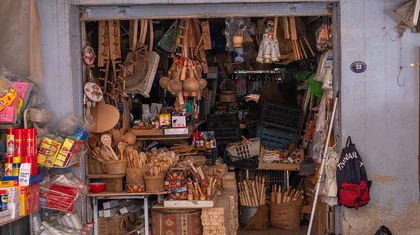
Dihua Street is Taipei's oldest commercial road, and the northern stretch near Minsheng West Road still works like a pantry. Shopkeepers scoop dried scallops from burlap sacks, weigh out shiitake by the catty, and stack late-autumn persimmons and tangerine peel on wooden trays.
Unlimited High-Speed International Travel eSIM
Connect in seconds across 180+ destinations. Instant QR code activation with zero roaming surcharges.

Walk south and the street shifts to ice cream stands and souvenir boxes. Walk north of Minsheng West Road and it turns back into the real thing — century-old shophouses with carved wooden facades, the Xiahai City God Temple tucked into a narrow doorway, and tea merchants who will pour you a cup without asking if you are buying.
- Neighborhood: Datong District
- Cost: Free to walk; expect NT$150–400 (~$5–13 USD) for a bag of dried goods or tea
- Best time: Weekday mornings, 9–11am
- Getting there: MRT Orange Line to Daqiaotou, Exit 1, then a 6-minute walk east to Dihua Street Section 1
Insider tip: Most tourists stop at the first cluster of shops past the temple and never go further. Keep walking north toward the Minquan Road end — prices drop, and the shopkeepers have time to explain what you are looking at.
2. Yingge Ceramics District
Yingge has been firing clay since the early 1800s, and Jianshanpu Road is still lined with more than a hundred ceramics shops and working studios. The Yingge Ceramics Museum gives you the history and the geology in about 90 minutes, then you go make something.
Walk-in wheel-throwing sessions run NT$500–800 (~$16–26 USD) and take about an hour. Hand-building with slab clay is cheaper, around NT$350 (~$11 USD). Your piece gets fired and glazed later — either come back in three to four weeks or pay NT$200–300 (~$6–10 USD) to have it shipped home.
- Neighborhood: Yingge District, New Taipei City
- Cost: Museum NT$80 (~$2.50 USD); workshops NT$350–900
- Best time: Weekday afternoons, 1–4pm
- Getting there: TRA local train from Taipei Main Station to Yingge, about 30 minutes, NT$31–40 (~$1–1.30 USD) with EasyCard, then a 10-minute walk up Wenhua Road
Insider tip: The museum is closed the first Monday of each month, and several studios shut on Tuesdays. Also skip the first block of shops near the station — that is imported mass-market ware, not local work.
3. Maokong Tea District
Maokong is where Taipei's tea comes from, and late October through mid-November is the winter harvest. You can smell the roast before you see the farm — tea masters pan-fire leaves in tilted iron woks, then roll them by hand on cloth.
Several family farms take walk-ins for a 90-minute session where you pick, wither, roll, and brew your own batch, usually NT$500–1,200 (~$16–39 USD) depending on group size. The view down over the Taipei basin from the ridge teahouses is the payoff at sunset.
- Neighborhood: Wenshan District, at the end of the Brown Line
- Cost: Maokong Gondola NT$120 (~$4 USD) each way with EasyCard; tea sessions NT$500–1,200
- Best time: 2–5pm, so you catch the light on the way down
- Getting there: MRT Brown Line to Taipei Zoo, then the gondola; or bus S10 from the station if the cable car queue is long
Insider tip: Ride the gondola up and take the bus down. The downhill queue after 4pm on weekends can hit 45 minutes, and the bus drops you back at the zoo in 20.
4. Lin An Tai Ancestral Home
This is a 1783 Fujian-style courtyard mansion that was taken apart stone by stone when a road was widened in the 1970s, then rebuilt beside Xinsheng Park. Entry is free, and on a weekday morning you might have the whole courtyard to yourself.
Look closely at the wooden screens — they were turned on a lathe, not carved, a technique that was already old when the house was built. The swallowtail roof and the semicircular pond in front follow feng shui rules you can see explained on the small placards.
- Neighborhood: Zhongshan District, beside Xinsheng Park
- Cost: Free
- Best time: 9–11am; closed Mondays
- Getting there: MRT Red Line to Yuanshan, Exit 2, then a 15-minute walk through the park
Insider tip: Pair it with the Taipei Fine Arts Museum next door (NT$30, ~$1 USD) and the weekend craft market at the Yuanshan Expo Park, which runs Saturday and Sunday afternoons.
5. Bopiliao Historic Block and Wanhua
Bopiliao is a surviving Qing-era street of brick arcade houses, restored and free to enter. It is small — 20 minutes if you rush — but the timber shutters, stone lintels, and narrow alleys give you a cleaner picture of old Taipei than any museum model.
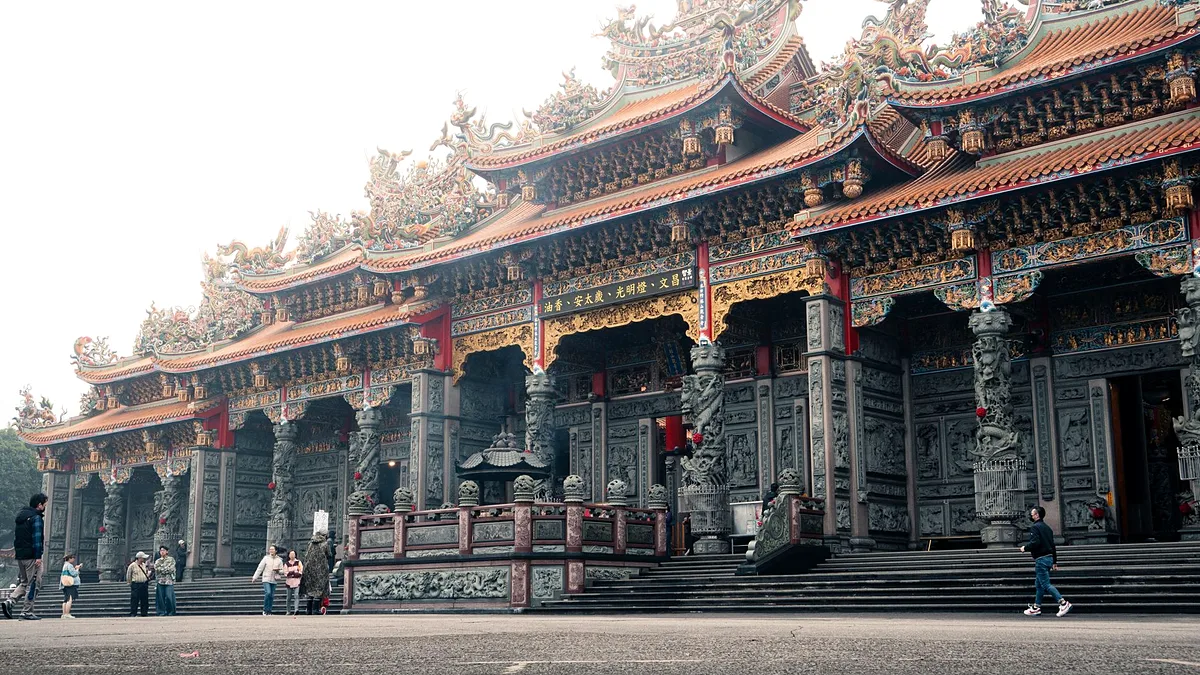
Five minutes away, Longshan Temple has been in continuous use since 1738 and still runs on real ritual: fortune-tellers under the arcade, offerings of fruit and orchid, and a crowd that swells on the 1st and 15th of the lunar month. The lanes around it hold seal-carving and woodblock shops that have been there for decades.
- Neighborhood: Wanhua District
- Cost: Free; a carved stone seal runs NT$300–800 (~$10–26 USD)
- Best time: Early, 9–10am, before school groups arrive
- Getting there: MRT Blue Line to Longshan Temple, Exit 1, then 3 minutes on foot
Insider tip: If you want a seal carved with your name in Chinese, bring the characters written down. Most carvers can do it in 40 minutes while you eat lunch nearby.
6. Songshan Cultural Park and the Taipei Puppet Theater
Songshan is a 1937 tobacco factory turned design park, with brick warehouses, a landscaped pond, and a weekend craft market that leans toward leather, ceramics, and small-batch textiles rather than fridge magnets. It is a good rainy-day stop because most of it is indoors.
Ten minutes north, the Taipei Puppet Theater keeps the glove-puppet tradition of Taiwanese opera alive with a small museum and occasional hands-on workshops. It is cheap, quiet, and genuinely interesting if you have any interest in how a puppet is carved and costumed.
- Neighborhood: Xinyi District (park) and Songshan District (puppet theater)
- Cost: Park free; Puppet Theater NT$50 (~$1.60 USD)
- Best time: Saturday afternoon for the market
- Getting there: MRT Blue Line to Sun Yat-Sen Memorial Hall, Exit 5, 5 minutes on foot
Insider tip: The Eslite Spectrum complex inside the park has a strong craft and design book floor on the upper levels — better browsing than the ground-floor gift shops.
Where to Eat and Drink Nearby
Cisheng Temple Food Stalls (Dadaocheng)
Under the banyan trees at 保安街49巷, a row of old stalls serves pork-rib soup, rice noodles, and braised tofu from about 9am until it sells out. Expect NT$40–120 (~$1.30–4 USD) per dish. Cash only.
Zhou Ji Meat Congee (Wanhua)
A Guangzhou Street institution open from early morning to mid-afternoon. The pork and taro congee is NT$35 and the fried pork is the reason locals queue. Budget NT$100 (~$3 USD) for a full meal.
Yao Yue Tea House (Maokong)
Open around the clock, with outdoor tables facing the valley. A tea set for two with snacks runs NT$600–900 (~$19–28 USD), and nobody hurries you out. It is the best value sunset seat in Taipei.
Practical Logistics and Budget Tips
Buy an EasyCard at any MRT station or convenience store. It covers MRT, city buses (NT$15 per segment), YouBike, and most convenience store purchases, which saves you a lot of coin-fumbling.
A single MRT ride costs NT$20–65 (~$0.65–2 USD). Taxis start at NT$85 (~$2.70 USD) and are reasonable for short hops after dark. If you are staying a full month, the TPASS commuter pass at NT$1,200 gives unlimited metro and bus travel across Taipei, New Taipei, Keelung, and Taoyuan — for a one-week trip it is not worth it.
| Item | Local price | Approx. USD |
|---|---|---|
| MRT single ride | NT$20–65 | $0.65–2 |
| Pottery wheel workshop | NT$500–800 | $16–26 |
| Tea roasting session | NT$500–1,200 | $16–39 |
| Museum entry (most sites) | NT$30–80 | $1–2.50 |
| Street meal | NT$80–180 | $2.50–6 |
What to Skip
Shilin Night Market is the one everyone names and the one most locals avoid — it is crowded, priced for tourists, and a 15-minute walk from the station. Ningxia or Nanjichang get you better food with shorter lines.
Skip any "traditional tea ceremony" sold from a street hawker in Ximending at NT$1,500. The real thing costs a fraction of that in Maokong. And if the sky is grey, skip the Taipei 101 observatory and hike Xiangshan instead — the view is free and arguably better.
One honest warning: heritage houses and the ceramics museum close on Mondays, and Yingge's old street is half-shuttered on weekday mornings. Build your week around that and you will not waste a day.
Frequently Asked Questions
Is Dihua Street worth visiting?
Yes, especially in late autumn when the dried-goods shops are fully stocked with persimmons, mushrooms, and citrus peel. Go on a weekday morning and walk north past Minsheng West Road for the authentic stretch.
Can I do a pottery class in Taipei without booking ahead?
Usually yes in Yingge on a weekday afternoon, when studios along Jianshanpu Road take walk-ins for hand-building and wheel sessions. Weekends and holidays fill up, so call or message a studio a day ahead if you are traveling with a group.
When is tea harvest season in Maokong?
The winter crop is picked from late October to mid-November and is considered the better of the two harvests. Spring tea comes in April and May, so late autumn is the season to visit for roasting demonstrations.
How do I get to Yingge from central Taipei?
Take a TRA local train from Taipei Main Station to Yingge — about 30 minutes and NT$31–40 with an EasyCard. From the station it is a 10-minute walk uphill to the ceramics old street.