
Seoul has a reputation problem. Say "luxury" and most people picture a ₩400,000-a-night suite in Gangnam and a tasting menu with a three-week waitlist. Meanwhile the parts of this city that actually feel expensive cost about the same as a bus ticket.
The trick is where the money goes. In Seoul it goes into texture: a 90-year-old hanok with paper-screen walls, a market stall lit by one bare bulb, a shoe factory rebuilt as a coffee bar. None of that is pricey. All of it feels like it should be.
What follows is the Seoul I send friends to — the good version, the one locals actually use, without the Gangnam markup.
Unlimited High-Speed International Travel eSIM
Connect in seconds across 180+ destinations. Instant QR code activation with zero roaming surcharges.

Seoul at a Glance: What Budget Actually Buys You Here
- Best time to visit: Late September to early November, or April to mid-May. Dry, bright weather and hotel rates roughly 30% below the summer peak.
- Daily budget: ₩90,000–₩150,000 (~$65–$110) per person covers a clean mid-range room shared two ways, three meals, subway rides and one paid attraction.
- Getting around: Subway, almost always. Line 2 is the workhorse loop, Line 3 links the palaces and Bukchon, Line 6 covers the old east side.
- Vibe: Late, loud and mostly cashless — but keep ₩50,000 (~$36) in paper notes for markets.
Gwangjang Market After Dark
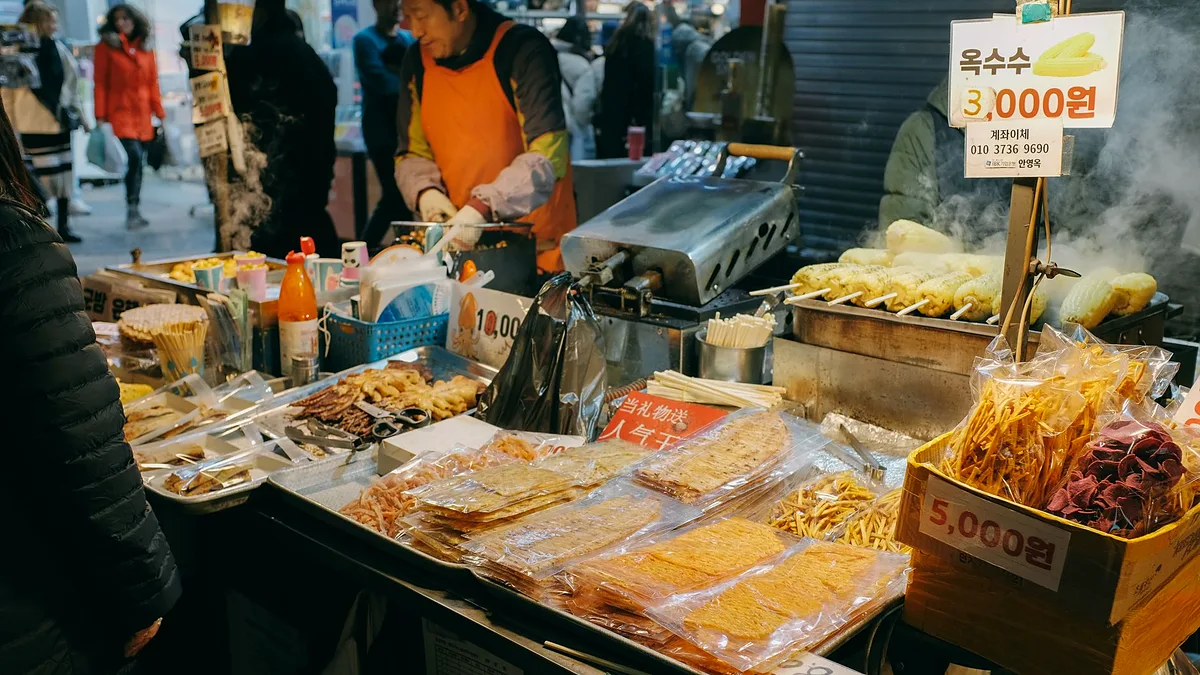
Gwangjang is the closest thing Seoul has to a neon cathedral. After 6pm the aisles fill with blue-white fluorescent light, steam off bindaetteok griddles and the low roar of 200 conversations at once. It is not subtle, and it is not meant to be.
Ignore the queues at the entrance. The good stalls sit four or five aisles in, where the vendors are feeding their own families between orders. A mung bean pancake, a bowl of makgeolli and a plastic stool will cost you less than a coffee in London.
- Neighborhood: Jongno 5-ga, at the top edge of Euljiro.
- Cost: Free to enter; bindaetteok ₩5,000 (~$3.60), mayak gimbap ₩4,000 (~$2.90), makgeolli ₩4,000.
- Best time: Weeknights 6–9pm. Saturday nights are shoulder-to-shoulder.
- Getting there: Jongno 5-ga Station (Line 1), Exit 8 — a 3-minute walk.
Insider tip: Most stalls take cards but add ₩1,000, and a handful are cash-only. The famous filmed-for-TV stall with the long line is fine, not exceptional — walk one aisle deeper and eat where the plastic stools are already full of locals.
Bukchon and Seochon Hanok Alleys on Foot
Bukchon gets photographed to death, and it deserves about half the fuss. The real payoff is walking it before 9am, when the tile roofs are still damp, the shutters are down and the only sound is a delivery scooter.
Then cross to Seochon on the west side of Gyeongbokgung. Fewer tour groups, more actual residents, and a grid of low houses with tiny coffee windows and a 70-year-old rice cake shop on every other block. Same architecture, no crowd.
- Neighborhood: Bukchon (east of the palace), Seochon (west).
- Cost: Free to walk. Gyeongbokgung Palace entry ₩3,000 (~$2.20); closed Tuesdays.
- Best time: 7:30–9:30am any day. The light is best just after sunrise.
- Getting there: Anguk Station (Line 3), Exit 2 for Bukchon; Gyeongbokgung Station (Line 3), Exit 2 for Seochon.
Insider tip: Bukchon is a working residential neighborhood with posted quiet hours and staff on the main slope asking groups to keep it down. Skip the crowded Bukchon-ro 11-gil climb and take any parallel alley one street north — same view, no elbows.
Ikseon-dong: Tea in a 100-Year-Old Hanok
Ikseon-dong is a 1920s hanok block that somehow survived the bulldozers and turned into the city's best small-scale café district. The alleys are barely wide enough for two people, and most buildings still have their original timber frames.
Go for tea, not lunch. A pot of ssanghwa or a bowl of patbingsu in a converted courtyard costs ₩7,000–₩12,000 and buys you 90 minutes of the quietest seat in central Seoul.
- Neighborhood: Jongno 3-ga, between Jongmyo and the Cheonggyecheon stream.
- Cost: No entry fee; tea and dessert ₩7,000–₩12,000 (~$5–$9).
- Best time: Weekday 2–5pm, when the lunch crowd clears and the lanterns come on.
- Getting there: Jongno 3-ga Station (Lines 1, 3, 5), Exit 6 — 4 minutes on foot.
Insider tip: Most hanok cafés seat 8 to 12 people and use a paper sign-up sheet by the door instead of a queue, so write your name down and wander the block rather than standing there. Shoes come off in about half of them — wear socks you would not be embarrassed by.
Sewoon Sangga and the Euljiro Nogari Alleys
Sewoon Sangga is a 1968 electronics and print arcade designed as a city inside a building, complete with an elevated walkway. Half of it is still machine shops and lighting suppliers; the other half is studios, rooftop views and a coffee scene that moved in quietly.
At night the surrounding backstreets turn into the nogari alleys — plastic crates, grilled dried pollack, cheap beer and office workers in rolled-up shirtsleeves. It looks like a film set and costs like a food court.
- Neighborhood: Euljiro, around Jongno Techno Mart and Sewoon Plaza.
- Cost: Free to wander; beer plus a nogari set runs ₩15,000–₩20,000 (~$11–$15) for two.
- Best time: 7pm to midnight, Tuesday to Thursday. Friday and Saturday are packed.
- Getting there: Euljiro 3-ga Station (Lines 2, 3), Exit 3 or 4.
Insider tip: Find the outdoor stair or elevator up to the Sewoon rooftop walkway — the view runs straight to Namsan, it is free, and it is almost always empty. The print shops below are working businesses, so ask before photographing anyone at a machine.
Seongsu-dong: Shoe Factories Turned Concept Stores
Seongsu used to be shoe factories and printing presses. The presses are still there, wedged between concept stores, and that contrast is the whole appeal — a designer handbag shop next door to a guy resoling boots.
Come for the coffee and the architecture, not the shopping. Most of the big brand flagships are free to enter, air-conditioned and genuinely well designed, which makes them a solid rainy-day substitute for a paid museum.
- Neighborhood: Seongsu-dong 1-ga and 2-ga, east of the Han River.
- Cost: Free entry; filter coffee ₩6,500–₩8,000 (~$5–$6).
- Best time: Weekday afternoon. Weekend queues at the famous cafés hit 40 minutes.
- Getting there: Seongsu Station (Line 2), Exit 3, then walk north off the main drag.
Insider tip: The Instagram-famous warehouse cafés on the main street are fine, but the interesting blocks are one or two streets back toward the river, where actual workshops still operate. Skip the paid pop-ups charging ₩20,000 for three rooms of neon.
Dongmyo Flea Market: Vintage on the Cheap
Dongmyo is where Seoul's vintage actually lives. Two thousand-odd vendors lay out used clothes, old cameras, cassette players and military surplus on tarps along the street and under the overpass.
Half of it is genuine junk. The other half is why people fly in from Tokyo with empty suitcases. Bring cash, bring patience, and go early — the best pieces leave before lunch.
- Neighborhood: Dongmyo and Sungin-dong, east of Dongdaemun.
- Cost: Free to browse; T-shirts ₩5,000 (~$3.60), vintage jackets ₩20,000–₩45,000, denim around ₩30,000.
- Best time: Saturday 9am–1pm is the full market; Sundays are thinner.
- Getting there: Dongmyo Station (Lines 1, 6), Exit 2, then follow the crowd right.
Insider tip: Almost nobody takes cards here and there are no ATMs inside the market — withdraw cash at the station first. Asking for ₩2,000 off is normal; haggling to half price is not.
Where to Eat and Drink Nearby
Seoul's best food is rarely the most expensive. These three are the ones I keep going back to, and none of them will wreck a daily budget.
Myeongdong Kyoja
Hand-cut kalguksu in a clear anchovy broth, plus some of the best dumplings in the city. The menu has four items and has not changed in decades. Expect a 10–15 minute queue at lunch; it moves fast.
Cost: ₩11,000 (~$8) for noodles, ₩12,000 for mandu. Where: Myeongdong 2-ga, near Myeongdong Station (Line 4), Exit 8.
Jangchung-dong Jokbal Alley
A single block of pig's-trotter restaurants doing the same thing since the 1960s. Order jokbal for two and you get a mountain of meat, lettuce and shrimp paste for less than one main course downtown.
Cost: ₩35,000–₩40,000 (~$25–$29) feeds two to three. Where: Jangchung-dong, 5 minutes from Dongguk University Station (Line 3), Exit 6.
Noryangjin Fish Market
Pick a fish downstairs, pay a restaurant upstairs to slice it, and eat it with soju at a plastic table. It is the loudest, freshest, best-value seafood meal in Seoul, and it runs around the clock.
Cost: ₩20,000–₩35,000 (~$15–$25) for fish plus prep fees, depending on what you buy. Where: Noryangjin Station (Line 1), Exit 1, via the pedestrian bridge.
Practical Logistics and Budget Tips
Transit
Skip taxis from Incheon. The AREX airport train reaches Seoul Station in 43 minutes for about ₩11,000 (~$8), against ₩70,000-plus for a cab. Buy a T-Money card at any convenience store for ₩2,500–₩4,000, load as you go, and tap it on subways, buses and most taxis.
Staying five days or more? The short-term Climate Card is the better deal — roughly ₩5,000 for one day up to ₩20,000 for seven days (~$3.60–$15) for unlimited subway and bus rides. Prices are posted at the airport information desk and subway customer centers.
Money
Seoul is close to cashless, but markets, flea markets and small noodle shops are not. Carry ₩50,000–₩70,000 in notes and use card everywhere else.
Claim your VAT back. Purchases over ₩30,000 at participating stores qualify, and the refund kiosks in Myeongdong and at Incheon are quick — plenty of visitors leave ₩20,000–₩50,000 on the table by not bothering.
What to skip
- N Seoul Tower observatory (~₩21,000 / $16): the view from Naksan Park or the Sewoon rooftop is free and better framed.
- Myeongdong street food: ₩8,000 for a cheese skewer that costs ₩3,000 in Gwangjang. It is fine; it is just not good value.
- Hotel breakfast: ₩25,000–₩35,000 for eggs when a ₩4,000 rice roll and ₩2,000 coffee from a convenience store will do.
- Palace-side hanbok rentals: ₩20,000–₩35,000 for two hours. The free palace entry it unlocks is only worth ₩3,000, so rent it for the photos, not to save money.
Frequently Asked Questions
Is Seoul expensive for travelers?
No — it is one of the better-value major cities in Asia, sitting well below Tokyo and Singapore on food and transport. A comfortable mid-range day lands around ₩90,000–₩150,000 (~$65–$110) per person.
How much does a budget day in Seoul cost?
A lean day of hostel bed, convenience-store breakfast, market lunch, one paid attraction and subway rides runs about ₩60,000–₩80,000 (~$43–$58). Add a private hotel room and sit-down dinners and you are comfortably over ₩120,000.
What is the cheapest way to get around Seoul?
The subway, without question — ₩1,400 (~$1) base fare per ride, or unlimited travel with a Climate Card. Buses cost the same and are often quicker for short cross-town hops.
Do I need cash in Seoul?
Mostly no, but markets, flea markets and small family restaurants are still cash-first. Carry around ₩50,000 in notes and you will never be stuck.