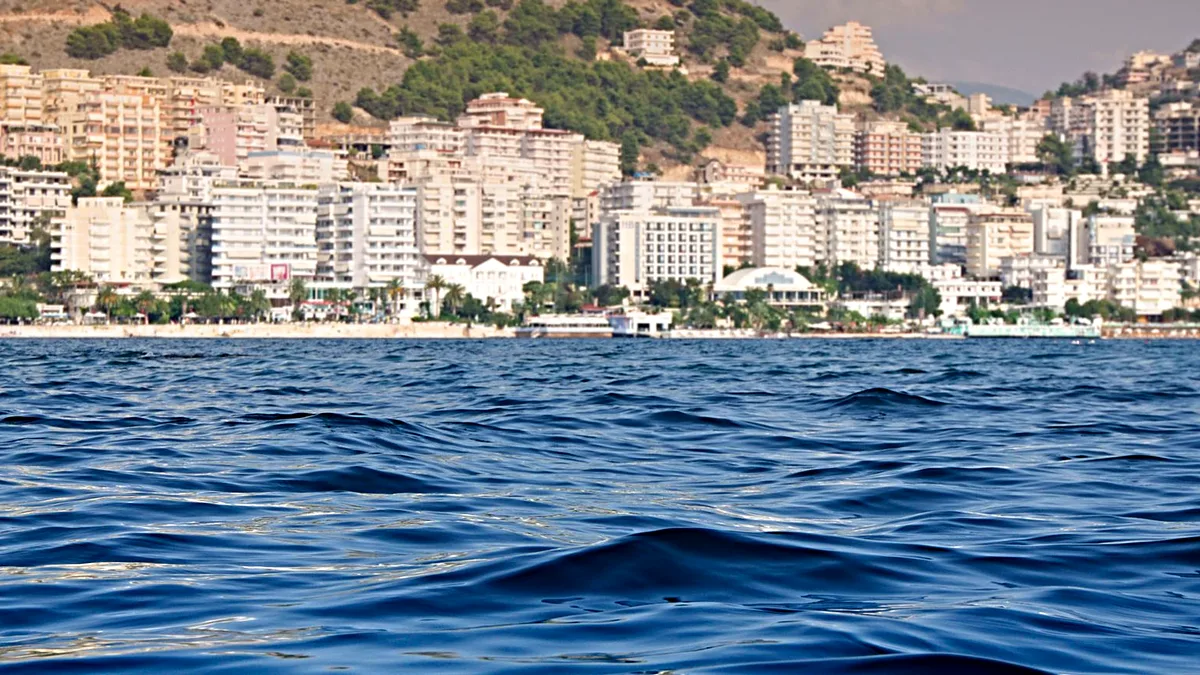

Sarandë in August is a wall of shoulders and sunscreen. Sarandë in January is a working town of about 20,000 people, and the sea is still that impossible Ionian blue.
That's the trade this guide is built on. The views, the ruins and the seafood don't change with the calendar — only the price and the queues do. A sea-view double that runs €160 a night in July goes for €50–60 in February, and you can walk into restaurants that turn people away in summer.
You will give up guaranteed sunshine and open beach bars, especially from November to March. What you get back is a cheaper, quieter, more honest version of the Albanian Riviera. Here's how to play it.
Unlimited High-Speed International Travel eSIM
Connect in seconds across 180+ destinations. Instant QR code activation with zero roaming surcharges.

The Winter Snapshot
- Best time to go: Late April–June and September–October for warm water at shoulder-season prices. December–February for maximum quiet (8–16°C, rain, roughly half the seafront shut).
- Daily budget: 6,000–11,000 ALL (~$63–116 USD) per person, covering a good double room, sit-down meals, coffee and one trip out of town.
- Getting around: No trains, no metro. Central Sarandë is entirely walkable; furgons and buses handle Ksamil, Butrint and Gjirokastër.
- Vibe: An unfussy seaside town with a concrete-and-pebble waterfront, UNESCO ruins 20 minutes south, and a coffee culture that runs on its own clock.
1. Lëkurësi Castle: Sunset on a Hill, Free to Wander
The ruined castle on the ridge above town is the single best free thing in Sarandë. You get the whole bay from above, Corfu sitting on the horizon like a grey whale, and the Ksamil islands scattered below. In winter, you'll likely have the terraces to yourself.
There's a restaurant inside the walls, and it is the classic high-low move: order one coffee or a glass of wine at sunset, then eat dinner cheaply back in town. The kitchen's grilled lamb is good but priced for the view.
- Neighborhood: Kodra e Lëkurësit, directly above central Sarandë.
- Cost: Free to enter the castle grounds. Restaurant mains 900–1,400 ALL (~$9.50–15 USD).
- Best time: 60–90 minutes before sunset, any month.
- Getting there: Walk up via the stone path from the back of town (40–50 minutes), or take a taxi for 800–1,000 ALL (~$8.50–10.50 USD) each way.
Insider tip: The taxi road is a long, looping hairpin; the old stone footpath behind Rruga Skënderbeu cuts the walk in half. Bring a torch if you're coming down after dark in winter, because the streetlights don't cover the whole path.
2. Butrint National Park: UNESCO Without the Crowds
Twenty minutes south of Sarandë is the one thing in Albania that genuinely deserves the word 'ancient'. Butrint has been occupied for over 2,500 years — Greek, Roman, Byzantine, Venetian — and the layers are stacked almost on top of each other between a lake and a lagoon.
In summer you shuffle along in a line. In winter you can stand alone in a Roman theatre while rain ticks off the stone seats, which is worth every euro you saved on the hotel.
- Neighborhood / area: Butrint, near Ksamil, roughly 20 km south of Sarandë.
- Cost: 700 ALL (~$7.50 USD) in low season; 1,000 ALL in summer. Under-12s free.
- Best time: Right at opening, 8:00. Winter closing is around 16:00, with last entry an hour before.
- Getting there: Take the Ksamil furgon from Sarandë bus station (about 150 ALL / ~$1.60 USD), ask the driver for Butrint, and walk 400 m from the main road. Taxi is 2,500–3,000 ALL return.
Insider tip: Walk the site clockwise — theatre, baptistery, great basilica, museum, then finish at the Vivari Channel. The baptistery mosaics are sometimes covered with sand or plastic in wet weather for protection; ask a guard politely and they may uncover a section if the ground is dry.
3. The Blue Eye Spring (Syri i Kaltër)
Thirty-five metres deep, ice-cold, and so clear the rocks look close enough to touch. The Blue Eye is a karst spring that pushes out a shocking volume of water, and the surrounding oak forest is dripping and green in winter.
It's a modest stop — an hour including the walk — but it pairs well with a half-day loop inland. Entry is pocket change, and the small café usually stays open on weekends.
- Neighborhood / area: Near Muzinë village, on the road toward Gjirokastër, about 25 km from Sarandë.
- Cost: Around 50 ALL (~$0.55 USD) plus parking. Taxi round trip 4,000–5,000 ALL (~$42–53 USD).
- Best time: Weekday mornings. Winter water sits at 10–13°C, so nobody is swimming.
- Getting there: Take any furgon toward Gjirokastër and ask to be dropped at the Syri i Kaltër turning (about 200 ALL), then walk roughly 2 km on asphalt.
Insider tip: Most visitors photograph the platform by the road and leave. Follow the forest path upstream for 15 minutes instead — you get the spring from a quieter boardwalk and, in winter, total silence.
4. Ksamil and Mirror Beach: An Empty Riviera
In July, Ksamil is sunbeds wedged six deep on white sand. In February it's a half-built resort village with shutters down and a sea so clear you can count pebbles at four metres. Walking the coast road between Ksamil and the beaches north of it is genuinely spectacular when nobody else is doing it.
Treat this as the low-cost, high-reward morning: pack a byrek and a bottle of water, walk, and be back in Sarandë for a late lunch. Swimming is possible on mild, sunny days in late April or October, not in January.
- Neighborhood / area: Ksamil village and the coastal stretch toward Butrint.
- Cost: Free. Sunbeds in season run 500–1,000 ALL (~$5.30–10.50 USD); in winter there are none.
- Best time: Morning light, before the wind picks up around midday.
- Getting there: Ksamil furgon from Sarandë bus station, 150–200 ALL, roughly 25 minutes.
Insider tip: Winter buses are sparse and the last return to Sarandë can leave as early as 16:00. Confirm the time with your driver on the way out — don't assume a bus will appear later.
5. The Promenade to the Forty Saints Monastery
Sarandë's seafront walk (Rruga Jonianet and its continuation) is where the town actually lives. Winter mornings bring pensioners doing laps, fishermen arguing, and a few cafés that stay open year-round because locals need them.
For a leg-stretch, climb to the ruined Monastery of the Forty Saints on the hill behind town. There's almost nothing left structurally, but the view down over the bay is the best free photograph in Sarandë.
- Neighborhood: Waterfront promenade, then the hill directly north-east of the centre.
- Cost: Free. A coffee on the promenade is 100–150 ALL (~$1–1.60 USD).
- Best time: Early morning for the walk, late afternoon for the light.
- Getting there: On foot from anywhere central. The monastery track starts above town and takes 40–50 minutes uphill.
Insider tip: Pick a clear day and take the unmarked concrete steps you'll find just past the water tank above the upper streets — it's a shorter, steeper route than the vehicle road, but the surface is loose in places.
6. Gjirokastër: The Stone City Day Trip
An hour and a bit inland sits a UNESCO city of slate roofs and cobbled alleys stacked on a hillside. In winter, mist sits in the valley and the place looks like it was drawn rather than built.
The castle is the headline — a vast, windswept shell with a captured Italian aircraft inside and a view over the Drino valley. The old bazaar below it is where you buy qifqi (baked rice balls), gliko (fruit preserve) and a very good coffee for the price of a bus ticket.
- Neighborhood / area: Gjirokastër old town and castle hill, about 60 km inland.
- Cost: Bus 400 ALL each way (~$4.20 USD); castle entry 400 ALL; Ethnographic Museum 200 ALL.
- Best time: Leave Sarandë on the 07:00–08:00 departure and return mid-afternoon.
- Getting there: Furgons and buses from Sarandë bus station, roughly hourly in the morning, 1h15 journey.
Insider tip: Check the last return bus the moment you arrive — winter timetables shrink and the 17:00 can quietly become a 15:30. Sit on the right side heading up for the valley views.
Where to Eat and Drink Nearby
Sirena — the waterfront seafood standard
On the northern stretch of the promenade, this is the sort of place where the fish is priced by weight and the waiter tells you honestly when something isn't worth ordering that day. Winter lunch for two with a carafe of house white lands around 3,500–4,500 ALL (~$37–47 USD).
Order the grilled sea bream or sea bass, a plate of horta (wild greens) and bread. Skip the frozen prawns and anything described as 'international' — you're 200 m from the boats.
Insider tip: Ask the price per kilo before you point at a fish. Winter catch varies and nobody wants a €60 surprise with their lunch.
The byrek counters on Rruga Skënderbeu
Sarandë's best-value breakfast is a flaky triangle of spinach-and-cheese byrek from a hole-in-the-wall bakery, eaten standing up with a small macchiato. Budget 100–150 ALL (~$1–1.60 USD) for the pastry and 100 ALL for the coffee.
Go before 10:00. By mid-morning the trays are empty and the shutters come down.
Insider tip: Pay in cash and have small notes ready — several of these counters don't take cards and can't break a 5,000 lek note at 8am.
The grill houses on Rruga Flamurit
Away from the sea, inland streets have unmarked grill rooms with plastic chairs, a charcoal fire and no English menu. This is where you eat qofte, grilled chicken and a chopped salad for 1,000–1,400 ALL (~$10.50–15 USD) a head, including bread and a drink.
It's not luxurious. It is, however, the meal you'll still be thinking about on the flight home.
Insider tip: Look for the places with local men smoking outside at 13:00 — that's your quality signal. Cash only, and the kitchen usually closes by 21:00 in winter.
Practical Logistics and Budget Tips
- Walk everything central. Sarandë's seafront, port, market and old lanes are all within 20 minutes on foot. You do not need a car unless you're heading to the Blue Eye or Porto Palermo.
- Cash beats cards. ATMs cluster around Rruga Skënderbeu and the promenade; withdrawal fees run about 500 ALL, so take out 20,000–30,000 ALL at a time. Many small restaurants and all bakeries are cash-only.
- Two currencies in play. Hotels sometimes quote in euros — check which one before you agree. Rough conversion: 1,000 ALL ≈ $10.50 USD.
- Book direct, in winter. With half the seafront closed, small family hotels will negotiate on the phone or via WhatsApp far more readily than through a booking platform.
- The Corfu ferry is weather-dependent. Off-season sailings drop to a few per week — confirm 48 hours ahead and don't build a tight connection around it.
- Pack for rain and wind. Winter Sarandë is mild but wet, and the bora wind makes the waterfront genuinely cold. A waterproof layer earns its suitcase space.
What to skip, honestly
Restaurants with photo menus and a tout at the door on the southern promenade charge roughly double for the same fish. Beach clubs advertising winter 'minimum spend' offers are selling you a closed beach. And the olive oil in souvenir shops is often third-party product at three times the supermarket price — buy from a local market stall instead.
Also set expectations on the town beach: it's concrete platforms and pebbles, not sand. The good swimming is 20 minutes south.
Frequently Asked Questions
Is Sarandë worth visiting in winter?
Yes, if you want empty ruins, half-price sea-view rooms and a town that behaves like itself rather than a resort. Go in late April, October or on a clear January week and you get the same Ionian sea without the summer crush.
How much does a day in Sarandë cost?
A comfortable day — good double room, three meals, coffee and local transport — runs 6,000–11,000 ALL (~$63–116 USD) per person in the off-season. Budget travellers can halve that by using guesthouses and byrek counters.
How do I get to Butrint without a car?
Take the Ksamil furgon from Sarandë bus station (about 150 ALL) and ask the driver to drop you at the Butrint turning, then walk 400 m to the gate. In winter, confirm the return bus time with your driver on the way out, because departures thin out fast after mid-afternoon.
Can you do a day trip to Corfu from Sarandë in winter?
Usually yes, but sailings are reduced and cancelled in rough weather, so check the operator's schedule 48 hours before. Book a flexible ticket rather than a fixed-day return, and keep your Corfu plans loose.