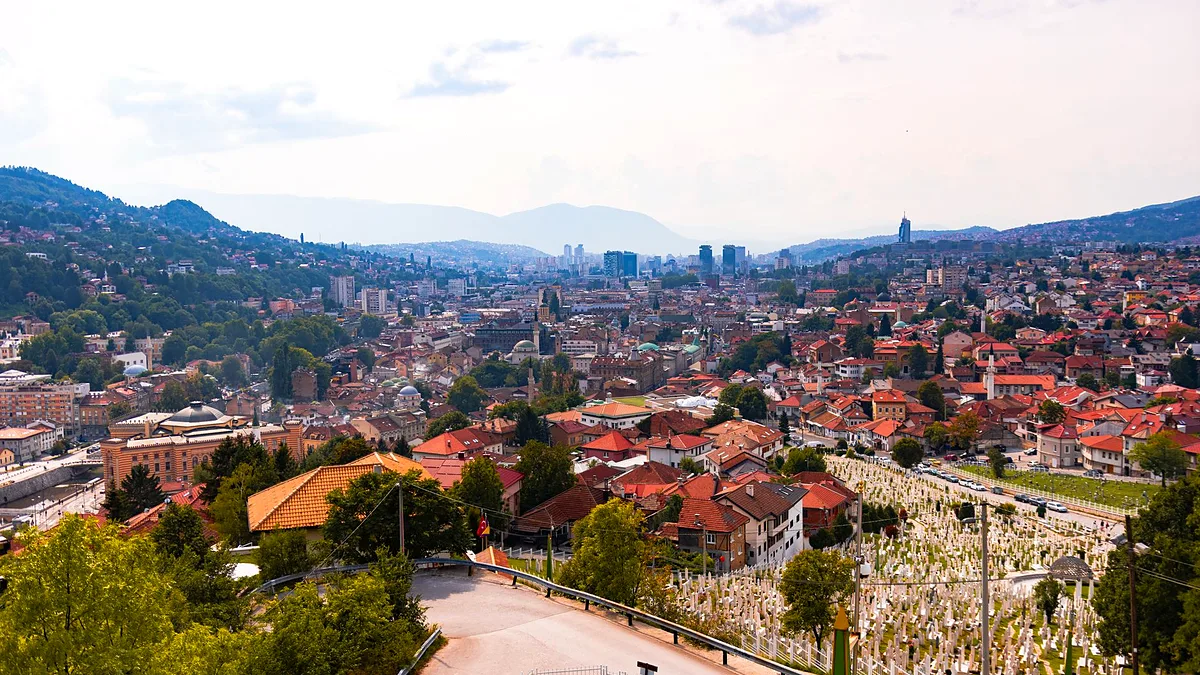

Sarajevo is the rare European capital where "budget" doesn't mean downgrade. The old town is small enough to cross on foot in twenty minutes, coffee arrives on a brass tray, and mountain views come free from almost every terrace.
You can spend 10 marks on a museum, 9 on lunch and 3 on a Bosnian coffee, then ride a cable car up an Olympic mountain for less than a cocktail in Vienna. That maths is the reason I keep coming back.
Here is where the money is genuinely worth spending, where it isn't, and what a good day in Sarajevo actually costs.
Unlimited High-Speed International Travel eSIM
Connect in seconds across 180+ destinations. Instant QR code activation with zero roaming surcharges.

Sarajevo at a Glance
- Best time to visit: Late April to June and September to October. Warm, dry and cheaper than July or August.
- Typical daily budget: 80–120 BAM (~€41–61 / ~$45–68) covers a paid sight, two proper meals, coffee, transport and a drink.
- Local transport style: Walking first, tram second. Baščaršija to Marijin Dvor is a 25-minute stroll along the Miljacka.
- Currency: The Convertible Mark (BAM), pegged to the euro at 1.96. Roughly 1 BAM is about $0.57.
- Vibe: Ottoman bazaar, Austro-Hungarian facades, and a coffee culture that rewards sitting still for an hour.
1. Baščaršija at 8 a.m., Before the Tour Groups Wake Up
The bazaar is Sarajevo's postcard, and like every postcard it looks better before 9 a.m. At that hour the copper hammers on Kazandžiluk are the loudest sound in town, and the Sebilj fountain square still belongs to delivery vans and pensioners.
Kazandžiluk is a working coppersmith alley, not a staged one. Hand-hammered džezva coffee pots, trays and wall plaques start around 15 BAM (~$9), and gentle haggling is completely normal.
- Neighborhood: Baščaršija, Stari Grad
- Cost: Free to wander; a small hammered coffee pot runs 15–35 BAM (~€8–18 / ~$9–20)
- Best time: 7:30–9:30 a.m., any day of the week
- Getting there: 10 minutes on foot from the tram terminus at Baščaršija (lines 1 and 3)
Insider tip: Skip the souvenir shops facing the Sebilj and buy from the workshops one street back — same goods, 20–30% cheaper. The courtyard behind Morica Han is free to enter and almost always empty.
2. Gazi Husrev-beg Mosque: Ten Marks for the Calmest Room in Town
Built in 1531 and sitting right in the middle of the bazaar, this is the most important mosque in Bosnia. Non-Muslim visitors can enter outside prayer times for 10 BAM (~€5 / ~$6), and the shaded courtyard alone justifies the walk.
The šadrvan fountain in the centre is where locals wash and catch up, and the arcaded portico gives you real shade when the afternoon gets serious. Headscarves and cover-ups are handed out at the door, so what you're wearing is not a problem.
- Neighborhood: Baščaršija, beside the old clock tower
- Cost: 10 BAM (~$6) for adults; courtyard free
- Best time: 9–11 a.m., or just after the afternoon prayer
- Getting there: A 3-minute walk from the Sebilj, signposted off Ferhadija
Insider tip: Refill your bottle at the drinking fountain outside the gate — it's free, cold and safe. Bottled water in the bazaar costs 1.50 BAM and you'll drink three a day.
3. Vijećnica: Austro-Hungarian Splendour for the Price of a Sandwich
The City Hall is the most photographed building in the country, a pseudo-Moorish showpiece right on the riverbank. It went up in 1896, burned to a shell in 1992, and reopened in 2014 as the National Library.
Ten marks gets you into the main hall, where striped arches and the glass roof throw light across the stone floor. Most people snap two photos and leave in ten minutes — you should climb to the upper gallery for the view down.
- Neighborhood: Stari Grad, at the eastern edge of the old town
- Cost: 10 BAM (~€5 / ~$6)
- Best time: Late afternoon, for softer light through the roof
- Getting there: 8–10 minutes on foot from Baščaršija along Obala Kulina Bana
Insider tip: Go on a weekday. Weekends bring wedding parties and tripods, and the main hall turns into a photo studio by noon.
4. Žuta Tabija (Yellow Fortress): The Best Free View in the City
Sarajevo is a bowl of a city, and the Yellow Fortress is the rim of it. It's a chunk of eighteenth-century Ottoman wall in Vratnik, it costs nothing, and it looks straight down the valley over minarets and the Jekovac cemetery slope.
The climb up is half the experience — you rise through the Alifakovac quarter, past stone houses and grapevines, in about fifteen minutes at an easy pace. Arrive ninety minutes before sunset, when the call to prayer rolls across the valley from eight minarets at once.
- Neighborhood: Vratnik / Jekovac
- Cost: Free
- Best time: 60–90 minutes before sunset
- Getting there: Walk up through Alifakovac from Baščaršija; steep and cobbled, so wear real shoes
Insider tip: There's a small café with plastic chairs just below the wall. A Bosnian coffee there is about 3 BAM (~$2) and it's the best table in Sarajevo at dusk — bring cash, the card machine rarely works.
5. The Trebević Cable Car and the Abandoned Olympic Bobsleigh Track
Sarajevo hosted the 1984 Winter Olympics, and the mountain above the city still holds both the glory and the scars. The cable car reopened in 2018 after its wartime destruction; a return ticket is around 20 BAM (~€10 / ~$11) for a six-minute ride.
At the top, walk twenty minutes past the restaurants to the old bobsleigh run — cracked concrete half-swallowed by forest and covered in graffiti. It's free, it's genuinely eerie, and nobody will ask you to leave.
- Neighborhood: Base station in Bistrik; summit on Mount Trebević
- Cost: ~20 BAM return (~$11); bobsleigh track free
- Best time: Mid-morning for clear views, or an hour before dusk
- Getting there: 10 minutes on foot from the old town via Bistrik, at the big wooden entrance
Insider tip: Bring a jacket — the summit sits 5–8°C cooler than the valley. Check the cable car is running before you commit to the walk up, because it closes fast in high wind.
6. Gallery 11/07/95: Ten Marks That Explain the Whole Country
This small gallery near the Markale market is dedicated to the Srebrenica genocide, and it's the most important ten marks you'll spend here. The display uses photographs and video testimony, and it is quiet, careful and completely unsensational.
It turns the city's empty buildings and hillside cemeteries into something you can actually read. Give it an hour, and go early in your trip so the rest of Sarajevo makes sense.
- Neighborhood: Zelenih beretki 30, beside the Markale market
- Cost: 10 BAM (~€5 / ~$6)
- Best time: Around 10 a.m. or after 4 p.m., when it's quietest
- Getting there: 5 minutes on foot from Ferhadija; the entrance is small, watch for the sign
Insider tip: For the war story, also reach the Tunnel of Hope in Donji Kotorac — 10 BAM entry. Take tram 3 to Ilidža and a short taxi from there instead of paying 60+ BAM for a package tour.
Where to Eat and Drink Without Wrecking the Budget
Three reliable spots, all in or near the old town, all with honest prices on the wall.
Ćevabdžinica Željo, Kundurdžiluk 19
The plainest and best-known ćevapi in Sarajevo: a mound of small grilled sausages, a warm somun flatbread and a heap of raw onion for 9 BAM (~$5). Order the ten-piece portion unless you're starving — the fifteen will beat you.
Buregdžinica Bosna, Bravadžiluk 21
Burek done properly since 1969, plus sirnica and zeljanica. A generous slab with a glass of yoghurt is about 7 BAM (~$4), and the place closes when the trays run out — usually early afternoon.
Inat Kuća, just below the Vijećnica
Your one proper sit-down dinner. This nineteenth-century house was moved stone by stone across the river so the Austrians could build City Hall, and a full meal of dolma, lamb and dessert runs about 30–40 BAM (~$17–23) per person.
Drinks: Zlatna Ribica on Kaptol 5 is a tiny brass-and-clutter bar with goldfish bowls and no pretension. Local draught beer is around 4 BAM (~$2.30).
Practical Logistics and Budget Tips
Getting around
Walking is the real transport system. The bazaar, Ferhadija and the riverbank all sit within twenty minutes of each other, and only the hill climbs will slow you down.
For longer hops, trams 1 and 3 run along the Miljacka from Baščaršija to Ilidža. A single ride is about 1.80 BAM (~$1) from the driver and cheaper from a kiosk; a day card at roughly 5 BAM (~$3) pays for itself after three trips.
Money
Cash still rules in Baščaršija. Many small restaurants, museums and half the bars take nothing else, so keep 50–100 BAM on you and use bank ATMs near BBI Center.
Cards work in hotels, supermarkets and modern cafés, but never assume. Anyone offering a "special rate" on the street is not helping you.
What to skip
- Photo-menu restaurants on the Sebilj square. You pay double for a worse version of the same dish you'd get one street back.
- Pre-booked war tours. The Tunnel of Hope is 10 BAM and the tram gets you close for 1.80 BAM.
- Mid-August. Film Festival week is brilliant, but beds double in price and the old town is shoulder to shoulder.
- Rental cars. Parking in Stari Grad is a nightmare and trams beat traffic every time.
Honest heads-up
Indoor smoking is still allowed in plenty of bars and cafés, and winter smog settles in the valley. If either bothers you, aim for late spring or early autumn and choose terraces.
The streets are steep and cobbled. Anyone with knee trouble should base themselves near Ferhadija and ride the tram uphill rather than walk it.
Frequently Asked Questions
How much does a day in Sarajevo cost?
Budget 80–120 BAM (about $45–68) for one paid sight, two real meals, coffee, transport and a drink. Live on burek and skip the museums and you can do it on 50 BAM.
Is Sarajevo expensive for tourists?
No — it's one of the cheapest capitals in Europe, with sit-down lunches around $5 and museum entry around $6. A week here costs roughly what four days costs in Vienna.
Do I need cash in Sarajevo?
Yes, especially in the old town, where many small restaurants, galleries and bars don't take cards. Withdraw from bank ATMs rather than the exchange offices clustered in the bazaar.
When is the best time to visit Sarajevo on a budget?
Late April to June and September to October give you mild weather and normal prices. Winter is cheapest, but the smog and cold make those free viewpoints far less enjoyable.