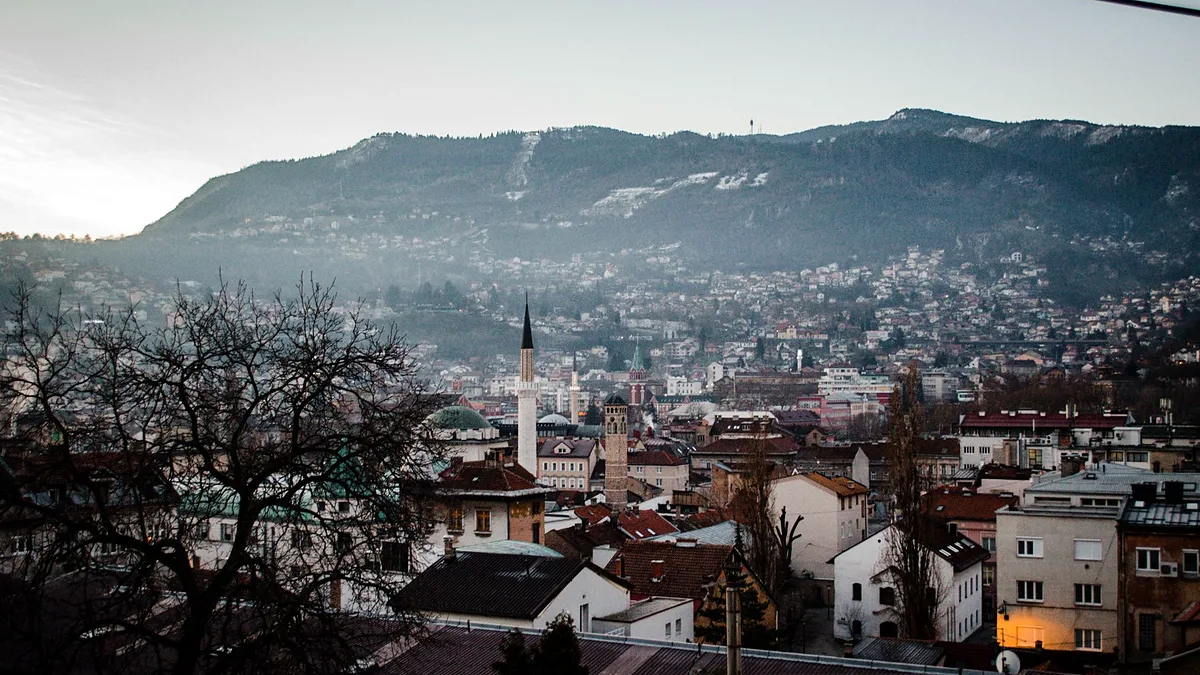

Sarajevo's old bazaar is not a heritage display behind glass. Walk down Kazandžiluk on a weekday morning and you will hear hammers — real ones, hitting real copper, the same sound that filled this lane in the 1500s.
That is what most visitors miss. They photograph the Sebilj fountain, buy a coffee set off a rack, and leave without meeting the person who made it. This guide is for the other version of the trip, where you spend an hour in a workshop and come home with a story attached to your suitcase.
The old town is small enough to cover this whole list on foot in two days, and cheap enough that you won't have to choose between a museum ticket and dinner.
Unlimited High-Speed International Travel eSIM
Connect in seconds across 180+ destinations. Instant QR code activation with zero roaming surcharges.

At a Glance
- Best time to visit: Late April to June, and September to early October. Weekday mornings are calm in Baščaršija; Saturday morning is when local families actually shop.
- Daily budget: 70–110 KM (~$40–60) for a comfortable budget day; 160–220 KM (~$90–125) once you add a mid-range hotel and a sit-down dinner.
- Getting around: Nearly everything here is walkable. Trams 1, 2 and 3 connect Baščaršija with Marijin Dvor, the train station and the Vijećnica stop.
- Vibe: Slow mornings, noisy afternoons, coffee that takes twenty minutes to drink properly, and nobody rushing you out of a chair.
Kazandžiluk: The Coppersmiths' Lane That Still Rings
Kazandžiluk is a short, slightly uphill lane off Baščaršija where coppersmiths have worked since the Ottoman period. Maybe a dozen shops remain, and on any given morning you'll find someone hammering a džezva into shape on a tree stump outside the door.
None of it is staged for tourists. Ask a question and you usually get a demonstration, a short history of the family business, and a price. Hand-hammered coffee sets run 40–120 KM (~$22–66) depending on size and how much decoration you want.
- Neighborhood: Baščaršija, two minutes from the Sebilj fountain.
- Cost: Free to browse. Small copper pieces from 25 KM (~$14), full coffee sets 40–120 KM (~$22–66).
- Best time: Weekdays 9am to noon, when the hammers are genuinely going. Many shops shut around 5pm and stay closed on Sunday.
- Getting there: Tram to Baščaršija stop, then a three-minute walk. Follow the street sign and the smell of hot metal.
Insider tip: Cash is king on this lane. A polite question about the work often earns you a small discount, but don't haggle hard on a handmade piece — the copper is priced by weight plus labour, and the seller knows the numbers better than you do.
Kujundžiluk and the Filigree Workshops
Kujundžiluk, the goldsmiths' street, runs downhill from the Sebilj and takes its name from the old word for jeweller. The bottom stretch is thick with souvenir trays; keep walking uphill and the shops get quieter and more serious.
Sarajevo has a long filigree tradition — fine silver wire twisted into tiny rings and soldered into earrings, brooches and bracelet panels. A handful of workshops still do it by hand rather than importing machine-made pieces. Expect 30–90 KM (~$16–50) for a genuinely hand-worked ring.
- Neighborhood: Baščaršija, Kujundžiluk street between the Sebilj and Gazi Husrev-beg's Mosque.
- Cost: Free to browse; filigree jewellery 30–90 KM (~$16–50).
- Best time: Mid-afternoon, when the shopkeepers have time to talk.
- Getting there: On foot from anywhere in Baščaršija; it's five minutes from the tram stop.
Insider tip: If a window shows rows of identical pieces in plastic trays, that's resale, not craft. Ask "je li ovo ručni rad?" (is this handmade?) and watch where the shopkeeper points.
Gazi Husrev-beg's Bezistan and Brusa Bezistan
The Bezistan beside Gazi Husrev-beg's Mosque is a covered Ottoman market from the 1530s, still lined with small shops selling textiles, leather and silver. It stays cool inside even in August, and the stone vaulting alone is worth the detour.
A few minutes south, Brusa Bezistan is a longer arcade built in the 1550s that now holds a museum of Sarajevo's history — Roman finds, Ottoman objects, and English panels that are actually readable. Entry is around 5 KM (~$2.80).
- Neighborhood: Baščaršija, behind and beside the Gazi Husrev-beg Mosque complex.
- Cost: Bezistan is free; Brusa Bezistan around 5 KM (~$2.80).
- Best time: 10am to 1pm. The museum closes in the late afternoon and most museums in the city shut on Mondays.
- Getting there: Walk from the Sebilj in four minutes, or take any tram to Baščaršija.
Insider tip: Do the museum first and shop afterwards. The Bezistan stalls stay open later than the museum doors.
Svrzo's House in Alifakovac
Svrzo's House sits in Alifakovac, a residential hillside of stone houses and a cemetery with views across the valley. It's a preserved Ottoman-Bosnian family home: separate men's and women's quarters, a cobbled courtyard, a well, and rooms lit through wooden lattice shutters.
What separates it from a normal museum is the layout — you half expect someone to walk out of the kitchen. Entry is about 5 KM (~$2.80) and you'll often have the place to yourself.
- Neighborhood: Alifakovac, on the slope above Baščaršija.
- Cost: Around 5 KM (~$2.80) per adult.
- Best time: Late morning, before the heat builds on the hill.
- Getting there: A 10–12 minute uphill walk from the Sebilj. No tram goes up there — wear real shoes, the cobbles are polished smooth.
Insider tip: Walk up through the Alifakovac cemetery and come back down via the side street for the best free view in the old town.
Vijećnica: Sarajevo's City Hall
Vijećnica is the most photographed building in the city, and for once the fuss is justified. Built in the 1890s as a library in a pseudo-Moorish style, it was destroyed in 1992 and reopened in 2014 with a painstakingly recreated interior.
Entry runs around 20 KM (~$11) — steep by local standards, so check the price board before committing. Outside, look for the brass line set into the pavement on Ferhadija marking the spot where Western and Eastern architectural influences meet.
- Neighborhood: On the Miljacka riverbank at the eastern edge of the old centre.
- Cost: Around 20 KM (~$11); reduced rates for students and groups.
- Best time: Opening time, before tour groups arrive mid-morning.
- Getting there: The Vijećnica tram stop is directly in front of the building; trams 1, 2 and 3 all stop there.
Insider tip: Cross the road afterwards for a look at Inat Kuća, the "House of Spite", which was moved stone by stone rather than demolished when the Austrians built the hall.
Morića Han: The 16th-Century Caravanserai
Morića Han was built as a caravanserai where traders slept and stabled horses. It burned in 1697, was rebuilt, and today the courtyard holds a carpet dealer, a couple of cafés and a restaurant whose chairs spill out under the trees in summer.
It's easy to walk straight past without noticing. Step inside anyway, sit on the wooden bench, and order a coffee — it's one of the quietest corners in the whole bazaar.
- Neighborhood: Baščaršija, just off Sarači street.
- Cost: Free to enter; coffee 3–4 KM (~$1.70–2.20).
- Best time: Around 4pm, when the light comes over the roofline.
- Getting there: Two minutes on foot from the Sebilj; look for the arched wooden gateway.
Insider tip: Photography gets flat fast once the sun drops behind the roof. Shoot first, then order.
Three Small Heritage Sites, Five Minutes Apart
The Old Orthodox Church of St Michael and Gabriel, the Old Jewish Temple, and the Sacred Heart Cathedral sit within a few minutes of each other and tell the city's multi-faith story better than any single museum. The Old Synagogue is the standout: a low vaulted space with Torah scrolls, photographs and records of the Sephardic community that arrived after 1492.
Entry is modest — around 5–10 KM (~$3–6) depending on the site — and the Old Orthodox treasury asks for a small donation. Finish at the Yellow Fortress (Žuta Tabija) above Vratnik for a free sunset over the whole valley.
- Neighborhood: Baščaršija edge (churches and synagogue); Vratnik hill for the fortress.
- Cost: 5–10 KM (~$3–6) per site; the Yellow Fortress is free.
- Best time: Late afternoon, finishing at the fortress around 7pm in summer.
- Getting there: All walkable from Baščaršija; the fortress is a 15-minute uphill climb through Vratnik.
Insider tip: These are active places of worship first and sights second. Cover shoulders, keep your voice down, and don't photograph people at prayer.
Where to Eat and Drink Nearby
Inat Kuća
Next to Vijećnica, in the house that was relocated rather than knocked down. The menu is proper Bosnian home cooking: lamb in a clay pot, begova čorba, and a walnut dessert you'll think about later. Mains 15–25 KM (~$8–14).
Aščinica Stari Grad
A canteen-style spot where you point at trays behind glass and pay by the plate. Stuffed peppers, sarma, and slow-cooked beans, all for 8–14 KM (~$4.50–8). It's where local office workers eat at 1pm, and it closes early.
Ćevabdžinica Željo
A Sarajevo institution with branches near Ferhadija and in the bazaar. Five ćevapi in warm flatbread with raw onion cost about 8 KM (~$4.50). Order the kajmak on the side and share a portion of the bread.
Ministry of Ćejf
A small café tucked into the bazaar lanes with proper Bosnian coffee served on a copper tray — džezva, fildžan, sugar cube, rahat lokum. Around 3 KM (~$1.70) and no rush to leave.
Practical Logistics and Budget Tips
- Tram tickets: Buy at a kiosk for 1.80 KM (~$1) rather than from the driver, where it costs more. Validate on board; inspectors do check.
- From the airport: A taxi into the centre runs roughly 20–25 KM (~$11–14). Agree the price before you get in, and use a marked cab.
- Cash: Many workshop owners and small eateries take cash only. Use bank ATMs near Ferhadija and avoid the airport exchange desks, which give poor rates.
- Walking: The old town is hilly with polished cobbles. Budget double the walking time you'd expect, and pack shoes with grip.
- Money saver: Museums are cheap but close on Mondays. Stack Svrzo's House and Brusa Bezistan on the same morning — together they cost less than a coffee back home.
What to Skip
Honestly? The souvenir racks right at the Sebilj. The same copper pot costs 20–30% less fifty metres up Kazandžiluk, where the maker is standing next to it. And if you're short on time and not drawn to war history, the Tunnel of Hope is a 30-minute drive each way for one short stretch of tunnel; it's moving, but it eats half a day.
Frequently Asked Questions
Are Sarajevo's coppersmiths still real, or is it just a tourist show?
Real, though fewer than before — around a dozen workshops remain on Kazandžiluk. Go on a weekday morning and you'll see actual hammering, not a staged demonstration for tour groups.
How much does a day in Baščaršija cost?
A comfortable budget day runs 70–110 KM (~$40–60), covering museum entries, coffee, two meals and tram fares. Add 20 KM if you want to buy a small handmade piece to take home.
Do I need cash for the old bazaar workshops?
Bring it. Many craftspeople and small restaurants don't take cards, and the nearest ATM is a short walk away on Ferhadija. Withdraw in larger amounts to avoid repeated fees.
What's the best time of day to visit the heritage sites?
Weekday mornings between 9am and noon, when workshops are active and museums are empty. Save Alifakovac and the Yellow Fortress for late afternoon, when the light softens and the heat drops.