
Sarajevo is the rare European capital where a proper Bosnian coffee costs less than a bottle of water at home, a cable car lifts you onto an Olympic mountainside before lunch, and you can sleep in a restored Ottoman house for less than a hostel bunk in Vienna. Locals call it the Jerusalem of Europe because a Catholic cathedral, an Orthodox church, a mosque and a synagogue sit within a five-minute walk of each other.
I spent four days here at roughly $60 a day and never once felt like I was slumming it. That covered a sit-down dinner every night, two museums a day and a mountain cable car. Here is exactly where the money went, plus the honest bits the postcards leave out.
Sarajevo at a Glance
- Best time to visit: Mid-May to mid-June, or September to mid-October. July and August are hot and crowded, and the Sarajevo Film Festival in mid-August doubles room rates.
- Daily budget: 65–110 BAM (~$36–$61) for a comfortable mid-range day. Add 50% for a four-star bed and a taxi or two.
- Getting around: Trams, trolleybuses and your own two feet. The old town is one square kilometre of cobbles.
- Money: The convertible mark (BAM) is pegged to the euro at 1.96 BAM = €1. Budget roughly 1 BAM ≈ $0.55 USD.
- Vibe: Ottoman bazaar meets Habsburg boulevard, with a café culture that borders on religion.
Baščaršija at 7:30am, Before Anyone Else
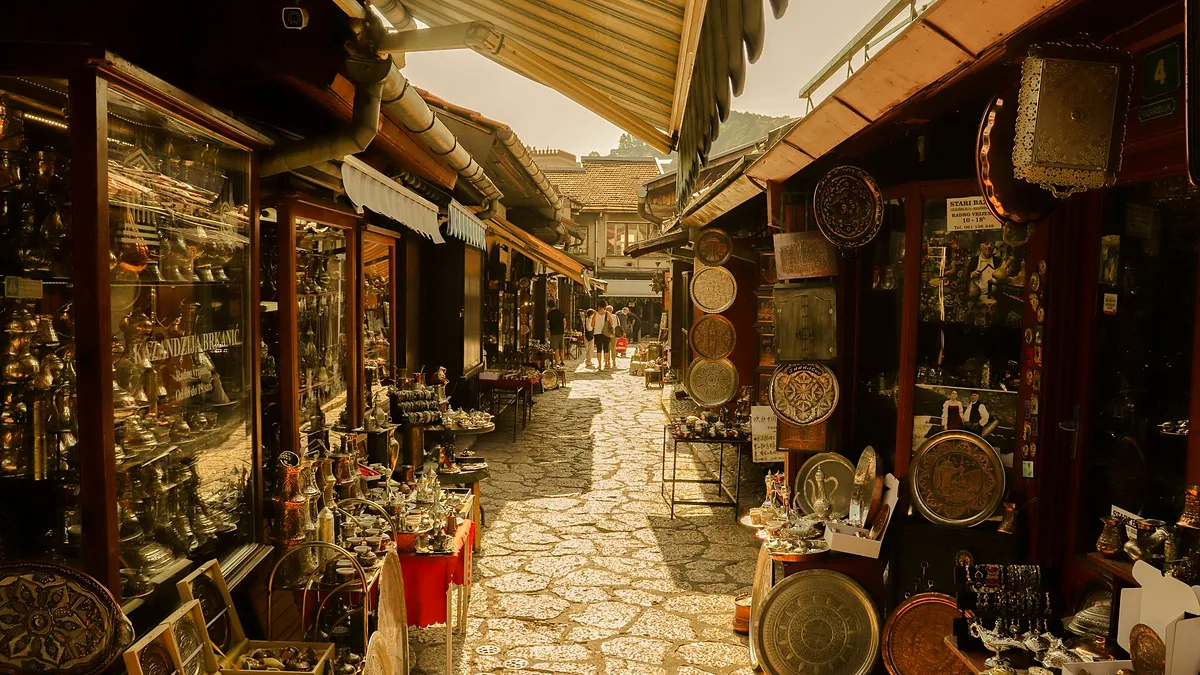
The bazaar quarter is where Sarajevo began in the 15th century, and it still runs on the same streets: Bravadžiluk for food, Kazandžiluk for coppersmiths, Sarači for leather. By 11am in July it is shoulder-to-shoulder. At 7:30 it belongs to shopkeepers hosing down the cobbles and the smell of fresh burek.
Unlimited High-Speed International Travel eSIM
Connect in seconds across 180+ destinations. Instant QR code activation with zero roaming surcharges.

Walk Kazandžiluk slowly. The copper workshops still hammer trays by hand, and the older men will show you how a coffee pot is shaped if you show real interest rather than a camera lens.
- Neighbourhood: Baščaršija, Stari Grad (Old Town)
- Cost: Free to wander; a hand-hammered copper coffee set starts around 30 BAM (~$17)
- Best time: 7:30–9:30am, or after 7pm when the day-trippers leave
- Getting there: Tram 1 or 3 to Baščaršija station, then two minutes on foot past the Sebilj fountain
Insider tip: Sebilj square has the worst coffee prices in the city, often 6 BAM for what costs 2 BAM one street back. Walk 90 seconds to Kundurdžiluk or Prote Bakovića and pay local rates.
Vijećnica, the City Hall That Burned and Came Back
The pseudo-Moorish city hall on the Miljacka is the most photographed building in Bosnia. It opened in 1896, was torched in 1992 with the National Library inside, and reopened in 2014 after two decades of painstaking restoration. The striped facade is lovely; the inside, all arched ceilings and coloured glass, is the part people forget to budget time for.
- Neighbourhood: Stari Grad, on the riverbank at the western edge of the bazaar
- Cost: 10 BAM (~$5.50) entry; the exterior and river terrace are free
- Best time: Right at the 9am opening, or after 4pm when tour groups have moved on
- Getting there: A five-minute flat walk from Baščaršija along Obala Kulina Bana
Insider tip: Two minutes west along Ferhadija, look down at the pavement for the "Sarajevo Meeting of Cultures" line. It marks the exact spot where the Ottoman facades stop and the Austro-Hungarian ones start, and almost nobody photographs it.
The Trebević Cable Car and the Abandoned Olympic Bobsleigh
The cable car reopened in 2018 and climbs from Bistrik to 1,164 metres on Trebević mountain in about ten minutes. The view back over red roofs and minarets is the single best photograph you will take in Sarajevo.
From the top station, follow the paved path downhill for 15 minutes to the 1984 Olympic bobsleigh track. It is cracked, abandoned and covered in murals, and walking through the concrete tube is completely free. Bring a phone torch, because the middle section is pitch black.
- Neighbourhood: Bistrik (lower station), Trebević (top)
- Cost: 20 BAM one way, 30 BAM return (~$11 / ~$17); the bobsleigh track is free
- Best time: 4–6pm for the light; avoid Sunday afternoon when half the city goes up
- Getting there: A 12-minute riverside walk from Baščaršija to Bistrik, or tram to Bistrik station
Insider tip: Skip the "Olympic tour" taxis quoting 40–50 EUR. The cable car plus your own legs is cheaper and lets you stay as long as you like. Also carry water: the restaurant at the top charges triple city prices.
Two Museums That Handle the 1990s Honestly
The War Childhood Museum on Logavina is the one that stays with you for weeks. It is a collection of ordinary objects, a teddy bear, a handmade toy, a pair of shoes, each with a caption written by someone who was a child during the four-year siege.
The Galerija 11/07/95 near Ferhadija is a memorial gallery dedicated to Srebrenica, small, quiet and deliberately difficult. Together they cover more ground than any guided tour, at your own pace and for under 25 BAM.
- Neighbourhood: Both in Stari Grad, ten minutes apart on foot
- Cost: War Childhood 10 BAM (~$5.50); Galerija 11/07/95 around 12 BAM (~$6.60)
- Best time: War Childhood is busiest 11am–2pm, so go at the 10am opening
- Getting there: Walk uphill first, then work your way back down toward the river
Insider tip: The War Childhood Museum closes on Mondays, so build your day around that. And if anyone sells you a 30–40 EUR "war tour" outside your hotel, do these two first before deciding.
Vrelo Bosne, the Spring at the End of Tram Line 3
The river Bosna rises in a park of plane trees, wooden bridges and slightly smug swans at the foot of Igman mountain. On a hot afternoon it runs several degrees cooler than the old town, and a full lap takes about an hour.
Tram 3 from Baščaršija to Ilidža takes roughly 30 minutes and drops you at the bottom of a long, flat, tree-lined avenue. Walk it in 25 minutes or take a horse-drawn carriage for the last stretch.
- Neighbourhood: Ilidža, about 12km west of the centre
- Cost: 3 BAM park entry (~$1.65); tram 1.80 BAM each way; carriage about 10 BAM per person
- Best time: Weekday mornings; weekends are wall-to-wall local families with picnic coolers
- Getting there: Tram 3 to the Ilidža terminus, then walk the avenue or hire a carriage
Insider tip: Carry small notes. Carriage drivers rarely have change for a 50 BAM bill, and the restaurants right at the park gate charge double what the cafés in Ilidža centre do.
Svrzo's House, Alifakovac and the Yellow Fortress Sunset
Svrzo's House is an 18th-century Ottoman family home preserved almost exactly as it was used: whitewashed rooms, low divan sofas, a summer courtyard with a stone fountain and a separate women's quarter. At 5 BAM it is the cheapest hour of atmosphere in the city, and you often get it entirely to yourself.
From there, climb through Alifakovac, Sarajevo's oldest residential lane, past red-roofed houses and a small hillside cemetery, and finish at the Yellow Fortress for sunset over the whole valley.
- Neighbourhood: Glođina 8 and Alifakovac, both in Stari Grad
- Cost: 5 BAM for the house (~$2.75); the fortress is free
- Best time: Reach Svrzo's by 3pm (it shuts around 4pm in winter), then the fort for 7–8pm in summer
- Getting there: An eight-minute uphill walk from Baščaršija; wear shoes with grip, the cobbles are polished smooth
Insider tip: The tiny café just below the fortress walls serves a coffee with that view for 2 BAM. Ignore the panorama restaurant halfway up, which charges triple for the same skyline.
Where to Eat and Drink Nearby
Ćevabdžinica Hodžić, Bravadžiluk 34
Ten small grilled sausages in warm flatbread with raw onion on the side, 8 BAM (~$4.40). Open daily roughly 8am to 11pm, cash only, no reservations, and no shame in ordering a second portion.
Aščinica Stari Grad, Prote Bakovića
An old-school canteen serving slow-cooked Bosnian stews from behind a glass counter. A plate of sogan-dolma or grah with bread runs 8–12 BAM (~$4.40–$6.60), and it is where local office workers actually eat lunch.
Dveri, Prote Bakovića 12
The one proper sit-down splurge: mains 20–35 BAM (~$11–$19), a serious Bosnian wine list and about eight tables. Book two nights ahead or you are not getting in.
For the afternoon, Zlatna Ribica on Kaptol 5 is a two-room bar cluttered with antiques and chandeliers where a bosanska kafa costs 2–3 BAM (~$1.10–$1.70). Baklava on Kundurdžiluk is about 2 BAM a piece, sold by the tray.
Practical Logistics and Budget Tips
| Typical cost | In BAM | In USD |
|---|---|---|
| Bosnian coffee | 2–3 | ~$1.10–1.70 |
| Ćevapi with bread | 8 | ~$4.40 |
| Tram ticket (kiosk) | 1.80 | ~$1 |
| Museum entry | 10–12 | ~$5.50–6.60 |
| Trebević cable car return | 30 | ~$17 |
| Guesthouse double, Old Town | 80–120 | ~$44–66 |
| Dinner for two with wine | 60–80 | ~$33–44 |
- Buy tram tickets at a kiosk. A trafika sells them for 1.80 BAM; paying the driver costs 2.50 BAM. Inspectors do check, and the fine is 30 BAM.
- Stay a street or two off the bazaar. Ferhadija, Alifakovac and the lanes above Kundurdžiluk have restored guesthouses 30% cheaper than the Sebilj square frontage, and you will sleep better.
- Cash beats card in the old town. Hotels take cards; ćevabdžinicas and coppersmiths do not. Use bank ATMs (Raiffeisen, UniCredit, Addiko) and avoid the standalone Euronet machines that add a €5 fee.
- Euros are accepted, badly. You will get a rate closer to 1.80 than 1.96. Change money at a bank or mjenjačnica instead.
What to Skip
The Tunnel of Hope is historically important but underwhelming at 10 BAM plus a taxi out to Dobrinja. If you go, take tram 3 toward Ilidža and then a local bus rather than a tour. Also skip the fixed-price "Bosnian coffee ritual" deals on Sebilj square, and any taxi that will not run the meter.
One honest warning: Sarajevo sits in a deep valley and heats with wood and coal. From late November to February the smog can be genuinely unpleasant, so if you have呼吸 issues, aim for spring or autumn. Winter is atmospheric and cheap, just not always breathable.
Frequently Asked Questions
Is Sarajevo expensive to visit?
No. A comfortable day of food, coffee, transport and one paid attraction lands around 65–110 BAM (~$36–$61). It is one of the cheapest capital cities in Europe for visitors.
Where should I stay in Sarajevo on a budget?
Look at guesthouses in Alifakovac, Ferhadija or the streets just above Kundurdžiluk. Expect 80–120 BAM (~$44–$66) for a double in a restored Ottoman house, well under four-star hotel rates.
How many days do you need in Sarajevo?
Two full days covers the old town, the museums and the cable car. Three to four days lets you add Vrelo Bosne and a slow afternoon of café sitting, which is the real point of the city.
Do I need cash in Sarajevo?
Yes, especially in the bazaar. Carry 100–200 BAM in small notes for ćevapi, tram tickets, baklava and coffee, and use cards for hotels and larger restaurants.