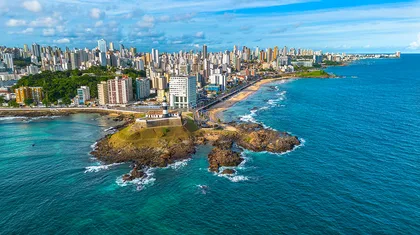

Salvador doesn't do quiet luxury. It does a church interior so loaded with gold leaf that your neck starts to ache, drum rehearsals that kick off at 9pm and finish when the last dancer quits, and a city beach where the water is already warm at 7am.
The surprise is the price. Bahia's capital is one of the few places in Brazil where R$450 a day (about $82 USD) covers a colonial pousada room with breakfast, a sit-down moqueca for two, museum entry and an Uber home at 1am. The most impressive thing you can do here — watching the sun drop into the Bay of All Saints from a 17th-century terrace — costs nothing at all.
So skip the all-inclusive resorts out by Itapuã and the packaged city tours. Everything below is street-level, priced in reais and dollars, and built around what people who actually live here show their visiting friends.
Unlimited High-Speed International Travel eSIM
Connect in seconds across 180+ destinations. Instant QR code activation with zero roaming surcharges.

At a Glance
- Best time to visit: September to November — dry, 27–30°C, thin crowds. April to July is the rainy season, and Carnival week triples every hotel rate in the city.
- Typical daily budget: R$180–260 (~$33–47 USD) for a lean day; R$400–550 (~$73–100 USD) buys a colonial hotel room and proper dinners.
- Transport style: Uber after dark, metro Line 1 plus walking by day, and the R$0.15 Elevador Lacerda to jump between the upper and lower city.
- Vibe: Baroque decay, Afro-Brazilian percussion, and street food cooked in dendê oil.
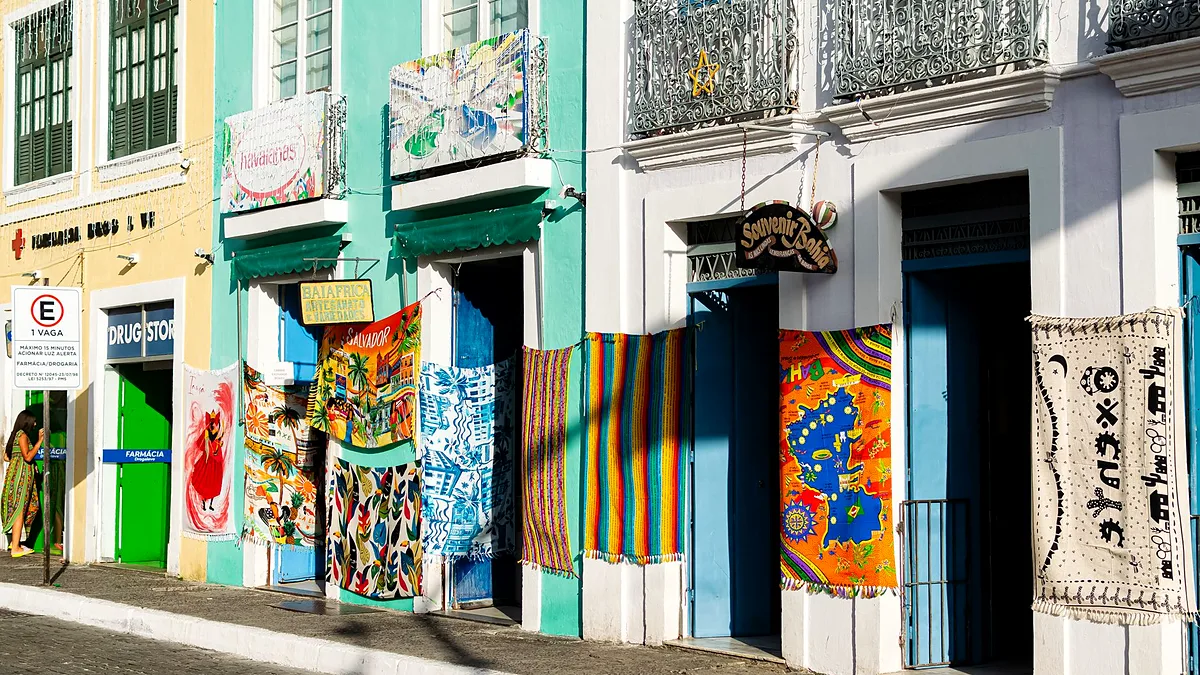
Pelourinho at 7:30am, Before the Tour Buses Wake Up
The historic center is a different city before 9am. Vendors are still hosing down the cobblestones, the pastel facades glow orange, and you can hear a whole conversation from three streets away. Come back after dark and the same squares turn into open-air music venues, with a different drumming group on every corner.
If you're here on a Tuesday, the Olodum rehearsal at Largo Tereza Batista is the closest thing to a free concert you'll find in South America. Show up around 8pm, buy a beer from a cooler for R$8 (~$1.50), and stand at the edge of the crowd.
- Neighborhood: Pelourinho, Centro Histórico
- Cost: Free to wander; coffee and pão de queijo around R$12 (~$2); Olodum rehearsal roughly R$30–40 (~$5–7)
- Best time: 7:30–9:30am for photos, 8–11pm on Tuesdays for the drums
- Getting there: Metro Line 1 to Lapa, then a 15-minute uphill walk; Uber from Barra is about R$25 (~$5)
Insider tip: Wear shoes with actual grip. The cobblestones here are polished slick by 300 years of foot traffic and turn into a skating rink after rain — flip-flops are a genuine hazard.
Igreja de São Francisco: The Most Gold You'll See for $3
People throw around the word baroque too loosely. Then they walk into São Francisco and go quiet. Every square centimeter of the nave is carved cedar covered in gold leaf, and the cloister's blue-and-white tile panels were shipped from Portugal in the 1740s. Budget 40 minutes minimum, because the ceiling keeps pulling your eyes up.
Buy the combined ticket with the Museu de Arte Sacra next door, housed in the old Santa Teresa convent. It's a short walk, air-conditioned, and holds one of the best religious art collections in Brazil.
- Neighborhood: Largo do Cruzeiro de São Francisco, Pelourinho
- Cost: R$15 (~$3 USD) for the church; combined museum ticket around R$25 (~$5)
- Best time: Right at opening, Monday to Friday, roughly 8am–5pm; closed Sundays
- Getting there: A five-minute walk from Pelourinho's main square, uphill from the Elevador Lacerda
Insider tip: Guides will offer to explain the interior for R$50. The free printed sheet at the entrance covers the highlights just as well, and the money is better spent on the museum ticket.
Santo Antônio Além do Carmo: The Quiet Hill Above the Noise
Five minutes uphill from Pelourinho, the crowd disappears. Santo Antônio is a single ridge of colonial houses, crumbling churches and small galleries, occupied by artists and a handful of pousadas with courtyards. The pace drops immediately — people sit on stoops here.
Walk Rua Direita do Santo Antônio end to end, poke into the galleries, then park yourself at the Largo for sunset. The view over the bay and the lower city is the best free seat in Salvador, and the restaurants around the square fill up fast after 7pm.
- Neighborhood: Santo Antônio Além do Carmo
- Cost: Free to explore; dinner for two R$150–220 (~$27–40 USD)
- Best time: 4:30–7pm — galleries are open, the light is good, and the evening crowd hasn't arrived
- Getting there: Walk uphill from Pelourinho via Ladeira do Carmo (12 minutes) or take an Uber to the Largo
Insider tip: Book a table on the terrace, not inside. Most kitchens here open at 6:30pm sharp, and the best-view tables on the Largo are gone by 7:15pm.
Solar do Unhão and the Saturday Sunset Jazz
This 17th-century sugar mill turned modern art museum sits right on the water between the Comércio district and Calçada. The Bahia Museum of Modern Art inside is small but genuinely good, and the building itself — thick stone walls, a stone jetty, an old slave-auction courtyard — is worth the trip alone.
On Saturday afternoons the terrace hosts live jazz at sunset. It's relaxed, mostly local, and costs a fraction of what a hotel bar would charge for the same view. Check the museum's Instagram before you go, since the schedule shifts with the season.
- Neighborhood: Avenida Contorno, near Calçada
- Cost: R$10 (~$2 USD) for the museum; jazz session free or by donation
- Best time: Saturday from 3:30pm to catch the museum, then stay for sunset around 5:30pm
- Getting there: Uber from Pelourinho is about R$25 (~$5); buses along Avenida Contorno stop at the gate
Insider tip: Bring mosquito repellent for the late afternoon. The museum sits on the water and the sandflies near the jetty are relentless.
Farol da Barra and Porto da Barra Beach
Barra is where Salvador behaves like a normal coastal city — joggers, cold coconuts, and a lighthouse that has been guiding ships since 1698. Climb to the top of the Forte de Santo Antônio da Barra for a 360-degree view of the bay on one side and open Atlantic on the other.
Then walk five minutes to Porto da Barra, the city's best urban beach. The water is calm, the sunset faces directly at you, and you can rent a chair and umbrella for the afternoon for less than the price of a cocktail at home.
- Neighborhood: Barra
- Cost: Beach free; lighthouse and fort museum R$15 (~$3 USD); chair and umbrella R$25 (~$5)
- Best time: 3–6pm for the beach, then stay for sunset at the lighthouse
- Getting there: Metro Line 1 to Lapa, then bus or a 25-minute walk; Uber from Pelourinho around R$25
Insider tip: Swim at Porto da Barra, not at Farol da Barra beach on the ocean side. The currents past the lighthouse are genuinely dangerous and there's no lifeguard on the outer stretch.
Rio Vermelho: Where Locals Actually Go Out
Rio Vermelho is a working neighborhood with a serious nightlife streak. Start with the Casa do Rio Vermelho, the former home of novelist Jorge Amado and photographer Zélia Gattai — a small, beautifully kept house museum with a garden bar. Then follow the smell of dendê oil to Largo de Santana.
That square is the acarajé capital of Brazil. Baianas in white lace set up their tabuleiros at dusk and sell the black-eyed pea fritters stuffed with vatapá, caruru and shrimp until well past midnight.
- Neighborhood: Rio Vermelho
- Cost: Casa do Rio Vermelho R$20 (~$4 USD); acarajé R$18–25 (~$3–5)
- Best time: 6–10pm, Wednesday to Sunday for the museum
- Getting there: Uber from Barra is about R$20 (~$4); buses along Avenida Oceânica drop you at the Largo
Insider tip: Ask for your acarajé sem pimenta unless you mean it. The pepper paste here is not decorative, and there's no water on that square that will save you.
Igreja do Bonfim and the Ribeira Ice Cream Run
The most beloved church in Bahia sits on a hill in the lower city, its facade covered in the colored ribbons that visitors tie to the railings. Entry is free, the atmosphere is genuinely devout, and the small museum in the sacristy is worth 15 minutes.
From there, take a short ride to Ribeira and its 1930s-era ice cream parlor, still the neighborhood's social center. A cone of tapioca or graviola costs less than a coffee in Lisbon, and the promenade along the water is a good place to waste an hour.
- Neighborhood: Bonfim, then Ribeira
- Cost: Church free; a ribbon R$5 (~$1 USD); two scoops of ice cream around R$16 (~$3)
- Best time: Weekday mornings, before the tour groups arrive around 10:30am
- Getting there: Uber from Pelourinho is about R$30 (~$5.50); the suburban train to Calçada and Bonfim is cheaper but slow
Insider tip: Buy your ribbons from the vendors on the steps for R$5, not from the shops that mark them up to R$20. And don't take photos of people praying inside — it's a working church, not a set.
Where to Eat and Drink Nearby
Restaurante do SENAC, Pelourinho. A training restaurant inside a gorgeous colonial building where culinary students cook a rotating Bahian buffet. It's one of the best-value meals in the historic center — around R$55 (~$10 USD) all-in — and the service is more polished than the price suggests.
Acarajé da Dinha, Largo de Santana, Rio Vermelho. The most famous tabuleiro in the state, and it earns the reputation. Order the acarajé with everything (R$22 / ~$4), then wash it down with a cold beer from the bar next door.
Cantina da Lua, Largo do Pelourinho. Run by the same family for decades, with a terrace right on the square. Dinners for two land around R$120–160 (~$22–29 USD); the moqueca and the bobó de camarão are the order.
Sorveteria da Ribeira. Serving since 1931, still using fruit from the Recôncavo. Two scoops for R$16 (~$3), cash preferred, no frills.
Practical Logistics and Budget Tips
Getting Around
- Buy a Meu Transporte card at any metro station — around R$4.10 (~$0.75 USD) per metro ride, with free integration onto select buses. Buses run roughly R$5.50 (~$1) cash, so the card pays for itself fast.
- The Elevador Lacerda costs 15 centavos and saves you a steep 20-minute walk between the upper and lower city. It's still one of the cheapest elevators on earth.
- Uber is the local secret. Cross-town rides rarely top R$35 (~$6.50), which makes late-night trips cheaper than the argument about walking.
- Pelourinho is steep, cobbled and hot. Build in 20 minutes of buffer per outing or you'll be soaked by the time you arrive.
What It Actually Costs
| Item | Reais | USD |
|---|---|---|
| Colonial pousada double, Santo Antônio (with breakfast) | R$320–450 | $58–82 |
| Moqueca for two, mid-range restaurant | R$120–160 | $22–29 |
| Acarajé from a baiana | R$18–25 | $3–5 |
| Museum or church entry | R$10–15 | $2–3 |
| Uber across the historic center | R$20–35 | $4–6 |
The Rooftop Trick
The luxury moment in Salvador doesn't require the suite. The rooftop bar at the Fera Palace Hotel, right in Pelourinho, has the best sunset view in the center and charges R$40 (~$7) for a caipirinha. One drink buys you two hours of terrace that hotel guests paid four times as much to access.
What to Skip
- Restaurants with photo menus and a tout on Praça do Pelourinho. You'll pay double for food that's been sitting in a warming tray.
- The Salvador Card. Most of the city's best sights — Bonfim, Porto da Barra, the Pelourinho streets, the Olodum rehearsals — are free or cost pocket change.
- Schooner tours booked from Mercado Modelo on the day. Fine if you haggle, badly overpriced if you don't.
- Beaches on the ocean side of Barra if you're not a strong swimmer. Currents are real.
Honest Heads-Up
Salvador has real street crime, and it clusters around empty streets at night. Stay in busy areas, keep your phone in your pocket rather than in your hand on quiet corners, and take an Uber door-to-door after dark rather than walking the last 500 meters.
The rainy season — April through July — is not a myth. If the beach is the point of your trip, book for October or November instead and save yourself the frustration.
Frequently Asked Questions
Is Salvador expensive for travelers?
No — it's one of the cheapest big cities in Brazil for food, transport and museum entries. The only thing that pushes costs up is accommodation during Carnival, when hotel rates triple and stay triple.
Can you do Salvador luxury on a budget?
Yes, if you spend on the right things: a boutique pousada in Santo Antônio runs R$350–450 (~$65–82 USD) a night with breakfast, while the city's actual luxury hotels start around R$900. The views, churches and beach cost nothing at all.
Is Salvador safe for tourists?
The tourist zones — Barra, Pelourinho during the day and evening, Rio Vermelho — are generally fine if you use normal city sense. Avoid empty side streets after dark and use Uber instead of walking long stretches at night.
What's the cheapest way to get around Salvador?
Metro Line 1 plus walking covers the center, with the 15-centavo Elevador Lacerda connecting the upper and lower city. For night trips and the lower-city sights, Uber is inexpensive enough that it beats waiting for buses.