
Salvador is the most African city in the Americas, and it is also one of the rare places where luxury and budget genuinely share a sentence. You can sleep in a restored 17th-century mansion, eat moqueca that would cost $40 in New York, and watch the sun drop into the Bay of All Saints from a colonial terrace — all on roughly $60 a day.
Bahia's capital rewards travelers who spend carefully rather than cheaply. Save on transport and street food, then put the money into the things that actually feel special: a pousada with a courtyard pool in Santo Antônio, a private capoeira lesson, a schooner out to a palm-covered island.
Here is the honest version, with real prices, real neighborhoods, and the overhyped stuff worth walking straight past.
Unlimited High-Speed International Travel eSIM
Connect in seconds across 180+ destinations. Instant QR code activation with zero roaming surcharges.

Salvador at a Glance
- Best time to visit: September to November — dry, warm and calm. February brings Carnival crowds and Carnival prices; June brings São João parties and rain.
- Daily budget: R$250–450 (~$45–85) per person covers a good pousada, two sit-down meals, a few Ubers and one paid activity. Backpackers can survive on R$150 (~$27).
- Getting around: Uber and 99 are cheap and reliable across Barra, Rio Vermelho and the historic center. The metro handles the airport run.
- Vibe: Drums before noon, beach chairs by two, caipirinhas on a cobblestone slope by eight. Loud, warm and unhurried.
1. Sleep in Santo Antônio Além do Carmo
Skip the chain hotels out on Avenida Tancredo Neves. Santo Antônio Além do Carmo, the hilltop neighborhood a steep 15-minute walk up from Pelourinho, is where Salvador's colonial mansions became small pousadas with courtyard pools, high ceilings and rooftop views over the bay.
Places like Pousada do Boqueirão on Rua Direita de Santo Antônio run around R$350–450 (~$64–82) for a double with breakfast — roughly a third of what an equivalent room costs in Rio. The trade-off is real: cobblestones that punish thin soles, church bells at 7 a.m., and almost nothing open after 11 p.m.
- Neighborhood: Santo Antônio Além do Carmo, walking distance to Pelourinho
- Cost: R$300–500 (~$55–91) per night for a double with breakfast
- Best time to book: Two to three weeks ahead in low season, three months for Carnival
- Getting there: Uber from the airport is R$120–150 (~$22–27); by metro, get off at Campo da Pólvora and walk up for 12 minutes
Insider tip: Ask for a room on the courtyard side, not the street side. The neighborhood bars are lovely, but a berimbau at 1 a.m. travels through colonial windows like it is in your bed.
2. Pelourinho Before Nine in the Morning
The Igreja e Convento de São Francisco on Largo do Cruzeiro de São Francisco is the single best-value spectacle in Brazil. For R$10 (~$2) you step into a nave covered in hundreds of kilos of gold leaf, with blue-and-white azulejo tiles and a ceiling of painted saints that takes a good ten minutes to actually read.
Arrive at opening time and it is just you, a caretaker with a broom, and the smell of old wood. By 10:30 a tour group in matching lanyards will be backing into your photos on the square outside.
- Neighborhood: Pelourinho, historic center
- Cost: R$10 (~$2) entry; cash and card both accepted
- Best time of day: 8 a.m. to 9 a.m., Monday to Saturday; closed Sunday
- Getting there: Walk down from Santo Antônio, or take an Uber to Largo do Cruzeiro de São Francisco
Insider tip: Ignore anyone on the square insisting the church is closed today and offering to show you a better one instead. It is open. Walk to the door.
3. Sunday Sunset Jazz at Solar do Unhão
The Museum of Modern Art of Bahia sits inside Solar do Unhão, a 17th-century sugar estate on the water at Avenida Contorno. On Sunday afternoons a jazz trio plays on the terrace while a few hundred people sit on the old stone steps with beers, watching the sun sink behind the Itaparica shoreline.
Entry to the museum is around R$20 (~$4) and the music comes free with it. It is the closest thing this city has to a free luxury experience, and it beats most paid ones.
- Neighborhood: Solar do Unhão, Avenida Contorno (between Comércio and Barra)
- Cost: R$20 (~$4) museum entry; beers from the kiosk R$10–15 (~$2–3)
- Best time: Sunday from about 5 p.m. — arrive by 4:15 p.m. for a step with a view
- Getting there: Uber from Pelourinho is R$20–25 (~$4–5); city buses run along Avenida Contorno
Insider tip: Check the museum's Instagram before you go. The jazz session takes occasional breaks in low season, and there is nothing sadder than a sunset with no saxophone.
4. Capoeira and Olodum: The Cheapest Way Into Bahian Culture
You do not need a R$200 folklore show. In the early evening, capoeira rodas form in the open air at Largo do Pelourinho — a ring of clapping tourists and locals, two fighters, three berimbaus — and watching costs nothing. If you want to actually learn, drop-in classes at studios around Pelourinho and Barra run R$50–80 (~$9–15).
For the drum thing, Olodum's headquarters on Rua Gregório de Matos opens its Sunday rehearsal to the public for around R$30–50 (~$6–9). It is loud in a way that rearranges your ribcage, and it is the reason half the pop music you know sounds the way it does.
- Neighborhood: Pelourinho, plus Ilê Aiyê in Liberdade for Saturday rehearsals
- Cost: Free to watch; R$30–80 (~$6–15) for rehearsals and classes
- Best time: Sunday late afternoon for Olodum; weekday evenings for rodas
- Getting there: Walkable inside Pelourinho; take an Uber to Liberdade, especially at night
Insider tip: Buy Olodum tickets at the door, not from anyone approaching you with a laminated flyer on the street. The official queue moves fast and it is 30 minutes shorter than the scam.
5. A Schooner Day on the Bay of All Saints
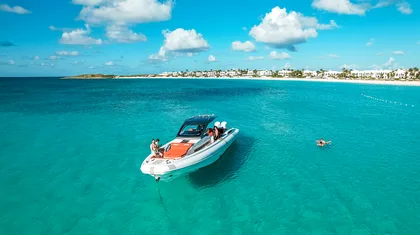
Boats leave from the Terminal Náutico da Bahia near Mercado Modelo for a full day on the bay, usually stopping at Ilha de Frades and a beach on Itaparica. Expect white sand, warm shallow water, and a grilled fish lunch on a plastic table that somehow tastes better than anything with a tablecloth.
Prices sit around R$100–160 (~$18–29) per person, lunch sometimes included. It is the best value boat trip in Bahia — just know that the onboard sound system will be playing axé at full volume from departure to dock.
- Neighborhood: Comércio waterfront, Terminal Náutico da Bahia
- Cost: R$100–160 (~$18–29), plus a small island landing fee of R$10–15 (~$2–3)
- Best time: Departures around 9 a.m., Tuesday to Sunday; weekdays are far less crowded
- Getting there: Walk down from Pelourinho via Elevador Lacerda (R$0.15), then 5 minutes along Avenida da França
Insider tip: Confirm in writing whether lunch and the landing fee are included before you hand over money. Ask how many passengers the boat takes — under 40 is a good day, over 80 is a floating nightclub.
6. Barra: The Free Beach Day That Feels Like a Resort
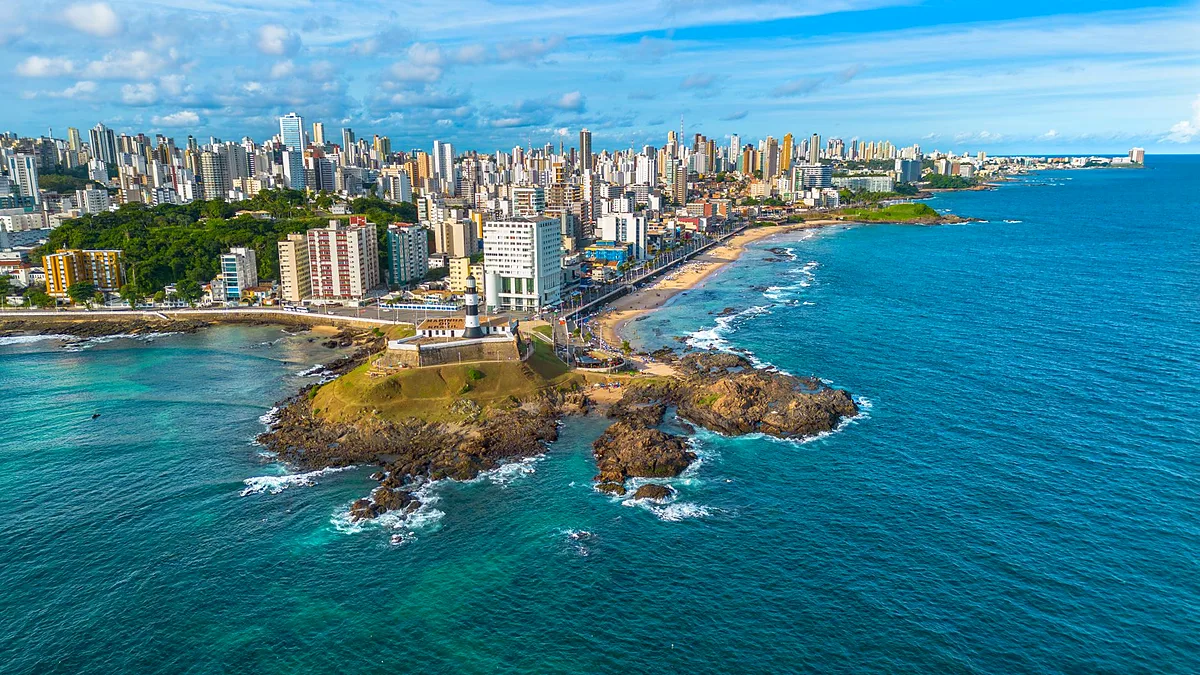
Porto da Barra is the beach locals actually use, tucked between the Forte de Santo Antônio da Barra and the neighborhood of Barra. The water is calm and green, the sand is wide, and a chair plus umbrella sets you back R$20–30 (~$4–6) for the afternoon.
The fort itself houses the Museu Náutico da Bahia for around R$15 (~$3), and the lighthouse beside it is where half of Salvador gathers for sunset with a coconut in hand. No ticket, no queue, no dress code.
- Neighborhood: Barra
- Cost: Beach free; chair and umbrella R$20–30 (~$4–6); museum R$15 (~$3); coconut R$8 (~$1.50)
- Best time: Swim before 10 a.m. when the bay is glassy; sunset at the lighthouse around 5:30 p.m.
- Getting there: Any Uber from Pelourinho is R$20–30 (~$4–6); buses along Avenida Oceânica stop at the farol
Insider tip: Politely refuse the bracelet a stranger starts tying to your wrist on the sand. It is not a gift, and the asking price arrives about 30 seconds later, usually R$20–50.
Where to Eat and Drink Nearby
Acarajé da Dinha at Largo de Santana in Rio Vermelho is the benchmark. Order the acarajé with vatapá, caruru and shrimp for R$18–25 (~$3–5), eat it standing up, and carry napkins. Cash is safest; the queue is normal.
Ki-Mukeka, also in Rio Vermelho, serves moqueca for two at R$130–170 (~$24–31) with rice, pirão and farofa. Split it between three people and it becomes a budget dinner that still feels like a celebration.
Restaurante SENAC on Largo do Pelourinho is the quiet cheat code: a weekday lunch buffet of Bahian home cooking, around R$60 (~$11) per person, served inside a colonial mansion with a courtyard. Get there before 12:30 p.m. or wait outside.
For dessert, Sorveteria da Ribeira has been scooping tapioca, pitanga and graviola since 1935 — R$8–14 (~$1.50–2.50) a cone, and worth the Uber to the Ribeira waterfront.
Practical Logistics and Budget Tips
From the airport, the metro is unbeatable value: Line 2 from Aeroporto station to Acesso Norte, then Line 1 to Campo da Pólvora, all for R$4.40 (~$0.85). Buy a rechargeable Cartão Integração at any station and top it up as you go.
Uber and 99 are the default for everything the metro does not reach. A ride from Rio Vermelho back to Pelourinho at night is R$25–35 (~$5–6) — take it rather than walking the ladeiras after 10 p.m.
Carry R$100–200 (~$18–36) in small notes. Most street vendors, acarajé stands and small bars are cash-first, though PIX is accepted almost everywhere locals shop.
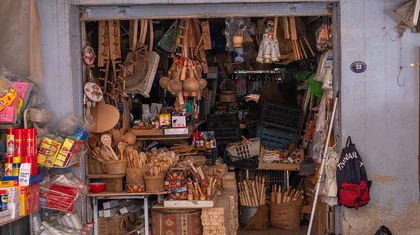
What to skip: Mercado Modelo souvenirs — the same lace, ceramics and hammocks sell for less at the Feira de São Joaquim. Skip the Baianas in white dresses who pose for photos and then charge R$20–50, and skip any packaged city tour that bundles a beach stop with a shopping stop.
Honest heads-up: Pelourinho is busy and fine during the day and around the main squares at night, but the empty side streets — Ladeira do Carmo, Rua do Passo — are not where you want to be alone after dark. Also note the Elevador Lacerda is a 15-cent ride, not an attraction worth queueing 25 minutes for at midday.
Frequently Asked Questions
Is Salvador expensive for travelers?
No — Salvador is one of the best-value cities in Brazil. A comfortable day with a good pousada, two restaurant meals and a paid activity lands around R$250–450 (~$45–85) per person.
Is Salvador safe for tourists?
Yes, with normal city sense: stick to Barra, Rio Vermelho, Santo Antônio and the busy parts of Pelourinho, and take an Uber instead of walking unlit streets at night. Leave jewelry and your phone in your pocket on crowded squares.
Which neighborhood is best to stay in on a budget?
Santo Antônio Além do Carmo gives you colonial charm and boutique pousadas at R$300–500 (~$55–91) a night. Barra is the pick if you want beach access, and Pelourinho is cheapest but noisiest.
How many days do you need in Salvador?
Four full days covers the historic center, a beach day in Barra, Sunday jazz and a bay boat trip. Add two more if you want capoeira classes, Rio Vermelho's nightlife and a day trip to Cachoeira.