
Salvador was Brazil's first capital, and the old town still behaves like one. Churches are lined with gold leaf, market stalls smell of dendê oil and dried shrimp, and the crafts on sale here — filé lace, hand-thrown pottery, berimbau bows — come from families who have been making them for generations.
This guide skips the souvenir filler. It covers the workshops where you can watch hands at work, the heritage sites that explain why those crafts look the way they do, and the honest trade-offs of visiting them.
At-a-Glance Snapshot
- Best time to visit: May to June or September to November — dry, warm, and rooms run 30% cheaper than in January. Avoid Carnival week (February), when most workshops close and prices triple.
- Daily budget: R$250–450 (~$46–83 USD) per person for a pousada room, three meals, and two paid attractions.
- Getting around: Uber and 99 apps are cheap (R$12–25 / $2–5 for most centre rides). The metro is clean but stops at Campo da Pólvora, a 15-minute uphill walk from Pelourinho.
- Vibe: Hot, loud, and unhurried in the mornings. Cobblestones everywhere. Bring shoes with grip and cash in small notes.
1. Igreja de São Francisco: The Gold Church That Funds the Story
The interior of São Francisco is the single most jaw-dropping sight in the old town: roughly 800 kilos of gold leaf on cedar carvings, plus Portuguese tilework and a ceiling painted with saints. What makes it relevant to a crafts trip is the stonework outside, carved by enslaved and free African masons whose signatures are still visible on the facade.
Unlimited High-Speed International Travel eSIM
Connect in seconds across 180+ destinations. Instant QR code activation with zero roaming surcharges.

Next door, the Capela Dourada (Golden Chapel) is smaller, quieter, and often empty. The two share a ticket, and seeing them back to back takes about 45 minutes.
- Neighborhood: Pelourinho, Largo do Cruzeiro de São Francisco
- Entry: R$10 (~$2 USD) for the church; R$20 (~$4 USD) combined with the Capela Dourada
- Best time: 8–9:30am, before tour groups arrive around 10
- Getting there: Walk up from the Elevador Lacerda (15 minutes), or take an Uber to Largo do Cruzeiro
Insider tip: Do the Capela Dourada first. Tour buses unload at São Francisco's main door mid-morning, and the smaller chapel stays calm even when the main church is packed.
2. Museu Afro-Brasileiro and the Terreiro de Jesus Lanes
This small museum sits inside the old Faculty of Medicine building on Terreiro de Jesus, and its collection of Candomblé objects, ritual tools, and slave-trade maps explains the visual language behind almost every craft you'll see for sale outside. It's the context that turns a beaded necklace into something you actually understand.
Afterward, walk the lanes off the square — Rua Gregório de Mattos and the streets toward Largo do Pelourinho — where small shops sell jewellery, carved orixás, and leather. Casa do Benin, two blocks away, has a tight, free collection of Afro-Brazilian art and is rarely crowded.
- Neighborhood: Pelourinho, Terreiro de Jesus
- Entry: R$15 (~$3 USD) for the museum; Casa do Benin is free
- Best time: Midday, when the heat pushes everyone into the shade and the galleries empty out
- Getting there: Five-minute walk from São Francisco; the square is a taxi and Uber drop-off point
Insider tip: Museum hours in Bahia shift without warning, especially around holidays. Check with your pousada the morning you plan to go rather than trusting the hours posted online.
3. Santo Antônio Além do Carmo: Workshops Behind the Church
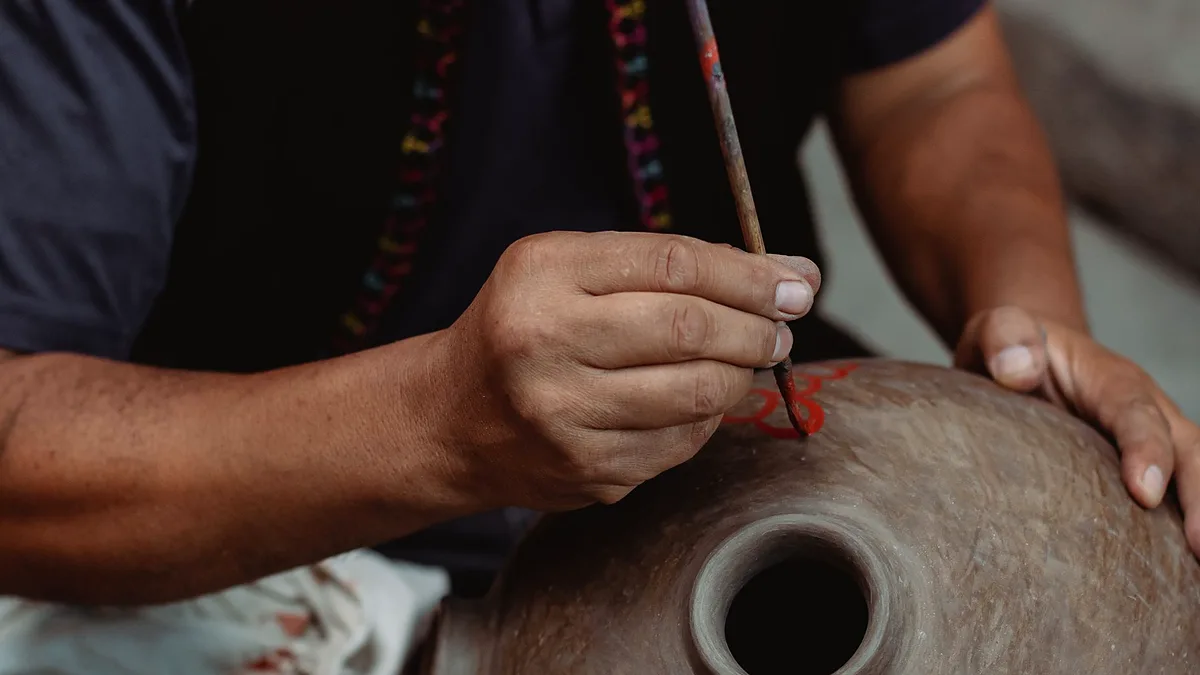
Cross the Carmo hill and the noise drops. Santo Antônio is a residential quarter of pastel colonial houses, and its main street, Rua Direita de Santo Antônio, holds a loose cluster of working ateliers — ceramics, woodblock prints, silverwork, and one workshop that builds atabaques and berimbaus by hand.
This is where you buy directly from makers, often at 30–40% below Pelourinho shop prices, and where you can ask questions without a queue behind you. Several capoeira academies train in the largo in the evenings; watching a class from the square steps costs nothing.
- Neighborhood: Santo Antônio Além do Carmo
- Cost: Free to browse; a hand-turned bowl runs R$60–120 (~$11–22 USD), a capoeira drop-in class R$50–80 (~$9–15 USD)
- Best time: 4–7pm, when workshops open up after siesta and the bay view from the far end of the street turns gold
- Getting there: 20-minute walk from Pelourinho, or R$15 Uber; steep, so take the car if it's raining
Insider tip: Most ateliers here are one-person operations with no sign and no fixed hours. Ring the bell, and if the door is shut, come back after 4pm — that's when the makers are actually in.
4. Feira de São Joaquim: The Raw Craft Market
This is not a curated market. São Joaquim is a sprawling wholesale fair where Salvadorans buy baskets, clay pots, brooms, hammocks, farinha, and the ritual supplies used in Candomblé houses. It's chaotic, loud, and the most honest place in the city to see where half the city's crafts actually begin.
Come for the balaios (woven baskets) and the stacked terracotta — much of it thrown in Maragogipinho, a pottery village in the Recôncavo that you can visit on a day trip. Bring small notes and be ready to negotiate, gently.
- Neighborhood: Comércio / Cidade Baixa, near Água de Meninos
- Entry: Free
- Best time: 7–9am on a weekday, when stock is arriving and the light is soft
- Getting there: R$15–20 Uber from Pelourinho, or a bus along Avenida da França
Insider tip: Ask before photographing vendors — many will say yes, and those who don't will tell you plainly. Keep your phone in your front pocket and skip the underpass area at the market's edge.
5. Solar do Unhão: Where Heritage and Modern Art Share a Room
A 16th-century sugar mill and former slave-trading site on the bay, now home to the Museum of Modern Art of Bahia. The building itself is the exhibit: thick stone walls, a stone ramp designed by Lina Bo Bardi, and a waterfront terrace where the water sits about three metres away.
Saturday afternoons bring Jam no MAM, a long-running live jazz and samba session on the terrace. It's popular with locals — arrive by 5:30pm to get a table, or plan to stand.
- Neighborhood: Solar do Unhão, Avenida do Contorno
- Entry: Around R$20 (~$4 USD) for the museum; the terrace and jazz are free
- Best time: Tuesday to Sunday, late afternoon; Saturday for the music
- Getting there: Uber only, honestly — there's no pleasant walk here, especially after dark
Insider tip: The bayside terrace is the draw, but the upper gallery holds rotating shows by Bahian artists who rarely get shown abroad. Fifteen minutes upstairs is worth more than an hour of sunset photos.
6. Bonfim: Ribbons, Wax Miracles, and Lace
The Church of Nosso Senhor do Bonfim sits on the Itapagipe peninsula, and it's the emotional centre of Bahian faith. The famous fitas — coloured ribbons tied to wrists with three knots and three wishes — are sold on the steps, but don't stop there. The Sala dos Milagres, a side room stuffed with wax body parts and thousands of photographs left as thanks, is the part people remember.
The square outside turns into a lace and embroidery fair on weekends. This is the place to buy filé lace, the netted, knotted craft of the Bahian coast, at prices well below the old town shops.
- Neighborhood: Bonfim, Itapagipe
- Entry: Free; ribbons cost R$5–10 (~$1–2 USD) each, lace scarves R$80–250 (~$15–46 USD)
- Best time: Weekday mornings; Sunday for the market
- Getting there: R$25 Uber from Pelourinho (20 minutes), or bus from Comércio
Insider tip: Buy ribbons from the older women selling on the church steps rather than the kiosks on the approach road. Same ribbon, half the price, and your money stays in the neighbourhood.
7. Olodum's Tuesday Rehearsal: Living Heritage, Not a Show
Every Tuesday night, the samba-reggae drum group Olodum rehearses in Largo Tereza Batista, a small square in the middle of Pelourinho. A few dozen drummers, a sound that rearranges your ribcage, and a crowd that's mostly Brazilian — this is the closest you'll get to the Afro-Brazilian culture the museums spend all day explaining.
Tickets are sold at the entrance on the night. Standing room only, and it goes on past midnight.
- Neighborhood: Pelourinho, Largo Tereza Batista
- Cost: R$30–50 (~$6–9 USD)
- Best time: Arrive by 8:30pm; the square fills fast
- Getting there: Walk from anywhere in Pelourinho; take an Uber home afterward rather than walking dark side streets
Insider tip: Skip the R$180 hotel dinner-and-folklore packages. For a fraction of the price you get real drummers rather than a choreographed show, and no bus to wait for at the end.
Where to Eat & Drink Nearby
Cantina da Lua — Terreiro de Jesus
A former barbershop where Jorge Amado used to sit, now a busy corner restaurant with cold beer and a decent moqueka. Order the moqueca de peixe for two at R$90–120 (~$17–22 USD) and sit outside.
Acarajé da Dinha — Largo de Santana, Rio Vermelho
The benchmark acarajé: black-eyed pea fritters split and stuffed with vatapá, shrimp, and hot pepper. R$18–25 (~$3–5 USD) each. Eat it standing, with a cold coconut.
Sorveteria da Ribeira — Ribeira
Open since 1931, and still the best ice cream in the city. Try the tapioca or graviola flavour, R$8–14 (~$1.50–2.50 USD) a scoop. It's a 15-minute Uber from the old town and worth the detour.
Practical Logistics & Budget Tips
The metro won't take you to the historic centre, so don't build a plan around it. Use it to reach Campo da Pólvora or Lapa, then walk uphill or grab a five-minute Uber. Rides inside the centre rarely pass R$25.
Ride the Elevador Lacerda at least once. It costs a few cents, connects the Comércio waterfront to Pelourinho in 30 seconds, and gives you the postcard view of the bay for free.
| Cost item | Typical price |
|---|---|
| Hostel dorm bed | R$60–110 (~$11–20 USD) |
| Pousada double, Pelourinho | R$220–400 (~$40–75 USD) |
| Acarajé from a tabuleiro | R$18–25 (~$3–5 USD) |
| Prato feito lunch | R$30–45 (~$6–8 USD) |
| Museum entry | R$10–20 (~$2–4 USD) |
| Uber across the centre | R$15–30 (~$3–6 USD) |
What to Skip
Mercado Modelo is convenient and air-conditioned, but the T-shirts and hammocks there cost 40% more than the same goods at Feira de São Joaquim or at Santo Antônio ateliers. Look, don't buy.
Also skip the guided day tour that claims to cover five churches in three hours. You'll spend more time in a van than in a nave, and the churches are all within a 20-minute walk of each other.
Honest Heads-Up
Pelourinho is heavily policed and fine during the day, but after 10pm stay on the lit, busy squares and take an Uber rather than walking back to Santo Antônio or the Cidade Baixa. Carry small notes: many workshops and market stalls don't accept cards, and nobody has change for R$100.
Frequently Asked Questions
What crafts is Salvador known for?
Filé lace, terracotta and ceramics from Maragogipinho, carved wooden orixás and saints, berimbaus and atabaques, and hand-rolled Bahian beads. The best places to see them made are the ateliers of Santo Antônio and the Feira de São Joaquim.
How many days do you need in Salvador?
Three full days covers Pelourinho, the museums, Bonfim, and one workshop visit without rushing. Add two more if you want Rio Vermelho, a capoeira class, and a day trip to the Recôncavo pottery villages.
Is Pelourinho safe for visitors?
Yes during the day — it's busy, well-policed, and easy to navigate on foot. At night, stick to the main squares around Largo do Pelourinho and take a car back to your pousada instead of walking side streets.
When is the best time to visit for crafts and heritage sites?
May, June, and September through November bring dry weather, thinner crowds, and lower room rates. January is spectacular for the Bonfim festival, but book accommodation months ahead.