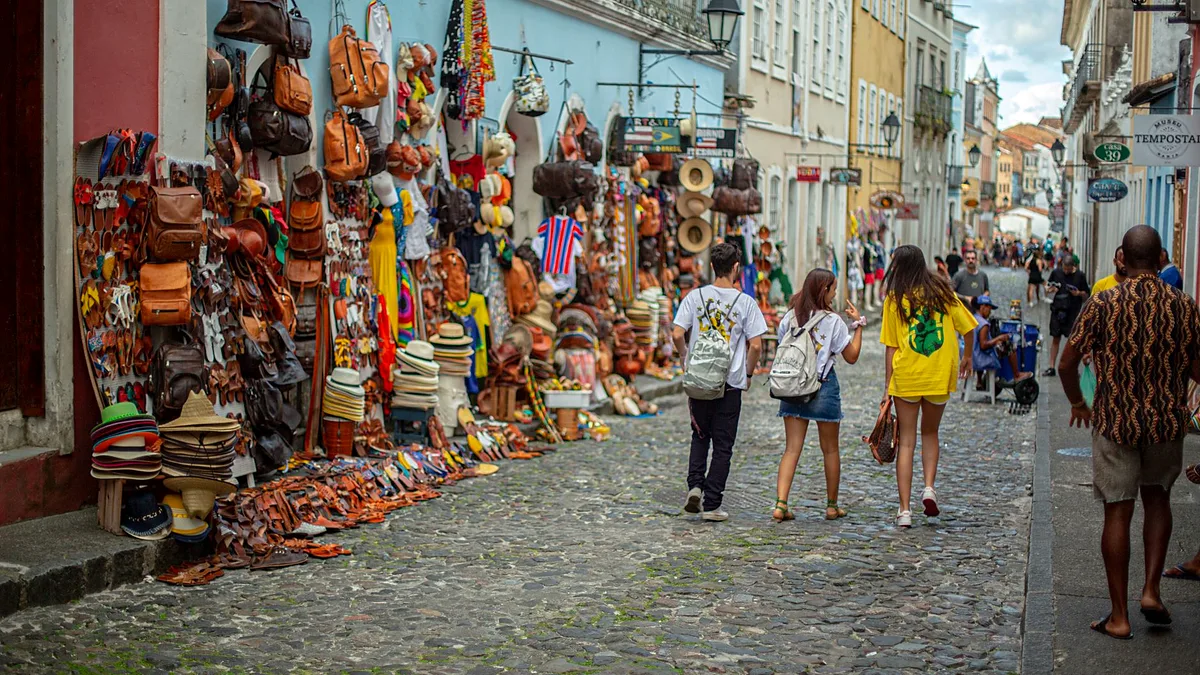

Salvador was Brazil's first capital, and its old town still moves to rhythms set three centuries ago. The difference from other colonial cities is that the craft here isn't staged for visitors: people carve, sew, drum, and dance in the same squares their grandparents used.
This guide sticks to that overlap — the workshops and heritage sites where you can watch, ask questions, and pay a fair price. I've kept the geography tight so you're not stuck in traffic all day, and I've flagged which spots earn your money and which don't.
- Best time to go: September to November, or March just after Carnival. April to July is rainy.
- Daily budget: R$250–450 (~$50–90) per person, including one paid workshop.
- Getting around: Metro plus Uber. The historic center is hilly — you'll walk more than you expect.
- Vibe: Loud, warm, unhurried in the mornings and musical after dark.
1. Largo do Pelourinho and Igreja do Rosário dos Pretos
This sloping square is the center of gravity for Afro-Brazilian Salvador. The Church of Our Lady of the Rosary of Black Men was built by enslaved and freed Africans in the 1700s, and it still holds a packed Mass with drumming on Tuesday evenings.
Unlimited High-Speed International Travel eSIM
Connect in seconds across 180+ destinations. Instant QR code activation with zero roaming surcharges.

Around it, narrow streets hold small ateliers selling wood carvings, berimbaus, and silver filigree. Wander Rua João de Deus and the lanes off the square; the best work is usually two doors down from the loud storefronts.
- Neighborhood: Pelourinho, Centro Histórico
- Cost: Free to walk; church entry free; carvings R$80–250 (~$16–50)
- Best time: 8–11am, before tour groups and heat
- Getting there: Walk 15 minutes uphill from Lapa metro station, or Uber to Largo do Pelourinho
Insider tip: Tuesday's 6pm Mass at the Rosário is open to visitors if you dress modestly and don't film — sit at the back and stay for the procession.
2. A Capoeira Angola Class and Roda
Capoeira was born in Salvador, and Angola-style classes here are taught as a full practice — music, song, and history, not just kicks. Drop-in sessions run most weekdays in the studios around Pelourinho, and nobody minds a beginner who listens.
If you only have an hour, watch instead. Rodas form in the late afternoon on Largo do Pelourinho and Terreiro de Jesus, with berimbau players setting the pace and locals filling the circle.
- Neighborhood: Pelourinho
- Cost: R$50–80 (~$10–16) for a drop-in class; rodas are free to watch
- Best time: Classes 6–8pm weekdays; rodas around 5–7pm
- Getting there: On foot within the historic center
Insider tip: Ask before filming. A quick nod to the teacher goes a long way, and phones in the circle are frowned on.
3. Museu Afro-Brasileiro at Terreiro de Jesus
Housed in the old Faculty of Medicine building, MAFRO holds a serious collection of Candomblé objects, textiles, and wood sculpture. It's small enough to finish in an hour and gives context to everything else you'll see in the city.
The square outside is worth the trip on its own — the 17th-century cathedral, street vendors with cocadas, and the shade of the old trees at midday.
- Neighborhood: Terreiro de Jesus, Pelourinho
- Cost: R$10 (~$2)
- Best time: Mid-morning, Tuesday to Friday
- Getting there: 4-minute walk from Largo do Pelourinho
Insider tip: The Candomblé section has no English labels. Read the two-page handout at the front desk before you start, or the objects will blur together.
4. Mercado Modelo for Crafts (With Caveats)
Under the old customs house near the Elevador Lacerda, this market packs roughly 250 stalls of carvings, hammocks, lace, and Candomblé supplies. It's convenient and it's touristy — both things are true.
Buy small items here: a berimbau, a set of fitinhas, a wooden orixá figure. For anything expensive, walk on to Feira de São Joaquim instead.
- Neighborhood: Cidade Baixa, below the Elevador Lacerda
- Cost: Free entry; small carvings R$40–120 (~$8–24)
- Best time: 9–11am, before cruise-ship crowds
- Getting there: Elevador Lacerda from Praça Cayru (about R$0.15) or a 12-minute walk downhill from Pelourinho
Insider tip: Never accept the first price. Start at 60% and expect to settle around 75–80% of the asking price.
5. Feira de São Joaquim
This sprawling waterfront market is where Salvador actually shops. You'll find straw baskets, ceramics, cast-iron pots, herbs, and the beaded and fabric goods used in Candomblé houses — all at prices locals pay.
It's rough-edged and not set up for tourists, which is exactly why it's worth an hour. Go early, keep your phone in your pocket, and bring cash.
- Neighborhood: Cidade Baixa, Avenida Frederico Pontes
- Cost: Free; baskets R$25–70 (~$5–14), ceramic pots R$30–90
- Best time: 6:30–10am on weekdays; Sunday closes early
- Getting there: Uber from Pelourinho, 10–15 minutes, around R$20
Insider tip: Bring small notes. Stallholders rarely have change for R$100, and haggling here is bad form — the prices are already fair.
6. Santo Antônio Além do Carmo and Fundação Pierre Verger
Climb the hill past the Carmo convent and you reach a calmer neighborhood of colonial houses, art studios, and a handful of very good bars. It's where Salvador's artists actually work.
The Fundação Pierre Verger keeps the archive of the French photographer who documented Bahian Candomblé for fifty years. A few rooms, powerful black-and-white prints, and usually a staff member happy to talk.
- Neighborhood: Santo Antônio Além do Carmo, Rua Direita
- Cost: Free entry, donations welcome
- Best time: Weekday afternoons; the largo is best at sunset
- Getting there: 20-minute uphill walk from Pelourinho via Ladeira do Carmo, or a short Uber
Insider tip: Check opening hours the same morning — the foundation keeps short weekday hours and closes on public holidays without warning.
7. Liberdade and Ilê Aiyê's Senzala do Barro Preto
Liberdade is the largest Black neighborhood in Brazil, and its carnival bloco Ilê Aiyê runs a year-round cultural center where costumes are sewn, drums are rehearsed, and local kids learn Afro-Brazilian history. Visits need to be arranged ahead.
This is not a sightseeing stop you drift into. It's a working community institution, so go with a guide or a contact, in daytime, and treat it as a visit to someone's home.
- Neighborhood: Liberdade / Curuzu
- Cost: Free, but a donation of R$50+ (~$10) is appropriate
- Best time: Weekday mornings, by appointment
- Getting there: Uber from Pelourinho, 10–15 minutes, about R$20
Insider tip: Do not turn up unannounced with a camera. Message the cultural center a few days ahead and ask what's possible.
Where to Eat and Drink Nearby
Cantina da Lua (Terreiro de Jesus) has been feeding the square since the 1960s. Order the moqueca or the bobó de camarão — plates run R$60–90 (~$12–18), and the daily special is closer to R$40 (~$8).
Acarajé da Dinha at Largo de Santana in Rio Vermelho is the benchmark. An acarajé with everything costs R$18–25 (~$4–5); go after 5pm when the oil is hot and the queue is local.
Sorveteria da Ribeira, open since the 1930s, serves tapioca, cajá, and graviola scoops for R$8–12 (~$2). It's a 20-minute bus ride north but worth pairing with a Ribeira afternoon.
Practical Logistics and Budget Tips
Buy a Bilhete Único card for the metro and buses; rides cost roughly R$4.50 (~$0.90). The metro won't get you into the historic center, so budget for two or three Ubers a day at R$15–25 each.
Carry cash. Many ateliers and market stalls won't take cards, and PIX only works if you have a Brazilian bank account. ATMs near Av. Sete de Setembro are the most reliable.
- Walk smart: Pelourinho to Santo Antônio is 20 minutes uphill; the climb back down via Ladeira do Carmo is steep but safe in daylight.
- Sunday: The Solar do Unhão craft fair runs with live samba — a good low-cost afternoon.
- Skip: Dinner-and-folklore packages at R$150–250. The dancing is staged and the food is average.
- Skip: The Elevador Lacerda at midday — the queue eats 20 minutes. Go early or walk down.
- Honest heads-up: Pelourinho empties out on Sunday and Monday evenings and feels deserted. Stay in lit squares after 9pm and take an Uber rather than cutting through side streets.
Frequently Asked Questions
Is Pelourinho safe for visitors?
By day it's busy, patrolled, and easy. At night stick to the main squares, keep your phone out of sight, and take an Uber for anything beyond a five-minute walk.
How much should I pay for handicrafts at Mercado Modelo?
Expect to settle at 75–80% of the first price, which is usually inflated for tourists. At Feira de São Joaquim and the artisan co-ops, pay what's asked.
When is the best day for Salvador's heritage sites?
Tuesday for the Bonfim church washing and the Rosário Mass, Sunday for the Solar do Unhão fair. Weekday mornings beat everything for Pelourinho without crowds.
Do I need Portuguese for a craft workshop?
Not for capoeira or most ateliers — people manage with gestures and basic Spanish. For a Candomblé house or a Liberdade visit, arrange a guide who can translate.