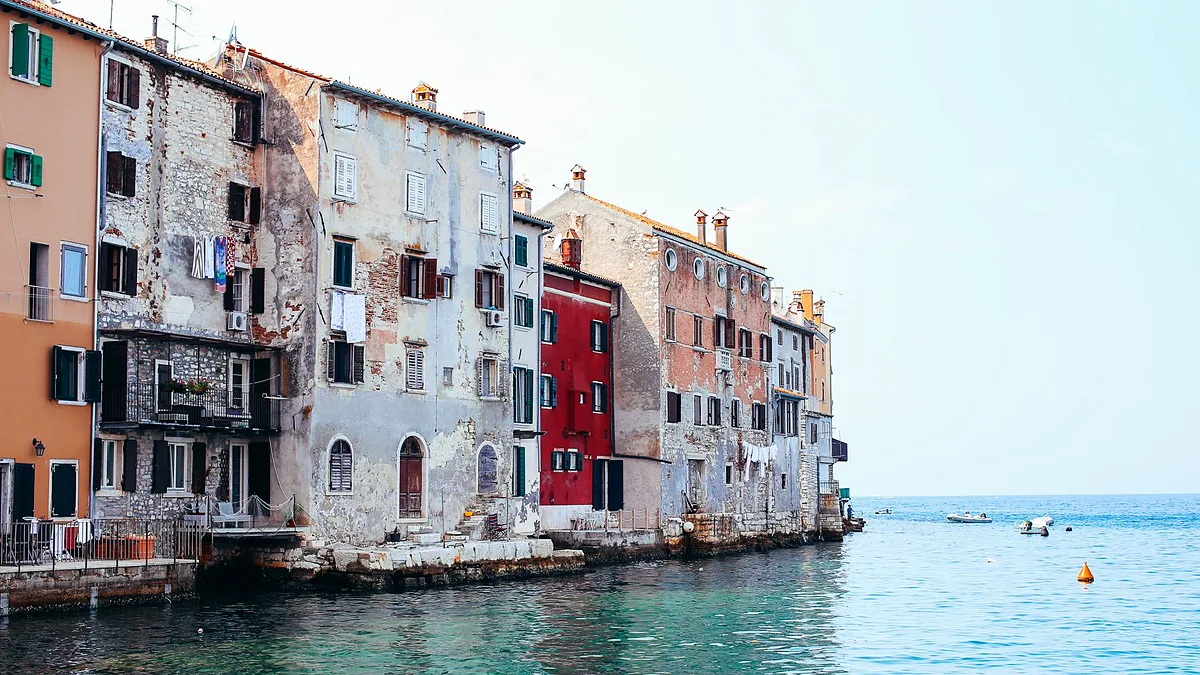

Rovinj rewards people who slow down. Most visitors sprint up to St. Euphemia's bell tower, take the postcard shot, eat a plate of scampi and catch the evening bus back to Poreč. That's a shame, because the real texture of this Istrian town sits one layer below the postcard.
It lives in a boat workshop where shipwrights still bend oak by hand, in a narrow cobbled street where painters sell work straight off the easel, and in a 300-year-old palace holding the town's whole story in a handful of rooms. This guide is for travellers who'd rather watch someone make something than queue for a selfie.
Every place below is real, currently open, and priced honestly. You'll also find the downsides, because Rovinj has a few and you deserve to know before you spend the money.
Unlimited High-Speed International Travel eSIM
Connect in seconds across 180+ destinations. Instant QR code activation with zero roaming surcharges.

At a Glance: Rovinj for Makers and History Lovers
- Best time to visit: May, June, September and early October. Studios are actually open, the stone isn't radiating heat, and rooms cost roughly 30–40% less than in August.
- Typical daily budget: €50–70 (~$54–76) on a careful day; €95–140 (~$103–151) mid-range with a sit-down dinner and two paid entries.
- Getting around: On foot. The old town is car-free and about 15 minutes end to end. Buses reach Pula, Poreč and Zagreb; there is no train station.
- General vibe: Quiet, bilingual (Croatian and Italian signs everywhere), fishing-town bones under Venetian architecture. Mornings belong to locals, evenings to strollers.
St. Euphemia's Bell Tower: The Climb That Frames the Town
The baroque church on Rovinj's summit was built between 1725 and 1736, and its bell tower copies St. Mark's in Venice almost line for line. About 175 wooden steps spiral you up a shaft so narrow that passing another person requires negotiation and a smile.
At the top, the copper statue of St. Euphemia turns on her iron spindle like a weathervane. On clear days you can trace the Istrian coast toward Poreč in one direction and the islands of Sveta Katarina and Crveni Otok in the other. It's the single best €6 you'll spend here.
- Neighbourhood: The summit of the Old Town, Trg sv. Eufemije.
- Cost: €6 (~$6.50) adults; young children free.
- Best time: 8:30–10:00 or after 17:30, when the tour groups are eating.
- Getting there: From Balbi's Arch, walk straight up Grisia and follow the crowd, then the stairs.
Insider tip: Inside, behind the main altar on the left, is a glass sarcophagus holding the saint's relics — most people walk past it to reach the tower stairs. Also check the flag before climbing: when the bura wind blows, the tower shuts without much warning.
Kuća o Batani: Where the Batana Boats Are Still Built
The batana is a flat-bottomed fishing boat rowed standing up, and it's the reason Rovinj exists. In 2014 the town's boat-building tradition was added to UNESCO's intangible heritage register, and this small museum on the waterfront is where that story is kept alive.
Part of it is displays; the better part is next door at Spacio Matika, an open-air workshop where shipwrights repair and build hulls with hand tools. If you're lucky you'll hear bitinada, the local multipart singing that grew out of rowing crews.
- Neighbourhood: Obala Pina Budicina, on the harbour just north of the Old Town, beside the market.
- Cost: €5 (~$5.50) for the museum; workshop visits are often free or a small donation.
- Best time: Late morning, roughly 10:00–12:00, when the shipwrights are actually working.
- Getting there: Three minutes on foot from the Valdibora parking and bus stop.
Insider tip: Ask at the desk whether any short batana rides are running that week. When they do, they leave from the harbour for around €10–15 (~$11–16) and beat the generic glass-bottom cruises by a mile.
Grisia Street: The Town's Oldest Gallery
Grisia is the cobbled lane that climbs from the old gate to the church, and it has been Rovinj's art address since 1968. That's the year the Grisia open-air exhibition began — on the first Sunday of August, hundreds of artists hang work on the street's stones and walls, and the whole town turns into a gallery for a day.
Year-round, the street is a mix. Some spaces are genuine working studios with turpentine in the air; others are souvenir shops selling the same sunset print in three sizes. Learning to tell the difference is half the fun, and nobody minds if you browse without buying.
- Neighbourhood: Grisia, Old Town.
- Cost: Free to browse. Prints €20–60 (~$22–65); originals €150–800 (~$162–865).
- Best time: 10:00–12:00, or after 19:00 when the light softens and the cruise crowd is gone.
- Getting there: Walk up from Balbi's Arch; it's the main artery and impossible to miss.
Insider tip: Ask who painted a piece and when they finished it. Real studios answer instantly; souvenir shops change the subject. For serious contemporary work, the Adris Gallery a few minutes from Carera is worth checking for its rotating exhibitions.
Rovinj Heritage Museum in the Califfi Palace
This is the town's attic, and it's far better than that sounds. Housed in the baroque Califfi Palace, the collection covers Venetian rule, fishing life, shipbuilding, archaeology and the Italian-speaking community that shaped modern Rovinj.
It's small — an hour, not an afternoon — but the objects are genuinely good, and the building itself, with its stone balconies and worn floors, is half the exhibit. Come here first if you want the rest of the town to make sense.
- Neighbourhood: Old Town, Trg maršala Tita, in the palace just below the main square.
- Cost: €4–5 (~$4.30–5.40).
- Best time: Midday, when it's hot outside and cool indoors.
- Getting there: Five minutes on foot from Balbi's Arch, signed from the main street.
Insider tip: Head to the top floor and find the old maps. One shows Rovinj as an island — it was one until 1763, when the channel between town and mainland was filled in.
The Valdibora Market and Fish Market
If you want to meet actual producers rather than buy from a gift shop, this is the place. The covered market on Valdibora sells Istrian olive oil, honey, dried figs, rakija, lavender and seasonal produce, with the fish market a few steps away.
It's not a farmer's-market fantasy — some stalls are resellers — but the good ones are obvious once you start asking questions. Bring cash and go early; by 11:00 the best of it is gone.
- Neighbourhood: Valdibora, between the harbour and the bus station.
- Cost: Free to enter. Olive oil €15–25 (~$16–27) per half litre; rakija €10–15; honey €8–12.
- Best time: 7:00–9:30, especially for fish.
- Getting there: Two minutes from the Valdibora car park; the fish hall closes around noon and on Sundays.
Insider tip: Buy olive oil only from a bottle with a producer name and a harvest date on it. Unlabelled bottles sold as "authentic family oil" are a coin flip, and most truffle paste in the tourist shops contains no Istrian truffle at all.
Franciscan Monastery of St. Francis
The Franciscan monastery sits on the quieter edge of the Old Town, and it is the closest thing Rovinj has to a pause button. The cloister, the small church and the old library — several thousand volumes, some of them centuries old — are open to respectful visitors.
There's no ticket booth, no audio guide, no shop. Just stone, silence and a couple of friars going about their day. It's the counterweight to the busy harbour, and worth ten quiet minutes.
- Neighbourhood: Old Town, north side, below the main street.
- Cost: Free; a donation of €2–3 is polite.
- Best time: Weekday mornings, outside Mass times.
- Getting there: A three-minute walk from the harbour front; look for the church facade, not a sign.
Insider tip: Cover shoulders and knees. It's an active religious house, and visitors in beachwear get politely turned away.
A Self-Guided Heritage Walk: Arch, Chimneys and Venetian Stone
You don't need a guide to read this town; you just need to look up. Start at Balbi's Arch, built in 1678–79 with the winged lion of Venice carved into it, then wander the lanes looking for two things: the funnel-shaped kamila chimneys on the rooftops, and the carved stone lintels with faded coats of arms above doorways.
The whole loop — arch, Grisia, the summit, down through the western lanes — is about two kilometres and takes ninety minutes if you stop to look. Fragments of the old defensive walls turn up in the oddest places, built into houses.
- Neighbourhood: Entire Old Town peninsula.
- Cost: Free.
- Best time: 7:30–9:00, before the day-trippers arrive and while bakers are still delivering.
- Getting there: Start at Balbi's Arch; every bus and car route in town funnels you toward it.
Insider tip: Those polished limestone lanes are genuinely dangerous in flip-flops after rain or during morning cleaning — they behave like ice. Wear shoes with grip.
Where to Eat and Drink Nearby
Kantinon sits on the waterfront by the fish market and is the locals' answer for Istrian classics: pljukanci with truffles, fried sardines, malvazija by the glass. Mains run €15–28 (~$16–30). Book for dinner; lunch is walk-in.
Da Sergio, tucked near the market, is the old-school choice — thin-crust pizza, simple seafood, no theatre. Mains €12–22 (~$13–24), and it's one of the few places in the centre where a family of four escapes under €80.
Valentino on the rocks below the church is where you go for a slow drink at golden hour. Cocktails around €10–12 (~$11–13). If you want one big splurge, the Michelin-starred tasting menu at Monte is excellent and costs €130+ per person before wine.
Practical Logistics and Budget Tips
Park at the Valdibora garage or car park — roughly €1.50–2.50 (~$1.60–2.70) per hour in season — and then forget the car entirely. Driving into the old town is impossible and pointless.
The bus station on Bratska handles Pula in about 45 minutes for €7 (~$7.60), Poreč in 35 minutes for €5, and Zagreb in four and a half hours for €28–35. Pula Airport is 40 km away; a taxi is €50–60 and there's a seasonal shuttle.
Prices below are a realistic snapshot. Croatia has used the euro since 2023, cards are taken almost everywhere, but keep €20–30 in cash for markets and small studios.
| Site | Entry | Heads-up |
|---|---|---|
| St. Euphemia Bell Tower | €6 (~$6.50) | Closes in strong wind |
| Batana House | €5 (~$5.50) | Closed Mondays |
| Rovinj Heritage Museum | €4–5 (~$4.30–5.40) | Closed Mondays |
| Franciscan Monastery | Free / donation | Mornings, modest dress |
| Grisia galleries | Free | Many shut on Sundays |
| Valdibora market | Free | Winds down by 11:00 |
What to skip: the tiny aquarium near the church (€12 for fifteen minutes), restaurants on the main waterfront with photo menus and touts, and loud sunset cruises that drown out the harbour. Also skip renting a car unless you're heading inland to Grožnjan or Motovun — parking costs will eat the savings. Tourist tax adds about €1.60 per person per night.
Save money by buying museum entries individually rather than hunting for a combo pass — they don't really exist here — and by eating lunch out, dinner in. A bakery picnic on the rocks at Zlatni Rt, a 20-minute walk south, costs €8 and beats most terraces.
Frequently Asked Questions
What artisan workshops can you actually visit in Rovinj?
The standout is the batana boat workshop at Spacio Matika beside the Batana House, where shipwrights work with hand tools most mornings. Grisia street's working studios and the Valdibora market stalls are the other two places where you'll meet makers rather than shop assistants.
Is St. Euphemia's bell tower worth the climb?
Yes, if you can handle 175 narrow wooden steps and don't mind heights on the top gallery. Go before 10:00 or after 17:30 for space, and skip it entirely on a windy day, because the tower closes.
When is the Grisia art exhibition in Rovinj?
It runs on the first Sunday of August and has done since 1968, with artists hanging work along the street and adjacent lanes. Arrive before 9:00 if you want to see the art rather than the backs of other visitors.
Do you need cash in Rovinj?
Most restaurants, museums and galleries take cards, so you won't need much. Still carry €20–30 (~$22–32) for market produce, small studio purchases and church donations.