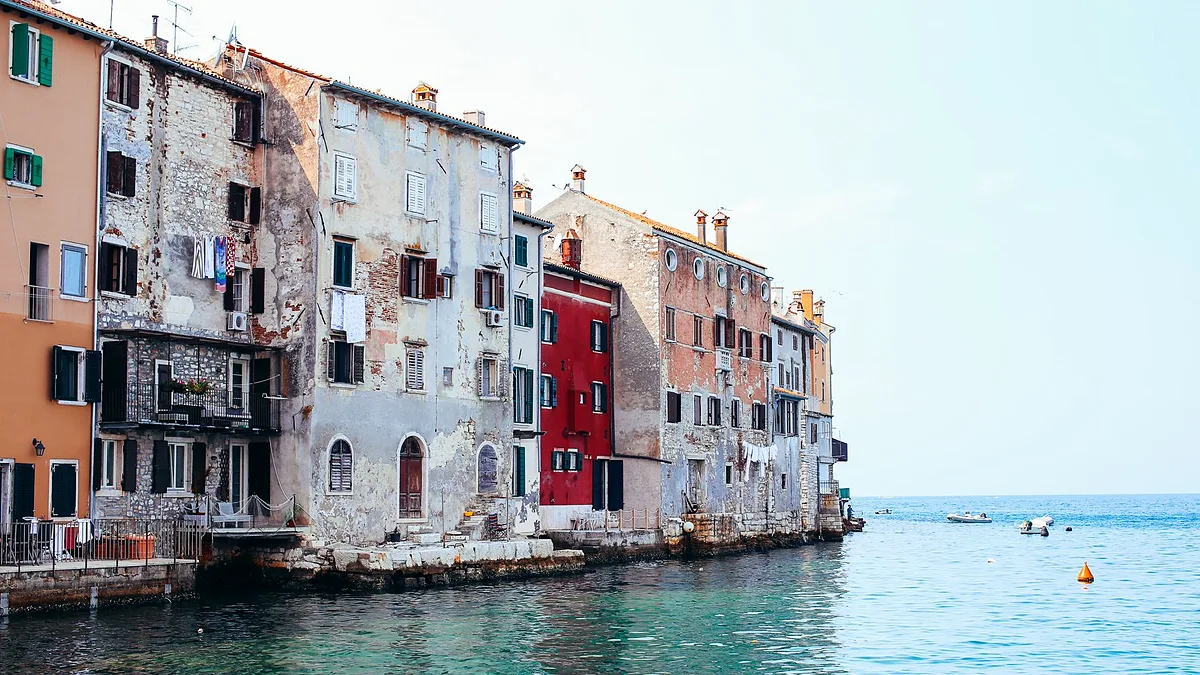

Rovinj looks like a postcard from the sea and behaves like a working town once you get inside it. Fishing boats still tie up along Valdibora, shipwrights still bend planks in the old boat sheds, and painters still open their studios on Grisia because that is where they live.
That difference matters if you want more than a swim and a sunset photo. The town's real texture sits in small workshops and unglamorous heritage sites that cost between €0 and €6 and take twenty minutes each to see properly.
Here is what is genuinely worth your time, what it costs, when to show up, and the bits you can skip without regret.
Unlimited High-Speed International Travel eSIM
Connect in seconds across 180+ destinations. Instant QR code activation with zero roaming surcharges.

Rovinj at a Glance
- Best time to visit: mid-May to late June, or September to early October. Warm sea, thin crowds, and workshops actually open.
- Typical daily budget: €75–120 per person (~$80–130 USD) mid-range. A lean day on coffee, bakery food and free sites runs €40–50.
- Getting around: the old town is car-free and fully walkable. Bikes or the coastal path get you to Zlatni Rt; buses handle Pula and Trieste.
- Vibe: a fishing port with a pretty face, not a museum piece. Locals still hang laundry above the galleries.
- Currency: euro since January 2023. Cards are widely accepted, but small workshops and market stalls prefer cash.
1. House of Batana (Kuća o batani) and Spacio Matika
The batana is Rovinj's own boat: a flat-bottomed wooden rowing boat that has been built here for centuries. In 2014 UNESCO added the town's boat-building tradition to its register of good safeguarding practices, and this small museum-plus-workshop is where that tradition stays alive.
You walk through the restored spacio — the covered shed where boats are stored and repaired — and often find someone actually working on a hull. It is not polished or interactive. That is exactly why it works.
- Neighborhood: the shoreline just north of the old town, a two-minute walk from Valdibora market.
- Cost: around €4 (~$4.30 USD); some parts free to enter.
- Best time: weekday mornings, when the workbenches are busy.
- Getting there: follow the waterfront north from the market; it is signposted and flat.
Insider tip: Ask whoever is on duty about the summer batana rowing race. Locals crew these boats themselves, and knowing the date will change how you plan your trip.
2. Grisia Street and the Grisia Art Exhibition
Grisia is one of the prettiest cobbled lanes in Istria, and it is also a working artists' row. Small studios sell paintings, ceramics, jewellery and prints made a few metres from where you are standing, and the shopkeepers are usually the makers.
Once a year, on the last Sunday of August, the street becomes one long open-air gallery. The Grisia exhibition has run since 1967 and draws artists from across Croatia and beyond. It is crowded, hot, and absolutely worth planning around if you love art.
- Neighborhood: the upper old town, climbing toward the church.
- Cost: free to walk; exhibition pieces are for sale at every price point.
- Best time: 8:00–10:00, or after 18:00 when the day-trippers leave.
- Getting there: enter from Balbi's Arch and walk uphill; no cars, uneven steps throughout.
Insider tip: On exhibition day, arrive before 9:00. By 11:00 the lane is shoulder to shoulder and you cannot see the work properly.
3. Church of St. Euphemia and Balbi's Arch
St. Euphemia dominates the skyline, and her bell tower — modelled on Campanile in Venice — is the best €6 you will spend in town. The climb is up wooden stairs and ladders, tight in places, and the reward is a full view over the rooftops, the harbour and the islands beyond.
On the way up Grisia you pass Balbi's Arch, built in 1679 and topped with a Venetian lion. It is a two-minute stop, so do not build a morning around it.
- Neighborhood: the very top of the old town.
- Cost: bell tower around €6 (~$6.50 USD); church entry free.
- Best time: right at opening, or an hour before sunset.
- Getting there: a 10-minute uphill walk from Tito Square; not accessible for strollers or wheelchairs.
Insider tip: The church closes to visitors during Mass — check the board at the door before you climb, or you will walk up for nothing.
4. Rovinj Heritage Museum in Califfi Palace
This is the town's attic, in the best sense. Housed in a Baroque palace on the main square, the collection covers Roman settlement, Venetian rule, fishing, salt and the hard century when the Italian-speaking population left.
It is small and old-fashioned, with handwritten labels in places, and it explains why Rovinj looks the way it does far better than any walking tour.
- Neighborhood: Trg Marsala Tita, the main square of the old town.
- Cost: roughly €3–4 (~$3.30–4.30 USD).
- Best time: 11:00–13:00, when the sun outside gets serious.
- Getting there: two minutes on foot from Balbi's Arch.
Insider tip: It usually closes one weekday, often Monday, and runs shorter hours in winter. Confirm at the door rather than trusting old online listings.
5. Mali Salon and Adris Gallery
Rovinj has a serious contemporary art habit for a town of 14,000 people, largely thanks to local industry money. Mali Salon is the small, sharp exhibition space near the main square, showing Croatian and international names on rotating shows.
The larger Adris Gallery puts on bigger, museum-grade exhibitions. Both change several times a year, so check what is on rather than assuming.
- Neighborhood: the old town centre, within a few minutes of Tito Square.
- Cost: free, which is unusual for this quality.
- Best time: late afternoon, when the galleries are quiet.
- Getting there: both are walking distance from anywhere in the old town.
Insider tip: Opening days are irregular and typically skip Sundays and Mondays. Do not build a day around one show without checking first.
6. Valdibora Morning Market
This is where the heritage gets eaten rather than framed. The covered market on Valdibora sells Istrian olive oil, honey, dried figs, cheese, pršut and bottles of malvazija from people who grew the grapes.
Go early, bring cash, and taste before you buy — most stalls will hand you a slice of cheese or a drizzle of oil without being asked.
- Neighborhood: Valdibora, on the north edge of the old town.
- Cost: free to browse; olive oil from €12–20 per bottle (~$13–22 USD).
- Best time: 7:00–9:30, before it thins out.
- Getting there: a three-minute walk from the main square.
Insider tip: Ask which grove the oil came from. Stallholders who can name the village are the ones worth buying from.
7. Monkodonja Hill Fort
Twenty minutes outside town sits a Bronze Age settlement on a hilltop, occupied roughly 1800–1200 BC and rebuilt with dry-stone walls for visitors. There is almost nothing here in the way of signage or facilities, and that is the appeal.
You get a genuine archaeological site, wind, and a view that explains why anyone would have built here in the first place.
- Neighborhood: countryside northeast of Rovinj, off the road toward Bale.
- Cost: free.
- Best time: early morning or late afternoon — there is zero shade.
- Getting there: 10–15 minutes by car or taxi; no reliable public transport, so book a return or cycle.
Insider tip: Wear closed shoes. The path from the parking area is rough stone and gravel, and flip-flops are a genuine ankle risk.
Where to Eat and Drink Nearby
Konoba Veli Jože — a short climb off Grisia, all stone walls and local families. Order the fish baked under the peka or a bowl of maneštra; expect €20–30 (~$22–32 USD) per person with wine.
Barba Danilo — on the road out toward Zlatni Rt, with a garden and a grill. Fuži with truffles and grilled fish are the moves. Around €25–35 (~$27–38 USD) per person, and it is where locals go for a long lunch.
Da Sergio — near the market, no view, no fuss, excellent pizza. A pizza and a drink lands around €12–15 (~$13–16 USD), which is the cheapest honest meal in the centre.
Practical Logistics and Budget Tips
Getting there and around
Rovinj has no train station. Buses from Pula take 45–60 minutes and cost roughly €5–7 (~$5.50–7.50 USD). Pula Airport is about 40 km away; taxis run €40–50.
Park at Valdibora or the edge-of-town lots and walk in — driving into the old town is not possible and not worth attempting. Summer parking runs about €1.50–2.50 per hour.
Money and timing
Book workshops and small museums for weekdays; several shut entirely from November to March. Shoulder-season afternoons bring a 13:00–17:00 closure at smaller places, so plan mornings.
Carry €30–50 in cash for the market, tiny studios and boat sheds that do not take cards.
What to skip
Skip waterfront restaurants with photo menus and laminated "grill for two" platters at €60. Walk two streets inland and pay half.
Skip souvenir truffle jars unless the label states a percentage — many are mostly sunflower oil. And do not bother with the glass-bottom boat trips; the town's real water story is the batana.
Frequently Asked Questions
Do you need cash in Rovinj?
Most restaurants, hotels and galleries take cards, so you need very little. Keep €30–50 for the Valdibora market and small craft studios that still prefer notes.
When is the Grisia art exhibition in Rovinj?
It is held on the last Sunday of August along Grisia street and has run since 1967. Arrive before 9:00 if you actually want to see the work rather than the backs of heads.
What is a batana boat?
A traditional flat-bottomed wooden rowing boat built in Rovinj for centuries, recognised by UNESCO in 2014. You can see them under restoration at the House of Batana near the waterfront.
How many days do you need in Rovinj?
Two full days covers the old town, the workshops and a swim at Zlatni Rt. Add a third if you want Monkodonja, a wine tasting or a day trip to Pula.