
Puglia has a reputation problem. People assume it's either a €700-a-night Borgo Egnazia fantasy or a campervan trip down a lot of dirt roads. Neither is true.
The masserias, olive groves and limestone coves that pull in the Milanese every August are genuinely doable on €90–130 a day. The trick is knowing where the money leaks — and it's almost never the things you remember afterwards.
Spend on a night inside a 300-year-old stone farmhouse and a plate of orecchiette made that morning. Don't spend on beach clubs, hotel breakfasts, or anything with a sea view and a €25 cover charge. Here's how that looks in practice.

At a Glance: Puglia on a Budget
- Best time to visit: Late May to mid-June, and September to early October. August weather, 30–40% lower prices.
- Typical daily budget: €90–130 per person for a budget-luxury trip; €60–75 if you skip the masseria and stay in agriturismi.
- Getting around: Ferrovie del Sud Est (FSE) regional trains plus a small rental car for two or three days. Car hire runs €25–40/day in shoulder season.
- Vibe: Slow mornings, long lunches, beach at 5pm. This is not a nightlife destination.
- Cash: Cards work in masserias and restaurants; butchers' grills and small frantoi prefer cash.
1. Sleep Inside a Masseria Without the Resort Bill
A masseria is a fortified farmhouse, and Puglia has thousands of them. The famous ones — Borgo Egnazia, Masseria San Domenico, Torre Coccaro — start at €400 a night and go up fast. Skip them.
The same vaulted stone rooms, almond trees and swimming pools exist on working farms between Cisternino, Martina Franca and San Vito dei Normanni, where rooms run €90–140 in June and September. Masseria Cervarolo near Ostuni is a solid mid-priced example; search "agriturismo masseria" on Booking or Wonder Puglia and sort by price.
- Where: Valle d'Itria and the countryside inland from Ostuni.
- Cost: €90–140 / ~$95–150 USD per double, shoulder season, breakfast included.
- Best time to book: 8–10 weeks ahead for June and September; 5–6 months for July.
- Getting there: You need a car. Rent from Bari or Brindisi airport; a 3-day rental from ~€90 total.
Insider tip: Ask whether the masseria is a working farm before booking. The ones that still press oil or grow grapes feel completely different from the ones that are just hotels in a stone shell — and they're usually cheaper.
2. Wander Ostuni's White Old Town at Golden Hour
Ostuni is the postcard: whitewashed lanes stacked up a hill, laundry lines, a 15th-century cathedral at the top. It's free to walk, and the light between 6pm and 8pm makes the whole town glow.
Skip the midday version. Between 1pm and 4pm the place bakes and half the shops close. Come late, watch the passeggiata, then eat.
- Where: Centro Storico, Ostuni.
- Cost: Free. Museo delle Civiltà Preclassiche della Murgia Meridionale is €5 / ~$5.50 USD.
- Best time of day: 6–8pm, or 8–9am before the tour buses.
- Getting there: FSE train from Bari to Ostuni takes about 1h20 and costs €5.50. The station is 2km below town — local bus or a 20-minute uphill walk.
Insider tip: Restaurants on Via Cattedrale and around Piazza della Libertà pay the highest rent and serve the weakest food. Walk ten minutes downhill towards Via Giovanni XXIII for the same dishes at two-thirds the price.
3. Swim the Free Coves: Baia dei Turchi and Torre Sant'Andrea
Puglia's best swimming is free. Baia dei Turchi, north of Otranto, is a white-sand bay reached by a 10–15 minute walk through a pine forest — no lido, no bar, no queue for a sunbed. Torre Sant'Andrea, further south, is a stack of limestone arches you swim between off flat rocks.
Both are on the same stretch of coast and work well as one day. Bring water and shade; there is nothing to buy once you're in.
- Where: Baia dei Turchi (near Alimini) and Torre Sant'Andrea, Salento coast.
- Cost: Free. Parking €5–8 / ~$5.50–8.70 USD. A lido sunbed nearby costs €20–25 for two.
- Best time of day: Arrive before 9:30am in July and August; 4pm onwards is quieter and warmer.
- Getting there: Car needed. From Otranto it's 15 minutes south to Torre Sant'Andrea.
Insider tip: Ignore the first car park you see at Baia dei Turchi — private lots charge €10 and wave you into the wrong trail. Drive to the marked reserve entrance and use the €5 municipal lot.
4. Eat at a Fornello Pronto in Cisternino for €18
Cisternino has a system the rest of Italy should copy. You walk into a butcher, point at the meat, they weigh it, season it and grill it for you at a table out front. It's called a fornello pronto and it's the best-value meal in Puglia.
Order bombette (rolled pork with herbs), gnummareddi (slow-braised lamb offal) and a sausage or two. Add bread, a half-litre of house Negroamaro, and you're at €15–20 a head for a feast.
- Where: Piazza Vittorio Emanuele and Via Roma, Cisternino.
- Cost: €15–20 / ~$16–22 USD per person including wine.
- Best time of day: 8–10pm, when locals eat. Many close on Mondays.
- Getting there: FSE Bari–Martina Franca line; Cisternino station is 4km out of town, so take the local bus or a €10 taxi.
Insider tip: Order and pay at the counter first, then sit. Tourists who sit down and wait get ignored for 20 minutes while the butcher serves the queue.
5. Taste Primitivo and Olive Oil at the Source
Primitivo di Manduria and Salento's Negroamaro are world-class reds, and cellar-door tastings cost a fraction of what they do in Tuscany. Around Manduria and Cellino San Marco, three or four wines with bread and oil typically run €20–30.
Olive oil is the other half of the story. Puglia produces close to half of Italy's olive oil, and during the harvest (October to December) small frantoi will show you the press and sell you a three-litre tin for €20.
- Where: Manduria and the Salento wine belt; frantoi around Ostuni and Cisternino.
- Cost: €20–30 / ~$22–33 USD per tasting. Frantoi visits are often free if you buy oil.
- Best time of day: Weekday mornings; many small cellars close on Sunday.
- Getting there: Easiest by car. FSE trains reach Manduria from Taranto.
Insider tip: Ask for vino sfuso at any cantina and bring your own bottle. Loose Primitivo runs €3–4 a litre and it's the same wine the restaurant down the road is charging €22 for.
6. Lecce: Baroque for the Price of a Coffee
Lecce's Baroque is carved from soft local limestone that's been melting beautifully for 400 years. The Basilica di Santa Croce is free to walk into and more impressive than most paid museums in Italy. The Roman amphitheatre sits in the main square, visible from the street.
Then there's the food. A pasticciotto — warm custard-filled pastry — costs about €1.50, and a caffè leccese (espresso with almond syrup and ice) is €2.
- Where: Centro Storico, Lecce.
- Cost: Free to wander; Museo Faggiano €5 / ~$5.50 USD; pasticciotto €1.50.
- Best time of day: 7–9pm during the passeggiata.
- Getting there: Trenitalia Bari–Lecce, roughly 1h45, €10–15. Station is a 10-minute walk from the old town.
Insider tip: Museo Faggiano started when a family digging up a blocked pipe found a Roman floor, then a medieval tomb, then a Templar tunnel. It's €5 and run by the family themselves — far better value than the €15 multi-museum pass.
7. Take the Ferry to the Tremiti Islands
This is the one splurge worth making. The Tremiti sit 12 nautical miles off the Gargano coast, reachable by hydrofoil from Vieste in about an hour. San Domino is pine forest and clear water; San Nicola has an 11th-century abbey and the grave of a poet dumped there by Frederick II.
There are no cars on the islands and almost nothing to spend money on once you arrive. Bring a mask and snorkel and you're set.
- Where: Isole Tremiti, Gargano coast, northern Puglia.
- Cost: Ferry €25–30 / ~$27–33 USD each way, plus a small landing fee. Day return trips run €45–55.
- Best time of day: First crossing out, last one back.
- Getting there: Hydrofoils from Vieste, Rodi Garganico and Termoli.
Insider tip: Book the morning crossing but check the sea forecast first — the Strait of Otranto chops up fast and the afternoon boats get cancelled more often than operators admit.
Where to Eat and Drink Nearby
Osteria del Tempo Perso — Ostuni
Tucked into a former olive press on Via Scipione Tanzarella, this is the cave-dining experience people fly to Polignano and pay €200 for — at €30–35 a head. The orecchiette con cime di rapa is the order.
Il Cortiletto — Cisternino
A few streets off the main square, family-run, with a courtyard and a short menu that changes weekly. Expect €25–30 for three courses including wine. Book by phone a day ahead.
Panificio Fiore — Bari Vecchia
On Strada del Carmine, this bakery has been turning out focaccia barese with cherry tomatoes and olives for generations. A slab the size of your hand is €2.50 — breakfast for under €4 with a coffee.
Practical Logistics and Money-Saving Tips
- Trains vs car: FSE lines cover Bari–Martina Franca–Taranto and Lecce–Otranto–Gallipoli. That's enough for Ostuni, Cisternino and Lecce. You still need a car for the beaches and masserias — rent for two or three days rather than the whole trip.
- Validate your ticket: Paper FSE tickets need stamping at the platform machine. Inspectors do fine on the spot and it's €30+.
- Watch the ZTL: Ostuni, Lecce and Otranto have camera-guarded limited-traffic zones in their old towns. Drive in by accident and the fine arrives six months later — €80 and up.
- Coffee standing up: €1.20 at the bar, €3.50 at a table. Same espresso.
- Beach clubs: Every lido has a free spiaggia libera next door. Pay for the sunbed once, on the day you want shade.
- Water: Public fountains are everywhere. Carry a bottle and skip the €2 supermarket litres.
What to Skip (Honestly)
Grotta Palazzese in Polignano a Mare is the famous cave restaurant on the cliff. The setting is real; the €200+ tasting menu is not worth it. Have a drink at sunset nearby and eat in town for €30.
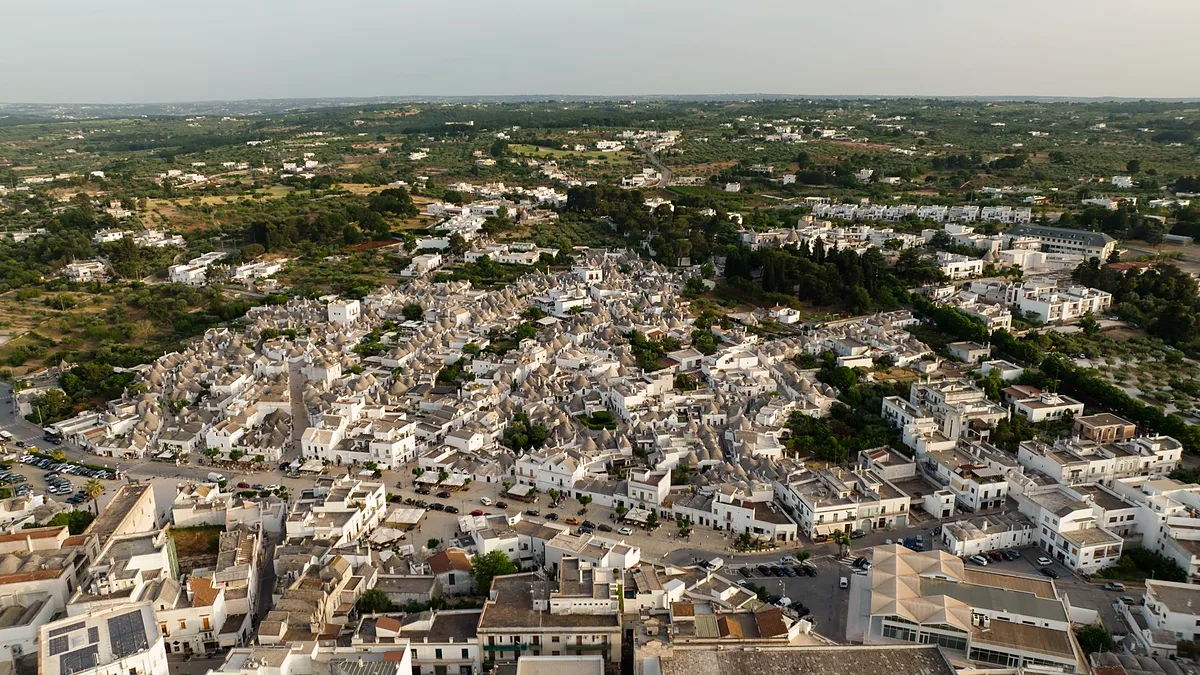
Alberobello's trulli are UNESCO-listed and genuinely strange and beautiful — but arrive before 9am or after 7pm. Between those hours in August it's a queue of souvenir shops. And avoid any Ostuni menu with photographs on it: that's the universal signal for frozen seafood and €18 pasta.
Frequently Asked Questions
Is Puglia expensive to visit?
No. Outside August, €90–130 a day covers a masseria room, a rental car split between two, and proper meals with wine. The expensive version of Puglia exists, but it's entirely opt-in.
Do you need a car to see Puglia on a budget?
Not for the towns — FSE trains link Bari, Ostuni, Martina Franca, Lecce and Otranto cheaply. You do need one for masserias and free beaches, so rent for a few days instead of the whole trip.
When is the cheapest time to visit Puglia?
Late September through October, and May before the school holidays. You get 22–26°C days, open beaches and accommodation at 50–60% of August rates.
How much does a masseria stay cost per night?
Working-farm masserias run €90–140 for a double with breakfast in June and September. The famous resort masserias start around €400 and climb to €900 in high season.