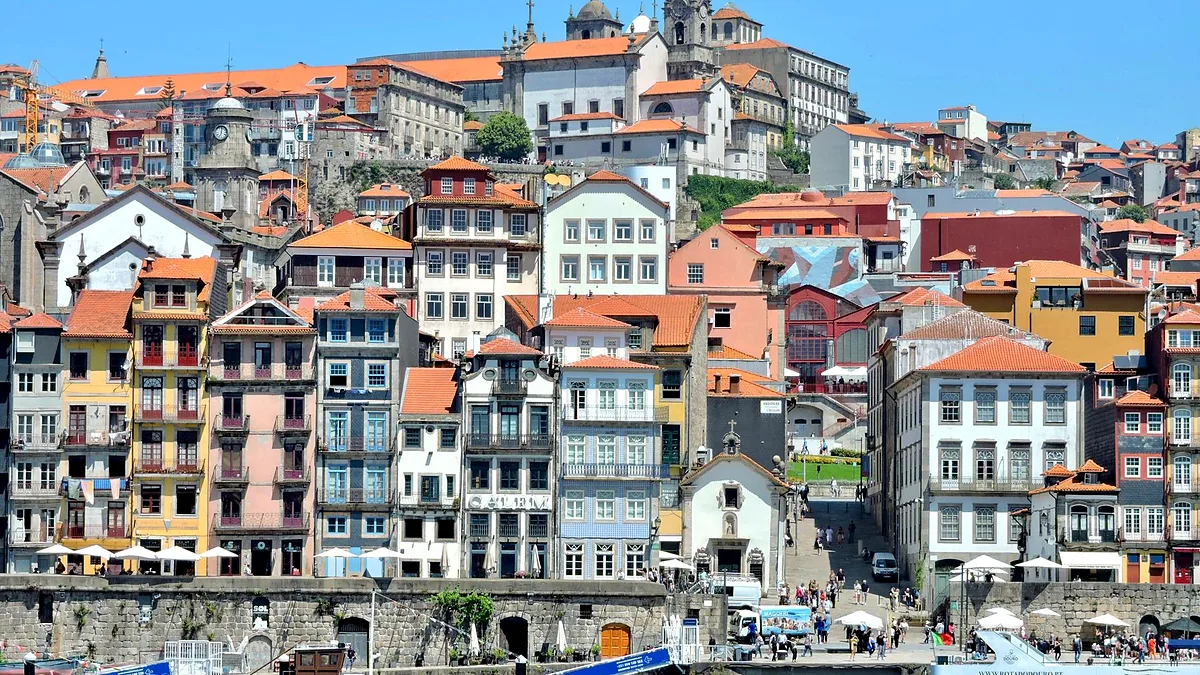

Porto in January is grey, wet and about ten degrees cooler than the postcards. That's exactly why it works. The queues at the tile-fronted churches shrink to nothing, the port cellars smell of damp oak and burnt sugar, and the city's remaining craftspeople — gilders, ceramicists, coopers, bookbinders — finally have time to talk.
This guide is built around the things Porto still actually makes, plus the heritage buildings that show off what it used to make. Expect real prices, the metro lines that get you there, and honest warnings about the spots that eat an afternoon and give back very little.
Porto at a Glance
- Best time to visit: Mid-January to late February — post-Christmas, pre-Carnival, with the cheapest hotel rates of the year (€75–€110 / ~$80–$120 for a good double in Cedofeita).
- Typical daily budget: €70–€120 (~$75–$130) per person, covering two paid attractions, a port tasting, transit and three proper meals.
- Getting around: Metro Lines A/B/C/E/F hit Bolhão; Line D links Aliados, São Bento and Vila Nova de Gaia. The reloadable Andante card is the key to all of it.
- Vibe: Quiet, indoor and slightly melancholy in the best way. Bring a rain shell and shoes with grip — Porto's polished calçada gets genuinely slick in winter.
1. Igreja de São Francisco: The Gold-Leaf Masterclass
The interior is a gold rush. Roughly 300 kilos of gold leaf sit over carved oak, applied across the 17th and 18th centuries by generations of entalhadores. It isn't subtle and it was never meant to be. Stand still in the nave for five minutes and new details keep surfacing — oak garlands, hidden birds, faces in the gilding.
Unlimited High-Speed International Travel eSIM
Connect in seconds across 180+ destinations. Instant QR code activation with zero roaming surcharges.

Winter is the only sane time to see it. In July you shuffle through with two hundred other people; in December you might have the place to yourself. The catacombs below, with their glass floor and neat rows of bones, are a strange and sobering add-on that most visitors rush past.
- Neighborhood: São Nicolau, two minutes from the Palácio da Bolsa
- Cost: €6 (~$6.50), catacombs and adjoining museum rooms included
- Best time: 9:30 opening on a weekday, or after 15:30
- Getting there: Metro Line D to São Bento, then an 8-minute downhill walk; or historic Tram 1 to Infante
Insider tip: Photography is fine, but flashes and tripods aren't, and the guards enforce it politely. Pay in cash if you can — the card machine is slow and there's usually a queue behind you.
2. Palácio da Bolsa: Floors Worth Looking Down For
The old stock exchange is the city showing off, and it earns the ticket. You can only enter on a guided tour, which runs every 30 minutes and lasts about 30 — enough time for the glass-roofed courtyard, the stucco work and the Arabic Room, still used for state receptions. Every surface is doing three jobs at once.
Look down, too. The floors are inlaid Brazilian and African hardwood, laid without nails. It's the closest thing Porto has to a craft museum that is still, technically, a working building.
- Neighborhood: Rua de Ferreira Borges, next door to São Francisco
- Cost: €12 (~$13); students and over-65s around €7.50
- Best time: the 9:00 tour, before tour buses land around 11:00
- Getting there: Metro Line D to São Bento (7-minute walk) or Lines A/B/C/E/F to Bolhão (12 minutes)
Insider tip: Book the first slot online and move straight to the Arabic Room when the group is released — it's the smallest room and everyone bunches at the entrance. Skip the evening fado package in winter; the acoustics are lovely but the set is short for the money.
3. Museu Nacional Soares dos Reis: Where Porto Keeps Its Craft
Housed in the 18th-century Palácio dos Carrancas, this is the national museum for Portuguese decorative arts. Ceramics, glass, silver and gold work from the 1600s onward, plus sculpture and painting, spread across two floors that are rarely busy on a wet weekday.
The workshop programme is the reason to check ahead. The museum runs tile painting, drawing and family craft sessions through winter, usually €5–€15 (~$5.50–$16), and they're barely advertised outside the museum's own site.
- Neighborhood: Rua de D. Manuel II 44, on the Cedofeita and Miragaia border
- Cost: €8 (~$8.70); free on Sundays until 14:00
- Best time: weekday afternoons; the free Sunday window is the busiest slot of the week
- Getting there: Metro Lines A/B/C/E/F to Lapa, then a 6-minute walk
Insider tip: The glass and silver rooms on the upper floor get skipped by most people heading for the paintings. Go there first, then loop back — it's quieter and the labels are better.
4. Casa Museu Guerra Junqueiro: The Collector's House
Behind the cathedral, a 1730s townhouse holds one man's obsessive collection: Indo-Portuguese furniture, Chinese porcelain, Portuguese filigree, silver, ceramics and religious sculpture, all crammed into rooms that still feel lived in. Labels are minimal. Ask the guard a question and you'll get a twenty-minute answer.
At €3 it is the best value in Porto for decorative arts, and on a rainy Tuesday you may be the only visitor. Give it an hour, not twenty minutes.
- Neighborhood: Rua de D. Hugo 32, Sé
- Cost: €3 (~$3.20)
- Best time: Tuesday to Sunday, 10:00–17:30; closed Mondays
- Getting there: walk up from São Bento (10 minutes), or ride the Guindais funicular up from Ribeira (€2.50 / ~$2.70) and walk 5 minutes
Insider tip: Take the funicular, not the stairs. The climb from Ribeira is brutal in the rain, and the funicular drops you almost at the door of the cathedral square.
5. Miguel Bombarda: Meet the Makers
Rua de Miguel Bombarda and the streets either side hold most of Porto's serious contemporary galleries — Presença, Fernando Santos, Quadrado Azul — plus a rotating cast of small studios selling ceramics, textiles and jewellery. Entry is free and doors are generally open Tuesday to Saturday, roughly 10:00–19:00.
This is where you buy a €40 (~$43) hand-thrown mug or a €120 (~$130) bowl directly from the person who made it, rather than from a shop near the river with a 300% markup. In winter the gallerists have time to talk you through the work.
- Neighborhood: Cedofeita, along Rua de Miguel Bombarda and Rua do Rosário
- Cost: free to browse; budget €20–€150 (~$22–$160) if you're buying
- Best time: the first Saturday of the month, when galleries hold simultaneous openings from 15:00
- Getting there: Metro Line D to Aliados (8-minute walk) or Lines A/B/C/E/F to Lapa (5 minutes)
Insider tip: Many studios don't keep fixed hours in winter. Check Instagram the morning you plan to go — a 30-second check saves a wasted trip across town.
6. Taylor's Port Lodge: Cooperage and Casks in Gaia
Cross the Luís I bridge and you're in the cellars. Taylor's, up the hill on Rua do Choupelo, is the least rushed of the big lodges, and the tour actually explains cooperage — how casks are built, charred and repaired, and why a 40-year-old tawny tastes of walnuts and orange peel.
It's a working cellar, not a theme park. In winter the tasting room is quiet enough that whoever is pouring will answer questions about blending and ageing instead of reciting a script.
- Neighborhood: Vila Nova de Gaia, 10 minutes uphill from the bridge
- Cost: tours from €20 (~$22); the reserve tasting runs around €40 (~$43)
- Best time: the 15:00–16:00 tours, close enough to sunset over the river
- Getting there: Metro Line D to Jardim do Morro, then a 10-minute uphill walk
Insider tip: If you only want the view and one glass, skip the tour and buy a tasting flight at the bar. The terrace looks straight down the Douro and it costs a fraction of the full package.
Where to Eat and Drink Nearby
Casa Guedes on Praça dos Poveiros is the sandwich locals actually queue for: roast pork with melted Serra cheese for €5.50 (~$6). The queue peaks between 12:30 and 14:00, so go at 11:30 or after 15:00.
Café Santiago at Rua de Passos Manuel 226 serves the benchmark francesinha for €12–€14 (~$13–$15). It's enormous. Order one between two and add a chip portion, then walk it off along Rua de Santa Catarina.
Confeitaria do Bolhão on Rua Formosa is the warm-up stop: a pastel de nata and a bica for around €2.50 (~$2.70), standing at the counter like everyone else. It's been running since 1896 and hasn't softened for tourists.
Practical Logistics and Budget Tips
- Andante card: €0.60 for the card, then single metro trips from €1.40 (zone 2). The Andante Tour 24-hour pass for all zones is €7 (~$7.60) and only pays off if you're making four or more trips.
- From the airport: Metro Line E to Trindade, then change — around 35 minutes and €2 with the card.
- On foot: Ribeira, Sé, Aliados and Cedofeita are all within 20 minutes of each other. Save transit for Gaia and Boavista.
- Ride-hailing: Bolt and Uber across the centre typically run €5–€8 (~$5.50–$8.70). Handy after a tasting.
- Book ahead: the Palácio da Bolsa and any port lodge. Museums in Porto rarely need reservations.
What to skip: Livraria Lello charges an €8 voucher for entry and still draws 45-minute queues in January — the staircase is stunning, the crush isn't. The Ribeira restaurants with photo menus and touts are consistently mediocre for twice the price.
Honest heads-up: the Porto Card (from around €13 for one day) sounds essential and almost never is. Add up your actual entries first; most people save money by just paying as they go.
Frequently Asked Questions
Is winter a good time for craft workshops in Porto?
Yes — studios are quiet and makers have time to talk you through their work. Some small workshops drop to weekend-only hours between December and February, so message them a week ahead.
How much does it cost to visit Porto's main heritage sites?
São Francisco is €6, the Palácio da Bolsa €12, the Soares dos Reis museum €8 and Casa Museu Guerra Junqueiro €3. You can cover all four in a day for under €30 (~$33).
Do I need to book port cellar tours in Vila Nova de Gaia?
On winter weekdays you can usually walk in. Book online if you want the last tour of the day for the sunset terrace, and always book at weekends in February.
What's the easiest way to get around Porto's museums and workshops?
Walking plus the metro. Line D connects Aliados, São Bento and Gaia, while Lines A/B/C/E/F stop at Bolhão and Lapa. Buy an Andante card from any metro machine for €0.60 and top up as you go.