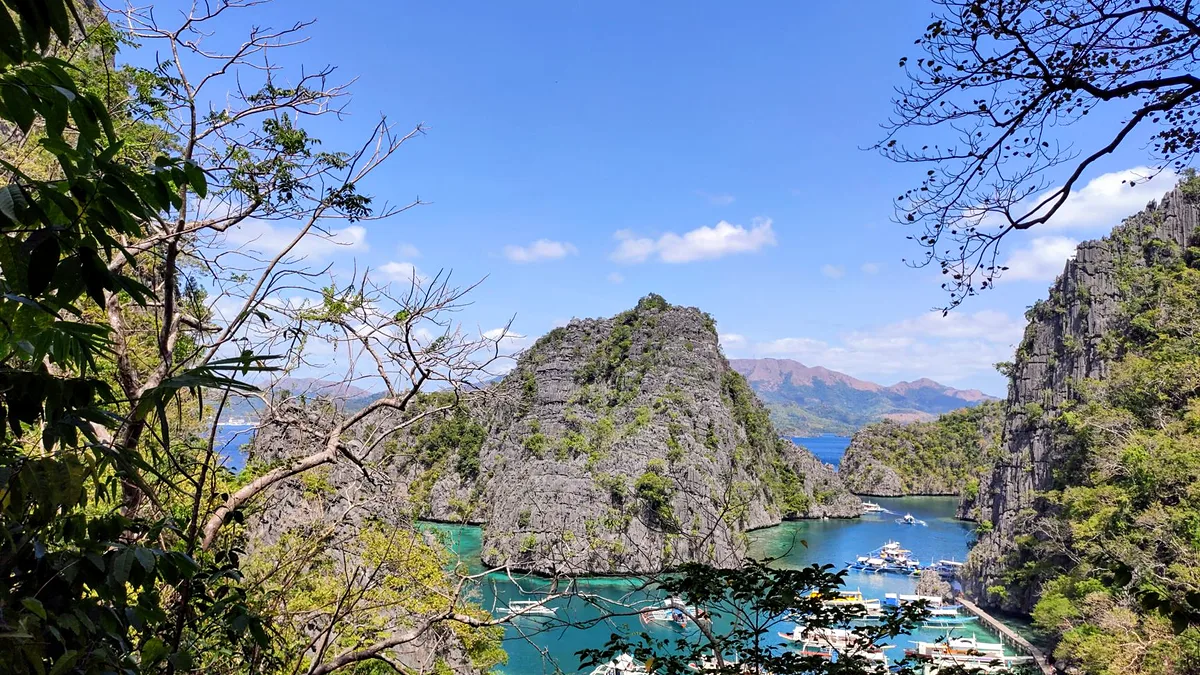

Palawan gets sold as a beach postcard: lagoons, limestone cliffs, boat tours that leave at 7am sharp. All of that is real and worth your time. But the province also has a quieter layer, one built for people who would rather sit in a cool, dim room with a ceiling fan and study a hand-carved tingkop than queue for a group photo.
This guide is about that layer. Small galleries, craft workshops, art-filled dining rooms, and a few private-feeling corners where nobody rushes you out. One honest note up front: Palawan does not have a members-only club scene like Manila or Bangkok. What it has is better in some ways — family-run rooms where the owner will talk to you for twenty minutes if you show up at the right hour.
- Best time to visit: Late May and June for low crowds, or January to early March for dry weather before Holy Week chaos.
- Typical daily budget: ₱2,500–₱4,500 (~$45–$80 USD) for a mid-range room, tricycles, meals and one paid entry.
- Local transport: Tricycles in Puerto Princesa, walking in El Nido town, shared vans between the two (5–6 hours).
- Vibe: Slow, provincial, unhurried. Galleries open late, close early, and rarely advertise.
Palawan Heritage Center, Puerto Princesa
This is the closest thing the province has to a proper curated gallery, and almost no beach-bound tourist sets foot in it. The building sits inside the Provincial Capitol compound in Sta. Monica, air-conditioned and dimly lit, with dioramas of the island's eleven ethnolinguistic groups and a rotating hall of local painters upstairs. It takes about an hour to see properly, and you will likely have whole rooms to yourself.
Unlimited High-Speed International Travel eSIM
Connect in seconds across 180+ destinations. Instant QR code activation with zero roaming surcharges.

The craft wing is the part worth slowing down for. Cuyonon weaving, Batak baskets, Palawan beadwork — all labelled with the village it came from, which matters more than it sounds.
- Neighborhood: Sta. Monica, at the Provincial Capitol compound, Puerto Princesa
- Cost: ₱50–₱100 (~$1–$2 USD)
- Best time: Weekday afternoons, 1pm–3pm, after school groups leave
- Getting there: 10–15 minutes by tricycle from Rizal Avenue, roughly ₱60–₱100 (~$1–$2 USD)
Insider tip: Ask the front desk attendant which ethnolinguistic display is currently complete. Some sections rotate out for repair, and they will tell you honestly rather than let you wander confused.
Kalui Restaurant's Art Rooms, Puerto Princesa
Kalui is technically a seafood restaurant, but walk in and you will think you stumbled into a private club that happens to serve food. You remove your shoes at the door, pad across polished wood floors, and pass walls hung with paintings by Palawan artists — many for sale, most unsigned by price. Private rooms branch off the main hall, each with its own table and its own silence.
It is the single best 'quiet room' experience in Puerto Princesa. Service is gentle, the seafood is genuinely good, and nobody minds if you linger over coffee to look at the art.
- Neighborhood: 369 Rizal Avenue, Puerto Princesa city center
- Cost: Mains ₱200–₱450 (~$3.50–$8 USD); reserve ahead
- Best time: 11:30am opening, or 6pm sharp before the dinner rush
- Getting there: Walkable from most downtown hotels; ₱30–₱50 tricycle otherwise
Insider tip: Book the day before and specifically request a side room off the main hall rather than a table in the center. The corner rooms seat four and feel like someone's dining room.
Asiano Arts & Crafts, Rizal Avenue
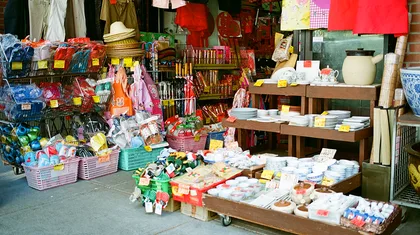
Half shop, half informal gallery, Asiano is where local woodcarvers and weavers actually sell their work rather than the airport versions of it. Shelves hold tingkop hats, hand-loomed fabrics, bagoong jars, and carvings that are clearly not factory-made. Entry is free and nobody pressures you to buy, which makes it a comfortable place to browse for an hour.
Prices are fair but not dirt cheap. A small carving runs ₱300–₱800 (~$5–$14 USD), a good woven mat ₱1,200 (~$21 USD) and up. If you are serious about craft, this is where your money stays in the province.
- Neighborhood: Rizal Avenue, Puerto Princesa, near the city plaza
- Cost: Free entry; crafts from ₱150 (~$3 USD)
- Best time: Mid-morning on weekdays, 9am–11am
- Getting there: Tricycle from anywhere downtown, ₱30–₱60 (~$1 USD)
Insider tip: Ask whether the carver is in that day. When he is, you can sometimes watch a piece being finished at the back table — and he will explain what the patterns mean.
Palawan Museum, Palawan State University
Small, slightly dusty, and entirely unbothered by tourism, this three-floor museum on the university campus holds archaeology, burial jars, and ethnographic material from across the province. It is the kind of place where a staff member might walk you to a case and explain a Tabon Cave artifact without being asked. There are no audioguides and no gift shop.
Come here after the Heritage Center if you want the academic version of the same story. Expect to spend 45 minutes.
- Neighborhood: Palawan State University campus, Tiniguiban, Puerto Princesa
- Cost: Around ₱50 (~$1 USD), cash only
- Best time: Weekday mornings; hours can shift, so confirm at your hotel first
- Getting there: 15 minutes by tricycle from downtown, ₱80–₱120 (~$1.50–$2 USD)
Insider tip: Bring small bills. There is no card reader and no ATM on the immediate block.
El Nido Boutique & Artcafe, El Nido Town
Tucked on Serena Street in the middle of El Nido's busiest strip, Artcafe is the rare town-centre spot that stays calm. The ground floor is a bookstore and small art shop with local photography and prints; upstairs, a wooden terrace looks over the rooftops toward the bay. Coffee is properly made and the breakfast plates are generous.
Between 7am and 9am it is almost empty, because everyone else is already on a boat. That hour is the whole point.
- Neighborhood: Serena Street, Barangay Buena Suerte, El Nido town
- Cost: Coffee ₱130–₱180 (~$2–$3 USD); breakfast ₱250–₱400 (~$4.50–$7 USD)
- Best time: 7am–9am, before island-hopping departures return
- Getting there: Walkable from anywhere in El Nido town, 5–10 minutes
Insider tip: Skip the ground-floor tables in the afternoon heat and head straight to the second-floor terrace. It catches a breeze and stays noticeably cooler.
Fort Santa Isabel, Taytay
Not a gallery, but it belongs on this list because it delivers the same thing — a quiet stone room where the noise of the coast drops away. The 17th-century Spanish fort sits at the edge of Taytay town, walls thick enough to mute the traffic, with a small chapel and a view over the bay. On a weekday you may share it with two other people.
Taytay itself is a faded former capital with old wooden houses and almost no tourist infrastructure, which is exactly why it is worth a stop between Puerto Princesa and El Nido.
- Neighborhood: Taytay town center, roughly 1.5 hours south of El Nido
- Cost: ₱20–₱50 (~$0.50–$1 USD)
- Best time: 4pm–5:30pm for soft light and cooler air
- Getting there: Bus or van from Puerto Princesa (₱300–₱400 / ~$6–$8 USD) or a 1.5-hour van from El Nido
Insider tip: Bring water and wear real shoes. The stone steps are uneven and the nearest shop is a five-minute walk away.
Where to Eat & Drink Nearby
Ka Inato (Rizal Avenue, Puerto Princesa) serves Palawan home cooking in native-style huts with serious distance between tables. Order the chicken inato and the tamilok if you are feeling brave. Budget ₱150–₱350 (~$3–$6 USD) per person, and go at lunch to avoid the evening cultural show crowds.
Badjao Seafront Restaurant (Abueg Sr. Street, Barangay Bagong Sikat) is a wooden walkway built out over the water, quiet at 5pm and romantic by 7pm. Grilled squid and lato seaweed salad run ₱250–₱600 (~$4.50–$11 USD). It is a tricycle ride out of the center, so arrange your return ride before you sit down.
The Alternative (El Nido town) is a small leafy courtyard restaurant doing vegetarian and international plates at ₱250–₱450 (~$4.50–$8 USD). It is the calmest dinner in El Nido and a good break from grilled fish.
Practical Logistics & Budget Tips
- Tricycles, not meters: Puerto Princesa tricycles are hired, not shared. Agree the price before you get in — ₱30–₱80 in town, ₱150–₱250 for cross-town trips.
- Van transfers: Puerto Princesa to El Nido runs ₱600–₱800 (~$11–$14 USD) and takes 5–6 hours. Book through your hotel the day before; walk-up seats sell out in high season.
- El Nido eco fee: ₱400 (~$7 USD), valid 10 days. You only need it for island-hopping, not for town galleries and cafés — do not let anyone tell you otherwise.
- Cash is king: Both museums take small bills only, and El Nido ATMs run dry on weekends. Withdraw in Puerto Princesa before you travel north.
- What to skip: Baker's Hill is a photo-op stop with mediocre food. The 7am island-hopping tours cram six boats into the same lagoon; a private or afternoon charter costs more but buys you quiet.
- Honest heads-up: Palawan's art scene is genuinely small. Do not expect hours of gallery-hopping — expect three or four rooms, a good conversation, and a lot of time left over for the water.
Frequently Asked Questions
Are there art galleries in Palawan?
Yes, but they are small and mostly concentrated in Puerto Princesa, with a few shops in El Nido town. The Palawan Heritage Center and Asiano Arts & Crafts are the two most consistent stops.
Is there a members-only club in Palawan?
No traditional members' club exists in the province. The closest experience is booking a private room at Kalui Restaurant in Puerto Princesa, or using the quiet lounges at the larger resorts.
How many days do you need to see Puerto Princesa and El Nido?
Allow three days in Puerto Princesa for museums and craft shops, then four to five in El Nido if you also want boats and beaches. Rushing the transfer between them eats a full half-day.
When is Palawan quietest?
June through early November is low season — cheaper rooms, emptier galleries, and daily rain that usually passes in an hour. Avoid Holy Week and the Christmas-to-New Year week entirely.