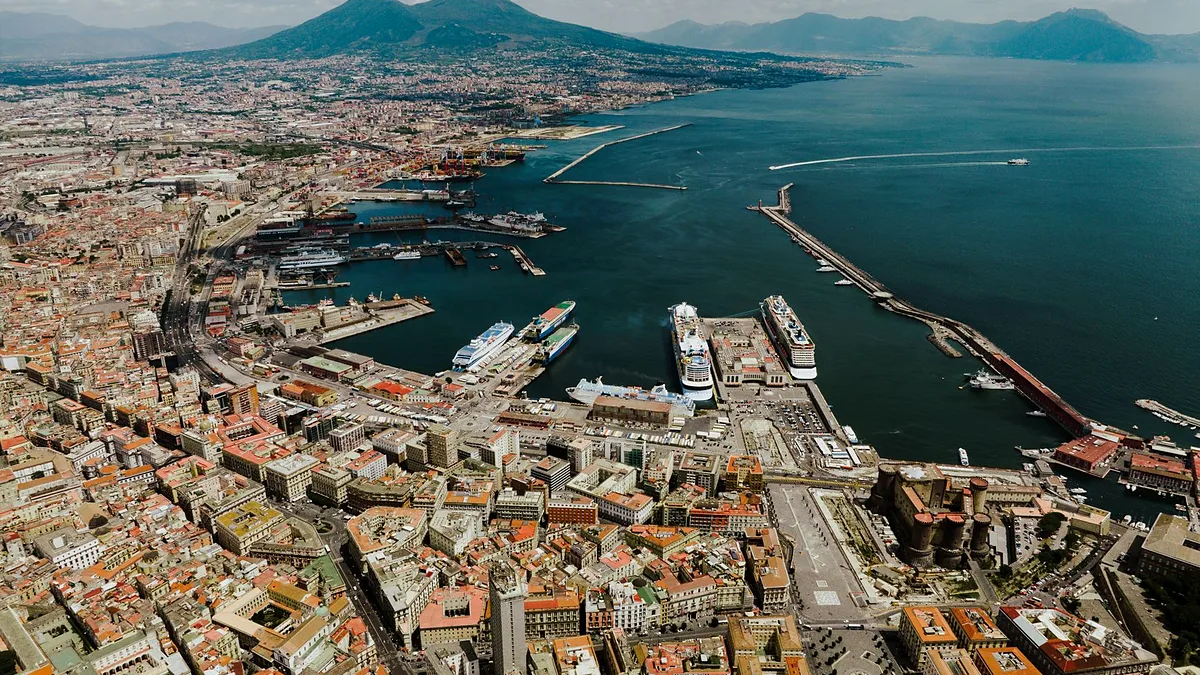

Naples in January is a different city. The tour groups thin out after Epiphany, the light turns grey and clean, and the small galleries and members-only rooms that spend summer shut finally have space for you.
This guide is about the layer under the famous stuff: the foundation run out of a palazzo flat, the Caravaggio you can stand in front of alone, the Greek tombs that only started taking visitors a few years ago, and the 19th-century club where Neapolitan lawyers still argue over cards.
Everything below is walkable, mostly indoors and cheap. That is the whole point in February.
Unlimited High-Speed International Travel eSIM
Connect in seconds across 180+ destinations. Instant QR code activation with zero roaming surcharges.

Naples in Deep Winter at a Glance
- Best months: mid-January to late February. Shorter queues, 8–14°C, sharp bursts of rain.
- Daily budget: €70–€120 / ~$75–$130 per person, since most galleries here are free and museums run €8–€15.
- Getting around: Metro Line 1 for the hills and the station, your feet for the centro storico, and a Unico Napoli day pass (€4.50 / ~$5) if you want both.
- Vibe: quiet, indoors, unglamorous in the best way. In January the cultural calendar is aimed at locals, not at visitors.
Fondazione Morra and the Nitsch Museum
This one surprises people. Tucked into a side street between Materdei and the Sanità, the Fondazione Morra looks after a huge archive of 1970s visual poetry and performance art, plus the collection of Hermann Nitsch, the Austrian artist who made Naples his second home.
Rooms are cramped, lighting is basic, and little is explained in English the way a museum would do it. That is the appeal — you are looking at an artist's working life, arranged by people who knew him, in a building with no gift shop.
- Neighbourhood: Vico Lungo Pontecorvo 17, on the Materdei/Sanità border.
- Cost: free, donations welcome. Visits by appointment.
- Best time: weekday mornings, 10:00–13:00.
- Getting there: Metro Line 1 to Materdei, then six minutes downhill on foot. Ring the intercom.
Insider tip: Call or email at least two days ahead and ask specifically for the Nitsch rooms and the archive, not just a visit. Also ask whether Casa Morra, their second space up on Salita San Raffaele, has anything running — it opens irregularly and is worth planning around.
Galleria Lia Rumma, Chiaia
Lia Rumma has shown heavyweights — Kiefer, Kentridge, Abramović — from this Chiaia address since the 1990s, and the space still behaves like a well-kept secret rather than a destination.
Two floors, white walls, no café, no queue. In winter you may be the only visitor, which is exactly the right way to meet a large Kiefer. Entry is free and nobody expects you to buy anything.
- Neighbourhood: Via Stazio 4, Chiaia, a short walk from Piazza dei Martiri.
- Cost: free.
- Best time: Tuesday to Saturday, roughly 11:00–19:00. Closed Sunday and Monday.
- Getting there: Metro Line 2 to Piazza Amedeo, then eight minutes on foot; or Line 1 to Vanvitelli and walk down.
Insider tip: Many Naples galleries close over the Christmas fortnight, sometimes from around 20 December to 6 January. Message them before building a day around one, and don't trust Google hours in early January.
Galleria Alfonso Artiaco, Piazzetta Nilo
Piazzetta Nilo is a tiny square a minute from San Domenico Maggiore, with a Roman statue of the Nile in the middle and four tables of coffee drinkers around it. Alfonso Artiaco sits right there, which makes it the easiest serious gallery to fold into a centro storico wander.
The programme leans international and conceptual — drawing, sculpture, photography — in a space that lets each show breathe. Free, quiet, and completely normal to walk into in a wet coat.
- Neighbourhood: Piazzetta Nilo 7, Centro Storico.
- Cost: free.
- Best time: late morning, Tuesday to Saturday.
- Getting there: Metro Line 1 to Università, then seven minutes along Via Mezzocannone.
Insider tip: Pair it with the church of Sant'Angelo a Nilo next door, which holds a Renaissance tomb from Donatello's workshop that almost nobody stops for. Three stops, one hour, no crowds.
Pio Monte della Misericordia
Everyone comes for Caravaggio's Seven Works of Mercy, and rightly so. What most people miss is that the Pio Monte is still a working institution, founded in 1602 by seven young noblemen running a charity out of the building — and you are allowed upstairs.
There you'll find a picture gallery of mostly 19th-century Neapolitan painting, a small balcony overlooking the Caravaggio, and meeting rooms with the dusty confidence of a club that has never needed to advertise. Which, technically, it is.
- Neighbourhood: Via dei Tribunali 253, Centro Storico.
- Cost: around €8–€10 / ~$9–$11 for church and gallery together.
- Best time: 09:00 opening, straight to the Caravaggio, then up.
- Getting there: Metro Line 1 to Università or Dante, then ten minutes on Via dei Tribunali.
Insider tip: The upper gallery has its own staircase and staff don't always mention it, so ask at the ticket desk for the Quadreria. Then find the little balcony behind the altar for a sideways view of the painting that changes the whole thing.
Ipogeo dei Cristallini, Sanità
In 2022 a set of four Greek chamber tombs opened underneath an ordinary apartment block. Carved around the 4th century BC, with painted decoration still on the walls, they were used for generations and then sealed. The visit is short, guided and slightly eerie — ideal for a cold afternoon when you want to be underground.
Groups are small and timed, so it never feels like a conveyor belt. You come out ten minutes' walk from the Catacombe di San Gennaro, so both fit in one afternoon.
- Neighbourhood: Via dei Cristallini 19, Sanità.
- Cost: around €15 / ~$16, booked online.
- Best time: weekday afternoons; in winter you can often book a few days out.
- Getting there: Metro Line 1 to Museo, then a twelve-minute uphill walk through the Sanità.
Insider tip: The neighbourhood's volcanic paving turns glassy in the rain, so winter is exactly when you need proper soles. The alley route from Via dei Tribunali also involves stairs — if that's an issue, take a taxi to the door.
Circolo Artistico Politecnico
Naples has a real network of historic private clubs — the Circolo Unione by Piazza del Plebiscito, the yacht clubs along the seafront — and you are not getting into most of them. The Circolo Artistico Politecnico is the exception worth knowing: founded in 1888, members-only in spirit, but it opens its upper halls to the public whenever it hosts an exhibition.
You climb a grand staircase off Piazza Trieste e Trento into rooms of paintings, dark wood and old paper. It is the closest most visitors will get to seeing how old Naples socialises, and it costs nothing.
- Neighbourhood: Piazza Trieste e Trento 48, behind the Galleria Umberto I.
- Cost: free during exhibitions.
- Best time: check the current show first; openings tend to be early evening.
- Getting there: Metro Line 1 to Toledo, four minutes on foot.
Insider tip: Their programme goes up on Facebook far more reliably than on any website. If the front door is shut, ring the porter and ask whether the mostra is open — and dress a notch above trainers for once. It's a club, not a co-working space.
Ex Asilo Filangieri, Forcella
A former school taken over in 2012 by artists and cultural workers, run since then as a self-managed space for rehearsals, talks, screenings and neighbourhood assemblies. Free, chaotic, and the most honest cultural address in the city.
What you find depends on the week: a theatre company building a set, a photography show, an argument about the port. It is not a museum and nobody will hand you a map.
- Neighbourhood: Vico Giuseppe Maffei 4, Pendino/Forcella.
- Cost: free.
- Best time: weekday evenings, when something usually happens.
- Getting there: Metro Line 1 to Duomo, five minutes on foot.
Insider tip: Check the calendar the same day, not a week ahead. And don't push into rooms that look closed — it's a working building, not an attraction, and people are mid-project.
Where to Eat and Drink Nearby
Pizzeria Starita, Via Materdei 27, is five minutes from the Fondazione Morra and has been making the montanara — fried, then baked — since 1901. Two pizzas and a beer land around €25–€30 / ~$27–$33. Arrive by 19:30 or wait outside.
Trattoria da Nennella, Vico Lungo Teatro Nuovo 103 in the Quartieri Spagnoli, is loud, fast and theatrical; the waiters shout, the menu is short, lunch runs €15–€20 / ~$16–$22 a head with wine. No reservations, so come at 12:30 or after 14:00.
Tandem, on Via Paladino in the centro storico, does one thing properly: slow-cooked Neapolitan ragù over pasta for €11–€14 / ~$12–$15. Small, warm, and a sensible rainy-day stop between galleries.
For a quick hit, Bar Mexico on Piazza Dante pulls a proper espresso for about €1.20, and Sfogliatella Attanasio near the station sells the best riccia in town for under €2. Keep a few coins on you.
Practical Logistics and Budget Tips
Tickets and transport
A Unico Napoli 90-minute ticket costs about €1.60 / ~$1.75 and covers metro, buses and funiculars; a day pass is around €4.50 / ~$5 and a weekly around €15.70 / ~$17. Buy in the app or at a tabaccheria, never from someone who approaches you at the station.
Line 1 is worth riding even when you're not going anywhere — Toledo, Università and Dante are the art stations. Note that the Chiaia funicular has been closed for long stretches of renovation, so check before planning a hill-to-sea shortcut around it.
Money and timing
Most galleries above are free, so a winter art day here costs less than lunch in Rome. Put aside €10–€15 for one paid museum and €20–€30 for food and you're comfortably under €60 before dinner.
Public museums in Naples usually close one day a week, most often Monday, and small private spaces shut from about 13:00 to 16:00. Christmas Day, 1 January and 6 January are dead citywide, and the week before Christmas on Via San Gregorio Armeno is shoulder-to-shoulder shopping rather than sightseeing.
What to skip
Skip the hour-long queue at the famous pizzeria on Via dei Tribunali — Di Matteo and La Notizia do the same job faster. Skip the open-top hop-on-hop-off buses in winter, since the whole appeal is the roof and the weather won't cooperate.
Don't turn up at the Cappella Sansevero without a timed ticket and expect to walk in; book online. And don't trust Google opening hours for artist-run spaces — send a message instead, because a real person answers and will tell you the truth.
Frequently Asked Questions
Are there free art galleries in Naples?
Yes — Galleria Lia Rumma, Alfonso Artiaco and the Fondazione Morra cost nothing, and the Circolo Artistico Politecnico is free whenever an exhibition is on. You only pay at the larger institutions such as the Pio Monte and the Ipogeo dei Cristallini.
What stays open in Naples between December and February?
Almost everything except beach clubs and rooftop bars. Winter is genuinely the better season for museums, catacombs and underground sites, because you're indoors and the queues have gone.
Can tourists visit Naples' private clubs?
Not the members-only ones like the Circolo Unione or the seafront yacht clubs, unless a member invites you. Your realistic way in is the public-facing side: exhibitions at the Circolo Artistico Politecnico, openings at the art foundations, and events at spaces like the Ex Asilo Filangieri.
How far ahead should I book the Ipogeo dei Cristallini?
In winter, two or three days is usually enough; in spring and summer, book a week or more ahead. Groups are small and weekend slots do sell out.