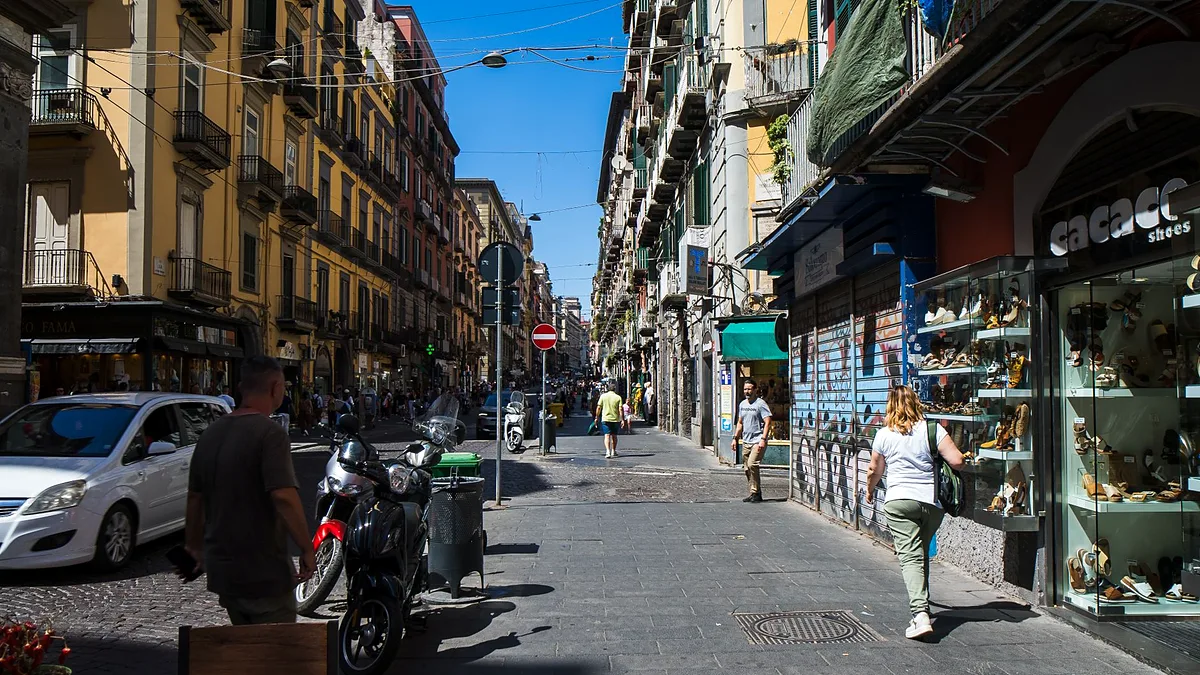

Naples doesn't do quiet luxury. It does loud luxury: a 300-year-old opera house where a good seat costs less than a concert back home, a majolica cloister with lemon trees for the price of two coffees, and a Caravaggio hanging in a chapel off a street where scooters thread past laundry lines.
That gap is the whole point of this city. Milan charges you for polish. Naples hands you the same painted ceilings, the same Gulf views, the same 18th-century palaces, and then gives you change.
I've done Naples on a writer's budget and eaten like a banker. What follows is the version I'd text a friend: what's worth paying for, what to walk past, and where a €1.30 ticket buys you the best art gallery in Europe.

Naples at a Glance
- Best time to visit: April to May, or late September to October. June and July are hot, August is half-closed, and February is cheap but wet.
- Typical daily budget: €70–110 (~$75–$120) per person for a mid-range bed, three real meals, one paid sight and transit. Luxury-leaning days land nearer €130.
- Local transport style: Metro Linea 1, three funiculars and your own two feet. €1.30 buys 90 minutes of travel.
- Vibe: Loud, layered, operatic. Baroque chapels next to hanging washing. Nobody whispers.
1. Teatro di San Carlo
The oldest working opera house in Europe opened in 1737 and still looks it: red velvet, six tiers of gilded boxes, and an acoustic that carries a soprano to the back row without a microphone. The reason it's on a budget list is simple — the city subsidises it. Gallery seats often start near €30, and restricted-view boxes cost less than a cinema ticket in London.
Even if you skip a performance, the guided tour is a masterclass in how to build a room that makes people sit up straight.
- Neighborhood: Centro Storico, Piazza Trieste e Trento, beside Galleria Umberto I
- Cost: opera from €30 / ~$33; guided tours about €10 / ~$11; combined Royal Palace + San Carlo ticket around €20
- Best time: Sunday matinees; season runs roughly late January to June, then autumn
- Getting there: Metro Linea 1 to Toledo, 5-minute walk; or Linea 6 to Chiaia
Insider tip: Neapolitans still dress for the opera — a plain dark shirt and proper shoes will get you through the foyer without feeling like a day-tripper. Buy at the box office on Via San Carlo rather than online; booking fees can add 15%.
2. Cappella Sansevero and the Veiled Christ
One small room, one sculpture, and it will stop you cold. Giuseppe Sanmartino's Veiled Christ (1753) is carved from a single block of marble, and the veil is thin enough to show the ribs underneath. The chapel is dark and deliberately theatrical, with a ceiling fresco that seems to hover a metre above your head.
- Neighborhood: Centro Storico, Via Francesco de Sanctis 19/21, two minutes off Via dei Tribunali
- Cost: €10 / ~$11, timed entry, booked in advance online
- Best time: the 9am slot or after 5pm; midday is shoulder-to-shoulder
- Getting there: Metro Linea 1 to Università or Duomo, then 8 minutes on foot
Insider tip: Photography is banned and the guards enforce it. Book on the official site only — the guys on Via dei Tribunali selling skip-the-line tickets are charging double for a queue that doesn't exist.
3. Chiostro di Santa Chiara
Step off Spaccanapoli and into a cloister tiled end to end in yellow and blue majolica, with citrus trees and a vine pergola overhead. It's a monastic garden from the 1740s that survived the war, and it feels like the quietest acre in the city. Give it half an hour and bring a book.
- Neighborhood: Centro Storico, Via Santa Chiara 49c
- Cost: €7 / ~$8, including the small museum and archaeological area
- Best time: 9:30–11am, before the tour groups; late afternoon for shade
- Getting there: Metro Linea 1 to Toledo, then 10 minutes down Via Toledo
Insider tip: Most people glance into the church, decide it's just another nave, and leave. The cloister entrance is around the left side of the building, through the ticket window.
4. Metro Linea 1, the €1.30 Art Gallery
Naples turned its subway into a contemporary art programme. Toledo station has a cascading blue mosaic that makes people stop mid-escalator, Università has oversized bronze forms, and Duomo has light wells cut deep into the rock. A single ticket is €1.30 and valid for 90 minutes, so you can ride the line like a gallery hop.
- Neighborhood: stations run from Piscinola through the Centro Storico to Garibaldi
- Cost: €1.30 / ~$1.40 per ride; day pass roughly €5.40 / ~$6
- Best time: weekday mid-morning; avoid 8–9am and 6–7pm
- Getting there: Toledo and Università are the showpieces
Insider tip: Use it as transport too. Linea 1 gets you from Garibaldi to Toledo in ten minutes, which beats walking through traffic. Keep your bag zipped on the escalators — this is the city's pickpocket hotspot.
5. Certosa di San Martino and Castel Sant'Elmo
Two for one on the Vomero hill: a Carthusian monastery turned museum with painted cloisters and a terrace that unrolls the entire bay in front of you, plus the star-shaped fortress next door with the widest view in Naples. Vesuvius on one side, Capri on the other, tiled rooftops in between.
- Neighborhood: Vomero, Largo San Martino 5
- Cost: Certosa €6 / ~$7; Castel Sant'Elmo €5 / ~$6
- Best time: 4–6pm for the light on the water; some rooms close on Tuesdays, so check first
- Getting there: funicular from Piazza Augusteo or Chiaia up to Piazza Fuga, then 5 minutes on foot
Insider tip: Ride up and walk down the Pedamentina stairway to Corso Vittorio Emanuele. It's 400 steps of terraces and washing lines, it's free, and it beats any paid viewpoint in the city.
6. Capodimonte: A Palace With a Free Forest
The Bourbon hunting palace on the hill holds Caravaggio's Flagellation, a wall of Titians and a serious porcelain collection, and at about €15 it's the priciest ticket on this list. The real steal is the Bosco behind it: 120 hectares of oak and ilex paths that cost nothing and fill with Neapolitan families on Sundays.
- Neighborhood: Capodimonte, Via Miano 2
- Cost: museum €15 / ~$16; park free; museum free on the first Sunday of the month
- Best time: museum in the morning, picnic in the wood afterwards
- Getting there: bus 178 or the R4 shuttle from Museo metro station, or a 20-minute taxi (~€15)
Insider tip: Skip the museum café. Build a lunch at Pignasecca market first, then eat it on the benches under the pines with the whole city laid out below you.
7. Rione Sanità and the Catacombs of San Gennaro
This is the neighbourhood visitors avoided for 30 years and locals are steadily taking back. Underneath it, the catacombs run for two kilometres, with 5th-century frescoes in spaces that are cooler and far emptier than anything in Rome. Above ground, the baroque staircase of Palazzo dello Spagnuolo is worth the detour.
- Neighborhood: Rione Sanità, Via Capodimonte 13
- Cost: €11 / ~$12 including the guided tour
- Best time: weekday tours around 10am or 4pm; weekends sell out
- Getting there: Metro Linea 1 to Museo, 12 minutes on foot; or bus 201/204
Insider tip: Pair it with a coffee at one of the neighbourhood's new bakeries. Sanità has Italy's strongest network of youth-run social enterprises, and your ticket money feeds straight back into them.
Where to Eat and Drink Nearby
L'Antica Pizzeria Da Michele, Forcella
Two pizzas on the menu, both under €7, both perfect in a way that makes the queue forgivable. The marinara at €5 (~$5.50) is the purist's order; the margherita is €6. It's a canteen, not a restaurant — you'll share a table and be out in 30 minutes.
Via Cesare Sersale 1/3. Open daily from late morning to about 11pm. Metro Linea 1 to Duomo, then 6 minutes on foot.
Trattoria da Nennella, Quartieri Spagnoli
Chaotic, theatrical, absurdly cheap. Waiters shout the menu at you, plates land hard, and a full lunch with wine runs €12–15 a head. It's the closest thing to dinner at a Neapolitan family's house without an invitation.
Vico Lungo Teatro Nuovo 103. No reservations — put your name down and wait on the street with everyone else. Cash is wisest.
Caffè Gambrinus, Via Chiaia
Open since 1860, all mirrors and stucco, and still the best lesson in how to buy luxury cheaply in this city. Standing at the bar, an espresso is about €1.50 (~$1.70). Sitting at a table with service, the same coffee runs €5 or more.
Via Chiaia 1, right by Piazza Trieste e Trento. Go at 8am with the commuters, not at noon.
Worth knowing: for the best sfogliatella in town, walk to Attanasio at Vico Ferrovia 1–4, near Garibaldi. About €2, served warm, and they often sell out before noon.
Practical Logistics and Budget Tips
Transit hacks that actually save money
A single ANM ticket is €1.30 and covers 90 minutes across metro, funiculars and city buses. A day pass is around €5.40. If you're hitting three or more paid state museums, price out the Campania Artecard (about €24 for three days) before buying individual tickets.
From the airport, the Alibus costs €5 (~$5.50) and drops at Garibaldi and Municipio. A taxi to the centre is a fixed fare of roughly €21 — agree it before you get in.
What things cost, roughly
| Item | Price (EUR) | Approx. USD |
|---|---|---|
| Espresso at the bar | €1.20–1.50 | ~$1.30–1.70 |
| Margherita pizza | €5–7 | ~$5.50–8 |
| Metro single ticket | €1.30 | ~$1.40 |
| Museum entry (state) | €6–15 | ~$7–16 |
| Lunch for two, trattoria | €25–35 | ~$27–38 |
What to skip
Skip the hour-long queue at the most famous pizzeria on Via dei Tribunali — the pizza two doors down is just as good and you'll get a table. Skip restaurants with photo menus along Via Partenope, where a plate of spaghetti costs three times the city average.
Skip the Capri day trip if money is tight: return ferries plus island prices will eat a whole day's budget. Procida costs roughly half and is a third as crowded. And don't sit down at a café table without checking the price list first — the seated price can be triple the bar price, plus a €2–3 cover charge.
Honest heads-up
Pickpocketing is real on Linea 1 and around Garibaldi, especially at rush hour. Keep your phone out of your back pocket and your bag in front of you on escalators. Naples is not a dangerous city, but it is a fast one — traffic lights are decorative, and scooters come from everywhere.
Frequently Asked Questions
Is Naples expensive for tourists?
No — it's one of the cheapest major cities in Western Europe for food, coffee and transport. Most visitors spend €70–110 a day without trying, and you can eat superbly for under €25.
Can you do luxury in Naples on a budget?
Yes, and better than almost anywhere else in Italy. Opera seats from €30, Baroque chapels for €7–10 and free royal parkland at Capodimonte give you the grand-tour experience at backpacker prices.
How many days do you need in Naples?
Three full days covers the Centro Storico, Vomero and one underground or catacomb site without rushing. Add a fourth if you want Capodimonte or a day on Procida.
Is the metro art in Naples really free to see?
Not free, but close: a €1.30 ticket gets you 90 minutes of travel on Linea 1, which links the mosaic work at Toledo with the installations at Università and Duomo. Treat it as a moving gallery that also happens to get you across town.