
Luxor is one of those places where the budget version can still feel rich. You do not need a five-star Nile cruise to watch the sunset from a felucca, and you do not need a private Egyptologist to stand alone in the Great Hypostyle Hall at 6:30 a.m. The trick is timing, ticket choices, and a few local habits that keep costs low.
This guide is for travelers who want the good stuff: quiet temple mornings, West Bank tombs with deep color, a clean midrange hotel, and meals that cost less than a taxi ride back home. Plan on EGP 1,500–2,800 (~$30–$55 USD) per person per day, depending on how many paid sites you add. That includes a simple room, local food, ferry and taxi hops, and one small splurge.
Luxor is split by the Nile. The East Bank has the train station, Luxor Temple, the souk, and most restaurants. The West Bank has the tombs, Medinet Habu, and a slower village feel. Pick a base, cross by ferry, and treat the river as part of the day.
Unlimited High-Speed International Travel eSIM
Connect in seconds across 180+ destinations. Instant QR code activation with zero roaming surcharges.

Luxor at a Glance
- Best time to visit: October to April for cooler days. In every season, start outdoor sites at 6:00–8:30 a.m. and go back out after 4:00 p.m.
- Typical daily budget: EGP 1,500–2,800 (~$30–$55 USD) per person, including a midrange room, local meals, transport, and one paid site.
- Local transport style: Public Nile ferry, blue-and-white microbuses, short taxi rides, and a lot of walking on the East Bank Corniche.
- General vibe: Early starts, long lunches, tomb corridors, ferry crossings, and tea breaks when the heat peaks.
1. Karnak Temple at Opening Time
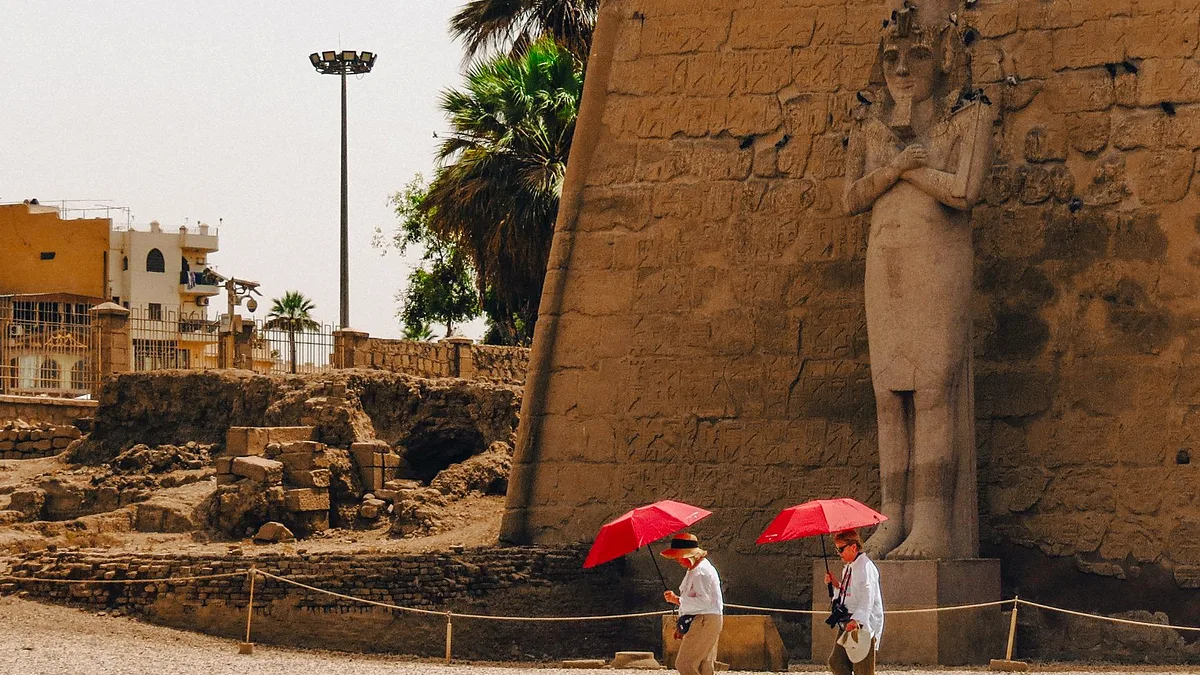
Karnak is huge, and that is the point. Arriving at opening, before the tour buses, turns a famous site into a calm walk through columns and obelisks. The Great Hypostyle Hall is the main event, but the back courts and the Festival Hall of Thutmose III are where you can hear your own footsteps.
Give it at least two hours and go on your first morning, when you are already waking up early.
- Neighborhood: Karnak, East Bank, about 3 km north of Luxor Temple.
- Cost: Around EGP 300 (~$6 USD) for the main site. Some side areas may cost extra.
- Best time: 6:00–8:30 a.m., especially October to April.
- Getting there: A taxi from the Corniche costs about EGP 80–120 (~$1.70–$2.50). Local microbuses run along the main road for EGP 5–10.
Insider tip: Walk to the far end past the sacred lake before you leave. Most groups turn around at the obelisks, so the eastern gate and the smaller chapels stay quiet.
2. Valley of the Kings, Without the Extras
The Valley of the Kings is not cheap by Egyptian standards, but it is still one of the best value tickets in the country. The base ticket includes three tombs, and that is enough for most people. The tombs rotate, so you never know exactly which three you will get, but the color and scale are the draw.
Go at 6:00 a.m. By 9:30 a.m., the big groups arrive and the narrow tomb corridors start to feel like a queue.
- Neighborhood: West Bank, at the end of the road past Qurna.
- Cost: Around EGP 750 (~$15 USD) for three tombs. Special tombs such as Seti I or Tutankhamun cost extra.
- Best time: 6:00–9:00 a.m., before the heat and crowds.
- Getting there: Take the public ferry, then a taxi or microbus. A return taxi with waiting time is about EGP 250–400.
Insider tip: Skip the tomb of Tutankhamun unless you are a completist. It is small, costs extra, and the real drama is in the larger tombs. Ask the ticket clerk which tombs are open that day before you choose.
3. Medinet Habu and Deir el-Medina
For the West Bank without the Valley of the Kings crowd, spend a morning at Medinet Habu and Deir el-Medina. Medinet Habu has some of the deepest carvings in Egypt, especially the battle scenes on the outer walls. Deir el-Medina is the village where the tomb workers lived, and the small temple and tombs feel personal rather than royal.
These two sites sit close together, so one taxi can cover both.
- Neighborhood: West Bank, south of the Valley of the Kings road.
- Cost: Medinet Habu around EGP 200 (~$4 USD); Deir el-Medina around EGP 150 (~$3 USD).
- Best time: 7:00–10:00 a.m. or 3:00–4:30 p.m.
- Getting there: Take the ferry, then a taxi for the half-day loop, about EGP 300–450.
Insider tip: Bring a small torch for Deir el-Medina's tombs, but do not rely on it. The guardians may open a tomb for you for a small tip; agree on the amount first.
4. Luxor Temple and the Avenue of Sphinxes
Luxor Temple is the easiest big site to visit because it sits in the middle of town. Go late afternoon or early evening, when the lights come on and the stone turns gold. The Avenue of Sphinxes is free to walk, and it connects the temple to Karnak over about 2.7 km.
Walk a short section after your temple visit, then stop for tea or juice.
- Neighborhood: East Bank, right by the Corniche and the souk.
- Cost: Around EGP 260 (~$5 USD) for Luxor Temple. The avenue walk is free.
- Best time: 5:00–7:30 p.m., after the worst heat.
- Getting there: Walk from most East Bank hotels, or take a taxi for EGP 50–80.
Insider tip: Enter Luxor Temple from the main gate and exit toward the avenue. Horse-carriage drivers will offer a tour; if you want one, agree on the total price and time before you sit down.
5. Luxor Museum and Mummification Museum
When the heat hits, the Luxor Museum and the Mummification Museum are your air-conditioned luxury. The Luxor Museum is small, well labeled, and rarely crowded. It has a beautiful collection from Thebes, including royal mummies and sculpture that is easier to study here than in a tomb.
The Mummification Museum is even smaller, but it explains the process in a clear, compact way.
- Neighborhood: East Bank Corniche, a short walk from Luxor Temple.
- Cost: Luxor Museum around EGP 300 (~$6 USD); Mummification Museum around EGP 150 (~$3 USD).
- Best time: 12:00–4:00 p.m., when outdoor sites are hottest.
- Getting there: Walk along the Corniche or take a short taxi ride.
Insider tip: Visit the Luxor Museum after 3 p.m. if you want fewer school groups. The upstairs gallery is usually quieter than the ground floor.
6. Souk, Corniche and a Sunset Felucca
The Luxor souk is not a museum piece. It is where people buy spices, galabeyas, kitchen tools, and phone cards. The best time is late afternoon, when the light softens and the Corniche fills with families. You can wander for an hour without spending anything.
Finish the day on a small felucca. Book directly at the dock and agree on the total price for the boat, not per person.
- Neighborhood: East Bank souk and Corniche; feluccas leave from both ferry docks.
- Cost: Free to walk the souk. Tea or juice EGP 20–50 (~$0.40–$1 USD). Felucca EGP 500–800 (~$10–$17 USD) for one to two hours.
- Best time: 5:00–8:00 p.m., with the felucca one hour before sunset.
- Getting there: Walk from Luxor Temple along the Corniche, then turn inland at the mosque.
Insider tip: Walk two blocks past the main tourist strip for scarves and spices. The shops near the mosque often have calmer prices and less pressure.
Where to Eat and Drink Nearby
Sofra
This East Bank favorite near Luxor Temple serves Egyptian home-style dishes in a calm setting. Order molokhia, stuffed pigeon, or grilled chicken, and finish with fresh lemon juice. Mains run about EGP 200–350 (~$4–$7 USD), and lunch is quieter than dinner.
Aboudi Coffee Break
On the West Bank in Gezira, Aboudi is a good stop after the Valley of the Kings. The set breakfast costs around EGP 80–160 (~$1.70–$3.30 USD) and comes with bread, eggs, cheese, and jam. Ask for a fresh mango juice if it is in season.
El-Kababgy
Near Luxor Temple, El-Kababgy is reliable for grilled meat and mezze. Order kofta, pigeon, or a mixed grill to share, with a table away from the street. Dinner for two with soft drinks usually lands around EGP 500–800 (~$10–$17 USD).
Practical Logistics and Budget Tips
Use the public Nile ferry between the East and West banks. It costs about EGP 10 (~$0.20 USD) and runs from early morning until evening. Taxis are useful for tombs, but agree on the price first or use a hotel-arranged driver for a half day, around EGP 400–600.
Carry small notes for tips, water, and ferry tickets. Many sites now prefer card payment, but not all; keep EGP 500–1,000 in cash for the day. ATMs on the East Bank are easier to find than on the West Bank.
Eat local. A bowl of koshari, falafel sandwich, or fuul costs EGP 30–80. Restaurant meals with meat are higher, but still far below European prices. Buy water by the large bottle from a kiosk, not the hotel minibar.
A Luxor Pass can save money if you plan to see four or more paid sites in a short trip. Run the math at the ticket office and compare it with your list. For a slow trip with lots of street time, pay as you go.
What to skip: The horse-carriage loop around the East Bank is overpriced and often stressful. The Sound and Light Show at Karnak is fine if you love spectacle, but it is not a budget essential. Skip Tutankhamun's tomb unless you have a personal reason to see it.
Honest heads-up: Luxor's touts are persistent, especially around the ferry and temple exits. A firm no, thank you and continued walking works better than a long explanation. Do not let a stranger lead you to a special shop without agreeing on a price.
Check opening hours before you cross the river. Some West Bank tombs close earlier than the main sites, and ticket offices may stop selling before the site closes. In summer, plan outdoor time before 10 a.m. and after 4 p.m.
Frequently Asked Questions
Is Luxor expensive for tourists?
No, Luxor can be very affordable. A comfortable day with local food, ferry rides, and one paid site often costs EGP 1,500–2,800 (~$30–$55 USD) per person.
What is the best time to visit Luxor on a budget?
October to April has the best weather, but prices are higher. Late September and early May can be cheaper, though afternoons are hot; start at 6 a.m. either way.
Do I need a guide in Luxor?
A guide is helpful for the Valley of the Kings and the Tombs of the Nobles, where context matters. For Karnak and Luxor Temple, a good guidebook or app can save you money.
How do I get around Luxor cheaply?
Use the public ferry for the West Bank, microbuses for short East Bank hops, and walk the Corniche. Taxis are best for tomb clusters; agree on the fare before you get in.