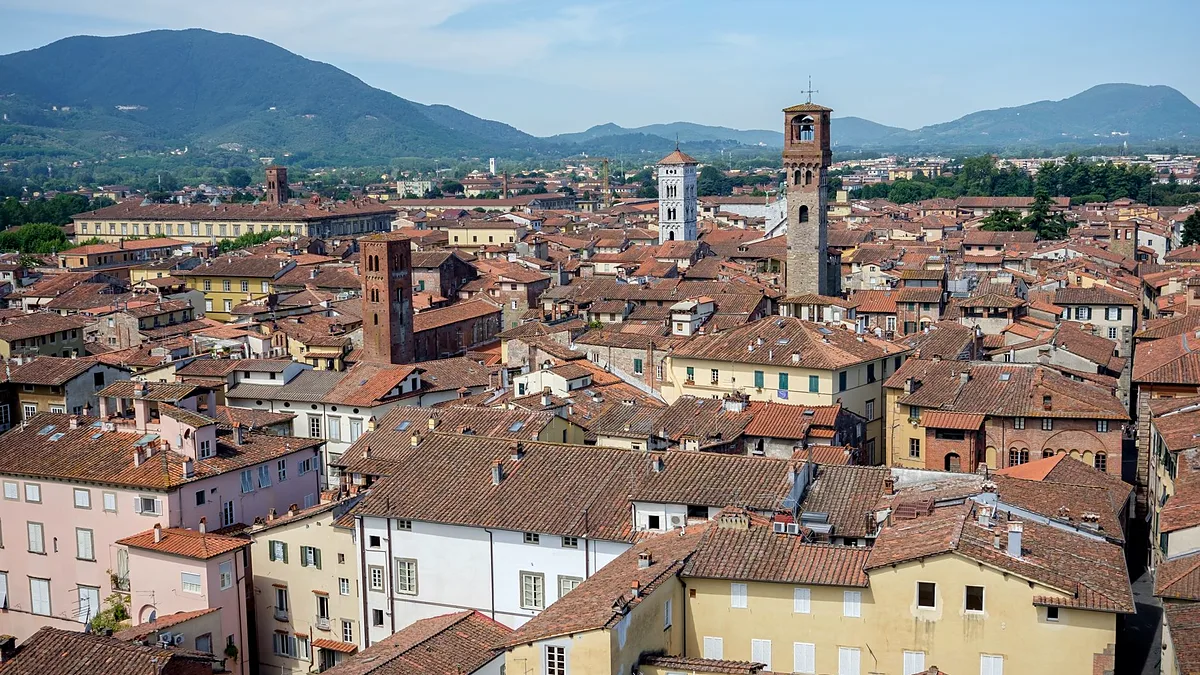

Lucca does not shout about its art. The walls get the crowds, the Guinigi Tower gets the queues, and somewhere in between, a 17th-century palace with a painted ceiling sits empty on a Tuesday afternoon. That is the Lucca worth planning a day around.
This city spent centuries as an independent republic, and it still behaves like one. Its museums are small, often municipal or state-run, frequently shut on Mondays, and sometimes staffed by one person who seems genuinely surprised to see you. The private clubs are even quieter: brass plaques, closed doors, no signage.
Below is a practical route through the galleries you can actually enter, plus honest guidance on the members-only side of town. Prices are current-ish and checked against the usual Italian museum quirks, so confirm hours before you commit a morning.

At a Glance Snapshot
- Best time to visit: April–June and September–October; weekday mornings for empty galleries, first Sunday of the month for free state museums.
- Typical daily budget: €70–140 / ~$76–152 per person, covering two museum tickets, a trattoria lunch, coffee and a bike.
- Local transport style: Walk. The whole historic center fits inside 4.2km of Renaissance walls, and a bike covers it in 15 minutes.
- Vibe: Reserved, elegant, quietly prosperous. Locals dress properly to go to the pharmacy. You will not be judged for trainers, but you will be outnumbered.
1. Palazzo Mansi: The Painted Gallery Nobody Queues For
Via Galli Tassi is a residential street five minutes from the tourist tide, and Palazzo Mansi sits on it like a well-kept secret. Inside, the first-floor gallery is a run of rooms with gilded ceilings, silk damask walls and a long enfilade of baroque paintings hung the old way — stacked three deep, frames touching.
The best room is the nuptial chamber, painted floor to ceiling with allegories, plus a textile collection of antique lace and wedding dresses that is far more interesting than it sounds. On a normal Wednesday you may have it entirely to yourself, which is rare for a state museum this good.
- Neighborhood: Centro storico, Via Galli Tassi 43.
- Entry: €6 / ~$6.50; combined ticket with Villa Guinigi around €9 / ~$10. Free on the first Sunday of the month.
- Best time: Tuesday to Friday, right at opening (roughly 8:30am).
- Getting there: 8-minute walk from Lucca train station through Porta San Pietro; no bus needed.
Insider tip: The staff close the ticket desk for lunch-adjacent gaps and the museum shuts Mondays. Pair it with Palazzo Pfanner two streets away only if you have stamina — the painted gallery is the better of the two.
2. Villa Guinigi: Lucca's Emptiest Museum
Most visitors never cross the walls to this side of town. Villa Guinigi, a brick Renaissance villa with a garden courtyard, holds the city's main collection of medieval sculpture, goldwork and archaeological finds — and it is almost always silent.
Go for the room of wooden crucifixes and the Volto Santo material, which explains why that blackened cedar Christ matters so much to Lucca. The upper floors are uneven in quality, so give yourself 60 to 75 minutes and leave happy rather than exhausted.
- Neighborhood: North-east edge of the center, Via della Quarquonia 1.
- Entry: €6 / ~$6.50, or the combined ticket with Palazzo Mansi.
- Best time: Late morning, any day except Monday.
- Getting there: 12-minute walk from Piazza San Michele, or bike and lock up outside the gate.
Insider tip: The garden benches at the back are free and public. Bring a panino from the bakery on Via Santa Lucia and eat it here instead of in a piazza.
3. Fondazione Ragghianti: Contemporary Art in a Former Convent
Behind an unassuming door on Via San Micheletto, the former convent of San Micheletto houses the Ragghianti foundation, Lucca's serious contemporary exhibition space. Shows rotate between photography, architecture and 20th-century Italian art, mounted in whitewashed rooms with fresco fragments still visible in the corners.
This is where the local art crowd actually turns up — openings here are the closest thing Lucca has to a salon. Admission is often free or a token few euros, which makes it the smartest rainy-day stop in the city.
- Neighborhood: South-east center, Via San Micheletto 3.
- Entry: Free to €5 / ~$5.50 depending on the exhibition.
- Best time: Wednesday to Sunday afternoons; closed Monday and often Tuesday.
- Getting there: 5-minute walk from Piazza San Francesco, inside the walls.
Insider tip: Check the foundation's site for opening-night (inaugurazione) dates. They are public, free, and come with the wine-and-nibbles crowd you will not find in any bar on Via Fillungo.
4. Casa Puccini and the Salon Tradition at Caffè di Simo
Puccini was born in a modest apartment at Corte San Lorenzo, and the house museum keeps his piano, his letters and the slightly melancholic feel of a family that moved often. It takes 30 minutes, and it explains why this city is so protective of its musical past.
Then walk to Caffè di Simo on Via Fillungo, the 19th-century literary café where Puccini and the local bohème held court. It is a café rather than a private club now, but the mirrored rooms preserve the salon atmosphere — dark wood, marble, quiet conversation.
- Neighborhood: Casa Puccini, Corte San Lorenzo 9; café on Via Fillungo 58.
- Entry: Casa Puccini roughly €7 / ~$7.50; an espresso at the bar €1.40 / ~$1.50.
- Best time: Museum mid-morning (closed Tuesdays); café before 11am to get a stool.
- Getting there: Both within a 6-minute walk of Piazza San Michele.
Insider tip: Drink your coffee standing at the bar. Sitting at a table costs roughly double, and the bar is where the regulars and the gossip are.
5. Domus Romana: Two Rooms Under the Street
In 2010, work on a building on Via Cesare Battisti uncovered a Roman house with frescoed walls still bright after 2,000 years. The site is tiny — two rooms and a fragment of mosaic — and visits run as short guided tours rather than a wandering museum.
It is genuinely one of the most surprising 20 minutes in Lucca, and almost no one knows it exists. Book ahead, because the visitor cap is small and openings are limited to weekends.
- Neighborhood: Via Cesare Battisti, just off Piazza San Michele.
- Entry: Around €5 / ~$5.50 per person, guided.
- Best time: Weekend slots; ask at the tourist office on Piazzale Verdi.
- Getting there: 3 minutes on foot from Piazza San Michele.
Insider tip: Confirmed slots are announced by the Comune, not on big booking platforms. Phone or stop by the tourist office in the morning rather than relying on a web search.
6. The Closed-Door Circuit: Clubs, Circoli and How to Get In
Lucca runs on clubs. Historic casini — 19th-century conversation societies — still keep brass plaques near Piazza San Michele and Via Fillungo, and membership passes through families rather than application forms. You will not talk your way in, and you should not try; it is a small city and people remember.
What you can do is the public-facing version: bocce clubs and ARCI circoli on the outskirts (San Concordio, Sant'Anna), where a glass of house wine costs €2 / ~$2.20 and nobody speaks English. Evenings on the wall at Caffè delle Mura work the same way — locals, not tourists, and a view over the ramparts.
- Neighborhood: Bocce and social clubs sit just outside Porta Elisa and Porta Sant'Anna.
- Cost: €2–4 / ~$2.20–4.40 for a drink; bocce courts often free for guests.
- Best time: 6–8pm, when the light softens and the regulars arrive.
- Getting there: 10-minute walk or 5-minute bike ride from the walls.
Insider tip: Ask at your hotel or a tabacchi whether a circolo has a public dinner or tombola night that week. Locals will invite you if you show genuine interest rather than treating it as a photo opportunity.
7. Museo della Cattedrale: The Treasury Room
Most people photograph the facade of San Martino and move on. The cathedral museum behind it holds the reliquaries, vestments and illuminated choir books, with a small treasury room that is dim, cool and beautifully lit.
It is not a picture gallery, but architecturally it does the same job: quiet rooms, good objects, low footfall. Go after the Duomo crowds thin out and you will have the place to yourself.
- Neighborhood: Piazza Antelminelli, beside the cathedral.
- Entry: Around €5–6 / ~$5.50–6.50.
- Best time: Weekday afternoons after 3pm.
- Getting there: Central; 5 minutes from anywhere in the historic core.
Insider tip: Skip the paid climb of the Torre delle Ore if you are short on time — the museum is the better use of an hour and a half.
Where to Eat and Drink Nearby
Trattoria da Leo, Via Tegrimi 1
Plastic tablecloths, a handwritten menu and Lucchese families at lunch. Expect €12–18 / ~$13–20 for a primo, a secondo and house wine. The farro soup and the roast chicken are the safe bets.
Forno Amedeo Giusti, Via Santa Lucia 18
A working bakery since the 1930s, best around 11am when the pizza slices come out of the oven. Two pieces and a buccellato to take away costs under €5 / ~$5.50.
Osteria Baralla, Via dell'Anfiteatro 5
Traditional Lucchese cooking in a room that has been feeding people since the 1860s. Mains €14–20 / ~$15–22; the tordelli (meat ravioli) is the reason to come. Book ahead for dinner.
Practical Logistics and Budget Tips
Getting Around
The center is pedestrian and the walls are a 4.2km loop — walk it once at sunset. Rent a bike from Cicli Bizzarri on Piazza Santa Maria for roughly €12–15 / ~$13–16 a day; you will need cash or a card deposit.
Local buses are run by Autolinee Toscane. Buy tickets at a tabacchi for €1.50 / ~$1.60 rather than on board, where the price rises. Trains from the station outside Porta San Pietro reach Pisa in 30 minutes (€3.70 / ~$4) and Florence in about 80 minutes (€8–10 / ~$9–11).
Realistic Costs
| Item | Typical Price |
|---|---|
| Espresso at the bar | €1.30 / ~$1.40 |
| Museum ticket | €5–7 / ~$5.50–7.50 |
| Bike rental, full day | €12–15 / ~$13–16 |
| Trattoria lunch | €12–18 / ~$13–20 |
| Mid-range dinner | €30–45 / ~$33–49 |
What to Skip
Restaurants lining Piazza dell'Anfiteatro trade on location, not cooking — walk two streets inland for better food at lower prices. The tourist road train around the walls is slow and expensive for what it is.
Also be honest about timing: if you arrive during Lucca Comics and Games (late October into early November), the city triples in population and every quiet gallery becomes a queue. Check the calendar before booking.
Frequently Asked Questions
Are Lucca's museums open on Mondays?
No — most state and municipal museums, including Palazzo Mansi and Villa Guinigi, close on Mondays. Plan your gallery day between Tuesday and Sunday, and confirm Sunday hours, which are often mornings only.
Can tourists get into Lucca's private clubs?
Not the historic casini, which are members-only and invitation-based. You can join the social side through bocce clubs, ARCI circoli and public exhibition openings at Fondazione Ragghianti, which are open to anyone.
How much does it cost to see Lucca's hidden galleries?
Budget €5–9 / ~$5.50–10 per museum, with some contemporary shows free. The combined Palazzo Mansi and Villa Guinigi ticket saves a few euros, and both are free on the first Sunday of the month.
Is Lucca walkable, or do I need a bus?
Entirely walkable — the historic center is flat and compact, and every spot in this guide is within 15 minutes on foot. A bike is only worth it if you want to circle the walls and reach the outer neighborhoods.