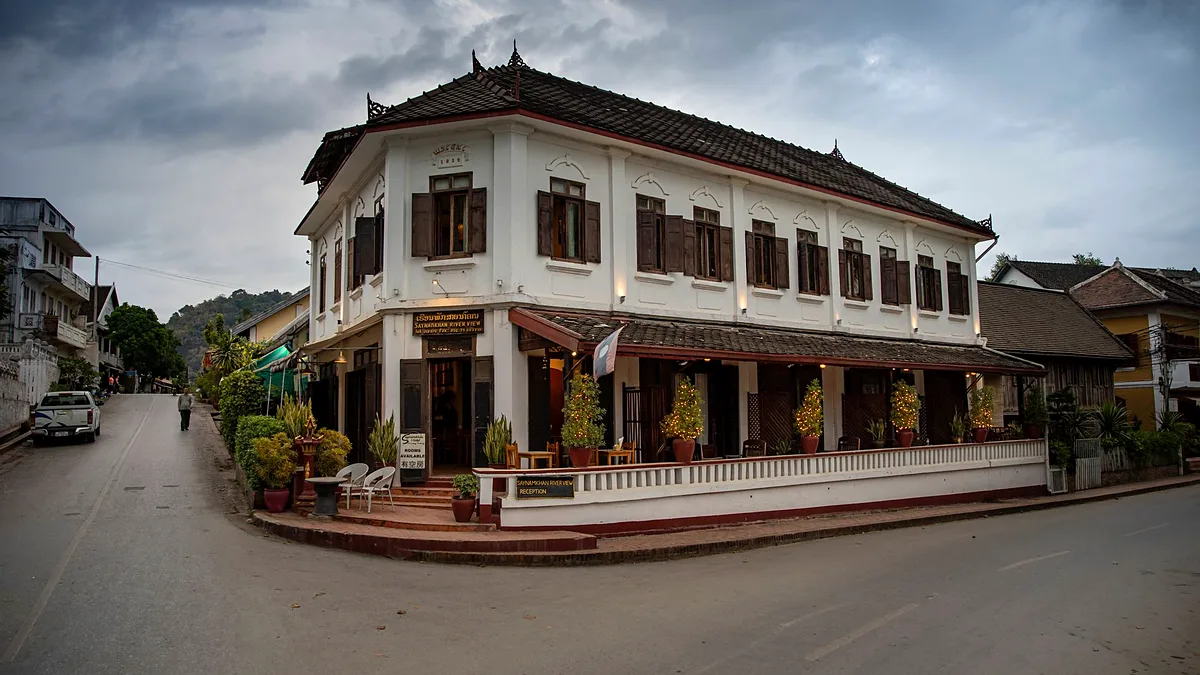

Luang Prabang runs on two clocks. The first starts at 5:30am with the alms round — saffron robes, sticky rice baskets, a hundred phone cameras. The second one starts around 1pm, when the minivans leave for Kuang Si and the peninsula goes back to being a town instead of an attraction.
That afternoon gap is where this guide lives. There is no real members' club scene here — no leather chairs, no waiting list, no doorman. What exists instead is arguably better: textile studios where the dyer knows your name by day two, a three-storey bookshop with a screening room upstairs, and hotel libraries you can walk into for the price of a pot of tea.
Everything below is walkable or a five-minute tuk-tuk from the old town. Prices are in kip, with rough US dollars at about 20,000 kip to the dollar.
Unlimited High-Speed International Travel eSIM
Connect in seconds across 180+ destinations. Instant QR code activation with zero roaming surcharges.

At-a-Glance Snapshot
- Best time to visit: November to February for cool, dry afternoons (22–30°C). March and April are hot and smoky from field burning; May to October is green, wet and quiet.
- Typical daily budget: 350,000–600,000 kip (~$17–30) for a comfortable mid-range day — guesthouse, two meals, one gallery, one tuk-tuk.
- Local transport style: Walking, mostly. The old town peninsula is about 1.5 km end to end. Tuk-tuks cost 30,000–50,000 kip (~$1.50–2.50) for a short hop.
- General vibe: Slow, hushed, slightly dusty. Most galleries and craft centres are open 9am–6pm, and almost everything shuts by 10pm.
- Dress code: Shoulders and knees covered for temples. Galleries are relaxed, but you'll be walking on hot stone either way.
1. Traditional Arts and Ethnology Centre (TAEC)
TAEC is the single best introduction to who actually lives in northern Laos. Housed in a restored French-era building near the night market, it displays Kmhmu, Hmong, Tai Lue and Akha textiles, basketwork and ritual objects with genuinely good labelling — no vague captions, no colonial tone.
It's small enough to see properly in 45 minutes, which makes it a perfect 2pm stop. The gift shop is one of the few places in town where the crafts are real, fairly priced and traceable to the maker.
- Neighbourhood: Ban Khamyong, top of Sisavang Vatthana Road, a 3-minute walk from the night market.
- Cost: 30,000 kip (~$1.50) for adults; children under 12 free.
- Hours: Daily, 9am–6pm (last entry 5:30pm).
- Getting there: Walk from anywhere on the peninsula. From Wat Xieng Thong it's about 12 minutes.
Insider tip: Head up to the second floor, where you're allowed to touch the loom and try a few passes. Tour groups usually clear out by 3:30pm, leaving the upstairs rooms empty.
2. Ock Pop Tok Living Crafts Centre
Ock Pop Tok sits on the Mekong bank about 2 km east of town, in Ban Phanom. It's half workshop, half garden, half river terrace — and yes, it does feel like a club you've accidentally been invited into. Women from nearby villages weave here daily, and you can watch the whole process from silkworm to loom.
The Silk Road Café overlooks the water and serves some of the most pleasant light lunches in town. Come for one thing — a half-day weaving or natural-dye class — and stay for three hours.
- Neighbourhood: Ban Phanom, along the Mekong east bank.
- Cost: Free entry. Half-day weaving class around 950,000 kip (~$48); natural dye workshop similar. Lunch mains 45,000–70,000 kip (~$2–3.50).
- Hours: Daily, 8am–6pm. Classes usually run 9am–1pm or 2pm–5pm.
- Getting there: Free shuttle from their Sisavang Vatthana shop at set times (call the day before). Otherwise a tuk-tuk is 40,000 kip (~$2).
Insider tip: Book classes 48 hours ahead in high season and ask to join the dye garden walk first. The garden explanations make the weaving class twice as interesting.
3. Mekong Quilts
A short stop, but a good one. This social enterprise on Sakkaline Road sells hand-stitched quilts and cushions made by women in rural provinces, and the back room functions as a small gallery of textile patterns. It's air-conditioned, quiet, and nobody pressures you to buy.
Worth 20 minutes if you're walking between Wat Sene and Wat Xieng Thong. The work is genuinely beautiful and the prices reflect months of labour, not a markup on factory goods.
- Neighbourhood: Sakkaline Road, between the night market and Wat Xieng Thong.
- Cost: Free to browse. Cushion covers from 180,000 kip (~$9); full quilts from 2,500,000 kip (~$125).
- Hours: Roughly daily, 8:30am–6pm.
- Getting there: A 6-minute walk from the Royal Palace Museum, on the main street.
Insider tip: Ask the staff which village a piece came from — they know the makers personally, and the answer usually turns into a 10-minute story.
4. L'Etranger Books & Tea
This is the closest thing Luang Prabang has to a private club, and it doesn't ask for a membership fee. Three floors on Kingkitsarath Road: a bookshop on the ground level, a tea room with worn armchairs in the middle, and a 20-seat screening room on top that shows a film most evenings around 7pm.
Order a pot of tea, sink into a chair, and read for two hours while the ceiling fan ticks. It's the antidote to temple fatigue and the best rainy-afternoon plan in town.
- Neighbourhood: Kingkitsarath Road, near the Nam Khan river end of the peninsula.
- Cost: Free entry. Tea or coffee 22,000–35,000 kip (~$1–1.75); films are free with a drink.
- Hours: Opens around 8:30am, closes when the last film ends (about 10pm).
- Getting there: Walk. It's a 10-minute stroll from the night market, downhill towards the river.
Insider tip: The film list is handwritten on a board by the stairs each afternoon. Arrive 15 minutes early — the room holds about 20 people and there are no reservations.
5. Ban Xang Khong Paper Village
Cross the bamboo footbridge over the Nam Khan and you're in a village of sa-paper makers and weavers. There's no gate, no ticket booth, no guide — just lanes of family workshops where mulberry bark is boiled, pulped, dyed with petals, and dried on frames in the sun.
Several workshops double as small galleries, and a few sell framed pieces that hold up as real art rather than souvenirs. It's the most honest craft experience within walking distance of town.
- Neighbourhood: Ban Xang Khong, east bank of the Nam Khan.
- Cost: Free to wander. A make-your-own-paper session runs about 30,000–50,000 kip (~$1.50–2.50). Handmade cards from 15,000 kip (~$0.75).
- Hours: Family workshops generally work 8am–5pm; the light is best mid-afternoon.
- Getting there: Dry season (roughly November–May), cross the bamboo bridge at the end of Kingkitsarath Road. Wet season, take a tuk-tuk via the Nam Khan bridge — around 40,000 kip.
Insider tip: Don't buy from the first stall you see. Walk 200 metres deeper into the lanes; the smaller workshops price lower and you'll usually get a demonstration without asking.
6. The Hotel Libraries That Act Like Private Clubs
Luang Prabang's colonial-era mansions now hold some quietly spectacular lounges — dark teak, ceiling fans, shelves of Lao history and old French novels. The best two are the library at Amantaka on Sisavang Vatthana Road and the Great House at Rosewood Luang Prabang, a 10-minute drive out at Ban Naduey.
The catch: these are guest spaces. Access works on an etiquette basis — call the same morning, book a drink or afternoon tea, and dress as though you're visiting someone's home. Most places say yes when they're not full. Some politely say no in peak season, so have a backup plan.
- Neighbourhood: Amantaka in the old-town centre; Rosewood at Ban Naduey, on the Nam Khan.
- Cost: Nothing to enter, but expect 80,000–250,000 kip (~$4–12) on drinks or tea. Food is much more.
- Hours: Daily, generally 10am–9pm.
- Getting there: Amantaka is a 5-minute walk from the night market. Rosewood needs a tuk-tuk or hotel car — about 50,000 kip (~$2.50).
Insider tip: Mid-afternoon on a weekday is the easiest window. Skip sunset hour entirely — that's when guests fill the seats and staff are stretched.
7. Wat Aham and Wat Wisunarat
Most visitors queue at Wat Xieng Thong and skip these two entirely, which is exactly why they work for a slow afternoon. Wat Wisunarat's 34-metre watermelon stupa sits in a wide, quiet courtyard, and the neighbouring Wat Aham has a shaded garden where you can sit undisturbed for an hour.
This is a working temple, not a museum. Sit quietly, watch the novices sweep, and leave your shoes and your voice at the door.
- Neighbourhood: South end of Sisavang Vatthana Road, opposite the Royal Palace Museum.
- Cost: 20,000 kip (~$1) each, paid at a small booth.
- Hours: Roughly 8am–5pm daily.
- Getting there: A 5-minute walk from the night market; 10 minutes from Wat Xieng Thong.
Insider tip: Late afternoon from about 4:30pm is when the courtyards empty and the light hits the stupa. Cover shoulders and knees — scarves are not enough at some gates.
Where to Eat and Drink Nearby
Tamarind
Reliable Lao cooking on Kingkitsarath Road with a proper tasting platter that teaches you what you're eating. Mains 45,000–75,000 kip (~$2.25–3.75); the set menu is around 165,000 kip (~$8). Book the riverside tables on the upper floor. Open roughly 11am–10pm.
Khaiphaen
A training restaurant on Sisavang Vatthana Road where young Lao staff learn hospitality. The grilled fish in banana leaf and the smoky aubergine dip are the order. Mains 38,000–65,000 kip (~$2–3.25). It's excellent and it closes around 10pm, so go early after a gallery afternoon.
Silk Road Café at Ock Pop Tok
The best lunch setting in town — Mekong views, garden seating, no rush. Expect 45,000–70,000 kip (~$2–3.50) for Lao dishes and fresh spring rolls. It's also the smartest way to combine lunch with a weaving class.
Practical Logistics and Budget Tips
Getting around
There is no metro and no useful bus network in Luang Prabang. The old town peninsula is flat and compact: 20 minutes tip to tip on foot. Rent a bicycle from most guesthouses for 30,000 kip (~$1.50) a day if you want to reach Ban Phanom or Ban Xang Khong without haggling.
Always agree the tuk-tuk price before you get in. A short hop in town is 30,000–50,000 kip; the airport is a fixed 60,000–100,000 kip (~$3–5) and takes 15 minutes.
Money
Use kip for everything, and carry cash. ATMs charge a fee of 20,000–40,000 kip per withdrawal and cap you around 1.5–2 million kip. Bring clean, untorn US dollar notes to exchange at banks for better rates than the airport counters.
Budget roughly 350,000–600,000 kip (~$17–30) a day including a mid-range room, two real meals, one class or entry fee and a tuk-tuk. Most galleries and craft centres accept cards, but small workshops take cash only.
What to skip
The Pak Ou caves at midday are hot, crowded and less impressive than the photos. If you go, leave at 6:30am. Elephant-riding camps are best avoided on animal-welfare grounds, and the "whiskey village" stops on every boat tour are shops, not villages.
Skip the night market "same-same" souvenir stalls and the dinner-and-dance shows unless you specifically want a staged performance. Also skip Kuang Si Falls at 10am — go at 7:30am and you'll have the lower pools almost to yourself.
One genuinely free evening option: Big Brother Mouse, the local publishing project, hosts drop-in English conversation most days around 5pm. Native speakers are welcome, and it's a better use of an hour than any bar on the strip.
Frequently Asked Questions
Is there a private members' club in Luang Prabang?
No — there is no formal members' club scene in the city, and nothing requires a membership card. The closest equivalents are hotel libraries like Amantaka's, enterable via a booked drink or meal, and semi-private spots like L'Etranger's upstairs screening room.
Which galleries in Luang Prabang are actually worth visiting?
Start with TAEC for context on the region's ethnic groups, then Ock Pop Tok for living textile work and Mekong Quilts for ethically made pieces. Ban Xang Khong's family paper workshops are the most authentic stop if you don't mind crossing the bamboo bridge.
Do I need to book a weaving class in advance?
Yes, at Ock Pop Tok and most craft centres — 24 to 48 hours ahead is enough in low season, longer between November and February. Walk-in entry is always free, so you can also just turn up and watch the weavers work.
What should I wear for temples and galleries?
Cover your shoulders and knees for any temple, and remove shoes before entering buildings — a thin scarf across the arms is often not enough at stricter gates. Galleries and cafés are relaxed, but you'll be walking on hot stone and uneven lanes, so wear real shoes rather than sandals.