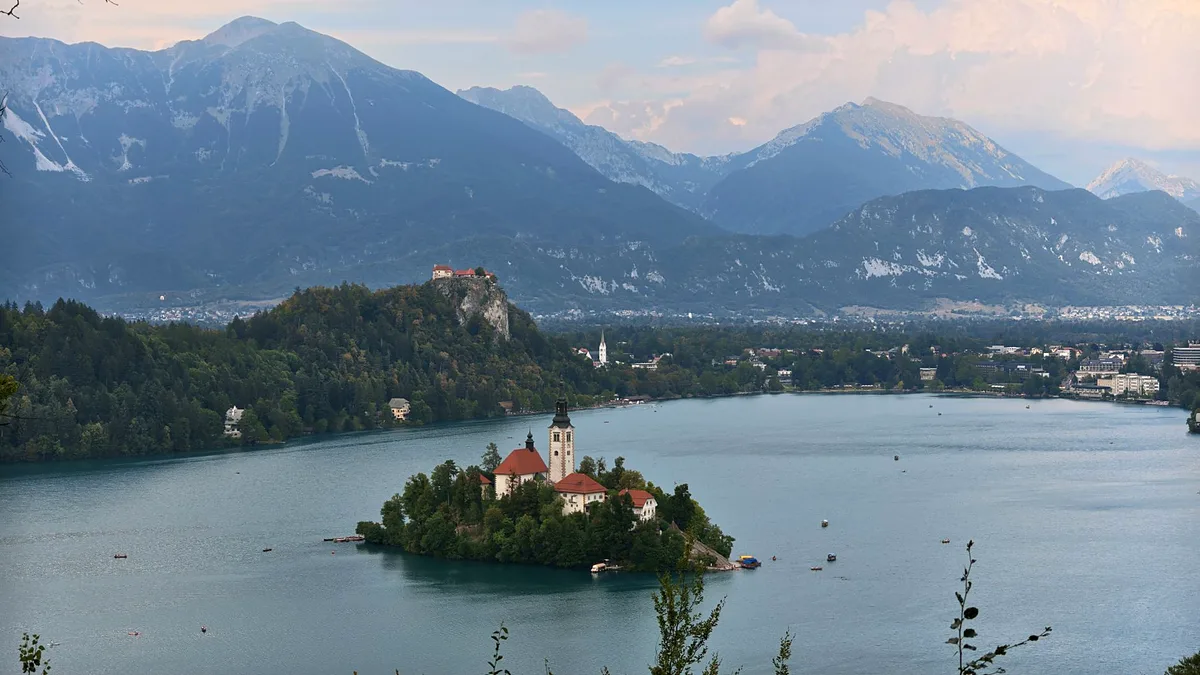

Most travelers come to Lake Bled for one photo: the island church, the castle on the cliff, the cream cake on a terrace. That photo is real, and it's worth getting. But walk twenty minutes off the lakeshore and you'll find the version of Bled most visitors never touch — a castle print room where you pull the woodblock page yourself, a village where nearly every house was once a nail forge, and honeybread bakers who've been decorating hearts for over two centuries.
This guide covers the craft workshops and heritage sites around the lake that are genuinely worth your time and money. I've listed what things cost in euros and dollars, when to show up, and the spots where tourists routinely burn an afternoon. Expect a mix of half-day trips and easy walks — you don't need to be a craftsperson to enjoy any of it.
At a Glance: Lake Bled Snapshot
- Best time to visit: late May–June or early September. Warm, dry, and roughly half the crowd of July–August.
- Daily budget: €70–120 (~$76–130) per person, including one workshop or museum entry per day.
- Getting around: on foot for the lake itself (a 6 km loop), Arriva buses for Radovljica, a car or taxi for Kropa and Idrija.
- Local transport style: small and slow. Buses run hourly at best and stop in the early evening.
- Vibe: alpine, unhurried, quietly proud of its trades. Nobody will rush you out of a workshop.
1. Bled Castle's Living Craft Rooms
Bled Castle gets about a million visitors a year, and 90% of them walk the ramparts, take the lake photo, and leave. That's a mistake. Down on the lower terrace there's a working replica of a 16th-century print shop, where staff in period dress show you how pages were set and pressed — and then hand you the bar to pull your own. You keep the print.
Unlimited High-Speed International Travel eSIM
Connect in seconds across 180+ destinations. Instant QR code activation with zero roaming surcharges.

Nearby you'll find a blacksmith's forge and a small wine cellar where the castle's own blends are poured for tasting. None of it is a theme-park re-enactment; the equipment works, and the people running it know the history cold. Budget 90 minutes minimum.
- Where: Grad 1, on the cliff above the lake's north shore.
- Cost: adults €18 (~$20), students and seniors €12, kids 4–14 €8, family ticket around €40.
- Best time: 8–10am, or after 5pm in summer when the coach groups have gone.
- Getting there: a 15-minute uphill walk from the lake along Partizanska cesta; by car, castle parking is about €4/hour.
Insider tip: skip the castle restaurant entirely — the food is average and the view is the only thing you're paying for. Eat in town, then come up for the craft rooms and the sunset instead.
2. Bled Island: The Wishing Bell and the Pletna Boats
The island's Church of the Assumption is heritage, not a craft workshop, but there's a real trade story attached to it. The wooden pletna boats that ferry people across are hand-built by a handful of local families, using a design that hasn't changed much in centuries. Ask your oarsman about the workshop — several are happy to talk about how the hulls are shaped.
On the island, climb the 99 stone steps, then head into the church and pull the wishing bell rope. It's a tradition, not a gimmick, and it's the best five minutes on the lake. The island itself is small — an hour including the boat ride each way.
- Where: Blejski otok, reachable only by boat.
- Cost: pletna round trip around €20 (~$22) per person; church entry around €7 (~$8). Renting your own rowboat costs roughly €30/hour for the whole boat.
- Best time: before 9am or after 4pm. Midday in July means queuing for both boat and bell.
- Getting there: pletna stands at the rowing centre and at Velika Zaka on the south shore.
Insider tip: pletna prices are fixed by the local association — don't haggle, it just annoys people. If you're a group of four, rent a rowboat instead and split the cost; it works out cheaper and you set your own pace.
3. Lectar Honeybread Workshop, Radovljica
A 15-minute bus ride from Bled, Radovljica's old town is where Slovenian honeybread — lect — has been made since the 18th century. At Lectar on Linhartov trg you can decorate your own heart-shaped biscuit with piped icing, guided by someone who has done it a few thousand times. It sounds twee. It is genuinely good fun, and you leave with something you made.
Downstairs there's a small museum of original wooden moulds and finished pieces, including some intricate 200-year-old designs. The building also runs as a restaurant, so you can turn the visit into lunch without moving.
- Where: Linhartov trg 2, Radovljica old town.
- Cost: decorating session around €14 (~$15); museum entry free if you eat or take the workshop.
- Best time: weekday mornings; weekends fill with Slovenian families.
- Getting there: Arriva bus from Bled bus station, roughly 15 minutes, around €2 (~$2.20).
Insider tip: book the workshop a day ahead by phone or email. Walk-ins are often turned away in summer, and the shop won't always tell you that until you've waited twenty minutes.
4. Beekeeping Museum and Šivec House, Radovljica
Pair this with Lectar — both sit on the same square. Slovenia keeps bees the way other countries keep vineyards, and this small museum explains why: painted hive panels, traditional hives you can open, and an honest explanation of how much work goes into a jar of honey. It's the kind of museum that takes 45 minutes and changes how you look at the jars back home.
Two doors down, Šivec House is a restored burgher's home with a painted facade and a gallery of local craft and art. Small, quiet, and almost always empty.
- Where: Linhartov trg 1 and Linhartov trg 6, Radovljica.
- Cost: beekeeping museum around €5 (~$5.50); a combined ticket with Šivec House is roughly €7 (~$7.60).
- Best time: Tuesday to Saturday, late morning.
- Getting there: same bus as above; the two museums are a one-minute walk apart.
Insider tip: ask at the desk about local beekeepers who sell direct. Several farm gates around Bled and Radovljica sell honey and propolis cheaper than any shop in town, and you'll meet the person who harvested it.
5. Kropa: The Iron Forging Village and Museum
Kropa is the most striking heritage stop in the area and hardly any foreign visitor makes it out there. For centuries this narrow valley village made nails and ironwork for half of Europe — the water-powered hammers ran day and night, and the houses are stacked tight against the hillside because there was nowhere else to build. The forging museum explains the whole process, from ore to finished nail, in two rooms.
What makes it worth the drive is the walk afterwards. Follow the village trail past the old furnaces, the workers' houses, and the cemetery, and you'll understand how a single trade shaped an entire settlement.
- Where: Kropa, about 18 km south of Bled.
- Cost: museum around €5 (~$5.50) for adults, less for children.
- Best time: weekday afternoons; check seasonal opening hours before you go, as it closes earlier out of season.
- Getting there: no useful public transport — drive (25 minutes) or take a taxi. Combine it with a stop in Radovljica.
Insider tip: the village is very steep and the paths are cobbled. Wear proper shoes. Also, the blacksmith demonstrations only run for booked groups, so call ahead if that's the part you care about.
6. Idrija: Lace School and Mercury Mine
Idrija is a 75-minute drive and a full day out, but it's the deepest heritage experience in the region. The town is a UNESCO World Heritage site for its mercury mine, and the lace school here has taught bobbin lace since 1876. You can watch a lacemaker work a pillow with a hundred bobbins and, on open days, try a simple pattern yourself.
The mine tour is the other half of the story — you put on a helmet and walk into the galleries with a former miner. It's cool, damp, and completely absorbing. Not recommended for small children or anyone claustrophobic.
- Where: Idrija, roughly 60 km southwest of Bled.
- Cost: mine tour around €13 (~$14); municipal museum €6; lace demonstrations usually free with museum entry.
- Best time: Wednesday to Sunday; allow a full day including the drive.
- Getting there: car is really the only sensible option. Bring a jacket for the mine.
Insider tip: book the mine tour online the day before. The first tour of the day is smaller and the guide has more time to talk.
Where to Eat and Drink Nearby
Slaščičarna Šmon, Bled
On the road up to the castle, and the place I send people for kremšnita — the vanilla-custard cream cake. Around €5 (~$5.50), and honestly as good as the famous version at Hotel Park for less money and no queue. Open from early morning to early evening.
Gostilna Pri Planincu, Bled
Old-fashioned, wood-panelled, and packed with locals at lunch. Order the buckwheat žganci with mushrooms or the Kranjska sausage with mustard. Mains run €12–18 (~$13–20). Grajska cesta, five minutes from the lake.
Lectar, Radovljica
Lunch in the same building as the honeybread workshop. The daily set menu is around €15 (~$16) and the portions are generous. Ask for the honeybread dessert even if it isn't listed — it usually is.
Practical Logistics and Budget Tips
Getting around without a car
Bled has no train station in the town itself — the station is at Lesce-Bled, about 4 km away, with a local bus link. From Ljubljana, Arriva buses take around 80 minutes and cost roughly €6.50 (~$7). Buy on the day at the bus station; there's no need to pre-book.
For the lake, walk. The 6 km loop takes about 90 minutes at an easy pace and beats any bus. Bikes rent for €10–15 a day if you want to reach Vintgar or the south shore quickly.
What things actually cost
Cards are accepted almost everywhere, including small workshops. Tap water is free and drinkable — refill at the fountains along the promenade instead of buying bottles. Supermarkets (Mercator, Hofer) are a short walk from the lake and make a picnic lunch for under €6.
What to skip
Skip the combined "castle + island + boat" packages sold near the bus station; you pay a markup for things you can book yourself in five minutes. Skip the €5/hour lakeside parking in summer and park on Grajska cesta or take the bus. And skip the castle restaurant — it's the weakest meal in town with the best view.
One honest heads-up: July and August turn the lakeshore path into a slow-moving queue. If you're here in peak season, do your heritage sites in the morning and save the lake walk for after 6pm. And if it rains, the Tržič museum (25 minutes away, €4) has a solid shoemaking collection — the town made footwear for the whole empire.
Frequently Asked Questions
Is Bled Castle worth the €18 entry fee?
Yes, if you use it properly. The print room, forge, and cellar tasting are genuinely hands-on, and the lake view from the ramparts is the best in the area. Skip it only if you're tight on time and would rather spend the money on a craft workshop.
Do you need a car to visit Lake Bled's craft workshops?
Not for Radovljica or the castle — buses and walking cover both easily. You do need a car (or a taxi) for Kropa and Idrija, so plan those as a driving day or book a local transfer.
What's the best rainy-day heritage activity around Lake Bled?
Radovljica, without question. The beekeeping museum, Šivec House, and the Lectar workshop are all within a minute of each other and mostly indoors. The Idrija mine also works well in rain, since you're underground anyway.
How many days do you need in Lake Bled?
Two full days lets you do the lake, the castle, and Radovljica without rushing. Add a third if you want Kropa or a day trip to Idrija, and a fourth if you're combining it with Bohinj or Ljubljana.