
Kraków is one of the few European cities where the old crafts are still being made, not just re-enacted for tourists. Stained glass gets cut and soldered in a workshop that has been running since 1902. Bakers twist obwarzanek dough by hand before sunrise. And under the Main Square, a medieval trading town sits preserved like a photograph.
This guide skips the postcard loop and focuses on where Kraków's heritage and its working artisans actually meet. You'll get real prices in złoty, the neighborhoods to walk through, and an honest note on what to skip.
- Best time to visit: Late April to mid-June and September to October. Warm enough to walk everywhere, quiet enough to book workshops on short notice.
- Typical daily budget: 150–260 zł (~$38–65 USD) per person, covering two museum or workshop tickets, transit, coffee and two meals.
- Getting around: Trams plus your feet. The Old Town is car-free and walkable; Kazimierz is 20 minutes on foot from the Main Square.
- General vibe: Unhurried and workshop-led. People here would rather talk you through a craft than sell you a fridge magnet.
1. Muzeum Witrażu: Stained Glass You Can Watch Being Made
At ul. Zygmunta Krasińskiego 23, a modest doorway opens onto a stairwell that smells of resin and hot metal. This is the Żeleński workshop, founded in 1902 and still producing stained glass for churches and restorations today. The museum route walks you through the actual workrooms, past wooden easels and half-finished panels, while a guide explains how a pencil sketch becomes leaded glass.
Unlimited High-Speed International Travel eSIM
Connect in seconds across 180+ destinations. Instant QR code activation with zero roaming surcharges.

It takes about 45 minutes and is one of the best-value experiences in the city. If your dates allow, book a weekend workshop and cut and foil your own small panel. Go in the morning while your hands are steady and your head is clear.
- Neighborhood: Zwierzyniec, on the bend of the Vistula just west of the Old Town.
- Cost: 35 zł (~$9 USD) for the guided museum route; workshops run 150–220 zł (~$38–55 USD).
- Best time of day: Weekday mornings. English tours are limited, so check the schedule online before you commit.
- Getting there: Trams 1, 2, or 6 to the Jubilat or Komorowskiego stop, then a 3-minute walk.
Insider tip: Pair this with the Franciscan Church on ul. Franciszkańska, a 5-minute walk from the Main Square. Stanisław Wyspiański's stained glass window there, completed in 1904, is free to see and shows you exactly what the workshop tradition produced. It's closed to sightseers during services.
2. Żywe Muzeum Obwarzanka: Bake the City's Signature Bread
Obwarzanek is Kraków's ring-shaped bread, boiled then baked and sold from street carts since the 14th century. At this small museum on ul. Paderewskiego, you don't just look at old photos; you roll, twist and top your own ring, then eat it warm about 15 minutes later. It's the rare family-friendly activity that adults genuinely enjoy.
Sessions run under an hour, which makes this a smart filler between bigger sights. Book ahead in summer and around December, when school groups fill the slots.
- Neighborhood: Old Town edge, near the Słowacki Theatre and Planty park.
- Cost: Around 55–75 zł (~$14–19 USD) per person, including your obwarzanek.
- Best time of day: Late morning, so you have an appetite left for lunch.
- Getting there: A 6-minute walk from the Main Square; trams to the Teatr Słowackiego stop.
Insider tip: The real thing is sold from blue-and-yellow carts across the city for about 3 zł (~$0.75 USD). Buy one on the street afterwards and taste the difference between a fresh bake and a reheated one.
3. St. Mary's Basilica and the Veit Stoss Altar
You'll hear this before you see it. Every hour, a trumpeter plays the hejnał from the taller tower, cutting the melody short mid-note. Inside, the draw is the Great Altar, carved by Veit Stoss between 1477 and 1489 and standing nearly 13 meters tall when opened. It's the largest Gothic altarpiece in Europe and the reason many visitors come to Kraków in the first place.
The altar is opened ceremonially each day at 11:50 am, and watching it unfold is worth arranging your morning around. The rest of the interior is decorative rather than restful, so plan for 30 minutes, not an afternoon.
- Neighborhood: Rynek Główny, northeast corner of the Main Square.
- Cost: Free to enter for prayer; roughly 15 zł (~$4 USD) for the tourist route with altar viewing.
- Best time of day: Arrive at 11:35 am and hold a spot before the altar opens. Afternoons are crowded.
- Getting there: Every tram into the center stops within 5 minutes; walk from anywhere in the Old Town.
Insider tip: Skip the paid tower climb if the weather is hazy. The view from the free Kościuszko Mound or the Wawel courtyard lawn is better on a clear day and costs nothing.
4. Wawel Cathedral and the Sigismund Bell
Wawel Hill holds the coronation church of Polish kings, and it's thick with layers: Romanesque fragments, Renaissance chapels, and the tombs of monarchs and poets alike. The 11-tonne Sigismund Bell, cast in 1521, hangs in the tower and is still rung by hand on major feast days.
Climbing to it means squeezing up wooden stairs and standing in a space where the bell takes up most of the room. Numbers are capped, so it's not a place to arrive casually at midday in July. The castle courtyards and grounds, meanwhile, are free and a good place to reset.
- Neighborhood: Wawel, a 12-minute walk south of the Main Square along ul. Grodzka.
- Cost: Around 35 zł (~$9 USD) for the cathedral; the bell tower and royal chambers are ticketed separately at similar prices.
- Best time of day: First entry at opening, or after 3 pm when the tour buses thin out.
- Getting there: Trams to Wawel stop; the walk along the Vistula boulevards is flatter and prettier.
Insider tip: The bell tower is seasonal and sometimes closes without much notice. Buy that specific ticket first, then build the rest of your visit around it.
5. Rynek Underground: The Medieval Market Beneath Your Feet
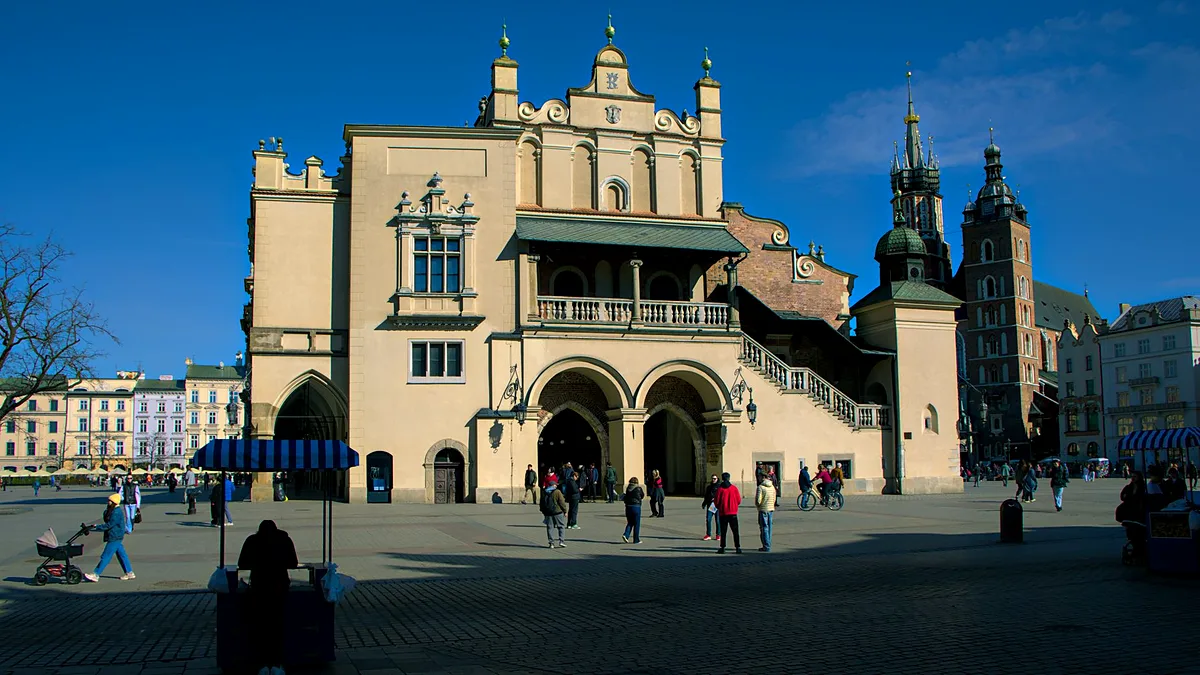
Beneath the eastern side of the Main Square, archaeologists uncovered 11th-century stalls, cobbled lanes and trading goods, and built a subterranean museum around them. You walk in the shadow of stone walls and shop fronts that predate most of the buildings above you. It's cool, quiet and a relief on a hot afternoon.
The displays lean heavily on screens and projections, which won't suit everyone. But the actual excavated ground is fascinating, and the ticket includes entry to the small exhibition on the square's history above ground.
- Neighborhood: Rynek Główny, entrance under the Cloth Hall.
- Cost: Roughly 32 zł (~$8 USD) standard; discounts for students and seniors.
- Best time of day: Book a morning slot. Weekend afternoons sell out.
- Getting there: Central enough that no tram is needed.
Insider tip: If you only have two days in Kraków, skip this one and put the money toward the stained glass workshop instead. Come back for it on a rainy day.
6. Kazimierz: Craft Shops and the Ethnographic Museum
Kazimierz was a separate town for centuries and still feels like one. The streets around ul. Józefa and ul. Szeroka mix Jewish heritage sites, independent studios and secondhand shops. Start at Plac Wolnica and the Ethnographic Museum, which holds folk crafts, textiles, ceramics and decorated Easter eggs with real regional provenance.
For buying rather than browsing, head to Cepelia on ul. Grodzka 68 in the Old Town. It's a cooperative selling Polish-made folk art, pottery and woodwork at fair prices, and it's the antidote to the imported trinket stalls in the Cloth Hall.
- Neighborhood: Kazimierz, 20 minutes on foot from the Main Square.
- Cost: Ethnographic Museum entry around 20 zł (~$5 USD); Cepelia charges nothing to browse.
- Best time of day: Weekday afternoons. Museum is closed Mondays.
- Getting there: Trams 3, 19 or 24 to Plac Wolnica; or walk down ul. Starowiślna.
Insider tip: The Plac Nowy market on a Saturday morning is where locals buy lace, ceramics and vintage tools. Arrive before 10 am for first pick.
7. Nowa Huta: Socialist-Realist Heritage by Tram
Twenty minutes east by tram, Nowa Huta was built from scratch in the 1950s as a model industrial town. Wide avenues, colonnades and planned courtyards make it the textbook example of socialist-realist urban design in Europe. The Muzeum Nowej Huty in Centrum E tells the story through photographs, oral histories and building plans.
This is the Kraków that guided walking tours rarely cover, and it's worth half a day. The abandoned steelworks courtyards and the vast Plac Centralny give you a sense of scale that the Old Town can't.
- Neighborhood: Nowa Huta, os. Centrum E 1.
- Cost: Museum entry about 18 zł (~$5 USD); tram fare about 6 zł (~$1.50 USD).
- Best time of day: Morning, before the museum's lunchtime lull.
- Getting there: Tram 4 or 10 from the Old Town, roughly 25 minutes.
Insider tip: Eat at a bar mleczny in Nowa Huta rather than heading back into the center. The lunch bars here still serve workers' portions at 1980s prices.
Where to Eat and Drink Nearby
Bar Mleczny Pod Temidą (ul. Grodzka 43)
A surviving milk bar serving pierogi, żurek sour rye soup and potato pancakes for around 20–30 zł (~$5–8 USD) a head. Cash is welcome, queues move fast, and the menu board is the only decoration. Go before 1 pm or after 2:30 pm to avoid the office lunch crush.
Zapiekanki at Plac Nowy, Kazimierz
The round brick building in the middle of Plac Nowy turns out grilled baguettes with mushrooms, cheese and garlic sauce for about 12–16 zł (~$3–4 USD). Stand and eat like everyone else. The best stall is the one with the longest local queue, not the loudest sign.
Mleczarnia (ul. Beera Meiselsa 20)
A candlelit café in a former Jewish prayer house with cheesecake and strong coffee at around 18 zł (~$4.50 USD). It's the right place to sit for an hour after a morning of museums. Evenings get busy, so come early if you want a table in the garden.
Practical Logistics and Budget Tips
Transit hacking
Buy tram tickets from the machines on board or in the app; a 60-minute ticket costs about 6 zł (~$1.50 USD) and a 24-hour pass around 24 zł (~$6 USD). Most of the historic center is walkable, so a single ticket in and a single ticket back often beats a pass.
Money
Cards work almost everywhere, but keep 100–200 zł in cash for market stalls and milk bars. The Kraków Card only pays off if you plan five or more paid museums in three days; for a workshop-focused trip, it rarely does.
What to skip
Skip the amber stalls inside the Cloth Hall, where much of the stock is pressed resin. Skip the golf-cart tours of Kazimierz; the streets are short and the commentary is thin. And skip any restaurant on the Main Square with a photo menu and a tout at the door.
Booking reality
Small workshops cap their groups at eight to twelve people, so book two or three days ahead in summer and a week ahead in December. Many studios close on Mondays, which is a good day to plan for Nowa Huta instead.
Frequently Asked Questions
Are there artisan workshops in Kraków you can visit without booking?
The Stained Glass Museum and the obwarzanek museum both accept walk-ins when slots aren't full, but guided tours run on fixed times. For hands-on workshop sessions, booking ahead is the only reliable way in.
How much do craft workshops cost in Kraków?
Expect 55–75 zł (~$14–19 USD) for a short baking or pottery session and 150–220 zł (~$38–55 USD) for a longer stained glass or ceramics workshop. Museum visits alone are much cheaper, usually 15–35 zł (~$4–9 USD).
What is the best month to visit Kraków for craft and heritage?
May, June and September give you the best balance of weather, opening hours and availability. December is atmospheric for the Christmas market, but workshops fill up fast and prices rise.
Is two days enough to cover Kraków's heritage sites and workshops?
You can cover the Old Town, Wawel and one workshop in two full days without rushing. Add a third day if you want Kazimierz and Nowa Huta, which are best done at a slower pace.