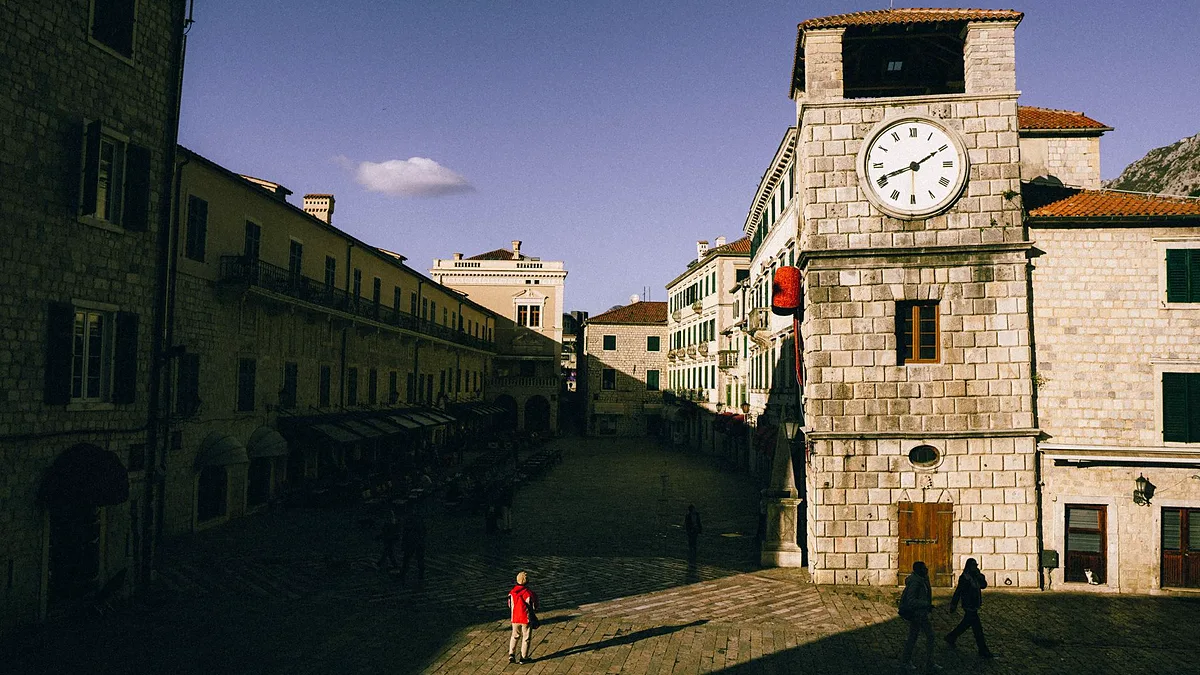

Kotor's old town is roughly 300 metres across, yet most visitors see about ten percent of it. They come in from the cruise tenders at the Sea Gate, walk one loop past the Cathedral of St. Tryphon, buy a cat magnet, and leave. Everything else — the courtyards, the first-floor ateliers, the private museum run out of a family house — sits one street back, unattended.
This guide is about that second Kotor: palace galleries with no signage, a genuinely strange cat collection, church treasuries full of painted icons, and small bars that operate like members' clubs only because everyone inside already knows each other. None of it is expensive. Most of it is empty.
At a Glance: Kotor Off-Season, Off-Script
Unlimited High-Speed International Travel eSIM
Connect in seconds across 180+ destinations. Instant QR code activation with zero roaming surcharges.

- Best time to visit: mid-May to mid-June, or September through early October. July and August bring three to four cruise ships a day.
- Typical daily budget: €50–90 (~$54–$98) for a mid-range day covering entries, two proper meals and a couple of drinks.
- Local transport style: walking. The old town is car-free and crossable in ten minutes; buses and taxis only matter for Dobrota and the bay.
- General vibe: Venetian stone, peeling shutters, bells at odd hours. Quiet, slightly shabby, and much better after 6pm.
1. Pima Palace and the Courtyard Galleries Nobody Enters
Trg od Brašna — Flour Square — is a thirty-second detour from the main drag, and Pima Palace is the reason to take it. The 17th-century building has a carved stone balcony visible from the square and a courtyard that has hosted rotating art shows for years.
Nothing here is labelled properly. You push a heavy door, walk into a stone yard with a lemon tree, and find three walls of canvases by a Montenegrin painter nobody outside the country has heard of. Entry is free or a token euro. Between exhibitions the courtyard alone is worth the two minutes.
- Neighbourhood: Old Town, just off Trg od Brašna (Flour Square)
- Cost: Free to enter; exhibitions usually €0–3 (~$0–$3)
- Best time: 9–11am before tour groups, or after 6pm when the courtyard is shaded
- How to get there: Two minutes on foot from the Sea Gate
Insider tip: If a palace gate is propped open with a brick or a stone, it's open to the public. Kotor doesn't do signage — the ajar door is the invitation.
2. The Cats Museum: Kotor's Oddest Private Collection
Kotor has a serious cat obsession, and this small museum takes it literally. Two rooms of prints, postcards, paintings and trinkets, all cat-themed, collected over decades by one family and displayed in their own house just off the Square of Arms. You'll be in and out in fifteen minutes.
I'll be honest: this is not an art gallery, and anyone expecting one will be disappointed. What it is, is a very specific window into local humour — and the owner will happily talk you through the collection if you show interest.
- Neighbourhood: Old Town, a short stairway off Trg od Oružja (Square of Arms)
- Cost: About €2–3 (~$2–$3.50), cash only
- Best time: Late morning, after 10am
- How to get there: 90 seconds from the Sea Gate; look for the small sign above the stairwell
Insider tip: Opening hours are optimistic at best. If the door's locked, the owner has stepped out for coffee — try again in twenty minutes rather than assuming it's closed.
3. Grgurina Palace, St. Nicholas and the Icon Treasuries
The Maritime Museum of Montenegro sits inside Grgurina Palace on Trg Bokeljske mornarice, and it's the most substantial indoor thing to do in the old town. Three floors of ship models, naval portraits, old charts and family silver tell the story of a town that spent centuries as a serious sailing port.
Then walk thirty seconds to St. Nicholas Church and its small treasury of silver and icons, and to St. Luke's — a church from 1195 that kept both a Catholic and an Orthodox altar, which tells you more about Kotor than any museum label will.
- Neighbourhood: Old Town, north side, near Trg od Mlijeka (Milk Square)
- Cost: Museum roughly €5 (~$5.50); churches free, treasury donations welcome
- Best time: Midday, when it's too hot to be outside — and when the ship crowds are on the fortress
- How to get there: Five minutes' walk from anywhere in the old town
Insider tip: English labelling is patchy above the ground floor. Ask the person at the desk for the two or three objects worth stopping for; they're usually glad someone asked.
4. KotorArt: A Summer Season That Feels Like a Members' Club
Every July and August, the KotorArt festival — locally still called Don Branko's Days of Music — puts classical concerts into churches, courtyards and the Square of Arms. Venues hold 150 to 250 people, so a full house still feels like a private recital.
Tickets run about €10–25 (~$11–$27) depending on the programme, and there are free open-air performances on the squares most weeks. Concerts also spill out to Perast, Prčanj and Dobrota, which is how locals actually attend.
- Neighbourhood: Old Town venues, plus bay villages
- Cost: €10–25 (~$11–$27) per ticketed concert; outdoor events free
- Best time: Book two to three days ahead in peak season; same-day tickets are usually standing room only
- How to get there: Programme and box office sit near the Square of Arms
Insider tip: The church venues are stone and hold heat. Dress lighter than you would for a concert at home, and arrive early enough to sit near a door.
5. The Tiny Bars That Operate Like Private Clubs
Kotor has no actual members' clubs, and any list claiming otherwise is inventing them. What it does have are 15-seat bars where the same thirty people turn up four nights a week. Letrika, tucked into the old town lanes, makes proper cocktails for €8–10 (~$9–$11). Bokun runs more wine-focused, with a glass of local Vranac at €4–6 (~$4–$6.50).
The old town effectively shuts by midnight, so these places thin out early. That's the trade-off: no big night out, but you can hear each other talk.
- Neighbourhood: Old Town lanes around Trg od Salate and the Sea Gate
- Cost: €8–15 (~$9–$16) for two drinks
- Best time: 8–11pm; indoor seats are cool and half-empty while the terraces are rammed
- How to get there: All within a five-minute walk of each other
Insider tip: In July and August, take the indoor table. Everyone fights for the terrace and then sits in 32°C heat next to a speaker.
6. Dobrota's Waterfront and the Old Olive Mill
Walk or ride 3km north along the bay to Dobrota, where the old captain's villas line the water and the pace drops another notch. The anchor is Ćatovića mlin, a 17th-century olive mill turned restaurant, with the original stone press still in the room.
Small family cellars along this strip take drop-ins for tastings more often than you'd expect, especially outside July and August. Ask at the tourist office in Kotor for who's currently pouring — the list changes yearly.
- Neighbourhood: Dobrota, along the coastal road
- Cost: Tastings commonly €10–20 (~$11–$22); mains at the mill €18–30 (~$20–$33)
- Best time: Late afternoon for the walk, sunset for dinner
- How to get there: Local bay bus €1–2, taxi €5–8, or a flat 35-minute walk
Insider tip: The waterfront path runs right along the road and there's traffic. Walk on the sea side and keep one ear open for scooters.
Where to Eat and Drink Nearby
Portun
A tiny seafood room near the Sea Gate with maybe eight tables and a menu that changes with the boats. Mains land around €15–22 (~$16–$24). Book, or eat at 6pm.
Cesarica
Reliable old-town seafood near Flour Square, strong on grilled fish and black risotto at €18–28 (~$20–$31) for mains. It's popular with locals in winter, which is the best sign.
Ćatovića mlin, Dobrota
The olive mill above, worth the walk for the room alone. Order the fish platter to share and a carafe of local white, roughly €40 (~$44) for two.
Any pekara (bakery) near the Sea Gate
Burek and a yoghurt for €2–3 (~$2–$3.50) is the cheapest good breakfast in town. Go before 9am while it's still warm.
Practical Logistics and Budget Tips
Getting around
The old town requires no transport at all — cars are banned inside the walls. For the bay, local buses to Dobrota and Perast cost €1–2 paid to the driver; there's no useful day pass, so don't hunt for one. Taxis from the Sea Gate rank run €5–10 within Kotor and Dobrota.
Realistic costs
Museum entries are €2–5, dinners €15–30 a head, coffee €1.50–2.50. Budget €50–90 (~$54–$98) a day and you'll be comfortable. Carry cash — several small galleries, the cat museum and church treasuries don't take cards.
What to skip
- The restaurants immediately outside the Sea Gate: you're paying for the view, and the food is a step down from one street further in.
- The St. John's Fortress climb at midday in summer. Entry is charged in peak season (around €10, cash) and there's no shade. Go at 7am or skip it.
- The Kotor–Lovćen cable car if you're short on time — around €20–25 return and weather-dependent.
- The Cats Museum if you want actual art. It's a curiosity, not a gallery.
Frequently Asked Questions
Is it free to enter Kotor Old Town?
Yes — there's no entry fee and no gate ticket, despite what some tour sellers imply. You only pay for individual museums, churches' treasuries and the fortress trail.
Are there real art galleries in Kotor?
There are several small ones inside historic palaces, mainly around Flour Square, plus seasonal shows during KotorArt in July and August. They're small, free or nearly free, and hours are inconsistent — mornings are your best bet.
When is Kotor least crowded?
May, June, September and early October, and any day between 10am and 4pm when cruise passengers are ashore. Early mornings and evenings in July still work if you're already staying in town.
How many days do you need in Kotor?
Two full days covers the old town, the museums and a bay village properly. Add a third if you want the fortress hike, a Dobrota wine stop and a slow afternoon doing nothing.