
Kotor has a reputation problem. Cruise ships drop thousands of people at the Sea Gate by 9am, and the waterfront restaurants respond with menus that charge €22 for a plate of mussels. Step one street back and the maths changes fast: coffee is €1.20, the morning market sells cheese by the slab, and the best view in Montenegro costs €15 and a litre of sweat.
This guide is for travellers who want the good version of Kotor without the five-star bill. Everything below is priced in euros (Montenegro uses the euro) with rough US dollars alongside, plus the honest downsides nobody puts on a postcard.
Kotor at a Glance
- Best time to visit: Late May to mid-June and September to early October. Warm sea, thin crowds, and prices roughly 30% below July and August.
- Typical daily budget: €55–75 (~$60–80) per person, covering a private room, three real meals, one paid sight and local transport.
- Getting around: On foot inside the walls, plus the Blue Line buses from the station for Perast, Tivat and Budva.
- Vibe: A lived-in medieval town with cats, laundry lines and a mountain that hangs over your head. Not a resort.
1. Walk the Old Town Lanes Before the Cruise Crowds
Kotor's Stari Grad is a UNESCO-listed maze of 12th-century churches, noble palaces and alleys so narrow you can touch both walls. At 7am it belongs to bakers, stray cats and the odd fisherman, and you can hear your own footsteps on the polished limestone.
Unlimited High-Speed International Travel eSIM
Connect in seconds across 180+ destinations. Instant QR code activation with zero roaming surcharges.

Entry is free. Wander from Arms Square (Trg od Oružja) through Flour Square and Milk Square, duck into the Serbian Orthodox Church of St. Nicholas, and find the tiny 1195 Church of St. Luke, which has survived every earthquake here. By 10am the same lanes are shoulder-to-shoulder with tour groups holding numbered paddles.
- Neighbourhood: Stari Grad, enter through the Sea Gate on the waterfront.
- Cost: €0. Coffee at a square-side kafana runs €1.20–1.80 (~$1.30–2).
- Best time: 6:30–8:30am, or after 8pm when the day-trippers leave.
- Getting there: A flat 8-minute walk from Kotor bus station along the bay.
Insider tip: Skip the €20 walking tours pitched at the gate. The tourist office by the Sea Gate hands out a free map with the palaces marked, and the town is small enough that getting lost costs you ten minutes, not a day.
2. Climb the San Giovanni Fortress for the View of the Trip
The switchback trail up to the ruined Castle of San Giovanni climbs about 260 metres past the 4.5km of walls that once protected Kotor. It is roughly 1,350 steps, takes 45 to 60 minutes at a normal pace, and delivers a view straight down onto the red roofs and the fjord-shaped bay.
Go early or go late. The stone radiates heat by midday in July, and there is almost no shade on the upper third. Sunset from the top, with the lights coming on in Dobrota across the water, is the single best free-ish experience in town.
- Neighbourhood: Trailhead in the northern corner of Stari Grad, behind the old town lanes.
- Cost: €15 (~$16) at the kiosk during high season. Outside staffed hours many people walk up for free.
- Best time: 6:30am for empty walls and soft light, or 6pm for sunset.
- Getting there: Walkable from anywhere in Old Town; follow the signs past the Church of St. Mary.
Insider tip: Wear real shoes. The upper path is loose rock and flip-flops cause the ankle injuries the local clinic sees every summer. Carry two litres of water — there is no tap after the trailhead.
3. Eat Breakfast at the Kotor Market (Pijaca)
The morning market just outside the Sea Gate is where the budget-luxury line gets blurred. For €6 (~$6.50) you can assemble a breakfast of smoked pršut, njeguški cheese, tomatoes, olives and a bag of figs that would cost €28 on a restaurant terrace fifty metres away.
Vendors come down from the mountain villages around Njeguši and Cetinje. Look for honey in unlabelled jars, homemade rakija in recycled bottles, and pomegranates in autumn. It is a working market, not a photo set, so ask before you point a camera at someone's stall.
- Neighbourhood: Right outside the Sea Gate, along the road towards Škaljari.
- Cost: Free to browse. 100g of pršut is about €2.50 (~$2.70), cheese around €9/kg.
- Best time: 7–10am. Stalls wind down by early afternoon.
- Getting there: Two minutes on foot from the main gate; the buses stop beside it.
Insider tip: Bring cash. Almost no stall takes cards, and the ATMs inside Old Town charge €3–5 in fees. Use the bank machines near the bus station instead.
4. Three Small Museums for Under €10 Total
The Maritime Museum of Montenegro sits in the Grgurina Palace and tells the story of a town that once had more sea captains than fishermen. For €4 (~$4.30) you get ship models, naval charts and a lovely courtyard that stays cool at noon.
Next door, the Cathedral of St. Tryphon charges around €3 to enter the upper gallery, where the relics and silverwork live. Five minutes away, the Cats Museum is a two-room curiosity run by volunteers, costing about €1.50 and genuinely charming if you like the town's feline obsession.
- Neighbourhood: All three sit inside Stari Grad, within a five-minute radius.
- Cost: Roughly €8.50 (~$9) for all three.
- Best time: 11am–2pm, exactly when the heat and crowds peak outside.
- Getting there: Walk; nothing in Old Town is more than 400 metres apart.
Insider tip: The cathedral asks for covered shoulders and knees. Carry a light scarf in summer and you will avoid the rental fee some churches now charge.
5. Blue Cave and Our Lady of the Rocks Without the Markup
A half-day boat trip to the Blue Cave on the Luštica peninsula and the man-made island of Our Lady of the Rocks is the postcard excursion here. Group tours from Kotor marina run around €30–35 (~$32–38) for three hours including a swim stop.
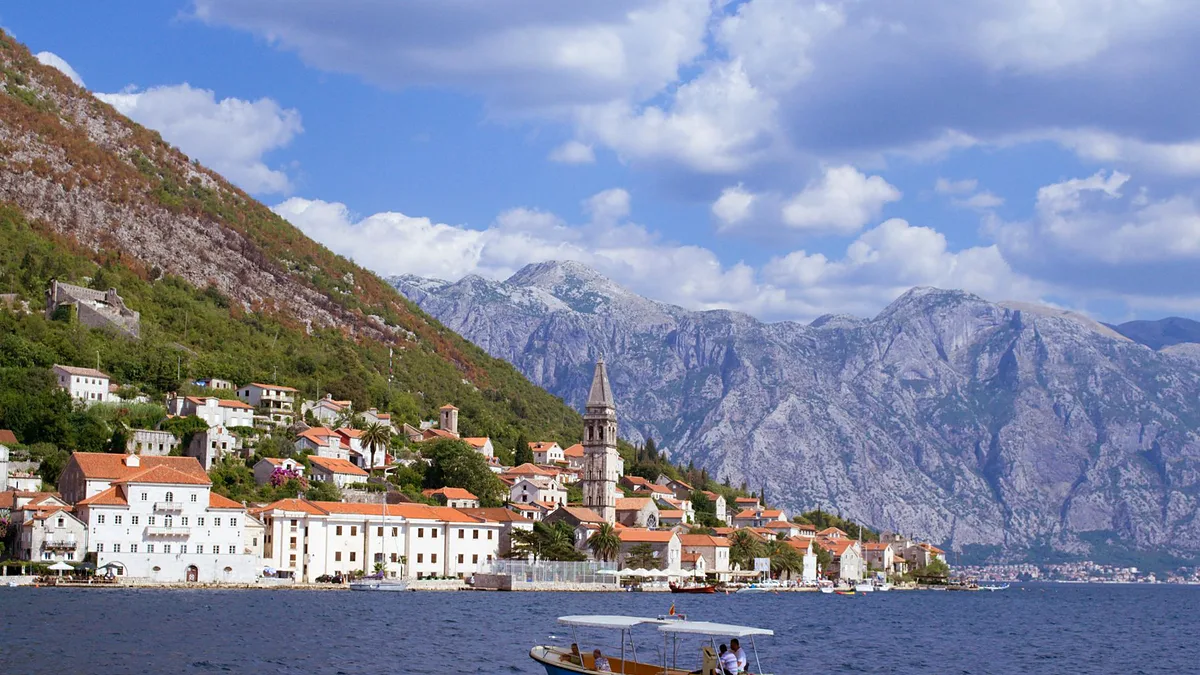
The cheaper and calmer route is DIY. Take the Blue Line bus to Perast (€1.50), then a local boat out to the island for about €5 return, and pay €2 to see the church's silver votive tablets. You control the timing and dodge the 40-person speedboats.
- Neighbourhood: Boats leave from Kotor's waterfront; Perast is 12km northwest along the bay.
- Cost: €10–12 DIY (~$11–13), versus €30–35 for a group tour.
- Best time: First boat out, around 8:30–9am, before the wind and the crowds arrive.
- Getting there: Blue Line bus from Kotor station, 25 minutes.
Insider tip: Bring your own mask and snorkel. The Blue Cave stop is only 15 minutes on most tours, and rental gear on the boat costs more than a cheap mask from home.
6. Free Sunset Swim off Dobrota's Concrete Piers
The beach beside Kotor bus station is gravel, grey and often crowded — skip it. Instead walk 15 to 20 minutes north along the bay into Dobrota, where locals have swum off flat concrete platforms with ladders for generations.
The water here is deep, clear and glassy at sunset, with the mountains turning pink behind you. It is free, and the small bars along the road sell cold Nikšićko beer for €2 (~$2.15) to take away.
- Neighbourhood: Dobrota, along the coastal road east of Old Town.
- Cost: €0. Beer from a shop or kiosk is €1–2.
- Best time: 6–8pm in June and September.
- Getting there: Walk or cycle the waterfront path; the bus towards Dobrota also stops along it.
Insider tip: Wear water shoes. There are sea urchins on parts of the rocky bottom, and the ladders get slippery with algae late in the season.
7. The Ladder of Kotor: A Free Mountain Hike
Behind the walls, an old mule trail zigzags up to the Krstac pass at 940 metres. It is free, it takes around two and a half to three hours up, and it delivers the same bay panorama as the fortress without paying a cent. This is walking, though, not a staircase — expect scree, switchbacks and long stretches with no shade.
At the top, farm kitchens sell cheese, pršut and rakija in summer. Then either retrace your steps or take the paved road down in the evening light.
- Neighbourhood: Starts above the northern edge of Stari Grad.
- Cost: €0. Budget €5–8 for a snack at the top.
- Best time: Start by 7am in summer; the trail is exposed all day.
- Getting there: Walk from Old Town, no transport needed.
Insider tip: Tell someone your plan and download an offline map before you go. The upper trail forks at a couple of points and phone signal is patchy.
Where to Eat and Drink Nearby
BBQ Tanjga sits just past the market on the road to Škaljari, with plastic chairs, football on a wall-mounted TV and mixed grill platters that feed two for about €18 (~$19). Order the ćevapi and the grilled chicken, share everything, and skip dessert because the portions are enormous.
Konoba Scala Santa hides at the quiet top end of Old Town, where the noise of the squares fades. Expect seafood risotto around €13 and a glass of local Vranac for €2.50. It is bookable, small, and one of the few places in the walls where the quality matches the price.
Pekara bakeries are the real budget weapon. A hot burek with cheese or meat costs €1.50–2 (~$1.60–2.15), and there are three within a two-minute walk of the Sea Gate. This is breakfast for the fortress climb, eaten on a wall with your legs dangling.
Practical Logistics and Money Tips
- Beat the cruise ships: They tend to land between 9am and 2pm. Do the town early, hike or museum at midday, and reappear at 4pm.
- Buses over taxis: Blue Line coaches run from Kotor station to Perast (€1.50), Tivat (€3), Budva (€4–5) and Herceg Novi (€4). Pay the driver in cash.
- Airport run: Tivat airport is 15 minutes away; a taxi is roughly €20–25 (~$22–27). Agree the price before you get in.
- Water: Tap water in Kotor is fine to drink. Refill a bottle and save €2 a day.
- Cash rules: Many konobas and all market stalls are card-free. Withdraw from bank ATMs near the bus station, not the tourist ones inside the walls.
- Tourist tax: About €1 per person per night, usually folded into your accommodation price.
- What to skip: The gravel city beach by the bus station, restaurants with photo menus on the promenade, and the €45 fish picnic boat trips that serve the same grilled fish as a €12 konoba.
- Honest heads-up: July and August bring 35°C heat, packed lanes and higher room rates. If you can shift your dates even two weeks into September you will get a noticeably better town for less money.
Frequently Asked Questions
Is Kotor expensive for travellers?
Less than Dubrovnik and Split for the same scenery. A comfortable day of food, one paid sight and a private room sits around €55–75 (~$60–80), and a shoestring day can be done for €35.
How much does it cost to climb the Kotor fortress?
The kiosk at the trailhead charges €15 (~$16) during high season for the San Giovanni walls. The Ladder of Kotor trail above it is free if you want the view without the fee.
Do I need cash in Kotor?
Yes, at least for markets, bakeries and smaller konobas, which often do not accept cards. Carry €30–50 in small notes and use bank ATMs near the bus station.
How many days do you need in Kotor?
Two full days covers the Old Town, the fortress and a swim, while three lets you add a Perast or Blue Cave day trip. Most people regret only booking one, since the town is best at dawn and dusk.