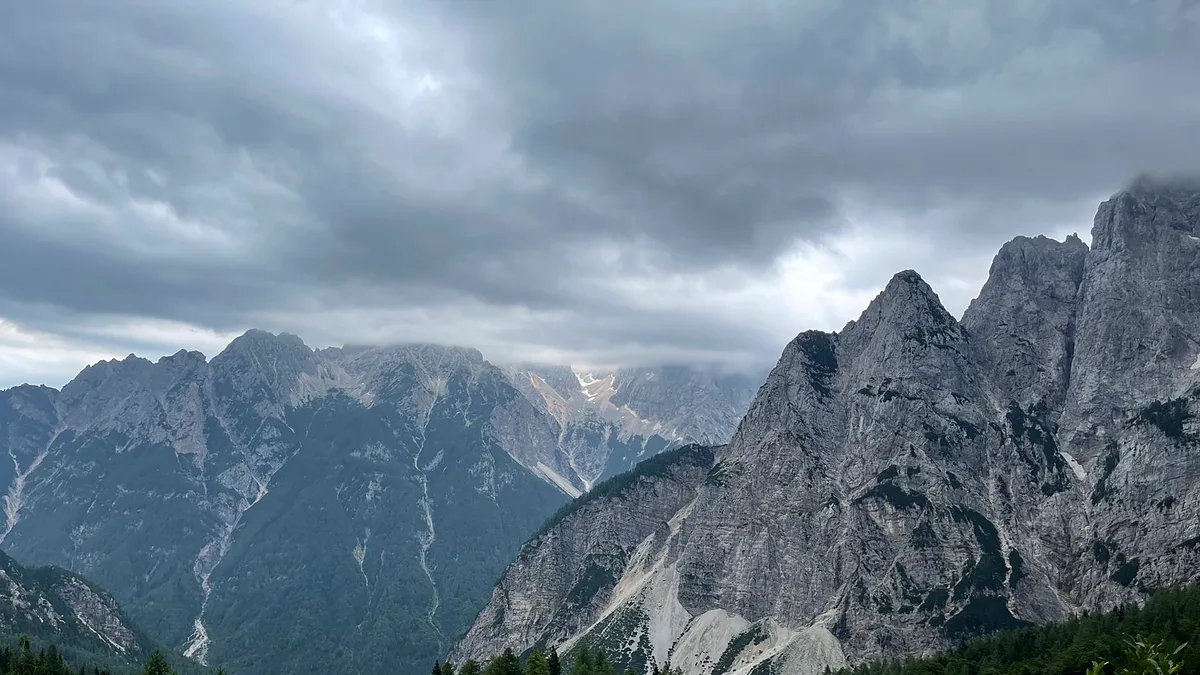

Winter strips the Julian Alps down to the essentials: snow on the larch trees, woodsmoke, and far fewer people than the summer crowds who come chasing the Soča's turquoise water. What surprises most visitors is the indoor side of the region. Small galleries sit inside 400-year-old townhouses, museum rooms are staffed by one person, and taprooms are run by the same brewer who pours your beer.
This guide is for the flat-light afternoons when it goes dark at four and you have no interest in another hour on a chairlift. Every stop below is real, priced, and open in winter, with honest notes on the ones that quietly shut in January.
- Best time to go: mid-January to early March, for reliable snow and empty gallery rooms. Weekdays are noticeably calmer than Saturdays.
- Daily budget: €75–150 (~$80–$165) per person, mid-range, including a rental car.
- Getting around: a car is close to essential. Buses link Bled, Bohinj and Radovljica, but not the smaller studio and gallery addresses.
- Vibe: slow, cash-friendly, closed on Mondays, and refreshingly short on queues.
Galerija Šivec in Radovljica's Old Town
Šivčeva hiša is a late-medieval burgher house on Radovljica's main square, and the gallery inside is the kind of place you can have entirely to yourself on a Tuesday morning. The ground floor holds temporary shows from Slovenian painters and printmakers, usually three or four a year. Upstairs, the building itself is the exhibit: a painted wooden ceiling from the 1500s, low doorways, and windows that look straight onto the Karavanke ridge.
Unlimited High-Speed International Travel eSIM
Connect in seconds across 180+ destinations. Instant QR code activation with zero roaming surcharges.

It takes about 40 minutes to see properly. That is the point. There is no audio guide, no gift shop pressure, and the person at the desk is usually happy to explain which artists are local.
- Neighbourhood: Linhartov trg, Radovljica old town
- Cost: €4 (~$4.30) adult entry
- Hours: Tue–Sat 10:00–17:00 in winter, closed Sunday and Monday
- Getting there: 20 minutes by bus from Bled, or a 10-minute drive; the square is a two-minute walk from the main stop
Insider tip: Do not rush past the first-floor landing. The painted ceiling above the staircase is the oldest thing in the building, and almost everyone walks under it without looking up.
Lectar Gingerbread Workshop, Radovljica
Two doors down from the gallery, Lectar has been baking honey bread in the same building since 1766. Downstairs is a working restaurant; the basement is a small museum of painted gingerbread hearts and the tools used to make them. You can also book a workshop and ice your own heart with the same stiff royal icing they have used for centuries.
It is genuinely fun, not a forced kids' activity. Most sessions run 45 to 60 minutes and you leave with something wrapped in paper that survives the flight home. Book ahead in winter because the workshop room only holds about ten people.
- Neighbourhood: Linhartov trg 2, Radovljica
- Cost: workshop around €12–15 (~$13–$16); museum visit free with a drink
- Hours: restaurant daily 10:00–19:00, workshops by reservation
- Getting there: same square as the gallery, so pair them in one trip
Insider tip: Take a morning slot. The icing needs a couple of hours to harden properly before you pack the heart in a suitcase.
Miklova hiša, Bohinj
Miklova hiša is an 18th-century farmhouse in Ribčev Laz, a two-minute walk from the Church of St John the Baptist and the lake shore. Inside, the low rooms hold changing art exhibitions, old farm tools and a small collection on Bohinj's beekeeping and dairy traditions. It is small, warm and unpolished, and that is exactly why it works.
Winter hours are the catch. The house is often staffed by volunteers and can be open only at weekends, or shut entirely during a cold snap. Call the Bohinj tourist office the day before rather than trusting a website.
- Neighbourhood: Ribčev Laz, Bohinj, near the lake bridge
- Cost: free to €3 (~$3.20), donations welcome
- Hours: limited in winter, typically weekend afternoons; confirm by phone
- Getting there: Bohinj bus from Bled (around 45 minutes) or the Bohinjska Bistrica train station plus a short taxi
Insider tip: Combine it with the lake walk to the church, then warm up at the hut at Savica. The three stops make a solid half-day when the snow is falling and the cable car is socked in.
Slovenian Alpine Museum, Mojstrana
Mojstrana sits at the mouth of the Vrata valley, and its alpine museum is the best indoor introduction to the mountains you are standing under. Exhibits cover the first ascent of Triglav in 1778, the history of mountain rescue, and a strong archive of climbing photography that reads like a gallery in its own right. There is a small art room on the upper floor, usually uncrowded.
It is a proper museum, not a visitor centre with three panels, and it explains why the Julian Alps have shaped Slovenian identity in a way that a ski resort never could.
- Neighbourhood: Mojstrana village centre, 15 minutes from Kranjska Gora
- Cost: €7 (~$7.60) adult entry
- Hours: Tue–Sun, roughly 10:00–16:00 in winter
- Getting there: drive, or take the bus toward Kranjska Gora and get off at Mojstrana
Insider tip: The museum shop sells the best topographical maps in the region. Buy one here instead of the petrol station before a snowshoe day.
Galerija Avsenik, Begunje na Gorenjskem
The Avsenik brothers more or less invented the sound of Slovenian popular folk music, and this gallery in their home village is a surprisingly charming detour. Instruments, hand-painted tour posters, old photographs and a small concert hall fill the space. Even if you have never heard a polka, the wall of 1950s and 60s tour artwork is worth the entry fee.
Begunje is six kilometres from Radovljica, so it slots easily into a Radovljica afternoon. The gallery is quiet in winter, which means you often get a personal tour from whoever is on duty.
- Neighbourhood: Begunje na Gorenjskem, near the Avsenik family restaurant
- Cost: around €6 (~$6.50)
- Hours: Tue–Sat, morning to late afternoon; shorter hours December to February
- Getting there: 10-minute drive from Radovljica or Bled; local bus stops in the village
Insider tip: Ask about the house concerts. The family still plays selected dates, and village regulars often snap up the tickets before they appear online.
Thirsty River Brewing, Bovec
Bovec's craft brewery sits in a small industrial unit on the edge of town, and its taproom has the feel of a members' club that forgot to be exclusive. Long tables, a wood stove, six or seven taps, and the brewer frequently doing the pouring. In winter the crowd is a mix of locals, mountain rescue types and the occasional skier waiting for the Predel road to open.
It is the best bad-weather afternoon in the Soča valley. Pints are cheap by Alpine standards, the beer is genuinely good, and nobody rushes you out.
- Neighbourhood: Bovec, in the small industrial zone a short walk from the centre
- Cost: pints €4.50–5.50 (~$5–$6); tasting flight around €9 (~$10)
- Hours: winter openings are usually late afternoon to evening, Wednesday to Sunday; check their socials the same day
- Getting there: walkable from Bovec centre in about 10 minutes; parking outside
Insider tip: Bring cash. Card machines in small Slovenian taprooms are unreliable, and the ATM in Bovec centre is not always working either.
Koča pri Savici: The Alpine Club Hut Night
Slovenia's mountain huts are run by alpine clubs, and the one at the Savica waterfall trailhead in Bohinj is open all year. It is not a gallery, but it is the closest thing to an old-school private club in the Julian Alps: a wood-fired common room, a bar that opens when the warden feels like it, and a menu of bean stew, sausage and apple strudel.
Even if you are not staying overnight, dinner here is the most authentic evening in the region. Beds are simple dorms with blankets, and the clientele is a mix of Slovenian weekend hikers and the odd through-walker.
- Neighbourhood: Savica, at the head of Bohinj lake
- Cost: dorm bed €18–22 (~$20–$24); soup or stew €5–8 (~$5–$9)
- Hours: open daily, but the kitchen usually runs only around 12:00–19:00 in winter
- Getting there: 15-minute drive from Ribčev Laz; no winter bus to the door
Insider tip: Arrive after 18:00, once the day hikers have gone. That is when the common room fills with people who actually know the mountains and are willing to talk about them.
Where to Eat and Drink Nearby
Gostilna Mihovc, Gozd Martuljek. A proper family-run inn ten minutes from Kranjska Gora, with venison stew, hand-rolled štruklji and a house wine list that costs less than one Bled cocktail. Mains €12–18 (~$13–$20). Book for Friday and Saturday.
Hiša Polonka, Kobarid. Bakery by day, bistro by night, and the best place to try kobariški štrukelj, the rolled pastry that is somewhere between strudel and a savoury roulade. Expect €10–14 (~$11–$15) for a main. It is a two-minute walk from the Kobarid museum, which makes a good rainy-day pairing.
Sova, Bled. A hostel cafe that quietly serves better food than most of the lakeside terraces, with craft beer on tap and a solid carniolan sausage plate for around €11 (~$12). No lake view, no queue, no problem.
Practical Logistics and Budget Tips
- Winter tyres are mandatory in Slovenia from 15 November to 15 March. Rental cars should already have them; check before you drive off.
- The Vršič Pass road is closed from roughly early November to late May. You cannot drive from Kranjska Gora to Bovec that way in winter, and the Predel pass is also often shut. Budget an extra two hours and go via Italy or Nova Gorica.
- Skip the train for most of this list. The scenic Bohinj railway from Jesenice to Nova Gorica is lovely, but it does not reach the galleries. Use it as a day out, not as transport.
- Buses: Arriva runs the Bled to Bohinj line year-round, roughly hourly. Buy tickets from the driver or on the Arriva app. There is no tourist travel pass worth buying outside Ljubljana.
- Parking in Bled costs around €1.50 per hour near the lake. Park at the sports hall on the edge of town for a flat daily rate and walk in.
- Cash matters. Small galleries, huts and taprooms are frequently card-free, especially outside Bled and Kranjska Gora.
What to skip: the kremšnita queue at the Park Hotel, where the cream cake is fine but the wait is not. Get one at a side cafe instead. Skip the restaurant at the top of the Vogel cable car: the view is exceptional, the food is not, and prices are roughly double the valley. And do not trust any winter opening hours posted online for small rural galleries; call first, in Slovenian if you can manage it, otherwise in English.
Frequently Asked Questions
Is the Julian Alps region worth visiting in winter if I do not ski?
Yes, and arguably more so. The valleys are quiet, prices drop outside school holidays, and the galleries, museums and huts in this guide stay open through the season. Snowshoeing, lake walks and spa afternoons fill the days easily.
Do I need a car to see the Julian Alps galleries and clubs?
For this specific list, yes. Buses connect Bled, Bohinj and Radovljica, but Mojstrana, Begunje and the Bovec taproom are far easier by car, especially when it gets dark before five.
How much do the hidden galleries in the Julian Alps cost?
Most entry fees are between €3 and €8 (~$3.20–$8.60), and several rural houses are free or donation-based. A full day of culture plus lunch rarely costs more than €35 per person.
What closes in the Julian Alps during winter?
The Vršič Pass road, many high-altitude huts and a number of small galleries that run on volunteer staff. Most museums close on Mondays, and rural galleries often shut for all of January.