
Why Late Autumn Changes the Hegra Trip
Most people come to Hegra for one photograph: Qasr al-Farid, a lone sandstone tomb carved 2,000 years ago and still standing at the end of a desert track. It earns the shot. But between mid-October and early December, the Nabataean site comes with better conditions than a backdrop — cold mornings, long shadows, and a craft scene in nearby AlUla that finally has room for you at the table.
This is harvest season in the AlUla oasis. Dates are drying on mats, citrus and pomegranate are coming off the trees, and the workshops in the restored old town run longer sessions because the midday heat no longer pushes everyone indoors. You can spend a morning with a Rawi (certified local guide) at the tombs and an afternoon at a potter's wheel, and still have energy for dinner.
One honest note before you book anything: Hegra is not a site you wander alone. Access is only through an official guided tour, so your day needs a plan. Everything below is built around that reality.
Unlimited High-Speed International Travel eSIM
Connect in seconds across 180+ destinations. Instant QR code activation with zero roaming surcharges.

At a Glance
- Best time to go: mid-October to early December. Days sit around 24–30°C (75–86°F), nights drop to 10–15°C (50–59°F). Aim for the 8:30am Hegra slot.
- Daily budget: SAR 450–900 / ~$120–240 per person mid-range. Careful spenders who self-cater and skip fine dining can land near SAR 250 / ~$67.
- Getting around: no public buses. Hire a small car (SAR 150–250 / ~$40–67 per day) or use Careem. Heritage tours use official buses from the Winter Park departure point.
- General feel: quiet, dusty-gold, unhurried. Modest dress (shoulders and knees covered) for both men and women, and plenty of walking on uneven stone.
1. Hegra: The Tombs, the Rawi, and the 8:30 Slot
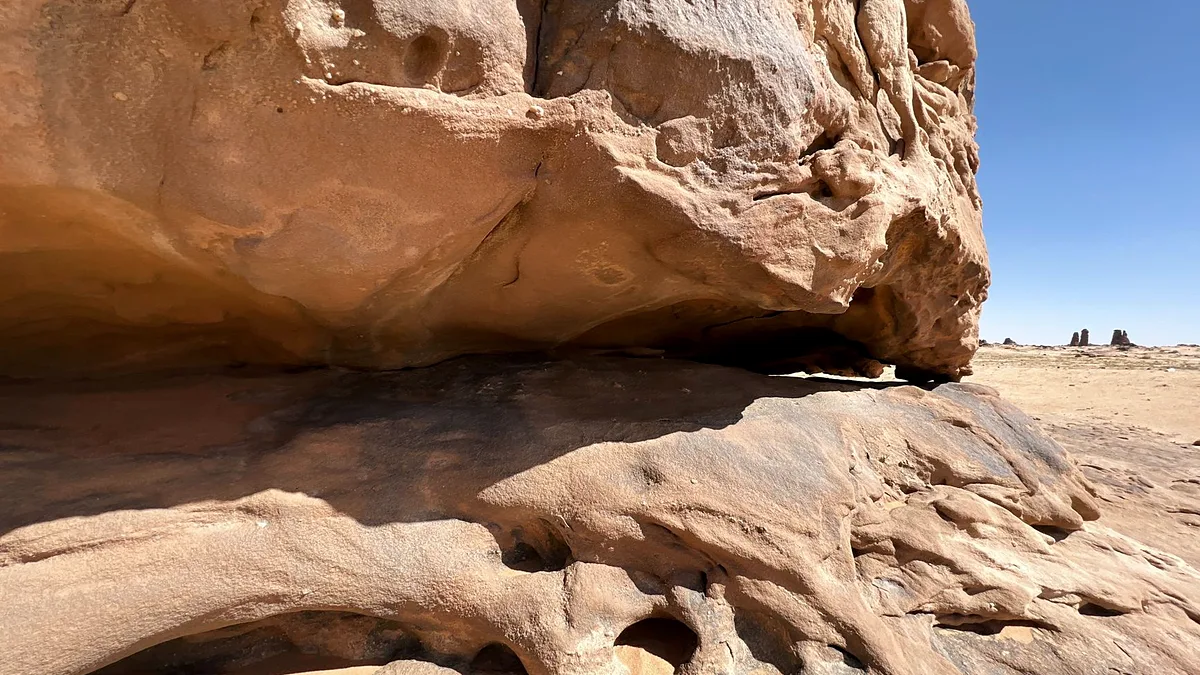
Hegra is Saudi Arabia's first UNESCO World Heritage site and the southern capital of the Nabataean kingdom — the same civilization that built Petra, but with far fewer people in the frame. There are 111 monumental tombs cut into the outcrops, plus wells, walls, and a dining hall at Jabal Ithlib where caravans once gathered. The bus tour takes about two and a half hours with three stops.
What makes late autumn different is the light. The sun stays low enough at 8:30am that the tomb facades read clearly instead of blowing out white in your photos. The air is genuinely cool, the walk to Qasr al-Farid does not turn into a endurance test, and the guides have time to talk about the inscriptions instead of rushing you back to the bus.
- Where: Hegra, about 20 km north of AlUla Old Town. Departures from the Winter Park visitor hub.
- Cost: SAR 95 / ~$25 per adult for the guided tour. Book online in advance.
- Best time: first departure of the day, usually 8:30am. Late afternoon (around 3pm) is the second-best light.
- Getting there: drive yourself to Winter Park and park free, or take the shuttle; the tour bus does the rest. You cannot drive your own car inside the site.
Insider tip: At the Qasr al-Farid stop you get roughly 15 minutes. Walk past the group to the far side of the tomb rather than standing at the front — the carved pediment and the shadow line both show up better from there. Also, sit on the left side of the bus on the way out for the best view of the outcrops.
2. Madrasat Addeera: Palm Weaving and Pottery in the Old Town
Madrasat Addeera is a restored mudbrick school in AlUla Old Town that now runs as a craft institute, and it is the single best reason to build an extra day into your trip. Instructors teach khous (palm-frond weaving), hand-built pottery, embroidery, silverwork, and incense blending using local woods and resins. Sessions are small, usually four to ten people, and you leave with something you actually made.
The palm-weaving class is the one to take in harvest season. Fronds are cut and dried nearby, the techniques are the same ones used for the baskets sold in the souq, and a two-hour session gives you a small tray or mat worth carrying home. Pottery runs longer and involves real clay under your nails.
- Where: AlUla Old Town, a short walk from the Tantora sundial.
- Cost: typically SAR 120–350 / ~$32–93 depending on the craft and session length. Materials included.
- Best time: generally Saturday to Thursday, roughly 10am–6pm, with some evening sessions. Schedules shift by season.
- Getting there: 10 minutes by car from most AlUla hotels; the Old Town itself is pedestrian-only, so park at the edge and walk in.
Insider tip: Sessions are published week by week and fill up fast in November. Message the AlUla arts booking line or check the official AlUla experiences site a week before you fly, not on the day. Friday hours are limited.
3. AlJadidah: Where the Craft Studios Sell What You Just Made
AlJadidah is the arts district just north of the old town — a grid of low buildings covered in murals, with galleries, design studios, and coffee shops that stay open late. Entry is free, and it is where AlUla's younger makers show work that sits between heritage craft and contemporary design: reworked palm-fibre lighting, printed textiles, ceramics, and jewellery.
Go in the late afternoon, when the light softens and the studios switch on. It pairs naturally with a workshop day because you can see where the traditional techniques end up commercially, and the price points are clearer than in the souq.
- Where: AlJadidah, immediately north of AlUla Old Town.
- Cost: free to walk. Gallery pieces from SAR 60 / ~$16; larger design objects SAR 300+ / ~$80+.
- Best time: 5–8pm, when the heat drops and everything is open.
- Getting there: walkable from the Old Town in about 15 minutes, or a 5-minute drive with parking on the main strip.
Insider tip: Skip the first row of shops facing the main road and walk two streets back. The smaller studios there are run by the makers themselves and are far more willing to talk you through a technique.
4. Dadan and Jabal Ikmah: The Inscriptions Most People Skip
Everyone books Hegra and forgets Dadan, which is a mistake. Dadan was the earlier capital of the kingdom, and its rock-cut lion tombs sit in a shallow red-rock amphitheatre that feels far more intimate than the big Nabataean facades. Twenty minutes away, Jabal Ikmah is an open-air library of hundreds of inscriptions in Dadanitic, Lihyanite, and early Arabic scripts, scratched into a cliff face by travellers and merchants.
The combined tour runs about two hours and is led by a Rawi who can actually read the context, not just the plaque. It is the section of the trip that explains what you saw at Hegra, so do it first if you can.
- Where: Dadan and Jabal Ikmah, roughly 10 km north of AlUla Old Town.
- Cost: SAR 60 / ~$16 for the combined tour; single-site tickets around SAR 45 / ~$12.
- Best time: mid-morning, 9–11am. There is very little shade.
- Getting there: official tour bus from the Winter Park hub, same system as Hegra.
Insider tip: Bring binoculars or use your phone zoom on the upper panels at Jabal Ikmah. The densest inscriptions are above head height and most of the group never looks up.
5. Souq AlUla and the Old Town Artisan Stalls
The rebuilt souq beside the Tantora sundial is the easiest place to buy craft without committing to a workshop. It is part market, part demonstration space: women weaving palm fronds on site, vendors selling AlUla dates by the box, incense, woven baskets, and hand-dyed textiles. It is tourist-facing, yes, but the makers are real and prices are posted.
Late autumn is when the date stalls hit their best stock, and the evenings are cool enough to browse slowly. Budget an hour, not a whole afternoon.
- Where: AlUla Old Town, around the sundial and the main souq lane.
- Cost: free entry. Woven baskets SAR 30–70 / ~$8–19; incense SAR 25 / ~$7; a box of dates SAR 20–45 / ~$5–12.
- Best time: 6–9pm, after the Hegra buses return.
- Getting there: central Old Town; park at the designated lots and walk.
Insider tip: Do not haggle hard on the hand-woven goods — the margins are thin and the posted prices are fair. Do compare date prices between stalls; they vary by nearly 50% for the same grade.
6. The Oasis Heritage Trail: Harvest Season on Foot
The oasis is the reason AlUla exists, and the 2.5 km heritage trail through the palm groves is free, shaded, and almost empty before 9am. In late autumn you walk past drying dates, citrus trees, and small irrigation channels that have been in use for centuries. Farmers still work these plots and will sell you fruit from the gate.
It is not a thrill. It is the quietest hour you will spend in AlUla, and it makes the craft economy make sense — the palm fronds in the weaving classes come from these exact trees.
- Where: AlUla Oasis, with entry points near the Old Town and off the main farm road.
- Cost: free. Fresh dates or citrus from farm gates SAR 15–30 / ~$4–8.
- Best time: 7–9am, before the sun clears the palms.
- Getting there: walk in from the Old Town edge, or park at the marked trailhead.
Insider tip: Wear closed shoes. The irrigation channels are open, shallow, and easy to step into while you are looking up at the canopy.
7. Elephant Rock at Sunset: The Cheap Finish
Jabal AlFil is a three-storey sandstone monolith with a natural arch that looks exactly like its nickname. There is no ticket, no queue system, and no reason to spend more than an hour. It is the ideal last stop after a workshop day, when you want a cold drink and a horizon rather than another guided briefing.
Set expectations: it is a photo stop, not a hike, and the on-site café is pricey for what it is. Bring your own water.
- Where: roughly 20–25 minutes' drive south of AlUla Old Town.
- Cost: free entry; café drinks SAR 25–40 / ~$7–11.
- Best time: arrive 45 minutes before sunset.
- Getting there: drive or take a Careem; there is no shuttle, and taxis back can be slow after dark.
Insider tip: Skip the camel loop on offer at the car park (around SAR 50 / ~$13). It is a five-minute circuit and the animals work hard in the heat. The free view from the rock itself is better.
Where to Eat and Drink Nearby
Tawlet Fayza — AlUla Old Town
Lebanese home cooking served as a set spread of mezze, grilled meats, and a rotating daily dish. It is the most reliable sit-down meal in the old town and the portions are generous. Expect SAR 130–170 / ~$35–45 per person without drinks, and book a day ahead for dinner in November.
Somewhere — AlUla Old Town rooftop
A rooftop spot above the old town lanes with simple grilled plates, flatbreads, and good coffee. Mains run SAR 60–90 / ~$16–24. Go at 5:30pm for the light on the mudbrick walls and to avoid the 8pm rush.
AlUla Fresh Farm — on the Hegra road
Farm-to-table cooking built around what is actually growing: citrus, herbs, dates, and local honey in late autumn. A set lunch lands around SAR 100–150 / ~$27–40. It is the natural stop on the way back from an early Hegra tour.
Practical Logistics and Budget Tips
| Item | Cost (SAR) | Approx. USD |
|---|---|---|
| Hegra guided tour (adult) | 95 | ~$25 |
| Dadan + Jabal Ikmah tour | 60 | ~$16 |
| Craft workshop, 90 min–3 hrs | 120–350 | ~$32–93 |
| Car hire per day, small SUV | 150–250 | ~$40–67 |
| Mid-range dinner, per person | 70–130 | ~$19–35 |
| Taxi, airport to Old Town | 60–80 | ~$16–21 |
- Book the heritage tours first. Hegra, Dadan, and Jabal Ikmah all run on fixed departures and November slots sell out. Lock those in, then build workshops around them.
- Skip the rental car for one day. If you are doing two guided tours back to back, the free Winter Park shuttle plus a Careem for dinner is cheaper than a day of parking and fuel.
- Carry a little cash. Cards work almost everywhere in AlUla now, but farm gates and small souq stalls still prefer SAR 100–200 in notes.
- Fuel up before long drives. Stations thin out north of the Old Town, and the nearest services near Hegra are limited.
- What to skip: the desert buggy tours (overpriced for the distance covered), camel rides at Elephant Rock, and any unofficial guide who approaches you in the Old Town. Official Rawis wear identification and are booked through the visitor hubs.
- Honest heads-up: AlUla is not a budget destination. Hotel rates spike hard from late October, and food and transfers are priced for the international market. Book accommodation six to eight weeks out, and do not plan a midday outdoor activity between noon and 3pm — the sun still bites even in November.
Frequently Asked Questions
Can you visit Hegra without a guided tour?
No. Access is only through an official Rawi-led tour booked via AlUla's visitor system, and private cars are not allowed inside. Tours depart from the Winter Park hub and take about two and a half hours.
How much does it cost to see Hegra?
Adult tickets are around SAR 95 (~$25) for the guided bus tour, with reduced rates for children. Add SAR 60 (~$16) if you also want the combined Dadan and Jabal Ikmah tour, which is worth the extra.
Are the craft workshops suitable for children?
Most are. Palm weaving and pottery sessions in AlUla Old Town usually welcome children from about age eight with a parent present, and materials are included in the fee. Check the minimum age when you book, since silverwork sessions often require older participants.
Do you need a car in AlUla?
It helps a great deal. There is no public bus network, and while Careem and hotel shuttles cover the Old Town and visitor hubs, Elephant Rock and the oasis trailheads are much easier with your own vehicle. A small car costs roughly SAR 150–250 (~$40–67) per day.