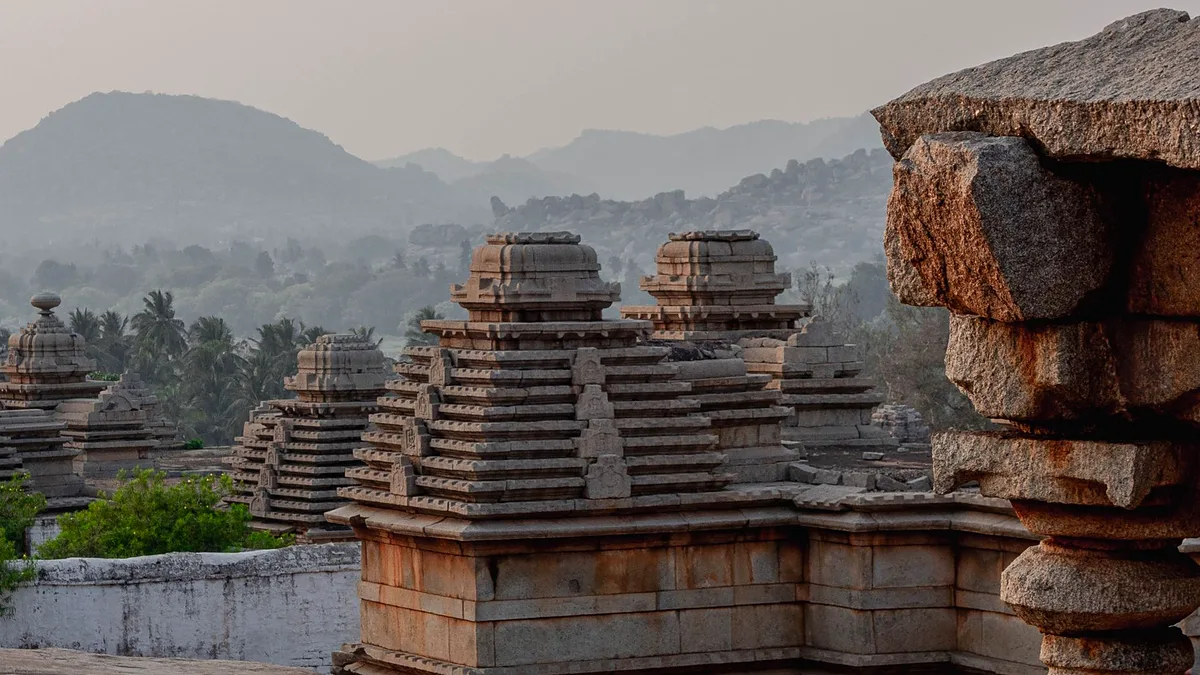

Hampi is what happens when an empire builds for 200 years and then vanishes. For roughly 25 km along the Tungabhadra River in northern Karnataka, boulders the size of apartment blocks sit on top of temple complexes, market streets and royal bathing tanks — all of it a UNESCO World Heritage Site, all of it walkable, and most of it free.
Here's the part nobody tells you: the good stuff costs almost nothing. The sunrise spot is free. The temple that will make you put your phone down costs less than a coffee in Europe. The best meal you'll eat is a ₹220 thali on a rooftop with a river view. Luxury here isn't a spa — it's having a 15th-century hilltop to yourself at 6am.
This guide is about squeezing that feeling out of a modest daily budget, and knowing exactly where to spend the extra ₹500.
Unlimited High-Speed International Travel eSIM
Connect in seconds across 180+ destinations. Instant QR code activation with zero roaming surcharges.

Hampi at a Glance
- Best time to visit: November to February, when days sit at 25–30°C and sunrise climbs are actually pleasant
- Typical daily budget: ₹1,800–3,500 (~$22–42) for a good room, three real meals and one paid monument
- Getting around: Bicycle at ₹120–150/day on the temple side; ₹50 coracle to cross the river; no Uber or Ola here
- Vibe: Two villages, one world-class ruin site, zero nightlife — lights out by 10pm, which is precisely the appeal
1. Matanga Hill: Sunrise for Zero Rupees
You climb in the dark, stumble up granite steps for fifteen minutes, and then the entire Vijayanagara valley turns orange. Below you: the Virupaksha temple tower, the river, and a landscape of boulders stacked like a giant got bored halfway through. There will be maybe eight other people up there.
This is the best free thing in Hampi and the reason to set an alarm. The steps are rough and unlit, so bring a phone torch and real shoes — flip-flops are how people roll ankles on the way down.
- Where: Hampi Bazaar, steps behind the Veerabhadra Temple
- Cost: Free (₹0)
- Best time: Arrive 5:45am for a 6:30am sunrise; the sunset version is equally good and less crowded
- Getting there: 10-minute walk east from Virupaksha Temple
Insider tip: Ignore the men at the base offering to guide you up for ₹200 — there is one path and it is obvious. On the descent, keep snacks zipped away; the bonnet macaques here are confident thieves.
2. Vittala Temple and the Stone Chariot
The Stone Chariot you've seen on the ₹50 note is here, and it's smaller than you expect and better than you expect. The Vittala complex is Hampi's showpiece: a chariot carved from granite, musical pillars that ring when struck, and a stone market street that once sold diamonds by the handful.
This is the one place to spend without hesitation. Tickets are dated and checked at a manned gate, so buy them the same morning you plan to go.
- Where: 2 km east of Hampi Bazaar, along the river
- Cost: ₹25 (~$0.30) for Indian nationals, ₹300 (~$3.60) for foreign visitors; under-15s free
- Best time: 8:30am opening, or after 3pm — midday is a furnace with no shade
- Getting there: 20-minute cycle, or auto ₹250 (~$3) one way from Hampi Bazaar
Insider tip: The battery carts from the car park charge ₹20 each way to cover 800 metres of flat road. Walk it. And the online ASI ticket works fine — touts outside will swear blind that it doesn't.
3. The Royal Enclosure Loop by Bicycle
Rent a cycle and ride four flat kilometres south to Kamalapura, where the royal family actually lived. The Lotus Mahal is an airy pavilion fusing Islamic arches with Hindu detailing; the Elephant Stables are eleven domed chambers that once housed war elephants. Between them sits a stepped tank that photographers lose their minds over.
Loop in the Queen's Bath too — a sunken 15-metre pool ringed by carved corridors where the royal women bathed. It is quietly one of the most atmospheric corners of the whole site.
- Where: Kamalapura, 4 km south of Hampi Bazaar
- Cost: ₹25 (~$0.30) Indian / ₹300 (~$3.60) foreign, per ticketed cluster; cycle hire ₹120–150 (~$1.50–1.80) per day
- Best time: 7–10am. By 11am you're riding in 38°C heat with no mercy
- Getting there: 25–30 minutes by cycle on the Kamalapura road; parking is free
Insider tip: Do the loop backwards. Hit Queen's Bath first, then work north toward the Lotus Mahal so the sun stays behind you and the coach groups are still eating breakfast.
4. Cross the Tungabhadra by Coracle
A coracle is a round basket of bamboo and hide, and the boatman spins it across the river in about four minutes. It costs less than a bus ticket and it's the best commute in India. On the far bank is Virupapur Gaddi — Hippie Island — a strip of guesthouses, rooftop cafes and paddy fields with no cars on it.
Come over for the whole afternoon, not just the crossing. The sunset from the rocks behind Sanapur is the kind of thing people extend their trip three days for.
- Where: The ghat below Virupaksha Temple, Hampi Bazaar
- Cost: ₹50–100 (~$0.60–1.20) per person; ₹800–1,000 to hire the whole boat at golden hour
- Best time: Cross between 7am and 5:30pm — the last boats leave around 6pm
- Getting there: 5-minute walk from Virupaksha Temple's east gate
Insider tip: If you're staying on the island, be back before dark. Miss the last coracle and the road detour is 30 km and ₹800+ by auto — a mistake people make every single week.
5. Sanapur Lake, Anegundi and the 575 Steps
Four kilometres from Hippie Island, Sanapur is a green reservoir ringed by boulders and banana plantations. A coracle out to the middle at 7am, when the water is glass and the herons are still sulking, beats any spa treatment in Goa.
Then push on to Anegundi, the older village across the river, where the Kishkinda Trust has spent two decades turning banana stems into paper, bags and fabric. On the same road, Anjaneya Hill is the spot Hindus identify as Hanuman's birthplace — 575 steps, a working temple at the top, and one uninterrupted sweep of the whole plateau.
- Where: Sanapur and Anegundi, on the island side of the river
- Cost: Sanapur coracle ₹300–500 (~$3.60–6) per boat; banana-fibre products ₹150–1,500; Anjaneya Hill free
- Best time: 7–10am for flat water, or 5pm for the hilltop sunset
- Getting there: 20-minute cycle from Virupapur Gaddi, or auto ₹300 (~$3.60) round trip
Insider tip: Do not swim near the weir or sluice gates at Sanapur. People drown there every season and the drop-off is invisible from the bank. Stay shallow, and stay where a local is watching. On Anjaneya Hill, monkeys will take sunglasses straight off your face.
6. Sleep Well for Under ₹1,500
Hampi's rooms split in two. On the temple side, Gopi Guesthouse and Kiran Guesthouse rent spotless doubles with hot water and a rooftop for ₹900–1,600 (~$11–19). On Hippie Island the huts are cheaper and looser — hammocks, questionable plumbing, great company.
For one splurge night, Hampi's Boulders on the riverbank charges ₹9,000–16,000 (~$108–192) and is genuinely special at half the price of a comparable resort in Kerala.
- Where: Hampi Bazaar (temple side) or Virupapur Gaddi (island)
- Cost: ₹900–1,600 (~$11–19) for a good double; ₹9,000+ for the splurge
- Best time: Book 3–4 weeks ahead for December–January; rates drop 30–40% in October and February
- Getting there: The temple side is walkable from the bus stand; the island needs the coracle or a 30 km road trip
Insider tip: Ask for a room away from the road rather than the cheapest room. That ₹200 difference is the best money you'll spend all trip.
Where to Eat & Drink Nearby
Mango Tree, Hampi Bazaar
Shaded by an actual mango tree, with floor seating and a view of the river, this is Hampi's most famous table and it earns the reputation. Order the Karnataka thali (₹220 / ~$2.60), a banana lassi, and whatever vegetable is in season. Open roughly 8:30am–9:30pm in season.
Laughing Buddha, Virupapur Gaddi
The island's long-running hangout: low tables, cushions, reggae and no hurry whatsoever. The wood-fired pizza is ₹280 (~$3.40) and filter coffee ₹40. Arrive by 5pm for a river-facing seat.
Gopi Roof Top, Hampi Bazaar
The cheapest proper breakfast in the village — masala dosa ₹60, fresh fruit bowl ₹90, coffee refills until you stop asking. Half the tables are long-stay travellers, half are temple pilgrims, which tells you the prices haven't been inflated for anyone.
Practical Logistics & Budget Tips
Getting to Hampi
Hosapete (Hospet) Junction is 13 km away and the hub for everything. Overnight trains from Bengaluru take 9–10 hours (sleeper ₹280, 3AC ₹850). From Hospet, local buses to Hampi Bazaar run every 20 minutes for ₹20–25, or an auto costs ₹300–400.
The nearest airport is Vidyanagar near Toranagallu, about 40 km away, with patchy service. Most travellers fly into Hubballi (165 km, taxi ₹3,000–3,500) or Bengaluru.
Getting around
Rent a bicycle for the temple side — it's flat and every major sight is within 5 km. Scooters (₹400–500/day) only make sense on the island side. Agree on auto fares before you get in, every time.
What to skip
- The ₹500 "VIP darshan" at Virupaksha Temple. Entry is free and the queue moves fast.
- The elephant blessing. ₹20 to be tapped on the head by a chained animal — skip it.
- Sunset Point restaurants on Hippie Island. Mediocre food at double the price for a view you can get free from any rock.
- Cheap guides at the Vittala gate. The ₹200 ones invent history; a certified guide via Karnataka tourism costs ₹1,200–2,500 for a half day and is worth it.
Money notes
Carry cash. ATMs in Hampi Bazaar run dry, especially at weekends, and Hospet is your reliable backup. UPI works in most temple-side cafes but less so on the island. The core zone is plastic-free, so bring a refillable bottle — refills cost ₹20–30.
Frequently Asked Questions
How much does a Hampi trip cost per day?
A comfortable budget-luxury day runs ₹1,800–3,500 (~$22–42) covering a good room, three proper meals, a cycle and one ticketed monument. Backpackers manage on ₹1,000 (~$12), while a splurge day with a private guide and a resort dinner lands near ₹6,000 (~$72).
Is two days enough for Hampi?
Two full days covers the temple side, the royal enclosure and one sunrise. Three to four days is the sweet spot if you want the island, Sanapur and Anegundi without sprinting between them.
What is the best time of year to visit Hampi?
November to February is ideal, with 25–30°C days and cool mornings for hill climbs. Avoid April and May when temperatures hit 40°C, and check river levels in July and August because the coracle crossing can be suspended.
Do I need a guide in Hampi?
No. Every major site has descriptive ASI signage and the layout is easy to navigate by cycle. If you want the stories, book a certified guide through the Karnataka tourism office for ₹1,200–2,500 a half day rather than accepting an unsolicited offer at the gate.