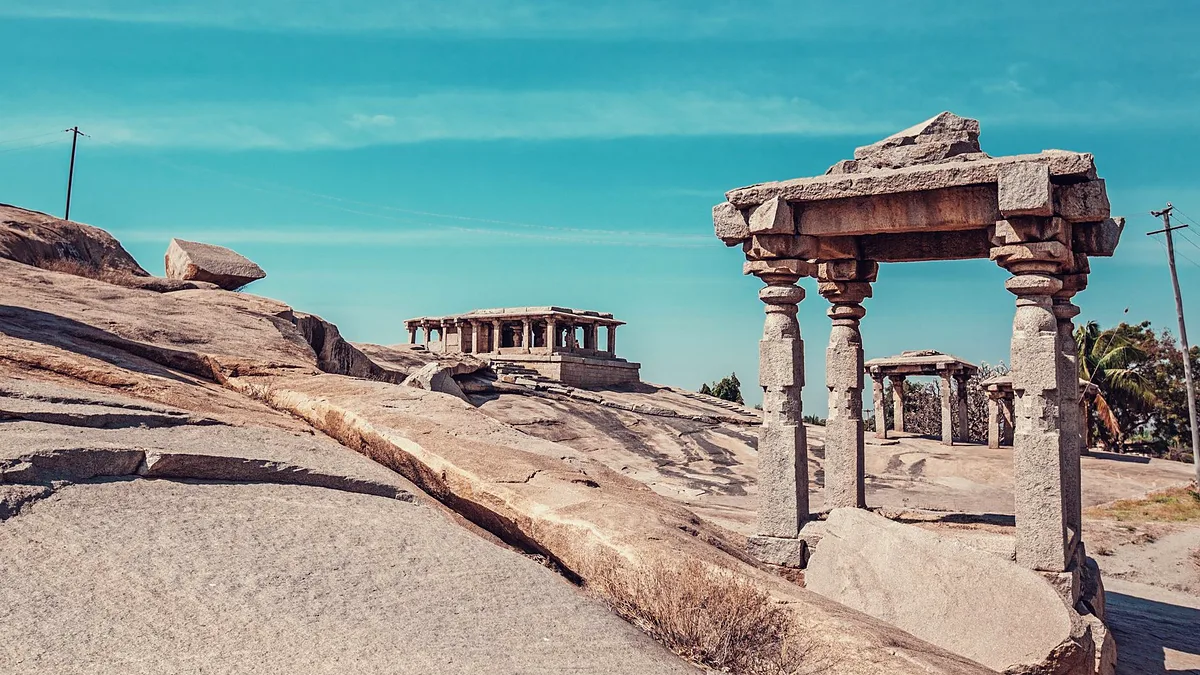

Hampi is usually sold as a ruin field — 26 square kilometres of boulders, broken gopurams and one very famous stone chariot. All true, and all spectacular. But the part most itineraries skip is that Hampi still makes things. Sculptors chip granite in the bazaar, weavers in Anegundi turn banana stems into fibre, and guides teach visitors to climb the same boulders their grandparents farmed around.
This guide is built for the hands-on version: a half-day at a carving bench, a morning in a weaving shed, then the temples those skills originally served. Bring closed shoes, a dust-proof bag and cash — most workshops do not take cards.
Hampi at a Glance
- Best time to visit: November to February, with 25–30°C days. March and April push past 40°C and the rock is unbearable by 10am.
- Daily budget: ₹1,800–2,500 (~$21–30) covers a guesthouse, three meals, a scooter and one paid activity. Mid-range with a guide and AC room: ₹5,000–7,000 (~$60–84).
- Getting around: Bicycle (₹100–150/day) or scooter (₹400–600/day) on the Hippie Island side, reached by a ₹15 boat crossing; autos and walking on the Hampi Bazaar side.
- Vibe: Slow mornings, brutal midday heat, sunset rooftops. Not a party town, not a luxury town, very much a sit-and-watch town.
1. Carve a Ganesha at a Hampi Bazaar Stone Studio
The stretch of Hampi Bazaar facing the Virupaksha gopuram is lined with small workshops where families have carved temple statuary for generations, many descended from the shilpis who worked the Vijayanagara sites. Walk in, ask about a lesson, and you will usually get one. Nobody here is precious about tourists watching.
Unlimited High-Speed International Travel eSIM
Connect in seconds across 180+ destinations. Instant QR code activation with zero roaming surcharges.

Sessions run two to four hours. You start on soft soapstone with a rasp, not granite, and you will not finish a statue — you will finish a small relief tile, which the studio wraps in newspaper for your flight home. The real value is the commentary. Ask how a sculptor picks stone by the sound it makes when tapped.
- Neighborhood: Hampi Bazaar, about 200m west of Virupaksha Temple's main gate.
- Cost: ₹1,000–2,500 (~$12–30) per person for a half-day, materials included. Cash only.
- Best time: 8–11am, before the tour buses and the heat.
- Getting there: Walk — the bazaar is car-free. From Hospete, bus to Hampi (₹25, 35 min) then 10 minutes on foot.
Insider tip: Ask to see the studio's photo album before you commit; the good ones keep a book of finished commissions. And do not haggle below ₹1,000 — the soapstone blanks alone cost the workshop real money.
2. Weave Banana Fibre with the Kishkinda Trust, Anegundi
Cross the Tungabhadra by coracle and you are in Anegundi, the older and quieter village on the north bank. Since 1997 the Kishkinda Trust has run craft and livelihood programmes here, training local women to turn discarded banana stems into fibre and then into bags, lamp shades and paper.
You can join a short workshop — usually two hours of stripping, sun-drying, twisting and hand-weaving on a frame. It is fiddly, slightly muddy work and honestly more interesting than half the ruins. You leave with a small piece and a much sharper understanding of why handmade products cost what they do.
- Where: Anegundi village, roughly 4km from the Hampi boat point.
- Cost: ₹800–1,500 (~$10–18) per person, depending on session length.
- Best time: Weekday mornings, 9am–12pm.
- Getting there: Coracle or ferry across (₹15–20), then an auto (₹150–250) or rented scooter.
Insider tip: Book at least two days ahead. This is a working NGO, not a tourist desk, and trainers are scheduled around production runs. Ask about the Lambani embroidery group too — the mirror-work is remarkable and sold at fair prices.
3. Read Vitthala Temple Like a Craftsperson
Most people photograph the stone chariot and leave. Give it ninety minutes instead and treat it as the portfolio of the people whose workshops you just visited. The chariot's wheels once turned, the kalyana mantapa's pillars are carved as stone chains from single blocks, and the musical pillars are thin enough to ring when struck — look at the chisel marks on the base, not the polished faces.
Go early. By 9:30am the site is loud with tour groups and the flat light kills the reliefs. Late afternoon, 4–6pm, is the other good window, when the granite goes gold and the crowds thin out again.
- Where: Vitthala Temple complex, north of Hampi Bazaar, near Kamalapur.
- Cost: ₹40 (~$0.50) for Indian nationals, ₹600 (~$7) for foreign visitors; the ticket also covers Lotus Mahal and the Elephant Stables for the day.
- Best time: Gates open around 6am; be there by 6:30.
- Getting there: Bicycle or scooter from Hampi Bazaar (25 min), or auto ₹250–350 one way.
Insider tip: Do not touch the musical pillars — they are fenced for good reason and guards will call you out. Bring a small torch to catch the ceiling reliefs inside the darker mandapas.
4. Learn to Boulder on Hampi's Granite
Hampi is one of the world's great bouldering destinations, and it is no coincidence that the same granite built the temples. The problem set is scattered around Virupapur Gaddi and Sanapur, away from the protected monument zones.
You do not need experience for a beginner half-day. Local guides supply crash pads, shoes and chalk, teach you to fall properly, and put you on slabs and easy faces. Expect sore forearms and a lot of sitting around watching people much better than you.
- Where: Boulders around Virupapur Gaddi and Sanapur, 3–5km from the boat point.
- Cost: ₹1,500–3,000 (~$18–36) per person for a guided half-day with gear.
- Best time: 6:30–10am or after 4pm; midday rock shreds skin.
- Getting there: Ferry to Hippie Island, then scooter or a short walk.
Insider tip: Confirm your boulders sit outside ASI-protected land before you start. Climbing on ticketed heritage rock is illegal, and it is a fast way to get access shut down for everyone.
5. See What Artists Are Making Now at Hampi Art Labs
Opened in 2024 on a former industrial site near Toranagallu, Hampi Art Labs is a purpose-built residency and gallery with a sculpture court and a serious roster of Indian and international artists. It is a jarring, welcome contrast to 700-year-old stone, and it makes the point that this valley never stopped producing work.
Check the exhibition calendar before you commit an afternoon, because between shows there is less to see. It is also a 45-minute drive each way, so pair it with a Hospete errand rather than treating it as a standalone trip.
- Where: Toranagallu, roughly 40km from Hampi Bazaar.
- Cost: Entry has generally been free with advance registration — confirm current policy when you book.
- Best time: Open days are typically Tuesday to Sunday, daytime hours; verify before travelling.
- Getting there: Private cab from Hampi or Hospete, ₹1,200–1,800 round trip.
Insider tip: Email or message ahead instead of turning up. The site sits inside a township with gate security, and walk-ins without a name on the list can be sent back.
6. Sunrise on Matanga Hill, Then Walk the Old Bazaar
Matanga Hill is the highest point in the ruins and the best free thing in Hampi. It is a 20–30 minute scramble up stone steps, best started at 5:30am so you are on top as the Tungabhadra valley turns from grey to orange. From the summit you can trace the whole city layout — the bazaar spine, the temple complexes, the boulder fields.
Come down, then walk the bazaar from Virupaksha to the old market. It is quieter than it was before the 2011 demolitions, but the craft shops, tea stalls and sculptors are still there, and morning is when everyone is actually working.
- Where: Matanga Hill trailhead, 10 minutes east of Hampi Bazaar.
- Cost: Free. A local guard to walk with costs ₹200–300, worth it in the dark.
- Best time: 5:15–5:45am start, or 5pm for sunset.
- Getting there: Walk from Hampi Bazaar; bring a torch, there are no lights on the steps.
Insider tip: Keep food and loose items zipped. The macaques on Matanga are bold, and sunglasses and breakfast are their favourite targets.
Where to Eat and Drink Nearby
Mango Tree, Hampi Bazaar
Rooftop tables under an actual mango tree, looking up at the Virupaksha gopuram. Order the North Indian thali (₹280 / ~$3.40) and a banana lassi. Open roughly 7:30am–10pm, cash preferred.
Laughing Buddha, Hampi Bazaar
Riverside, multi-cuisine and dependable for breakfast and Israeli plates. Mains ₹200–400 (~$2.40–4.80), and the wifi actually works, which matters more than it should out here.
Gopi Guesthouse Rooftop, Hampi Bazaar
Sunset seats facing the temple tower, cheap and honest. Filter coffee ₹40, full meals ₹180–300. Arrive by 5:30pm for a front-row chair. For breakfast, the idli-vada stalls near the bus stand do it for ₹40–60.
Practical Logistics and Budget Tips
- Train: Hosapete Junction (HPT) is the railhead. The overnight Hampi Express from Bengaluru costs ₹350–450 in sleeper.
- Air: Hubballi is 165km (3.5 hours by road); Bengaluru is 350km and 6–7 hours. Neither is close.
- Last mile: Bus from Hospete to Hampi is ₹25; an auto is ₹500–700.
- The ferry: The boat to Hippie Island stops around 5:30–6pm. Miss it and the road detour via Hospete is over an hour.
- Cash: The single ATM in Hampi Bazaar runs dry often. Withdraw in Hospete. UPI works at bigger cafes but not at workshops.
| Daily cost | Budget traveller | Comfortable |
|---|---|---|
| Room | ₹600–900 (~$7–11) | ₹2,500–4,000 (~$30–48) |
| Food | ₹500–700 (~$6–8) | ₹1,200 (~$14) |
| Transport | ₹150 cycle | ₹400–600 scooter |
| Activity | ₹40–200 monuments | ₹1,500+ workshop or guide |
What to Skip, Honestly
- Gemstone and antique sellers in Hampi Bazaar. Mostly glass and reproductions at collector prices.
- ₹2,000 full-day auto tours sold in Hospete. Rushed, and you see less than you would on a bicycle.
- Swimming at Sanapur Lake. There have been drownings; the water has hidden currents. If you take a coracle, wear the life jacket.
- Midday sightseeing in April and May. It is not brave, it is just miserable. Split your day 6–10am and 4–7pm.
- Skipping the temple elephant entirely. Lakshmi is bathed in the river most mornings around 8am — that is the moment worth seeing, not the paid blessing.
Frequently Asked Questions
How many days do you need in Hampi?
Three full days covers the main monument circuit at a relaxed pace. Add a fourth or fifth if you want a proper half-day workshop and a morning in Anegundi, because both eat into sightseeing time.
Can you do craft workshops in Hampi without booking?
Stone-carving lessons in Hampi Bazaar are usually walk-in, especially on weekday mornings. Weaving and NGO-run workshops in Anegundi need two or three days' notice, so message ahead before you travel.
What is the best way to get around Hampi?
Use a bicycle or scooter on the Hippie Island side and your legs plus the odd auto on the Hampi Bazaar side, since the bazaar and monument core are car-free. The ₹15 ferry links the two, but it stops at dusk.
Is Hampi expensive for a budget traveller?
No — ₹1,800–2,500 (~$21–30) a day is realistic for a clean room, good food, a scooter and one paid activity. The costs that surprise people are private cabs and last-minute AC rooms in peak season.