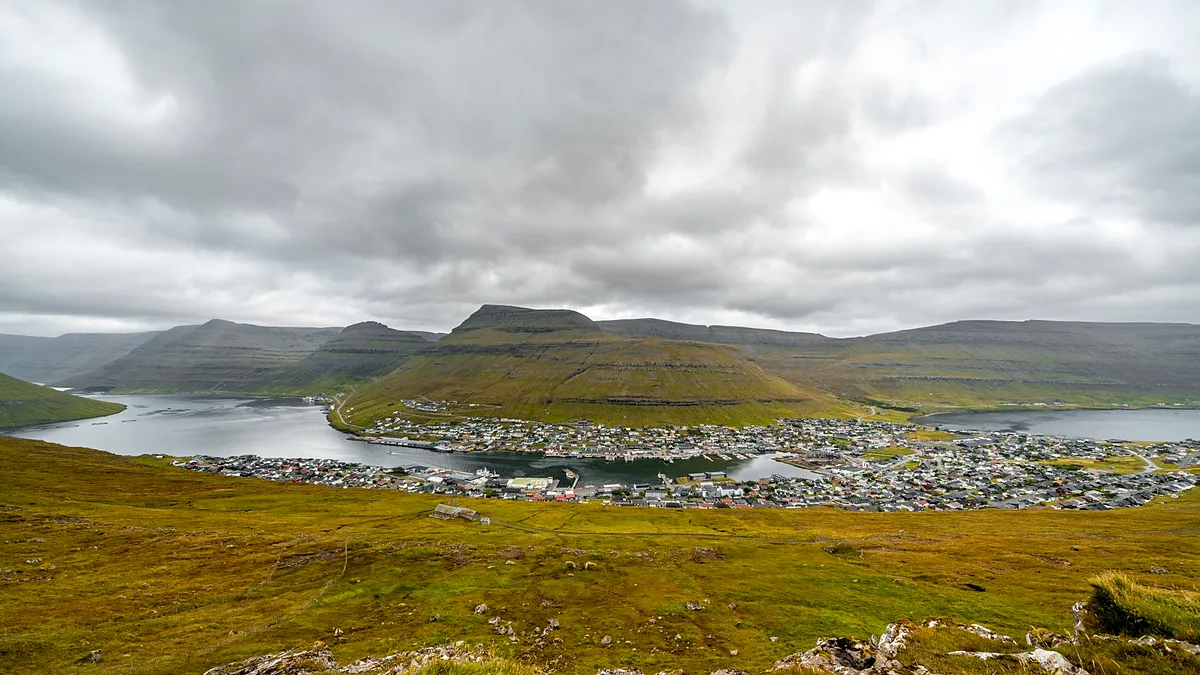

The Faroe Islands have a reputation problem: everyone assumes a week here costs the same as a small car. It doesn't have to. The best things on these 18 islands — cliff walks, turf-roof villages, sea fog crawling over a lagoon — are free or close to it.
What actually eats money is getting between islands, sleeping somewhere warm, and dinner. Get those three right and a comfortable trip lands around DKK 800–1,000 (~$115–145) per person per day, sharing a car and a room.
Below are the places worth building a day around, then the ferry times, tunnel tolls and supermarket maths that decide whether the trip feels easy or stressful.
Unlimited High-Speed International Travel eSIM
Connect in seconds across 180+ destinations. Instant QR code activation with zero roaming surcharges.

At a Glance
- Best time: mid-May to mid-June for puffins and lower rates; September for empty roads. July and August are peak and 30–40% dearer.
- Daily budget: DKK 700–1,000 (~$100–145) per person, two people sharing a car and a guesthouse room.
- Getting around: a small rental car plus the SSL bus and ferry network. City buses in Tórshavn are free.
- Vibe: single-track roads, weather that flips every hour, sheep with right of way, no queues if you start early.
- Money: Faroese króna (DKK), pegged to the Danish krone. Cards work everywhere, even at remote campsites.
1. Tinganes and Reyn: The Free Warm-Up in Tórshavn
Start in the capital's old quarter, because it sets the tone: nothing fenced off, nothing ticketed, just grass roofs and black-tarred timber houses on a peninsula between two harbours. Tinganes is where the Norse parliament met from around 825, and the Løgting still sits nearby.
Walk east into Reyn, the residential old town, where people genuinely live behind those turf roofs. Forty minutes on foot covers it, and there's no signage telling you what to feel.
- Where: Tinganes and Reyn, central Tórshavn
- Cost: free
- Best time: 7–9am before the cafés open, or after 8pm in June when the light goes gold and stays there
- Getting there: 10-minute walk from the harbour; every city bus in Tórshavn is free, so hop one if it rains
Insider tip: Walk to Skansin, the little fort at the tip of the peninsula, for the view across to Nólsoy. The houses on Gongin are private homes — photograph the street, not through the windows.
2. Gásadalur and Múlafossur: The Postcard That Costs Nothing
Múlafossur drops straight off a cliff into the Atlantic and is the most photographed spot in the country. It's also completely free. The village behind it, Gásadalur, had no road until a tunnel opened in 2004 — before that, locals carried their dead over the mountain for burial.
Stand at the fence line around 10pm in June and you'll have the whole thing to yourself. The fall is small, the drop is enormous, and the noise is the only thing you'll hear.
- Where: Gásadalur, Vágar, about 20 minutes' drive from the airport
- Cost: free; the car park is unstaffed
- Best time: 6–11pm in summer for empty frames and soft light
- Getting there: bus 300 from Tórshavn via the airport, or 25 minutes by car
Insider tip: Walk 200 metres east past the village turn-off for the angle without the car park railing in shot. The turf is grazed by sheep and the edge is unfenced, so keep back from the lip when it's wet.
3. Saksun and the Pollurin Lagoon: Turf Roofs at the End of the Road
Saksun sits in a bowl of green mountains at the end of a dead-end road, with a black-timbered church, eleven residents and a tidal lagoon that drains to a black-sand beach twice a day. The old farm, Dúvugarðar, is now a small museum under a turf roof you could lose a boot in.
It's one of the few places on Streymoy with a fee attached. Pay it — the family running it has kept these buildings standing for three centuries.
- Where: Saksun, northern Streymoy
- Cost: village and lagoon free; Dúvugarðar museum DKK 75 (~$11)
- Best time: around low tide so you can walk toward the beach; mid-afternoon for light on the water
- Getting there: 50-minute drive from Tórshavn; bus connections are thin, so this is a car day
Insider tip: The road in is single-track with passing places — learn to reverse 100 metres on demand or you'll meet a local in a hurry. The beach is private farmland; stay below the high-water line.
4. Kirkjubøur: 900 Years Under One Roof
Kirkjubøur was the country's medieval power base, and the ruins of the unfinished Magnus Cathedral still stand open to the weather, free to walk into. Next door is Roykstovan, a farmhouse inhabited since the 11th century by the same family, the Paturssons.
Pay the small fee to go inside the old smoke room and see beams blackened by nine centuries of fires. It's the closest thing here to time travel, and it costs less than a round of drinks in the capital.
- Where: Kirkjubøur, 12 km south of Tórshavn
- Cost: cathedral ruins free; Roykstovan DKK 100 (~$15)
- Best time: weekday afternoons June to August, roughly 10am–5pm
- Getting there: bus 5 from Tórshavn, about 25 minutes, or a 15-minute drive
Insider tip: Walk back along the shore path instead of the road. It's free, quiet, and you get the cathedral silhouette from the beach, which is how it's meant to be seen.
5. Kalsoy and the Kallur Lighthouse: Bond Country for the Price of a Ferry
Kalsoy is a 30-kilometre blade of an island with around 80 residents and a lighthouse at the northern tip that appeared in "No Time to Die". The ferry from Klaksvík takes 20 minutes; the hike from Trøllanes takes about an hour each way and costs nothing.
The final stretch is a grass ridge with a drop on both sides and sea on three horizons. On the early ferry you'll share it with maybe four other people.
- Where: Kalsoy, northern islands; trail starts at Trøllanes
- Cost: ferry roughly DKK 50 (~$7) return on foot; hike free
- Best time: the first ferry of the day — the ridge fills up and fog rolls in by afternoon
- Getting there: ferry from Klaksvík to Syðradalur, then local bus or car through the tunnels
Insider tip: Travel as a foot passenger. The ferry carries only about a dozen cars and vehicle spots book out weeks ahead in summer. Check the SSL timetable the night before — the return leg is often earlier than you expect.
6. The Lake Above the Ocean: Leitisvatn and Trælanípa
Leitisvatn sits 30 metres above sea level and appears to hang over the Atlantic, an illusion created by the cliff angle. The walk out to Trælanípa takes two to three hours return over mostly flat ground, which makes it the best-value big-view hike in the country.
This is one of very few sites with a paid access fee, and it's worth knowing why: the trail crosses private farmland that has to be maintained and grazed.
- Where: trailhead near Miðvágur, Vágar
- Cost: DKK 200 (~$29) per car for the car park — split between passengers and it beats any boat tour
- Best time: before 10am or after 6pm; skip it in low cloud, there's nothing to see
- Getting there: 10 minutes' drive from Miðvágur; bus 300 stops in the village
Insider tip: Grass overhangs the cliff edge at Trælanípa and looks solid when it isn't. Stay behind the markers — the wind here pushes harder than you expect.
7. Sleep in a Turf Village: Gjógv and the Northern Coast
The best money you'll spend is a night in a village after the day-trippers leave. Gjógv on Eysturoy has a natural sea gorge, 40 residents and a guesthouse, Gjáargarður, with turf roofs and a restaurant serving lamb from the hills above it.
Alternatives: Tjørnuvík on Streymoy, where you sleep under the sea stacks of Risin and Killingin, or Elduvík, which has a campsite and a beach. Any of them beats a hotel in Tórshavn for atmosphere.
- Where: Gjógv, Eysturoy; Tjørnuvík and Elduvík, Streymoy
- Cost: guesthouse double with breakfast from about DKK 1,100 (~$160); campsites DKK 100–150 (~$15–22) per person
- Best time: any clear night in June or September; book three months ahead for summer
- Getting there: car via the Eysturoy tunnel, about DKK 100 (~$14) each way, billed to your plate
Insider tip: Ask for a room facing the gorge or the sea, not the car park. Email small family guesthouses directly — they often reply faster than the booking platforms.
Where to Eat and Drink Without Blowing the Budget
A main course in the Faroes runs DKK 240–320 (~$35–46) almost everywhere. The trick is one good dinner a day and supermarket everything else.
Barbara, Tórshavn
A tiny harbour fish restaurant with whitewashed walls and about eight tables, serving whatever came off the boat that morning. Mains sit near DKK 260 (~$38); order the fish soup.
Áarstova, Tórshavn
Traditional Faroese cooking in a 200-year-old tarred house on Gongin — lamb, dried fish, root vegetables, set menu around DKK 450 (~$65) per person without wine. It seats about 30, so book.
HAPS, Tórshavn
Burgers and beer at DKK 130–160 (~$19–23), no reservations, fast service. This is where locals eat when they can't be bothered to cook, and it's the cheapest sit-down meal in the centre.
The Bónus Run
Bónus (and SMS in smaller towns) is where your budget gets made. Bread, cheese, smoked salmon, skerpikjøt and coffee comes to about DKK 250 (~$36) and covers two people for a hiking day. Alcohol is sold only in the state shops, Rúsdrekkasøla landsins — buy there, because a bar beer is DKK 90 (~$13).
Practical Logistics and Budget Tips
Car or bus?
Rent the smallest car you can live with — around DKK 500–700 (~$72–100) a day in summer if you book three months out. Fuel is about DKK 14 a litre (~$2), and a car gets you to Saksun and the trailheads before the coaches arrive.
If you're based in Tórshavn and staying on Streymoy, skip the car. City buses are free, regional SSL buses are cheap, and the ferries are easy to walk onto.
The helicopter trick
Atlantic Airways runs a subsidised helicopter from Tórshavn to Suðuroy for roughly DKK 350 (~$50) one way — a real flight over the islands for less than dinner. Seats are limited and locals get priority, so book weeks ahead and take the ferry back.
Tolls and tunnels
The Eysturoy tunnel (about DKK 100 / ~$14 each way) and the Sandoy tunnel are billed automatically to your rental car's plate. Tell the rental company you'll be using them so the charge lands on your card, not as a surprise invoice.
What to skip
Koks, the two-Michelin-star restaurant, costs DKK 3,500+ (~$500) per person before drinks — brilliant, but it's a separate trip. Skip the 4x4 upgrade (the roads are fine) and the staged Viking dinners. The Vestmanna bird-cliff boat (about DKK 395 / ~$57) is the one paid tour that genuinely earns its price.
Honest heads-up
Kitchens close early and many restaurants shut on Sundays, as do shops. Weather can cancel a ferry with two hours' notice, so never book a same-day flight home after an island trip.
Frequently Asked Questions
Is the Faroe Islands expensive to visit?
Yes, compared with most of Europe — but the gap is smaller than people assume if you self-cater and stay in guesthouses. Two people sharing a car and a room can travel comfortably on roughly DKK 1,600–2,000 (~$230–290) a day all in.
What is the cheapest way to get around the Faroe Islands?
The SSL bus and ferry network is the budget option, and Tórshavn's city buses cost nothing. For the outlying villages a shared small rental car usually works out cheaper than buying individual bus legs once you split it two or three ways.
When is the cheapest time to visit the Faroe Islands?
Mid-May to early June and September are the sweet spots: lower accommodation rates, puffins still on the cliffs in late May, and roads that aren't full yet. July and August are peak season, when prices jump 30–40%.
Do I need to book ferries and guesthouses in advance?
Yes for anything involving a car, and yes for Mykines and Kalsoy in summer. Foot passengers can usually turn up, but village guesthouses like the one in Gjógv sell out months ahead for June and July.