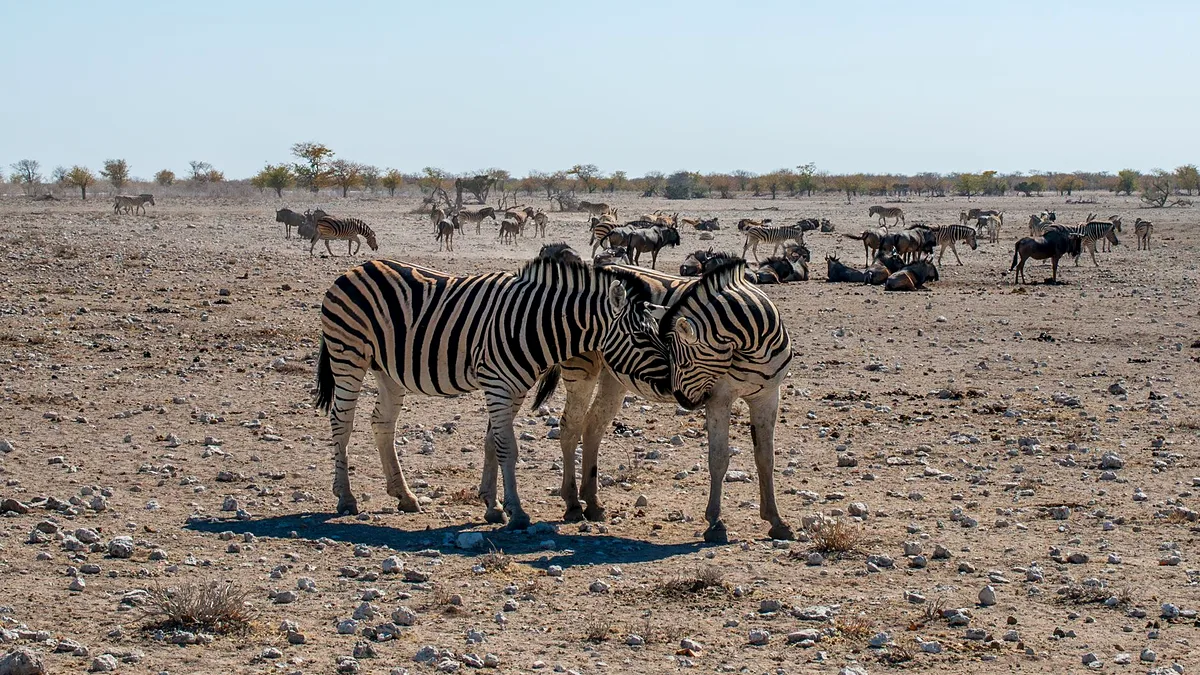

Etosha is famous for a salt pan so big it shows up on satellite images, and for elephants that step out of the heat haze like they own the place. What most visitors never see is the layer around it: old German forts, small-town museums, roadside woodcarvers and Himba craft from the far northwest.
Straight talk first. There are no craft workshops inside the park fence. The carvers, workshops and heritage buildings sit at the gates and in the towns an hour or two out, so you need your own car and a spare morning or two to make it work.
This guide lists the stops actually worth the fuel, with local prices, driving times and the bits that disappoint.
Unlimited High-Speed International Travel eSIM
Connect in seconds across 180+ destinations. Instant QR code activation with zero roaming surcharges.

Etosha at a Glance
- Best time to visit: May to October for dry weather and easy gravel roads; April and November for fewer vehicles and green bush.
- Daily budget: N$1,800 to N$3,200 (about $100 to $175 USD) per person, covering park fees, fuel, a mid-range room or campsite and meals.
- Getting around: Self-drive only. No buses, no rideshare and no shuttles between gates and towns.
- The vibe: Early starts, dusty boots, long horizons and a cold beer by six.
1. Fort Namutoni: The Park's Only Real Heritage Building
Namutoni is the eastern gate camp and the one place in Etosha where history is built into your accommodation. The white fort was first raised in 1903, destroyed in a fight with Ovambo forces in 1904, then rebuilt in the 1950s on the original footprint. It is a national monument, and you can climb the ramparts, read the small display rooms and look down on the waterhole.
The craft trade happens outside the gate, where vendors spread carvings on blankets along the gravel: soapstone rhinos, wooden bowls, beaded bracelets and the occasional good hand-carved spoon. Prices start near N$80 (about $4.30) and gentle haggling is normal and expected.
- Where: Namutoni camp, eastern Etosha, just off the C38.
- Cost: The fort is free once park fees are paid, roughly N$150 (about $8) per person per day plus a vehicle fee. Rates were raised in 2024, so confirm at the gate.
- Best time: 7am to 10am, before the day-trip buses, or in the last hour of light.
- How to get there: About 105 km from Tsumeb on the C38. That is 1.5 hours on gravel and fine in a sedan in the dry season.
Insider tip: Walk the rampart at sunset rather than sitting at the waterhole. The walls turn honey-coloured and you will usually have the whole top deck to yourself.
2. Sprokieswoud: Etosha's Strange Little Fairy Forest
Signposted off the main park road between Namutoni and Halali is a stand of Moringa ovalifolia trees that look like they were planted upside down. Namibians call it Sprokieswoud, the Haunted or Fairy Forest, and there is a short, flat loop walk through it.
It is not a headline attraction. This is fifteen minutes of odd trees, deep shade and a good story, but if you are already driving that stretch it is a welcome leg-stretch and an easy photo stop.
- Where: Inside the park, on the Namutoni to Halali road, with a signed turnoff.
- Cost: Nothing beyond park entry.
- Best time: Midday, when you want shade, or golden hour for photographs.
- How to get there: Self-drive only. Watch for the small sign; it is easy to overshoot at 60 km/h on gravel.
Insider tip: Check your shoes and socks afterwards. The shade is a favourite hangout for ticks in the wet months.
3. Tsumeb Museum and the Town's Craft Tables
Tsumeb is a copper-mining town about 105 km from Namutoni and the best base for a heritage day outside the park. The museum occupies an old German school building and covers the mine, the 1905 to 1915 German colonial period and a mineral collection that will keep rock nerds busy for an hour.
Around town you will find small craft sellers and community arts projects, and their hours are famously wobbly. Ask at the museum desk what is actually open that day instead of trusting a website or an old guidebook.
- Where: Central Tsumeb, walkable from the main street and the Minen Hotel.
- Cost: Museum entry around N$30 to N$50 (about $2 to $3). Craft pieces N$50 to N$400 (about $3 to $22).
- Best time: Weekday mornings, Tuesday to Friday, when staff are on site.
- How to get there: Namutoni to Tsumeb on the C38, or Okaukuejo to Tsumeb on the C38 and B1.
Insider tip: Carry small notes. Nobody in these shops has change for a N$200 note first thing in the morning.
4. Lake Otjikoto: The Sinkhole Full of German Guns
Just off the B1 about 24 km from Tsumeb, Lake Otjikoto is a limestone sinkhole with bright green water and one of the strangest stories in Namibia. Retreating German colonial troops dumped their weapons and ammunition into it in 1915 rather than hand them over.
Divers have since pulled up cannon and crates, and the small museum at the rim displays them. The visit takes twenty to thirty minutes, which makes it a neat pairing with the Tsumeb museum run.
- Where: On the B1 between Tsumeb and Otavi.
- Cost: Around N$50 (about $2.70) per person.
- Best time: Morning, before the tour vans swing through.
- How to get there: Sealed road the whole way, which is a relief after days of gravel.
Insider tip: Do not swim or lean over the edge for a selfie. The water is deep, cold and ringed with slippery rock, and there are no lifeguards anywhere near.
5. Himba Craft West of Galton Gate
If you enter or leave Etosha through Galton Gate in the west, Kamanjab is the last proper town and the launch point for Himba cultural visits. Several communities in the area open their homesteads for short visits covering the red ochre skin paste, smoke baths, and leather and beadwork.
Be picky about who you book with. Some visits are staged photo sessions where most of the money stays with an agent. Others pay the family directly and are genuinely spent talking to people. Ask who gets the cash and whether photography is allowed before you hand anything over.
- Where: Kamanjab area, roughly 90 km of gravel from Galton Gate.
- Cost: About N$250 to N$400 (roughly $14 to $22) per person for a community visit, plus whatever craft you buy.
- Best time: Late afternoon light, but confirm the day before. This is a working homestead, not a museum.
- How to get there: Self-drive via Kamanjab. Fuel up in town before heading to the gate; there is nothing in between.
Insider tip: Buy small and buy honestly. A beaded bracelet or a leather pouch beats haggling hard on a big piece you were never going to use.
6. Okaukuejo Carvers and the Anderson Gate Roadside
The gravel stretch outside Anderson Gate near Okaukuejo is the most reliable craft stop in the park area. Carvers set up tables under shade cloths selling bowls, spoons, animal figures and jewellery, and they are used to visitors with limited boot space.
Quality is a lottery, so handle everything. Check that wood is properly dried and cut cleanly, check that beads sit tight, and do not pay a tourist price for something you could buy cheaper in Outjo. Half the fun is the conversation anyway.
- Where: Outside Anderson Gate, near Okaukuejo, on the C38 approach.
- Cost: Most pieces N$60 to N$300 (about $3 to $16). Cash only.
- Best time: Late afternoon, when the light is good and they are packing up.
- How to get there: Self-drive; about 100 km from Outjo on the C38.
Insider tip: The second and third tables from the gate usually offer better prices than the first, because most cars stop at the first one they reach.
7. Hoba Meteorite, If You Have a Spare Day
About 25 km west of Grootfontein, roughly an hour and a bit from Tsumeb, sits the largest known single meteorite on Earth. It is a 60-tonne slab of iron and nickel that landed around 80,000 years ago and has never been moved.
It is smaller in person than the photos suggest, and the drive is long if Etosha is your base. Go only if you are heading south anyway. Entry runs about N$50 to N$100 (roughly $3 to $5).
Insider tip: Arrive early. There is almost no shade at the site and the metal surface throws heat back at you by midday.
Where to Eat and Drink Nearby
Namutoni Camp Restaurant
The terrace next to the old fort is the obvious stop after a heritage morning. Kudu, oryx or game steak with chips runs N$220 to N$320 (about $12 to $17), and the breakfast buffet is around N$180 (about $10).
Book a table facing the waterhole for the last hour of daylight. It is the cheapest sunset show in Namibia.
Minen Hotel, Tsumeb
An old German-colonial place in the middle of town with high ceilings, cold beer and a menu that has not chased trends in decades. Schnitzel and chips costs N$160 to N$240 (about $9 to $13), a draught beer around N$30 (about $1.60).
Ask for a courtyard table. It is quieter than the bar and you can hear yourself plan the next day's drive.
Supermarkets and Padkos in Outjo and Tsumeb
Both towns have proper supermarkets where water is a third of camp prices and the bakery counter sells pies for around N$25 (about $1.40). Biltong by the 100g is N$40 or so and makes the best gravel-road snack.
Self-catering one meal a day genuinely saves N$300 or more per couple. Camp shops stock the basics but charge for the convenience.
Practical Logistics and Budget Tips
- Fuel up every time you can. Okaukuejo, Halali, Namutoni, Tsumeb, Outjo and Kamanjab all have stations. Never pass one on the western roads with less than half a tank.
- Get your permit stamped. Leaving and re-entering the park for a museum or craft run is fine, but the paperwork has to match or you will be questioned at the gate.
- Carry cash in small notes. N$300 to N$500 covers craft, community visits and tips. There are no ATMs at the gates, and the nearest are in Tsumeb and Outjo.
- Sleep outside the park to save. Guesthouses in Tsumeb and Outjo run N$700 to N$1,100 (about $38 to $60) against N$2,500 or more for in-park lodges.
- Gates open at sunrise and close at sunset. Plan heritage drives as full-day loops, not after-dinner detours.
What to Skip (Honest Heads-Up)
- Anything ivory, rhino horn or rare wood. It is illegal, it will be confiscated at the airport, and buying it funds the trade that is killing the animals you just photographed.
- Staged village tours sold by agents in Windhoek. If the community is not paid directly, your money is not doing what you think it is.
- Sprokieswoud if you are short on time. It is a pleasant fifteen minutes, not a destination.
- The first craft stall you see. Walk fifty metres and compare. Prices drop noticeably.
Frequently Asked Questions
Is there craft shopping inside Etosha National Park?
Only at the camps and gates, where vendors sell carvings and beadwork from blankets. For actual workshops and heritage buildings you need to leave the park and drive to Tsumeb, Outjo or Kamanjab.
How far is Tsumeb from Etosha?
About 105 km from Namutoni on the C38, which takes roughly 1.5 hours, or around 130 km from Okaukuejo. Both routes are gravel in parts but passable in a sedan in the dry season.
Do I need a 4x4 to visit Etosha's heritage sites?
No, not from May to October. A normal sedan handles the C-roads to the gates and the sealed B1 to Tsumeb, Lake Otjikoto and Grootfontein fine, though you will feel the corrugations.
Is it ethical to visit a Himba village near Kamanjab?
It can be, if you book through a community-run operator and confirm the family is paid directly. Ask upfront about photography rules and skip anything that feels like a cash-for-photos conveyor belt.