
Choquequirao is the big Inca site you cannot drive to. No road, no shuttle, no cable car — just a punishing drop to the Apurímac river and a 1,500 m climb back out, spread across four or five days. That is exactly why you will share the main plaza with six people and a couple of grazing llamas.
Now the honest part about the craft. There are no workshops at Choquequirao. No stalls at the gate, no weavers sitting by the terraces. The making happens in the villages on the way in — Cachora and Curahuasi — and in Cusco, where the weaving cooperatives run the best hands-on class in the country. This guide covers both halves of the trip.
Prices are in soles with US dollars, and the things I would skip are marked as such.
Unlimited High-Speed International Travel eSIM
Connect in seconds across 180+ destinations. Instant QR code activation with zero roaming surcharges.

Choquequirao at a Glance
- Best time to visit: May to September for dry, cold, clear days. December to March is muddy and leechy, but the Inca canals actually run.
- Typical daily budget: S/120–180 (~$32–48 USD) independent; S/400–550 (~$105–145 USD) on a guided Cusco package.
- How you move: public bus to Curahuasi, combi to Cachora, then your own legs with a mule carrying the heavy gear.
- Vibe: dusty, steep, high-altitude, no phone signal, and far quieter than any other Inca site this size.
1. The Llama Terraces
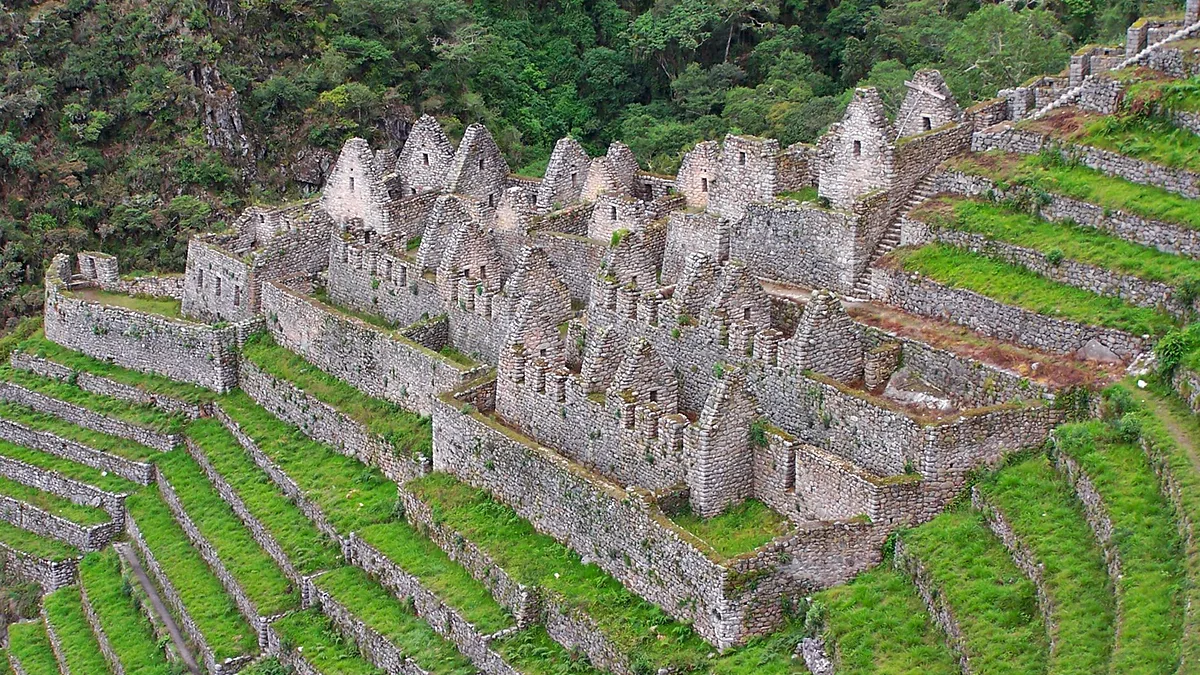
This is the photo you have seen without knowing the name: a long flight of terraces with white quartz llamas set into the retaining walls, tails up, walking in a line. They were cleared and consolidated in the 2000s and remain the least-visited sector, because reaching them costs an extra 40 minutes of switchbacks.
Go at first light. The quartz catches the sun and you will have the whole staircase to yourself while the guided groups are still drinking coffee at Marampata.
- Where: south-west flank of the site, below the main plaza
- Cost: included in the park ticket — around S/70 (~$19 USD) for foreign adults, half with a student ID
- Best time: 6:30–8:00 am, before day walkers arrive
- How to get there: signed trail past the kallankas, then 20–25 minutes of steep descent
Insider tip: most guides cut this sector to save time on the climb back. Tell yours on day one that you want the llamas, or you will be shown the plaza, the usnu and marched back to camp.
2. The Main Plaza and Usnu
The centre of Choquequirao is a wide grass plaza ringed by two-storey buildings with gabled stone ends, some original and some rebuilt after 2000, with a stepped usnu platform in the middle where ceremonies happened. It sits at roughly 3,050 m and was built and occupied in the 15th and 16th centuries, in the same era as the last Inca holdouts at Vilcabamba.
Stand on the upper terraces around 8 am and you get the whole layout in one frame — plaza, usnu, and cloud pouring out of the canyon behind it.
- Where: dead centre of the archaeological zone
- Cost: park ticket only
- Best time: 7–9 am, for light and empty grass
- How to get there: 20–25 minutes uphill from the campsite and site checkpoint
Insider tip: the usnu is fenced and roped off. Tourists climb it for photos every week and get whistled down — do not be that person.
3. The Canals and Fountains Sector
Choquequirao's water system is the part engineers travel here for. Stone-lined channels drop from a spring above the site and feed a chain of fountains and small baths, and in the wet season you can still hear them running. It is also where you notice that most of this place is terraces and drainage rather than temples — a working estate as much as a ceremonial centre.
Excavation crews work the dry months, so expect covered trenches and people sifting soil. Stay on the marked path; the edges are unconsolidated.
- Where: northern edge of the site, above the main plaza
- Cost: included in the park ticket
- Best time: February to April, when the channels actually carry water
- How to get there: follow the upper terrace path from the plaza, about 10 minutes
Insider tip: the stone staircases here are polished smooth and there are no handrails. Trekking poles are not a fashion statement on this section.
4. The Saywite Monolith, Curahuasi
Most Choquequirao trips pass within 20 minutes of Saywite and never stop. The monolith is a single carved granite block roughly 4 m across, covered in more than 200 figures — terraces, canals, pumas, monkeys, people — usually explained as a ritual scale model of the Inca world. Nobody actually knows.
It sits at about 3,500 m on the Cusco–Abancay road, with a small museum and a short trail of lesser carved stones. An hour here resets your eye for what you are about to see at Choquequirao.
- Where: Saywite, Curahuasi district, Abancay province, Apurímac
- Cost: roughly S/5–10 (~$1.50–3 USD)
- Best time: 9–11 am, before the school buses from Abancay arrive
- How to get there: any Cusco–Abancay bus drops you at the Saywite turnoff; 2 km walk or a short taxi
Insider tip: pair it with the Cconoc hot springs (S/5 entry, 30 minutes away at 1,900 m) on the way back — but do the ruins first, because the pools will end your ambition.
5. Cachora: Muleteer Craft and the Gateway Village
Cachora sits at 2,900 m with one plaza, a church, a school, a couple of shops and the last reliable food before the canyon. It is also where the arrieros live, and their craft runs through your whole trip whether you notice it or not — braided ropes, striped saddle blankets, woven carrying nets, leatherwork on the mule harnesses.
There is no ticket booth or formal workshop here. Ask at the municipality, or ask your arriero directly. Several families in the surrounding hamlets still work backstrap looms and will show you if you turn up with patience and a little Spanish — pay properly or bring something to trade.
- Where: Cachora district, Abancay province, Apurímac
- Cost: free to wander; mule plus arriero runs S/120–160 per day (~$32–42 USD)
- Best time: the afternoon before you start walking, when muleteers gather in the plaza
- How to get there: combi from Curahuasi, about an hour, S/10–15 (~$3–4 USD); direct vans from Cusco take four hours
Insider tip: arrange mules yourself in the plaza instead of through a Cusco agency. You pay roughly half, and the money stays in the village.
6. Centro de Textiles Tradicionales del Cusco
Do this before you hike, not after. The CTTC on Avenida El Sol works directly with weaver communities around Chinchero, and the Cusco space runs continuous demonstrations of spinning, natural dyeing with cochineal and q'olle, and backstrap-loom weaving. Entry is free, the labelling tells you which village made what, and prices are fixed.
Half a day here changes how you read the textiles in Cachora and Curahuasi — you start recognising dye work and loom width instead of seeing souvenir blankets. Longer dye and weaving sessions are available by reservation.
- Where: Av. El Sol 603, second floor, Cusco
- Cost: free entry, donations welcome; half-day workshop roughly S/80–140 (~$21–37 USD)
- Best time: weekday mornings, when demonstrators are working and the room is quiet
- How to get there: 10 minutes on foot from the Plaza de Armas
Insider tip: buy from the weavers' table here rather than the shops on Calle Plateros. Same money, and it reaches the cooperative instead of a middleman.
Where to Eat and Drink Nearby
Mercado San Pedro, Cusco
Your last proper market before the trail and the cheapest good meal in the city. The soup counters upstairs serve a menú del día for S/8–12 (~$2–3 USD): quinoa soup, trout or chicken, rice, and a jugo blended in front of you. Go before noon, while the market still belongs to Cusco.
Curahuasi: anise, cheese and manjar blanco
Curahuasi calls itself the anise capital of Peru, and the sweet, high-proof anís sold around the Plaza de Armas is the local craft in a bottle — S/15–25 (~$4–7 USD). Pick up queso Curahuasi and a pot of manjar blanco from the dairy stalls on the main road; both survive a day in a pack.
Marampata and Playa Rosalinas trail kitchens
On the trail, family comedores in Marampata serve a set soup-and-rice plate for S/15–25 (~$4–7 USD), and the shacks at the Playa Rosalinas river crossing sell cold beer and fried trout for about the same. There is no menu worth studying — you eat what was cooked that morning, and it is usually excellent.
Practical Logistics and Budget Tips
Getting there without a tour
Take an early bus from Cusco to Curahuasi (about three hours, S/20–30 / ~$5–8 USD), then a combi or shared taxi up to Cachora (one hour, S/10–15). From Cachora the trail is signed and obvious. You do not need a guide, but you do need three litres of water capacity and a filter.
What it actually costs
Park entry is around S/70 for foreign adults, paid at the control in Cachora before you set off, and campsites run S/10–15 a night. Independent trekkers land at S/120–180 a day including food and a shared mule; guided four-day packages from Cusco sit at $400–650 per person.
What to skip
Skip any Choquequirao in two days tour — the canyon makes it physically impossible, and what you are buying is a van to a viewpoint. Skip the long-promised cable car, which still is not carrying passengers. And skip the gear-rental upsell in Cusco beyond poles and a head torch.
Honest heads-up
There are no ATMs past Curahuasi, so carry soles in small notes. Sandflies at the river crossing are vicious in the shoulder season, and the descent to Playa Rosalinas wrecks knees — poles and a slow pace beat heroics. Carry out every scrap of plastic; the villages have no waste collection.
Frequently Asked Questions
Are there craft workshops at Choquequirao itself?
No. The archaeological site has no stalls, workshops or vendors of any kind. The closest hands-on craft is in Cachora and Curahuasi on the way in, or at Cusco's Centro de Textiles Tradicionales before you leave.
How much does it cost to visit Choquequirao?
Budget around S/70 (~$19 USD) for park entry, S/30–45 for transport to Cachora, and S/120–180 per day if you trek independently. A guided four-day package from Cusco runs roughly $400–650 per person.
Is the Choquequirao cable car open yet?
No. The teleférico has been studied and re-announced for years but is not carrying passengers at the time of writing. Plan the trip as a hike and treat any cable car mention in a tour listing as marketing.
How many days do you need for Choquequirao?
Four days minimum from Cachora, and five is more comfortable if you want the llama terraces and a slow morning at the ruins. Add a full day in Cusco beforehand to acclimatise and do the textile workshop.