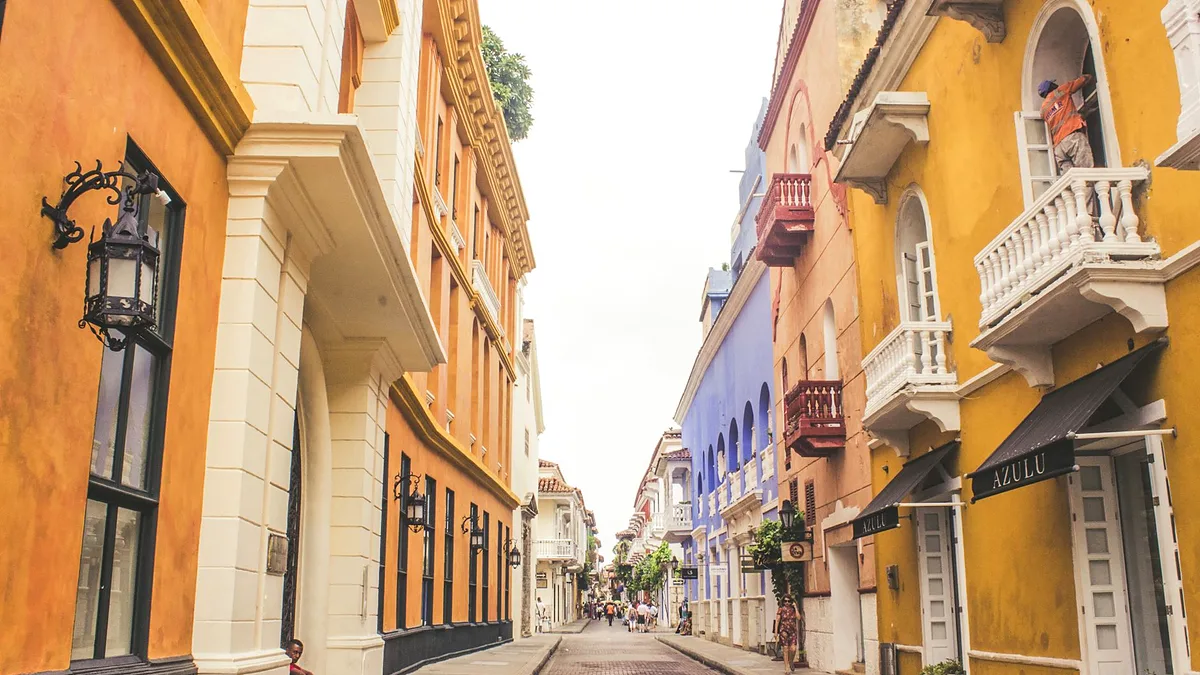

Cartagena's walled city gets photographed to death. The same pastel balconies, the same crowd at Plaza de los Coches, the same sunset queue on the wall. What most visitors never see is the layer underneath: a working contemporary art scene in converted townhouses, studios set into the old defensive wall, and a social calendar built on members' clubs and guest lists.
Much of it costs nothing. Some of it is genuinely closed to you, and I would rather tell you which doors to skip than let you waste an evening standing outside one. Everything below is walkable from the old town unless I say otherwise.
One warning before you start: Cartagena is punishingly hot from 11am to 3pm. Galleries have air conditioning, streets do not. Plan your crawl for early morning or after 4pm and treat the middle of the day as a siesta.
Unlimited High-Speed International Travel eSIM
Connect in seconds across 180+ destinations. Instant QR code activation with zero roaming surcharges.

Cartagena at a Glance
- Best time to visit: December to April, the dry season. Avoid Semana Santa and 26 December to 5 January, when hotel rates roughly double.
- Typical daily budget: COP 180,000–260,000 (~$45–65 USD) for budget travellers; COP 400,000–650,000 (~$100–160 USD) mid-range with one proper dinner.
- Getting around: No metro. Walk the Centro Histórico and Getsemaní; take TransCaribe or a taxi (COP 8,000–15,000) for Manga, Bocagrande and Crespo.
- Vibe: Colonial streets, serious heat, a small but ambitious art scene, and a nightlife that starts at 10pm and runs past 3am.
1. NH Galería: The Contemporary Room Behind a Closed Door
Nohra Haime's Cartagena space sits in a restored colonial house on Calle de los Doncellas, two blocks from Plaza de Bolívar. The rooms are white, cold and quiet, with rotating shows that mix big-name Latin American moderns with younger Colombian artists you will not find in a hotel lobby.
It is free, it is almost never crowded, and the staff will happily explain the work if you ask. This is the best single stop if you want to see what the Colombian art market is actually buying right now.
- Neighborhood: Centro Histórico, Calle de los Doncellas
- Cost: Free (COP 0)
- Best time: Tuesday to Saturday, roughly 10am–7pm; closed Sunday and Monday
- Getting there: A 5-minute walk from the Puerta del Reloj; taxis drop at Plaza de Bolívar
Insider tip: The front door is usually shut with a bell beside it, so half the people who walk past assume the place is closed. Ring it. Afterwards, take Calle de la Universidad for shade and a cold drink.
2. Museo de Arte Moderno: Getsemaní's Small, Honest Museum
On Plaza de la Merced, this converted colonial building holds three or four rooms of rotating shows: Caribbean modernism, photography, and work from local art students. It is not a blockbuster museum — it is a neighbourhood one, and you can see all of it in 40 minutes.
That is exactly the appeal. Locals duck in between errands, the guards are friendly, and the plaza outside fills with kids playing football at dusk.
- Neighborhood: Getsemaní, Plaza de la Merced
- Cost: About COP 10,000 (~$2.50 USD)
- Best time: Tuesday to Saturday, 9am–5pm; hours shift around holidays, so confirm at your hotel
- Getting there: 10 minutes on foot from the Puerta del Reloj; every taxi driver knows the plaza
Insider tip: Ask the guard about the upstairs balcony. The view over the square and the church dome is one of the best free frames in the city.
3. San Diego's Atelier Streets: Where the Dealers Actually Work
San Diego is the quiet half of the old town, and its galleries behave accordingly. The Cartagena outpost of Bogotá's Galería La Cometa shows established and emerging Colombian names in a townhouse with original beams and a courtyard that stays cool all afternoon.
The surrounding blocks — Calle del Curato, Calle del Sargento Mayor — hide small studios and restoration workshops that open irregularly. There is no signage, so you knock.
- Neighborhood: San Diego, around Calle del Curato and Plaza de San Diego
- Cost: Free to browse; small prints and works on paper from about COP 250,000 (~$60 USD)
- Best time: Tuesday to Saturday, 10am–6pm for galleries; Saturday morning for studios
- Getting there: An 8-minute flat walk north from Plaza de Bolívar, mostly in shade
Insider tip: If a workshop door is ajar and you hear a radio, it is fine to call out buenos días and ask to look. Owners work elsewhere during the week, which is why Saturday is your best shot.
4. Las Bóvedas: Studios Built Into the City Wall
Twenty-three vaulted chambers were cut into the wall in the late 1700s as storerooms and barracks. Today they hold shops and workshops, and while most sell hats and fridge magnets, the arches at the far end are still run by makers: leatherworkers, filigree jewellers, and weavers selling hammocks from San Jacinto.
- Neighborhood: Centro Histórico, Calle de las Bóvedas, inside the wall near the Baluarte de Santa Catalina
- Cost: Free entry; crafts COP 25,000–250,000 (~$6–60 USD)
- Best time: Daily, roughly 9am–6pm; go before 11am to beat the cruise crowds
- Getting there: A 6-minute walk along the wall from the Puerta del Reloj
Insider tip: Ask who made the piece before you pay. A lot of what is on display is machine-made and shipped in from Bogotá, and the genuine handmade work is usually at the back of the stall, not the front.
5. Club de Pesca: Old-Cartagena Club Life You Can Actually Book
The Club de Pesca occupies the old fort of San Sebastián del Pastelillo on the Manga waterfront, all stone walls, ceiling fans and a marina full of boats. It is a members' club, but the restaurant takes outside reservations, which makes it the easiest way to watch how the city's establishment spends a Sunday lunch.
The food is solid rather than spectacular — grilled fish, seafood rice, a decent ceviche — and you are paying partly for the setting. Dress smart-casual; vests and flip-flops will get you a raised eyebrow.
- Neighborhood: Manga, on the water at the Castillo del Pastelillo
- Cost: Mains COP 55,000–120,000 (~$14–30 USD); budget COP 150,000+ per person with wine
- Best time: Daily, roughly 12pm–10pm; book the 6pm sitting for sunset
- Getting there: 10–15 minutes by taxi from the Centro Histórico, about COP 12,000; not a walk you want after dark
Insider tip: Request a table along the water wall when you book, not when you arrive. Friday and Saturday fill up days ahead, and turning up without a reservation is how you end up eating in the bar.
6. Café Havana: The Salsa Room With a Guest List
On Plaza San Pedro Claver, Café Havana has been the city's reference salsa night for years: live band, tight dance floor, mojitos, and doormen who work off a list. It behaves like a club because it is one, just without the membership card.
- Neighborhood: Centro Histórico, Plaza San Pedro Claver
- Cost: Cover COP 30,000–50,000 (~$8–13 USD) on Friday and Saturday; sometimes waived for early arrivals
- Best time: Wednesday to Saturday from about 7pm until 3am; the band usually starts around 10pm
- Getting there: Walkable from anywhere in Centro; taxis drop at the corner of the plaza
Insider tip: Wednesday gives you the same live band with half the crowd. Message the club on Instagram a day ahead to book a table — it beats queuing at 10pm on a Saturday.
7. Rooftops and Guest-List Nights: The Rest of the Club Layer
Cartagena's truly private clubs will not let you in, and any tour promising otherwise is selling you a bar stool with a nice name. What does work is the rooftop layer: the bar at Townhouse in Centro, the pool deck at Casa San Agustín, and the terrace bars along the wall, where two cocktails cost COP 45,000–70,000 (~$11–18 USD) and the view is the entertainment.
For something with actual dance floor, Bazurto Social Club in Getsemaní runs champeta and live music with a smaller cover than the famous rooms. It is loud, cramped and a lot more fun than it sounds.
- Neighborhood: Centro Histórico and Getsemaní
- Cost: Cocktails COP 22,000–35,000 each; Bazurto cover COP 20,000–30,000 (~$5–8 USD)
- Best time: 5:30–7pm for rooftop sunset; 10pm onwards for live music
- Getting there: All walkable within the old town; agree taxi prices first if you are heading to Bocagrande later
Insider tip: Rooftop bars start gate-keeping after 8pm on weekends. Arrive for sunset, order a second drink, and you keep your spot instead of arguing at the door.
Where to Eat and Drink Nearby
La Cocina de Pepina (Getsemaní)
A pocket-sized Caribbean kitchen a few streets back from Plaza de la Trinidad, with about eight tables and a set lunch that changes daily. Order the mote de queso or the posta negra; expect COP 40,000–55,000 (~$10–14 USD) for a full plate. Go at 12:30pm, because by 1:30pm there is a line and nowhere to wait.
El Barón (Plaza San Pedro Claver)
Coffee and arepas by day, cocktails by night, with tables spilling onto the square opposite the church. A flat white runs about COP 10,000 (~$2.50 USD) and small plates COP 22,000–35,000. It is the natural stop before or after Café Havana, since it is 30 seconds away.
Ábaco Libros y Café (Centro)
A bookshop café on Calle de la Mantilla with strong air conditioning, shelves of Colombian fiction, and coffee from COP 8,000–13,000 (~$2–3 USD). When the afternoon rain hits — and it will — this is where you wait it out with a book instead of a plastic poncho.
Practical Logistics and Money Tips
Getting around without wasting money
Buy a TransCaribe card if you are staying outside the old town; trips cost a couple of thousand pesos and the buses are clean. Inside the walls, walking beats everything: Centro to Getsemaní is a 15-minute flat walk. For taxis, either use an app or agree the price before you get in — a Centro hop should be COP 8,000–15,000, and the airport run COP 20,000–30,000.
What things cost
Galleries are free or close to it, which makes this an unusually cheap theme. Your real spending goes on food, covers and cocktails, and those triple the moment you sit on a wall-facing terrace. Carry small bills: many workshops and market stalls cannot break a COP 100,000 note.
What to skip
Skip the chiva party buses, the horse-drawn carriages around the plaza, and any street seller offering emeralds at a bargain price. The mass island tours that hit four beaches in a day are packed and rushed — pick one island and stay there instead. And do not pay a tout at Plaza de los Coches for a walking tour you can do yourself with a map and this list.
Frequently Asked Questions
Are there free art galleries in Cartagena?
Yes. NH Galería and the Cartagena space of Galería La Cometa are both free to enter, and Las Bóvedas costs nothing to browse. The Museo de Arte Moderno charges a token COP 10,000, which is under $3 USD.
Can tourists visit Cartagena's private clubs without a membership?
Only where the club runs a public restaurant or bar, like the Club de Pesca, which takes reservations from non-members. Genuine members' clubs require an invitation, so treat any promise of access as a red flag.
What is the best time of day for a gallery crawl in Cartagena?
Go between 9am and 11am, or after 4pm, when the heat stops being punishing and the light is better anyway. Most galleries close between 1pm and 2pm and shut entirely on Sundays and Mondays.
Where do locals go out at night in Cartagena?
Getsemaní, mostly — Plaza de la Trinidad and the streets around Calle del Guerrero — plus the salsa rooms in Centro. Nightlife starts late, so arriving before 10pm means you will be the first one on the dance floor.