
Most Cape Town itineraries sprint up Table Mountain and stop. That's a real shame, because the city's texture lives at street level — glassblowers on Sir Lowry Road, spice merchants in the Bo-Kaap, and a small museum that records a neighborhood the bulldozers took.
Every stop below is a working place, not a display case. I've listed honest prices, the exact hours that matter, and the things worth skipping, so you can build a day that fits your budget instead of a tour company's.
At a Glance
Unlimited High-Speed International Travel eSIM
Connect in seconds across 180+ destinations. Instant QR code activation with zero roaming surcharges.

- Best time to visit: March–May or September–November. Mild, dry, and the studios are quiet before the December crush.
- Daily budget: R900–R1,800 (~$48–$97) covering entries, food and rideshares — not counting the ceramics you'll want to buy.
- Getting around: Rideshare plus walking. MyCiTi buses work for the Waterfront and Civic Centre but rarely drop you at a workshop door.
- Vibe: Industrial-chic in Woodstock, lived-in and residential in the Bo-Kaap, quietly heavy at District Six.
The Woodstock Foundry: Glass, Clay and Bronze Under One Roof
A 1920s warehouse on Sir Lowry Road that now houses working glassblowers, ceramicists, jewellers and a bronze foundry. On a weekday you can stand a few meters from a furnace and watch a gather of molten glass turn into a tumbler in under ten minutes.
This is the single best stop for anyone who wants to see craft actually happening rather than arranged on a shelf. The tenants sell from their benches, so you're often buying from the person who made the piece that morning.
- Neighborhood: Woodstock, 160 Sir Lowry Road
- Cost: Free to browse. A glassblowing demo or short class runs R450–R950 (~$24–$51); a hand-blown tumbler is around R280 (~$15)
- Best time: Tuesday to Friday, 10:00–16:00, when the furnaces are hot. Saturdays are quiet
- Getting there: 12–15 minute rideshare from the CBD (~R85 / ~$4.60). MyCiTi drops you on Victoria Road, a 10-minute walk away
Insider tip: Ask at the glass studio whether a bench is open before you plan a class — pieces have to cool slowly in an annealer overnight, so same-day pickup is never an option. Arrange shipping or come back the next morning.
Woodstock Exchange and Imiso Ceramics
The Woodstock Exchange at 66 Albert Road is a converted factory full of small design studios, and its standout tenant is Imiso Ceramics, the studio of Andile Dyalvane and Zizipho Poswa. Their hand-built vessels carry Xhosa forms and surface patterns you won't find in a souvenir shop.
Ground-floor browsing is free and easy. The real work happens in the upper studios, and not all of them take walk-ins, so ask at the entrance desk which doors are open that day.
- Neighborhood: Woodstock, 66 Albert Road
- Cost: Free entry. A small Imiso bowl runs R450–R900 (~$24–$49); statement pieces start around R4,000 (~$216)
- Best time: Weekday mornings. First Thursday of each month, studios stay open late until about 21:00
- Getting there: 10-minute walk from the Old Biscuit Mill; rideshare from the CBD ~R85 (~$4.60)
Insider tip: Ceramics are heavy and airlines are unforgiving. Ask for the studio's shipping rate before you buy, or plan to wrap pieces in clothing inside your carry-on. And if you're here on a Saturday, the Neighbourgoods Market next door at the Old Biscuit Mill is worth 45 minutes — but it's shoulder-to-shoulder by 11:00 and prices reflect the tourist traffic.
Bo-Kaap: Museum, Mosque and Spice Counters
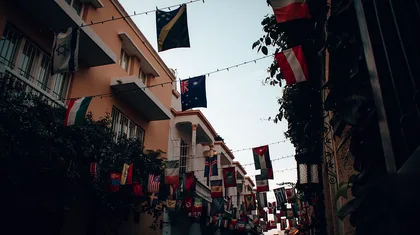
The Bo-Kaap sits on the slope above Wale Street, and it's the closest you'll get to Cape Town's Cape Malay heart. Start at the Bo-Kaap Museum on Wale Street for 40 minutes of context, then walk to the Auwal Mosque, established in 1794 and the oldest in South Africa.
Then go buy spices. Atlas Trading on Wale Street sells bulk masala, cinnamon bark and dried chillies by weight, and the smell alone justifies the trip. Several local cooks run small Cape Malay cooking classes out of their homes — a half-day of folding samoosas and simmering denningvleis costs less than a restaurant dinner.
- Neighborhood: Bo-Kaap, around Wale and Pentz Streets
- Cost: Bo-Kaap Museum R30 (~$1.60). Cooking classes R550–R750 (~$30–$40). Spices R20–R60 per 100g (~$1–$3)
- Best time: 09:00–11:00 on weekdays, before the tour groups. Avoid Friday midday during Jumu'ah prayers
- Getting there: 10-minute uphill walk from Cape Town Station, or a short rideshare (~R60 / ~$3.20)
Insider tip: This is a residential grid, not a photo set. Shoot the facades from the road, never through windows or over garden gates, and ask before photographing people. Residents are warm but tired of being treated as scenery.
District Six Museum and the Homecoming Centre
The District Six Museum on Buitenkant Street is small, cheap and the most affecting hour you'll spend in the city. Its ground floor is covered with a street map of the old neighborhood, and former residents have written their names and addresses directly onto it.
Book one of the guided walks led by ex-residents rather than just doing the exhibits. Ninety minutes with someone who was moved out in the 1970s does more than any wall text, and the fee goes back into the trust.
- Neighborhood: East City / Zonnebloem, 25A Buitenkant Street
- Cost: R60 adult (~$3.20); guided District Six walk around R180 (~$10)
- Best time: Weekday mornings. Closed Sundays. Allow 60–90 minutes
- Getting there: 8-minute walk from the Castle of Good Hope. Street parking is scarce, so take a rideshare
Insider tip: The museum is emotionally heavy and there's nowhere to sit and process. Plan a coffee stop afterwards rather than stacking another museum on top of it.
Castle of Good Hope
Built between 1666 and 1679, this is the oldest surviving colonial building in South Africa and still a working military site. The Key Ceremony at 10:00 and 12:00 on weekdays — guards in period dress, drums, a surprisingly formal little ritual — is genuinely worth timing your visit around.
Be honest with yourself about the rest: parts of the complex feel dusty and under-loved, signage is patchy, and restoration work closes sections without warning. Go for the walls, the William Fehr Collection and the ceremony, not for polished museum production.
- Neighborhood: Foreshore, corner of Buitenkant and Darling Streets
- Cost: R50 adult (~$2.70), R25 children (~$1.35)
- Best time: 09:00–11:00 on a weekday to catch the 10:00 ceremony
- Getting there: 10-minute walk from Cape Town Station; the MyCiTi Civic Centre stop is 8 minutes away
Insider tip: Walk the outside perimeter on Darling Street before you pay. The pentagon shape only makes sense from the moat, and it's free.
Groot Constantia
South Africa's oldest wine farm, established in 1685, with a Cape Dutch manor house that survived fires and a wine cellar still producing in the valley's original style. The estate is a heritage site first and a tasting room second, which is exactly why it works.
Tastings have become a bit of a conveyor belt on weekends, so arrive at opening or after 15:30. The cellar tour is the part most visitors skip, and it's the part that explains the coopering, the old cement fermentation tanks and why Constantia wine was famous in Europe before anyone planted in Stellenbosch.
- Neighborhood: Constantia, Groot Constantia Road
- Cost: Estate entry free; manor house museum R40 (~$2.20); wine tasting R95–R165 (~$5–$9)
- Best time: 09:00–10:30 or after 15:30. Weekends are busiest
- Getting there: 20–25 minute rideshare from the CBD (~R200 / ~$11). No useful train
Insider tip: Don't leave without tasting the Grand Constance dessert wine — it's the sweet style that made this valley famous in the 1700s. And book the cellar tour online the day before; walk-up slots vanish on Saturdays.
Where to Eat and Drink Nearby
Truth Coffee Roasting
A steampunk cathedral inside a Victorian warehouse at 36 Buitenkant Street, five minutes from the District Six Museum. Espresso is around R35 (~$1.90), a proper breakfast plate R110–R140 (~$6–$8). Open daily from 07:00; the roastery noise is part of the charm.
Biesmiellah
A Bo-Kaap institution on the corner of Wale and Pentz, serving since 1969. Order the bobotie at R145 (~$8) or the denningvleis at R165 (~$9), and take koeksisters for the road at R40 (~$2.20). Closed Sundays, and it fills up right after Friday prayers.
Eastern Food Bazaar
Longmarket Street, a five-minute walk from the Castle, and the best cheap meal downtown. A butter chicken plate with naan lands around R85 (~$4.60); the biryani counter is the locals' pick. No atmosphere to speak of, which is why the prices stay low.
Practical Logistics & Budget Tips
Transit: Buy a myconnect card (R35 / ~$1.90) at the airport or Civic Centre and load R100. The MyCiTi airport bus into town is about R115 (~$6). For everything else, Uber and Bolt beat the bus: short hops across the CBD and Woodstock run R60–R120 (~$3–$6.50), and splitting a car is often cheaper than two bus fares plus the walk.
Walking: The CBD, Bo-Kaap, Castle and District Six form a genuinely walkable loop in daylight. Don't walk Sir Lowry Road or the Foreshore after dark, and skip the Metrorail Central line unless a local is with you.
Money: Studios and restaurants take cards. Spice shops and market stalls prefer cash, so carry R300–R500 (~$16–$27) in small notes.
What to skip: Greenmarket Square looks like an artisan market but a lot of the stock is imported from outside South Africa — buy from the maker instead. Avoid any "township tour" that doesn't pay the people whose homes you're driving through. And if crowds wreck your day, skip the Neighbourgoods Market entirely; the same makers sell from their studios on weekdays.
Reality check: Budget R900–R1,800 (~$48–$97) per person per day for entries, food and transport. If you want one-stop craft shopping, the Watershed at the V&A Waterfront is convenient and well curated, but expect a 20–30% markup over buying direct from a Woodstock studio.
Frequently Asked Questions
Is the Bo-Kaap Museum worth visiting?
Yes, but treat it as a 40-minute primer rather than a destination. At R30 (~$1.60) it gives you the history you need before walking the streets, and it's closed on Sundays.
Can you visit working artisan workshops in Cape Town?
Yes — the Woodstock Foundry and Woodstock Exchange both host working studios that welcome browsers on weekdays. Not every door is open, and some makers are appointment-only, so ask at the entrance rather than wandering in.
How much should I budget for a craft-buying day?
Around R600–R1,000 (~$32–$54) if you're buying small pieces like a bowl, a woven basket or spices. Serious ceramics and glass start at R2,000 (~$108), so decide your limit before you handle anything.
Is the Castle of Good Hope safe and worth the entry fee?
It's safe and busy during daytime hours, and at R50 (~$2.70) it's the cheapest heritage ticket in the city. Go on a weekday morning to catch the Key Ceremony, and don't walk there alone after dark.