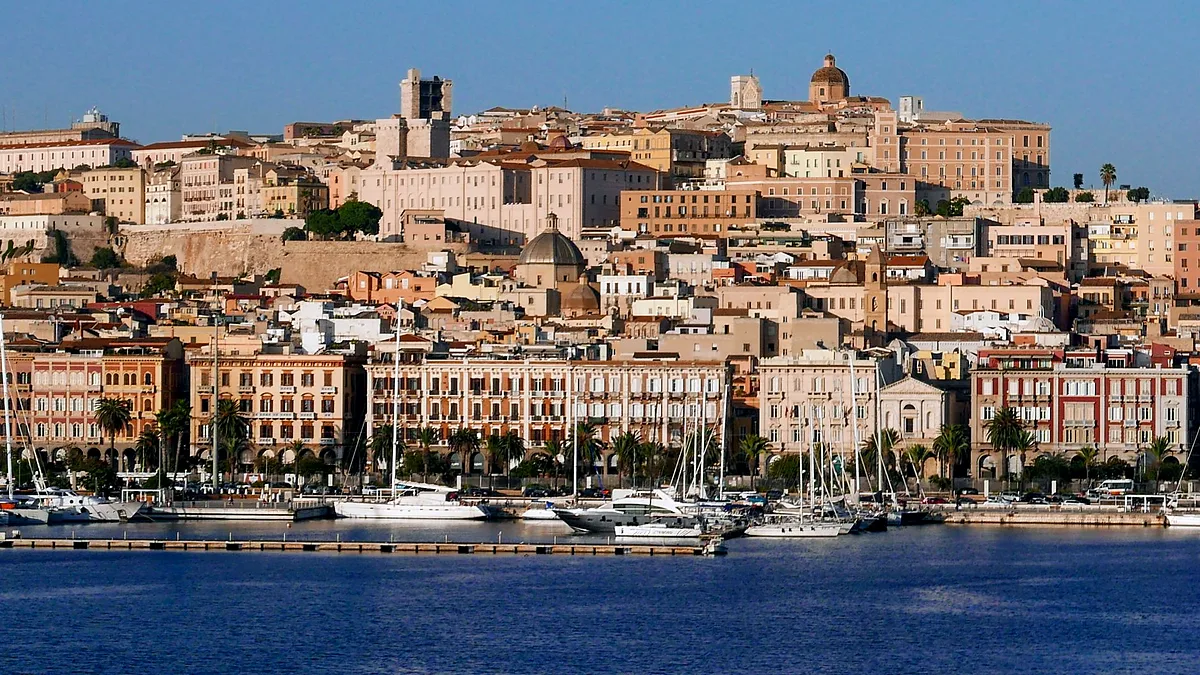

Cagliari is a working city that happens to sit on a beautiful bay. That matters for this guide. You are not visiting a place where craft survives behind glass — you are walking past benches where gold is still drawn into thread, and catching a 12-minute train to kilns that fire terracotta much the way they did two centuries ago.
The trick is knowing which bits are real and which are staged for cruise passengers stepping off at the port. So here is the honest split: the workshops worth your morning, the heritage sites that earn their ticket price, and a couple of things you can skip without regret.
Cagliari at a Glance
- Best time to visit: Late April to mid-June, or late September to late October. July and August hit 35°C and many family workshops shut for two or three weeks around Ferragosto (15 August).
- Typical daily budget: €60–110 (~$65–$120) per person, covering one paid museum, two proper meals and transit. Add €40–60 if you plan to buy ceramics or filigree.
- Getting around: Central Cagliari is walkable but vertical. Castello sits on a limestone hill and every route up involves stairs or a ramp. CTM buses fill the gaps; trains handle day trips.
- Vibe: Unfussy, loud at lunch, genuinely local. Shopkeepers will let you watch them work if you ask politely and don't block the light.
The Cittadella dei Musei: Sardinia's Craft Story Under One Roof
Start here, because everything you'll see in the workshops afterwards makes more sense with context. The archaeological museum on Piazza Arsenale holds the island's nuragic bronzetti — tiny bronze figures with enormous hands and watchful faces — plus a ceramics collection that traces local clay work from prehistory to the modern day.
Unlimited High-Speed International Travel eSIM
Connect in seconds across 180+ destinations. Instant QR code activation with zero roaming surcharges.

The building itself is a converted arsenal inside the old Spanish fortifications, so the walk in through the courtyard already feels like entering a different century. Most visitors give it 45 minutes. Give it two hours and you'll actually understand what the potters are referencing.
- Neighborhood: Castello, Piazza Arsenale 1
- Cost: €9 (~$10) full ticket, discounts for EU 18–25s, free under 18
- Best time: 9:00 opening on a weekday — the top-floor ceramics rooms are empty
- Getting there: 15-minute uphill walk from Piazza Yenne via Via Manno and Piazza Costituzione, or bus 7 to Piazza Indipendenza
Insider tip: The ticket office sells a combined pass with the towers for a few euros more, but only if you ask. Staff rarely volunteer it.
Torre dell'Elefante and the Medieval Wall Walk
The Pisans built these limestone towers in the early 1300s and two of them still stand guard over the entrances to Castello. Torre dell'Elefante, on Via Santa Croce, takes its name from the small carved elephant on its facade — charming until you learn it was a symbol of Pisan power over a conquered city.
Climbing it is short and slightly claustrophobic: narrow stone stairs, a low doorway, then a rooftop view across the terracotta roofs of Castello. Torre di San Pancrazio, a five-minute walk away near Piazza Indipendenza, looks out the opposite direction over Villanova.
- Neighborhood: Castello (both towers)
- Cost: €4 (~$4.30) each, or roughly €6 (~$6.50) combined
- Best time: Right at opening, 9:30–10:00, before the tour groups
- Getting there: Both are inside the pedestrian zone; walk from any Castello entrance
Insider tip: Do San Pancrazio first. Morning light hits the Villanova side properly, and you'll have the stairwell to yourself while everyone else queues at the Elephant.
Bastione di Saint Remy and the Passeggiata Coperta
This is Cagliari's front porch — a neoclassical terrace built in the 1890s that connects Castello's lower edge to the Marina district below. Locals use it to sit and complain about the heat. You should use it for the free view across the rooftops to the sea.
The real prize is inside the arches: the Passeggiata Coperta, a covered walkway that runs the length of the bastion and hosts rotating exhibitions, craft fairs and design markets. It's the single best chance to see Sardinian makers in one place without chasing addresses.
- Neighborhood: Castello edge, above Via Roma
- Cost: Terrace free; Passeggiata Coperta €3 (~$3.30), often waived during events
- Best time: 19:00–20:30 for the sunset; check the Comune di Cagliari events page for fair dates
- Getting there: Stairs or lift from Piazza Costituzione; five minutes on foot from Via Roma
Insider tip: Skip the lift at Piazza Costituzione and take the staircase up from Via Santa Croce instead. It drops you at the quiet end of the terrace.
Stampace: The Crypt of Santa Restituta and the Filigree Benches
Stampace is Cagliari's oldest working-class quarter and still the city's goldsmith district. Along Via Sulis and the streets near Piazza Santa Restituta you'll find small jewellery studios doing filigrana — Sardinian filigree, where gold wire is twisted so finely it reads as lace.
Before you look at jewellery, go underground. The crypt beneath the church of Santa Restituta is a rock-cut maze of Roman and early Christian tombs, quiet, cool and lit by a handful of lamps. It takes twenty minutes and changes the mood of the whole morning.
- Neighborhood: Stampace, Piazza Santa Restituta
- Cost: Crypt €3 (~$3.30); browsing the jewellers is free, filigree earrings start around €45 (~$49)
- Best time: 10:00–12:30 on a weekday; the crypt usually closes for lunch
- Getting there: Flat 8-minute walk from Piazza Yenne along Via Sant'Efisio
Insider tip: Between roughly 13:00 and 17:00 this district shuts down hard. Arrive in the morning and don't assume a shop is closed for good just because the shutter is down at 2pm.
Mercato di San Benedetto: Where Food Artisans Still Work
Sardinian craft isn't only about clay and gold. San Benedetto is a two-storey covered market where fishmongers, cheesemakers and bakers work in the open, and it's the fastest way to understand what the island actually eats.
Head to the back stalls for pane carasau — the paper-thin flatbread that snaps like a crisp — plus pecorino, bottarga and fregola. Vendors are generous with samples if you're buying, less so if you're photographing. Ask before you point a camera at anyone's counter.
- Neighborhood: Villanova, Via Cocco Ortu
- Cost: Free to enter; expect €15–25 (~$16–$27) for a bag of cheese, bread and cured goods
- Best time: 8:00–10:00 on a Tuesday or Friday, when the fish counters are busiest and best
- Getting there: 10 minutes on foot from Via Roma; CTM buses 1 and 5 stop nearby
Insider tip: The market is a morning operation and most stalls pack up by 14:00. Don't plan an afternoon visit.
Assemini: A Half-Day Among the Terracotta Kilns
Assemini, eight kilometres inland, is Sardinia's terracotta town. Families here have been throwing pots and firing them in wood-kilns for generations, and a handful of small studios in the old quarter still sell directly from the workshop floor at prices well below what the port-side souvenir shops charge.
The pieces are practical and heavy — oil jars, water carriers, glazed bowls — not the decorative tiles you see elsewhere. Call ahead if you want to watch a wheel being thrown; most operations are family-run with no website and no fixed visiting hours.
- Neighborhood: Assemini old centre, near the parish church of San Pietro
- Cost: Free to browse; a hand-thrown bowl runs €15–40 (~$16–$43), a two-hour lesson about €40 (~$43)
- Best time: Tuesday or Thursday morning, when kilns are being loaded
- Getting there: Regional train from Cagliari station to Assemini, 12 minutes, about €1.40 (~$1.50); trains run roughly hourly
Insider tip: Ask the Comune's tourist office in Assemini which kilns are actively firing that week — the list changes and Google Maps is out of date.
Fondazione Siotto and EXMA: Contemporary Craft in Old Stone
Two separate venues, both free or nearly so, both worth an hour. Fondazione Siotto in Stampace runs small exhibitions in a restored palazzo and regularly shows Sardinian designers working in textiles, glass and metal.
EXMA, on Via San Lucifero, is a bigger converted space with a rolling programme of photography, design and craft shows. Neither is a museum in the traditional sense — they're places where the local creative scene actually gathers, so the openings are where you'll meet makers face to face.
- Neighborhood: Stampace (Fondazione Siotto, Via dei Genovesi 114) and Villanova edge (EXMA, Via San Lucifero 71)
- Cost: Usually free; some Fondazione Siotto shows ask €5 (~$5.40)
- Best time: Late afternoon, Tuesday to Saturday; both close on Sundays and Mondays
- Getting there: Both are a 10-minute walk from Piazza Yenne in opposite directions
Insider tip: Check their Instagram accounts rather than the websites. Exhibition dates move, and the websites lag by weeks.
Where to Eat & Drink Near the Workshops
Trattoria Lillicu, Via Sardegna 78 in the Marina district, is the old-school seafood room locals send visitors to. Order the fregola con arselle and the grilled catch of the day; expect €30–40 (~$32–$43) per person with wine. It's plain, tiled and loud in the best way. Closed Sundays outside summer.
Su Cumbidu, Via Napoli 66, is where you go for mountain food in a city by the sea — porceddu, culurgiones and a wall of Sardinian reds. Portions are large, so share. Around €25–35 (~$27–$38) per head.
Caffè Libarium Nostrum, Via Santa Croce 33, sits right below the Elephant Tower with a terrace over the rooftops. It's a €7–9 (~$8–$10) aperitivo spot, not a dinner destination, and the view justifies the mark-up once.
Practical Logistics and Money Tips
Transit Hacks
CTM buses cost €1.30 (~$1.40) for a 90-minute ticket and about €3.30 (~$3.60) for a day pass, sold at tabacchi shops and through the CTM app. Buy before boarding; inspectors do check. The airport train from Elmas Aeroporto to Cagliari station takes 7 minutes and costs the same as a bus ticket. For Assemini, use Trenitalia, not the bus — it's faster and cheaper.
Typical Daily Budget
| Style | Daily spend | What it buys |
|---|---|---|
| Budget | €55–75 (~$60–$81) | One museum, market lunch, bus pass, standing coffee |
| Mid-range | €90–130 (~$97–$140) | Two paid sites, sit-down dinner, a small ceramic |
| Comfort | €180+ (~$195+) | Private workshop visit, filigree purchase, taxi transfers |
What to Skip, Honestly
- Restaurants on Via Roma and Piazza Yenne with photo menus. You'll pay double for reheated seafood. Walk two streets inland.
- The little tourist train. Castello is a 15-minute walk; the train mostly circles the port.
- The Roman amphitheatre. It's fenced off and largely closed to visitors for most of the year. Look down at it from the Cittadella gardens instead of building a morning around it.
- "Sardinian" ceramics sold near the cruise terminal. Much of it is imported. Look for the Artigianato Artistico label or buy direct from Assemini or a Stampace studio.
One last thing: carry cash. Several of the smaller workshops and kilns don't take cards, and the nearest ATM can be a ten-minute walk away.
Frequently Asked Questions
Are Cagliari's artisan workshops open to the public?
Many are, but almost none have fixed visiting hours. Small studios in Stampace and the Assemini kilns generally welcome visitors in the morning and are happy to talk if you ask before taking photos. Call or message ahead for anything more than browsing.
How do I get from Cagliari to Assemini for the ceramics workshops?
Take a regional Trenitalia train from Cagliari station toward San Gavino or Olbia and get off at Assemini; the trip takes about 12 minutes and costs roughly €1.40 (~$1.50). Trains run roughly hourly, so check return times before you start browsing.
Is the Castello district walkable from the port?
Yes, but it's uphill on cobblestones. From Via Roma it's a 15-minute climb via Via Manno or the Santa Croce stairs, and there's a public lift at Piazza Costituzione if you'd rather not walk it.
When is the best time to visit Cagliari for craft shopping?
Late April to mid-June and late September to October, when workshops are fully open and the heat doesn't flatten you by noon. Avoid mid-August, when many family studios close for Ferragosto and the city's artisan rhythm pauses entirely.