
Most visitors give Bratislava three hours: castle photo, one beer on Hlavné námestie, back on the bus to Vienna. That schedule skips the part of the city that is actually interesting — the small, working craft trade that never fully left the old town.
Bratislava spent centuries as a coronation city and a guild town. Potters, dyers, bookbinders and goldsmiths all had lanes named after them, and a few of those lanes still have people making things in them today. You just have to know which doors to open.
Everything below is a real address: the folk-art institute on Obchodná, the potters' lane under Michael's Gate, the Gothic cathedral where Hungarian kings were crowned, and the castle ruins out at Devín. All of it except Devín sits inside a walkable two-kilometre circle.
Unlimited High-Speed International Travel eSIM
Connect in seconds across 180+ destinations. Instant QR code activation with zero roaming surcharges.

At a glance
- Best time to visit: late April to June, or September to mid-October. Weekdays matter — several studios shut on Sundays.
- Daily budget: €55–90 (~$60–98) for a comfortable mid-range day; closer to €35 (~$38) if you stick to free heritage sites and eat at lunch counters.
- Getting around: walk everything in Staré Mesto. Trams and trolleybuses fill the gaps, and bus 29 runs out to Devín Castle.
- Vibe: unhurried, small, Germanic-Slavic in equal measure. Nobody dresses up. Cobblestones everywhere — wear flat shoes.
1. ÚĽUV: The Folk Art Institute That Keeps Slovak Craft Alive
ÚĽUV has been commissioning Slovak makers since 1945, and its Obchodná street branch is part shop, part gallery. Inside you'll find hand-thrown ceramics from the Pezinok workshops, carved wooden toys, bobbin lace, and indigo-dyed blue-print textiles made the traditional way.
What makes it worth the stop is that nothing here is a souvenir-shop knock-off. Pieces carry the maker's name, prices are fixed and fair, and staff run short hands-on workshops in ceramics, wirework and gingerbread decorating. Instruction is mostly in Slovak, but the practical sessions barely need language.
- Neighbourhood: Obchodná, just north of Michalská brána in Staré Mesto.
- Cost: free to browse; workshops €25–45 (~$27–49); a good hand-thrown mug €18–30.
- Best time: weekday late morning, when the shop is quiet and deliveries arrive.
- Getting there: six-minute walk uphill from Hlavné námestie, through the gate and along Michalská.
Insider tip: Workshop dates are scribbled on a paper sheet by the till and are not reliably listed online. Ask in person on day one and book for later in your trip.
2. Hrnčiarska Lane and Michael's Gate
Hrnčiarska means "potters' street", and it is the narrowest, most photogenic lane in the old town. The guild that gave it the name is long gone, but a handful of small studios still sell ceramics, jewellery and glass from ground-floor rooms, and you can occasionally hear a wheel turning behind a half-open door.
Michael's Gate at the top of the lane is the last surviving medieval town gate, and its tower holds a small Museum of Arms with muskets, swords and city fortification models. Budget 20 minutes, not two hours.
- Neighbourhood: Hrnčiarska, running off Michalská in Staré Mesto.
- Cost: the lane is free; arms museum around €5 (~$5.50); a small ceramic piece €10–25.
- Best time: before 11:00 on a weekday, ahead of the tour groups.
- Getting there: two minutes on foot from Hlavné námestie, straight through the gate.
Insider tip: Most of the "workshops" on this lane are retail only. To see actual work happening, come Tuesday to Thursday morning and look for open doors with clay dust on the floor.
3. Bratislava Castle and Its Baroque Garden
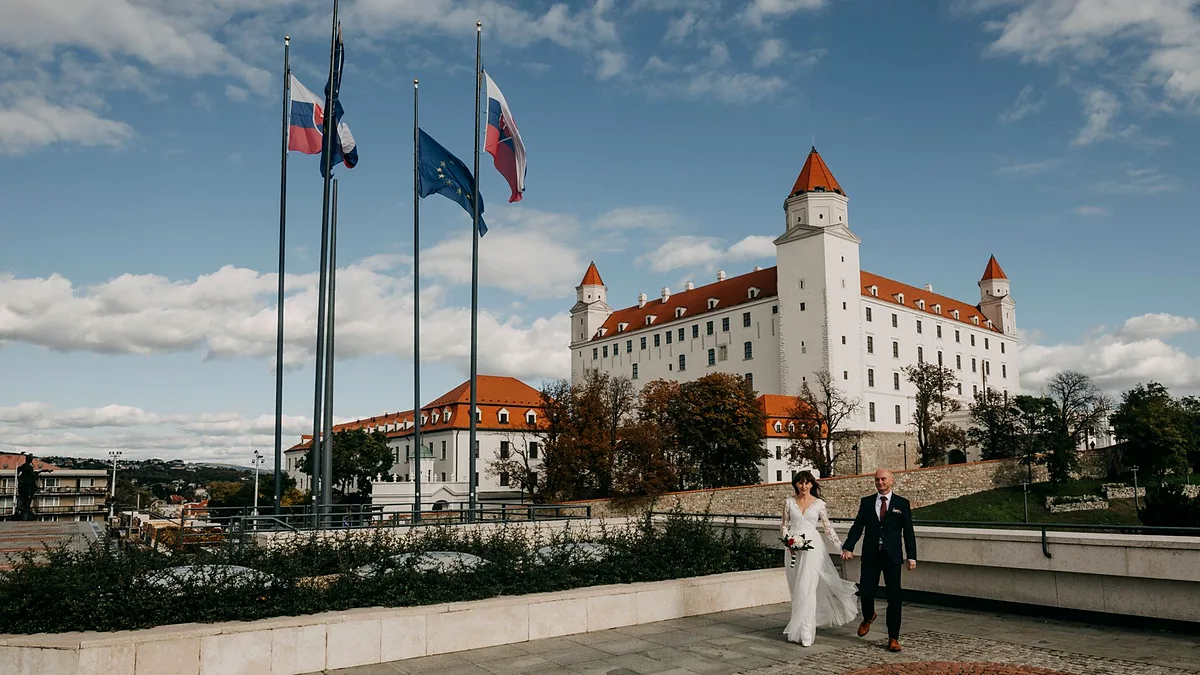
The castle is the postcard, and the climb up Zámocká gives you the best free view in the city: the Danube, the UFO bridge, and on a clear day the wind farms outside Vienna. The baroque garden behind the palace is almost always empty, which is strange given how central it is.
Be honest with yourself about the museum, though. The history exhibition inside is thin for the price and the reconstructed interiors feel closer to a conference centre than a royal palace. Go for the terrace, the garden and the sheer scale of the white walls.
- Neighbourhood: Hrad, above Staré Mesto's western edge.
- Cost: grounds and garden free; history museum around €10 (~$11).
- Best time: 16:00–18:00 for the light, or 09:00 to beat the cruise groups.
- Getting there: a 10-minute uphill walk from Hlavné námestie; a trolleybus also runs up from Hodžovo námestie if the hill is too much.
Insider tip: If you are tight on time or cash, skip the paid interior and put that €10 toward Devín Castle instead, where the ruins do far more of the storytelling.
4. St. Martin's Cathedral and the Coronation Route
Between 1563 and 1830, eleven Hungarian kings and eight queens were crowned in this Gothic cathedral. Bratislava held the role while Buda sat under Ottoman rule, which is why a gold replica of the Hungarian crown sits on top of the 85-metre spire.
Inside it is dark, cool and remarkably plain, with carved side chapels and a nave that feels wider than it looks from the street. Look for the coronation anniversary plaques on the walls and the small chapel behind the main altar.
- Neighbourhood: Podhradie, directly beneath the castle.
- Cost: free entry; tower around €3 (~$3.30).
- Best time: weekday mornings; avoid Sunday mass and the 17:00 service.
- Getting there: five minutes west of Hlavné námestie on foot.
Insider tip: Gold crown medallions are set into the pavement marking the coronation route. Start at the cathedral and follow them back toward the old town — walking it the other way means you arrive at the end point first. Also cover your shoulders or you may be turned away at the door.
5. Devín Castle: The Ruins Worth the Bus Ride
Twelve kilometres west of the centre, Devín's ruins sit on a rock above the meeting point of the Danube and the Morava rivers. The Morava was the Iron Curtain river, and standing on that ridge looking into Austria is the most quietly powerful five minutes Bratislava offers.
The site itself is a jumble of Roman, Slavic and medieval layers, with the slender Maiden's Tower perched over the water. There is very little shade and the paths are steep in places, so treat it as a half-day outing rather than a quick stop.
- Neighbourhood: Devín, a village absorbed into Bratislava's western edge.
- Cost: around €8 (~$9) adult entry.
- Best time: weekday afternoon; weekends bring local families in force.
- Getting there: bus 29 from Most SNP, roughly 25–30 minutes and about hourly; cyclists can follow the Danube path instead.
Insider tip: The café at the top is slow and overpriced. Bring water and eat in Devín village by the church on the way back, where the prices are local.
6. Jewish Heritage: The Chatam Sofer Memorial and Heydukova Synagogue
The Chatam Sofer, one of European Judaism's most influential scholars, was buried here in 1839, and his grave survived the war partly because it was hidden under rubble. Today a low concrete and glass memorial covers the preserved graves, reached through a pedestrian tunnel from the riverside road.
Ten minutes north, the Heydukova Street Synagogue still holds services in a 1920s building with a striking functionalist-Moorish facade. Both sites are quietly moving and almost never crowded, which says something about how most visitors spend their time here.
- Neighbourhood: the memorial sits below the castle by the tram tunnel; the synagogue is on Heydukova in Staré Mesto.
- Cost: free, though a donation of €3–5 (~$3–5) is appropriate.
- Best time: weekday mornings — opening hours at the memorial are limited and seasonal.
- Getting there: tram to the tunnel under the castle for the memorial; six minutes on foot north for the synagogue.
Insider tip: Men need a head covering — there are paper kippot at the entrance. Do not photograph inside the memorial; it is an active burial site, not a monument.
Where to Eat and Drink Nearby
Bratislavský meštiansky pivovar (Drevená 8) brews its own beer in a former burgher house a two-minute walk from Michael's Gate. Order the bryndzové halušky with bacon at around €10 (~$11), or the pork knee if you are sharing. Mains run €11–18.
Prašná bašta (Zámočnícka 11) is the reliable choice for Slovak classics in a 17th-century building near the cathedral. Expect mains at €10–16 (~$11–17) and a proper homemade soup. Book ahead for dinner; it fills with locals, not tour groups.
Modrá hviezda (Beblavého 14) sits right under the castle walls and has fed writers and dissidents for decades. It is the priciest of the three at €14–20 for a main, but the terrace on a warm evening justifies it. For coffee, Kaffé Kaffé on Štefánikova pulls the best flat white in the old town for about €3.20.
Practical Logistics and Money Tips
Staré Mesto is genuinely small — Hlavné námestie to the cathedral is five minutes, and the whole old town takes 25 minutes end to end. Wear flat shoes, because the cobbles will punish anything else by mid-afternoon.
Single tickets cost about €1.30 (~$1.40) for 30 minutes and €1.90 for an hour. A 24-hour pass is around €4.90 (~$5.30) and a 72-hour pass about €11.90, both worth it the moment you plan more than two rides. Validate paper tickets in the yellow boxes on board; inspectors do fine tourists without mercy.
Carry some cash. Several of the smaller studios on Hrnčiarska and around the castle are card-shy, and the same goes for market stalls. The Bratislava CARD (roughly €23 for a day) only pays off if you plan on three or more paid museums plus transit — most people don't.
What to skip: restaurants on Hlavné námestie with photo menus and a hawker at the door; the UFO observation deck on a hazy day, when you pay about €10 for fog; and "traditional folklore dinner" packages in the old town, which are staged and expensive. If rain traps you, Galéria Nedbalka on Nedbalova is a good €10 indoor hour of modern Slovak art. And Danubiana, the riverside art museum 20 km south, is excellent but needs a half-day and careful bus timing.
Frequently Asked Questions
Is Bratislava worth a full day or just a stopover?
Give it two nights if craft and heritage are your thing, because Devín and the workshops each eat half a day. A single rushed afternoon will only show you the main square and the castle terrace.
Can you actually watch or try craftwork in Bratislava?
Yes. ÚĽUV on Obchodná runs bookable ceramics and wirework sessions, and a few ground-floor studios on Hrnčiarska still work on site. Go on a weekday morning, since Sunday shuts most of it down.
How much do Bratislava Castle and Devín Castle cost?
Bratislava Castle's grounds and gardens are free, with the history museum around €10 (~$11). Devín Castle is about €8 (~$9) to enter and is the better value of the two.
What is the best transport ticket for a short visit?
The 24-hour pass at roughly €4.90 (~$5.30) covers trams, buses and trolleybuses including the ride to Devín. If you never leave Staré Mesto, skip it entirely and walk.