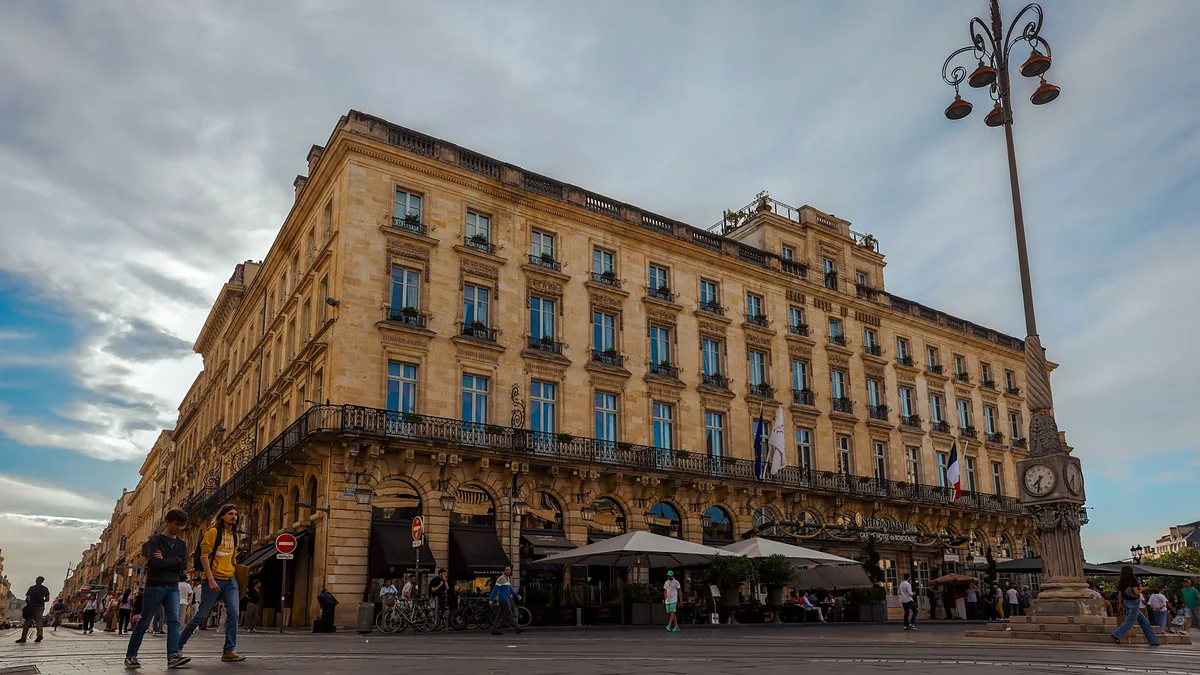

Bordeaux has a reputation problem. People hear the name and picture château tours, three-hour tasting menus and a hotel bill that quietly ruins the rest of the year. The city is far more generous than that.
Its best luxury is free. You can walk 18th-century limestone quays for hours, cross a river on a stone bridge built in 1822, and drink wine at a third of what it costs in London or New York — because it was made an hour away. You just need to know where locals put their money.
This guide skips the €200 tasting packages. Everything below is under €25, and half of it costs nothing at all.
Unlimited High-Speed International Travel eSIM
Connect in seconds across 180+ destinations. Instant QR code activation with zero roaming surcharges.

Bordeaux at a Glance
- Best time to visit: Late April to mid-June, and September through early October. Warm, dry, and hotel rates drop 20–30% outside July and August.
- Typical daily budget: €75–110 (~$80–120) per person, excluding accommodation. That covers trams, one paid museum, coffee, a proper lunch and two very good glasses of wine.
- Getting around: Tram plus your feet. The centre is dead flat and about 30 minutes wide; the TBM network covers everything else.
- Vibe: University city meets wine capital. Pale stone facades, no rush, and a river that turns gold around 8pm in summer.
1. Bar à Vin: Classified Wine for the Price of a Coffee
Bar à Vin occupies the ground floor of the Maison du Vin on Cours du 30 Juillet, a short walk from the Grand Théâtre. It is run by the city's wine trade body, which means no markup theatre and no sommelier performance — just a long marble bar, tall windows and dozens of wines by the glass.
This is the smartest wine move in Bordeaux. You can drink a classified-growth wine for €6 that would cost you $20 a glass at home, then walk out and buy a bottle from a nearby caviste for your room.
- Neighbourhood: Triangle d'Or — 1 Cours du 30 Juillet
- Cost: €3.50–6 (~$4–6.50) per glass; cheese or charcuterie board around €8 (~$8.60)
- Best time: Doors open at 11:30. Arrive before 12:30 or after 14:30 to dodge the lunch crush
- Getting there: Tram B or C to Quinconces, then a 4-minute walk
Insider tip: Ignore the regional AOC list at the front of the menu and head for the château column at the back. That's where the €5–6 pours of proper classified wine hide.
2. Bassins des Lumières: An Art Show Inside a Submarine Bunker
A WWII German submarine base in Bacalan is now the largest digital art centre in France — 12,000 square metres of concrete, water and projected light. You walk through the old submarine pens while paintings slide across walls twenty metres high.
It sounds gimmicky and it isn't. The scale is genuinely jaw-dropping, and at €16 it's the best-value spectacle in the city.
- Neighbourhood: Bassins à Flot, Bacalan
- Cost: €16 (~$17) adults; under-18s and under-26 EU residents free
- Best time: Weekdays after 3pm; book the last entry slot for thinner crowds
- Getting there: Tram B to Bassins à Flot or Cité du Vin, then a 10-minute walk
Insider tip: The bunker holds a steady 19°C year-round. In July that's a relief; in April you'll want a jumper.
3. Musée des Beaux-Arts: Rubens and Matisse, Zero Euros
Tucked behind the Jardin Public on Cours d'Albret, this is one of France's better regional fine art museums — and the permanent collection costs nothing. Rooms of Rubens, Titian, Matisse and Delacroix, usually with fewer than a dozen people in them.
It's the ideal rainy-morning fallback in a city that doesn't offer many indoor options at this price.
- Neighbourhood: Jardin Public — 20 Cours d'Albret
- Cost: Free for the permanent collection; temporary shows around €6–10 (~$6.50–11)
- Best time: Weekday mornings, right at opening
- Getting there: Tram B or C to Quinconces, then an 8-minute walk through the gardens
Insider tip: It closes Tuesdays. Other days it runs roughly 11:00–18:00, so check before you build a whole morning around it.
4. Darwin Écosystème: The Free Creative Campus on the Right Bank
Cross the Pont de Pierre, keep following the river, and you reach a former military barracks taken over by Bordeaux's skaters, artists and organic growers in 2009. Entry is free. Inside there's a skatepark, a climbing wall, street art, a bike workshop and a big canteen serving mostly organic food.
The real reason to come is the view. Stand on the terrace and look back at the city's pale stone waterfront — it's the postcard shot nobody bothers to take.
- Neighbourhood: La Bastide — Quai des Queyries
- Cost: Free to enter; climbing around €10–14 (~$11–15); canteen mains €12–16 (~$13–17)
- Best time: Weekend afternoons, or sunset on a warm evening
- Getting there: Tram A to Jardin Botanique, then 10 minutes on foot
Insider tip: The food hall gets rammed at 13:00 on Sundays. Eat at 11:30, or come back at dinner when the crowd thins out.
5. Saint-Émilion by Regional Train: Wine Country for Under €25
The TER from Gare Saint-Jean reaches Saint-Émilion in about 35 minutes, and a return costs roughly €12. That's your entire transport budget for a day inside one of the world's most famous wine appellations.
Wander the medieval lanes for free, look inside the monolithic church, then book a tasting at a small château — most charge €8–15 and pour four or five wines. You'll spend less than a single city-centre tasting class.
- Neighbourhood: Depart from Gare Saint-Jean, Bordeaux
- Cost: Train €10–12 (~$11–13) return; tastings €8–15 (~$8.60–16); village free to explore
- Best time: Mid-morning weekday trains, around 9:00–10:00
- Getting there: TER regional line toward Libourne or Sarlat; 35 minutes
Insider tip: The station sits about 1.5 km downhill from the village. A little tourist train runs up, but the walk through the vineyards is the best part — and book château visits ahead, since most won't take walk-ins at harvest.
6. Chartrons and Rue Notre-Dame: Free Browsing, Good Coffee
Chartrons is where the wine merchants lived and worked, and their old warehouses now hold antique dealers, small galleries and coffee places that take espresso seriously. Rue Notre-Dame is the spine of it — no entrance fees, no queues, just a solid hour of wandering.
On Sunday mornings the quay-side market fills with producers selling cheese, oysters and pastries. It's cramped, it's local, and it costs nothing to walk through.
- Neighbourhood: Chartrons, along Rue Notre-Dame
- Cost: Free; coffee €2.50–4 (~$2.70–4.30)
- Best time: Sunday 9:00–13:00 for the market; weekday afternoons for the shops
- Getting there: Tram B to Chartrons or CAPC, then two blocks inland
Insider tip: Most antique dealers don't open until 11:00. Get coffee first, then start at the far end of the street and work back toward the river.
7. Place Saint-Michel and the Grosse Cloche: The Free History Loop
Start at the Grosse Cloche, the 15th-century belfry that once rang out across the old town, then walk ten minutes south to the Gothic Basilica of Saint-Michel. Both are free to see from outside, and both sit in a neighbourhood that still feels lived-in rather than staged.
Come on a Sunday and Place Saint-Michel turns into a flea market — furniture, old wine glasses, records, the occasional decent painting. Even if you buy nothing, it beats most paid attractions.
- Neighbourhood: Saint-Michel / Saint-Pierre
- Cost: Free; the separate bell tower climb runs about €6 (~$6.50)
- Best time: Sunday morning for the market; weekday afternoons for quiet streets
- Getting there: A 10-minute walk south from Place de la Bourse
Insider tip: The flea market is cash-first. Bring small notes — plenty of stallholders won't take a card for a €3 purchase.
Where to Eat and Drink Nearby
Chez Jean-Mi — Marché des Capucins
Oysters and a glass of white at 9am is a Bordeaux tradition, and this stall inside the Capucins market does it without ceremony. Expect a dozen oysters for €8–12 (~$8.60–13), a plate of shrimp, and a table shared with market traders.
Go early. The market winds down after 14:00 and closes entirely on Mondays.
Le Petit Commerce — 4 Rue Notre-Dame, Chartrons
A Chartrons institution for seafood tapas and a wine list that doesn't punish you for ordering by the glass. Most small plates land between €6 and €9 (~$6.50–10); a glass of white is around €4.
Book for dinner, especially Thursday to Saturday. Walk-ins get squeezed onto the bar, which is honestly a fine outcome.
La Belle Campagne — 58 Rue Notre-Dame, Chartrons
A market-driven bistro with a chalkboard that changes weekly and a lunch formule around €16–18 (~$17–19). Portions are generous and the cooking is honest rather than showy.
Lunch is the value play here — the evening carte climbs quickly once starters and wine are in.
Practical Logistics and Budget Tips
Getting around without a car
The centre is flat, compact and made for walking; the Grosse Cloche to the Jardin Public is about 25 minutes at a stroll. For anything further, the TBM tram network has four lines and a single ride costs around €1.90 (~$2).
Buy a carnet of ten rides at a machine instead of singles — it cuts the per-ride price by roughly a third. Validate every time, because inspectors do patrol and fines sit around €60.
Realistic costs
| Item | Typical cost |
|---|---|
| Tram single ride | €1.90 (~$2) |
| Glass of wine at a good bar | €4–7 (~$4.30–7.50) |
| Lunch formule | €15–19 (~$16–21) |
| Museum entry | €0–16 (~$0–17) |
| Oysters and white wine at the market | €10–14 (~$11–15) |
| Return train to Saint-Émilion | €12 (~$13) |
What to skip
- Restaurants on Place du Parlement and along the quays. You're paying for the postcode. Walk two streets inland and the food improves while the bill shrinks.
- Château day tours sold by city-centre agencies at €60–90. The TER to Saint-Émilion costs €12 return and puts you in the same vineyards.
- La Cité du Vin's full ticket, around €22 (~$24), if you're only mildly curious. Wine obsessives get their money's worth; everyone else can admire the building from the tram stop and spend the €22 on actual wine.
- The little white tourist train. It covers a route you can walk in 40 minutes, and you'll see more doing it.
Frequently Asked Questions
Is Bordeaux expensive for tourists?
Less than Paris, Lyon or Nice, and far less than most people expect. A comfortable day of trams, one paid museum, lunch, coffee and two good glasses of wine lands around €75–110 (~$80–120) per person before accommodation.
Can you taste Bordeaux wine on a budget?
Yes, easily. Bar à Vin sells glasses from about €3.50, and a return train to Saint-Émilion plus a château tasting comes in under €25 total.
Do you need a car in Bordeaux?
No. The historic centre is walkable, the tram covers the rest, and the regional train reaches the wine villages in under 40 minutes. A car here is mostly a parking problem.
When is the cheapest time to visit Bordeaux?
November through March, excluding the Christmas market weeks, when hotel rates fall sharply and museums stay quiet. The trade-off is rain — pack properly and you'll have the city almost to yourself.